
Horn
PDFGeneral information

Description
The traditional costume, the Tracht, is in Austria not a museum exhibit but living clothing. It is worn at church-festival days and fairs, at weddings and folk celebrations, and often on an ordinary day. Every valley has its own colours, embroidery and cut, and an experienced eye can tell from the costume which province its wearer comes from. The materials, too, speak of place: linen, leather, wool, horn, everything that the surrounding nature provided for the peasant household.
Horn is one of the oldest materials of the folk costume. Hunting trophies, the antlers of stag and roe deer, were put to use: buttons, buckles, clasps and appliqués were turned from them and ornamental decorations carved. Horn buttons on a waistcoat or jacket are the mark of a true hunting costume, and each such detail is made by hand. The material is tied to the forest and the mountains, to hunting and a careful attitude to nature, for nothing that was taken was wasted.
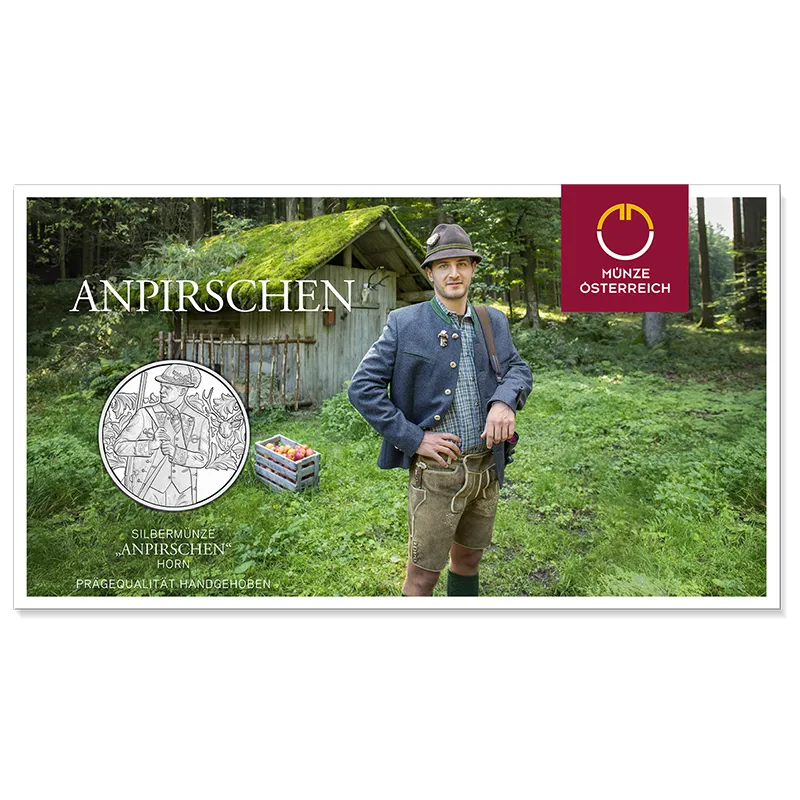
These days traditional clothing in Austria is fashionable again: it is chosen for festivals, weddings and trips into the countryside, and workshops receive orders for hand-made garments. Interest in the materials is returning too: flax, leather, loden and horn are valued once more as reliable, beautiful and environmentally friendly. The coin reflects this trend and reminds us that a craft lives as long as it is used.
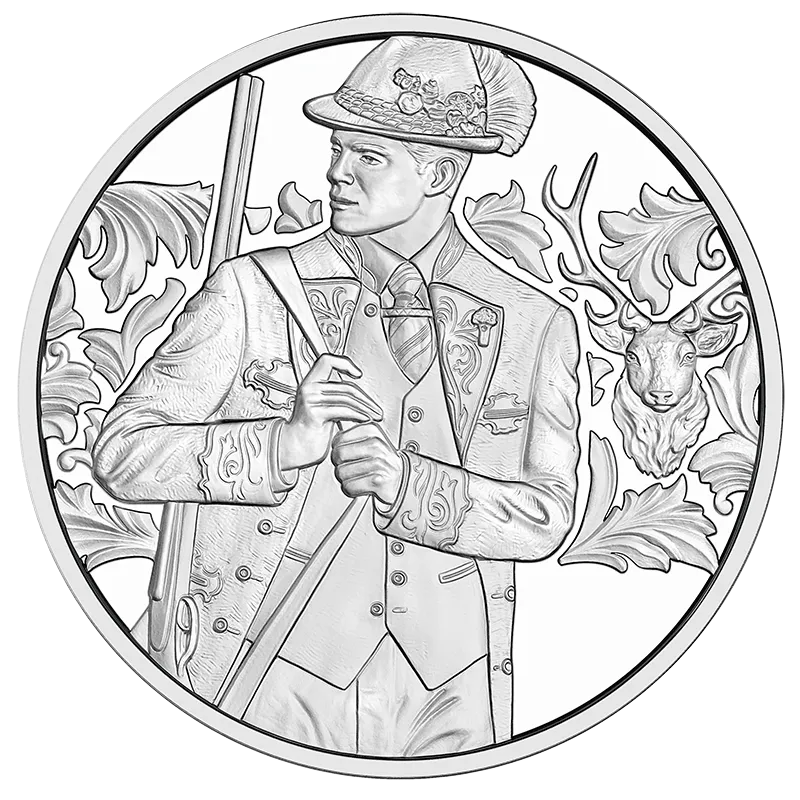
The last coin of the series shows a man in traditional costume whose waistcoat buttons and jacket decorations are made of horn. Around him is an ornament in the spirit of horn carving, and in the centre rises the head of a proud stag. It is the most "forest" subject of the series: horn links the costume with the hunter's craft and the image of Alpine nature. The craftsmen who carve horn show how fine and durable things come from a simple material.
The "gschneizt & kampelt" coins are a gift to Austrian culture: four stories about what a traditional outfit is made of and by whom. The name refers to a colloquial expression meaning a person who is spruced up and "in full dress". The series began in 2025 with coins about linen and leather, and loden and horn were added in 2026. The designs were engraved by Anna Schlindner and Elena Dolgova.
Horn in the folk costume is also a mark of belonging to the world of hunters and foresters. Buttons of antler on green or grey cloth are recognised at once, and carved appliqués with the head of a stag give the clothing nobility. The coin unites in one image the man, the material and the animal with which he is bound: in this way the idea of harmony between the hunter and nature is conveyed, to which he owes both food and material for his craft.
Obverse
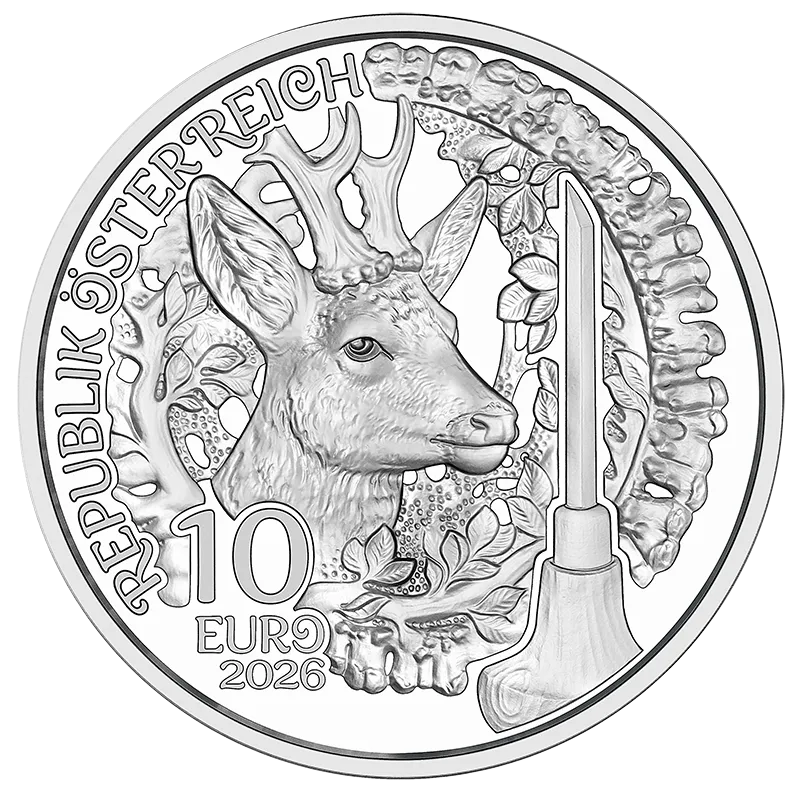
The obverse is the official side. The inscription REPUBLIK ÖSTERREICH runs around the rim, below it 10 EURO and 2026. On the field is the head of a roe buck within a wreath of leaves and twigs, and on the right a hunting knife stands upright: the hunting theme is already declared on the official side.
Reverse
The reverse is the artistic side. A young man in a hunting jacket with embroidered lapels and cuffs, a waistcoat and a hat covered with badges; the strap of a rifle is slung across his shoulder. The background consists of large scrolling leaves, and on the right the head of a stag with branching antlers looks out of the foliage. The "handmade" version is without colour: all the expressiveness lies in the relief, on which the patterns and small details read well.