
Grain harvester
PDFGeneral information

Description
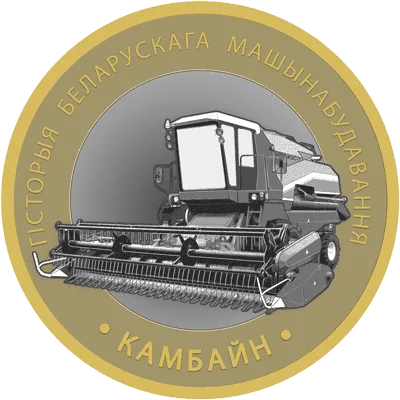
Bread begins with the harvest, and the harvest begins with the combine. The grain combine replaced huge gangs of reapers and sheaf-binders and turned the harvest from exhausting work by hand into work of a few days. For Belarusian fields, set in a humid climate with a short window for harvesting, fast and reliable machinery is especially important: every dry day counts. On the coin Kambain this image is the subject of the last page of the series. That is why for a countryman the combine is not just a machine but a symbol that the crop is in and the labour of the year was worth it.
The coin shows the self-propelled grain combine KZS-7 of the Polesye family made by Gomselmash. The Gomel plant of agricultural machinery traces its history to 1930; over time the enterprise changed several specialisations and became one of the leading makers of forage harvesting equipment in the USSR. In the 1990s the plant was the first in the country to master the serial production of its own grain combines, and the Polesye brand became as recognisable as the Belarus tractor.
A combine of this family is built for straight and windrow harvesting of cereals: a threshing and separating unit with a straw walker, an enlarged grain tank and a cleaning system let it gather the crop on fields of varying moisture. The Polesye family keeps developing; machines with more productive threshing systems are built on its base, along with forage harvesters and other farm machines. Gomselmash equipment works not only in Belarus but also in Russia, Kazakhstan and other countries, where the harvest campaign does not go without Belarusian machines.
For the people of the country the harvest is one of the most recognisable events of the year. Rows of combines in the field, clouds of dust and machines that do not sleep at night make up a picture by which the state of agriculture is read. It is no accident that the combine closes the line of machines in the series: after the tractor that ploughs and sows, it is the combine that gathers the result and turns the work of a whole year into grain in the bins.
Harvesting grain is a race against time. Grain is ripe for only a few days: left standing it sheds, while rain and damp lower quality and start ear diseases. So during the campaign work goes on in two shifts, the fields are lit at night by the headlights of combines, and operators live by the fields in caravans. In such a campaign the combine is not merely a machine but the centre of a small production system: lorries follow it, repair teams service it, spare headers and bearings are kept for it. A good combine operator has always been respected in Belarus, and their name was often known in the district as well as that of the farm chairman. Hence the particular attention paid here to new models of harvesting equipment.
Obverse
The artistic side carries a relief image of the self-propelled grain combine KZS-7 Polesye in profile: the tall cab, the wide header in front and the grain tank behind accurately convey the look of a harvesting machine. Around it run the inscriptions: at the top ГІСТОРЫЯ БЕЛАРУСКАГА МАШЫНАБУДАВАННЯ, at the bottom КАМБАЙН. The silhouette reads at first glance and underlines the working character of the machine.
Reverse
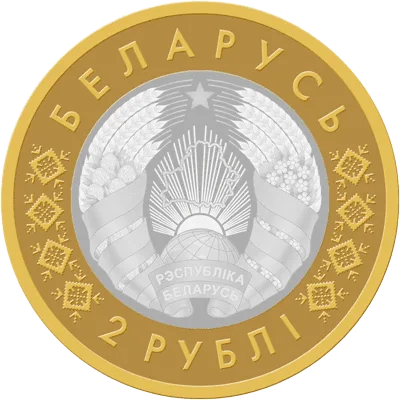
The official side shows a relief of the State Coat of Arms of the Republic of Belarus; around it are engraved the name of the country, БЕЛАРУСЬ, and the mark of the currency unit, with a stylised national ornament set between the inscriptions. The word БЕЛАРУСЬ, the year 2025 and ornamental elements repeat along the edge. The concise state symbolism stands against the expressive industrial subject of the obverse.