
Bee Hummingbird (1 Peso)
PDFGeneral information

Description
The bee hummingbird is a record-holder among birds: nobody in the feathered world is smaller. It is called the zunzún, and scientists call it Mellisuga helenae. The bird is about five or six centimetres long and in lightness is comparable to the smallest coin. To live at such a size the body needs a colossal metabolism: the heart beats hundreds of times a minute, the wings make dozens of beats a second, and during the day the bird visits hundreds of flowers. At night its body temperature drops and the bird freezes, saving energy.
Seeing a zunzún alive is not simple: the bird is fast, small and easily taken for an insect. Males stand out with a bright red-orange head and throat and a blue back, while females are more modestly coloured. Favourite places are woodland edges, thickets and gardens with many nectar flowers. The nest is a miniature cup of spider silk, lichens and down; in it are two eggs the size of peas.
The bird lives only in Cuba, which makes it a real treasure of the island. In 1981 the Cuban mint in Havana began issuing the “Fauna Cubana” coins for collectors. The first series had the bee hummingbird, the emerald hummingbird and the Cuban crocodile — three subjects showing the variety of local nature. The coins were not meant for payments and were demonetised in the year of issue.
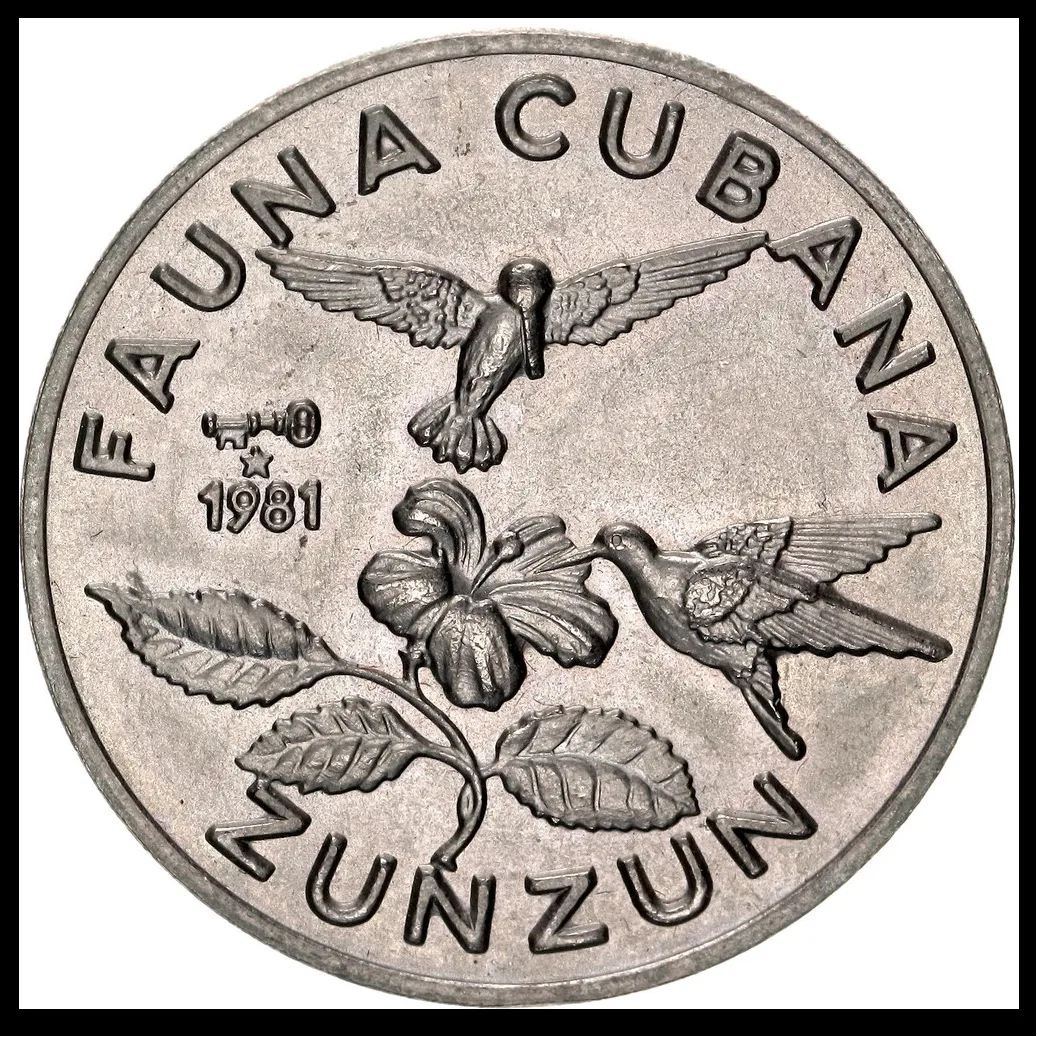
The drawing on the artistic side is classic for zoological illustration: a bird in motion at a flower, without background, only the hero and its feeding point. This is a valuable feature: on the small area of a coin one cannot depict the environment, but one can depict behaviour. The hummingbird is feeding here, and that is its whole character.
For Cuban children the zunzún is a character of fairy tales and school lessons: it is shown on posters as “the smallest bird in the world”, and many remember it for life. So its choice for the first fauna series looks almost inevitable: the subject is clear to everyone and at once brings a smile. For a naturalist the hummingbird is an example of how far an organism’s adaptation to life at the limit of the possible can go.
Obverse
The obverse is the artistic side. It shows a pair of bee hummingbirds at a flower: tiny feathers, slender beaks and wings blurred by motion are rendered in crisp relief. By comparison with the flower the birds’ tiny size is felt well. The inscriptions FAUNA CUBANA, ZUNZUN and the year 1981 are struck, with the mint mark beside them. The free field around is left even so that the birds read at once. The tail is slightly lowered, like that of a bird about to dart upward.
Reverse
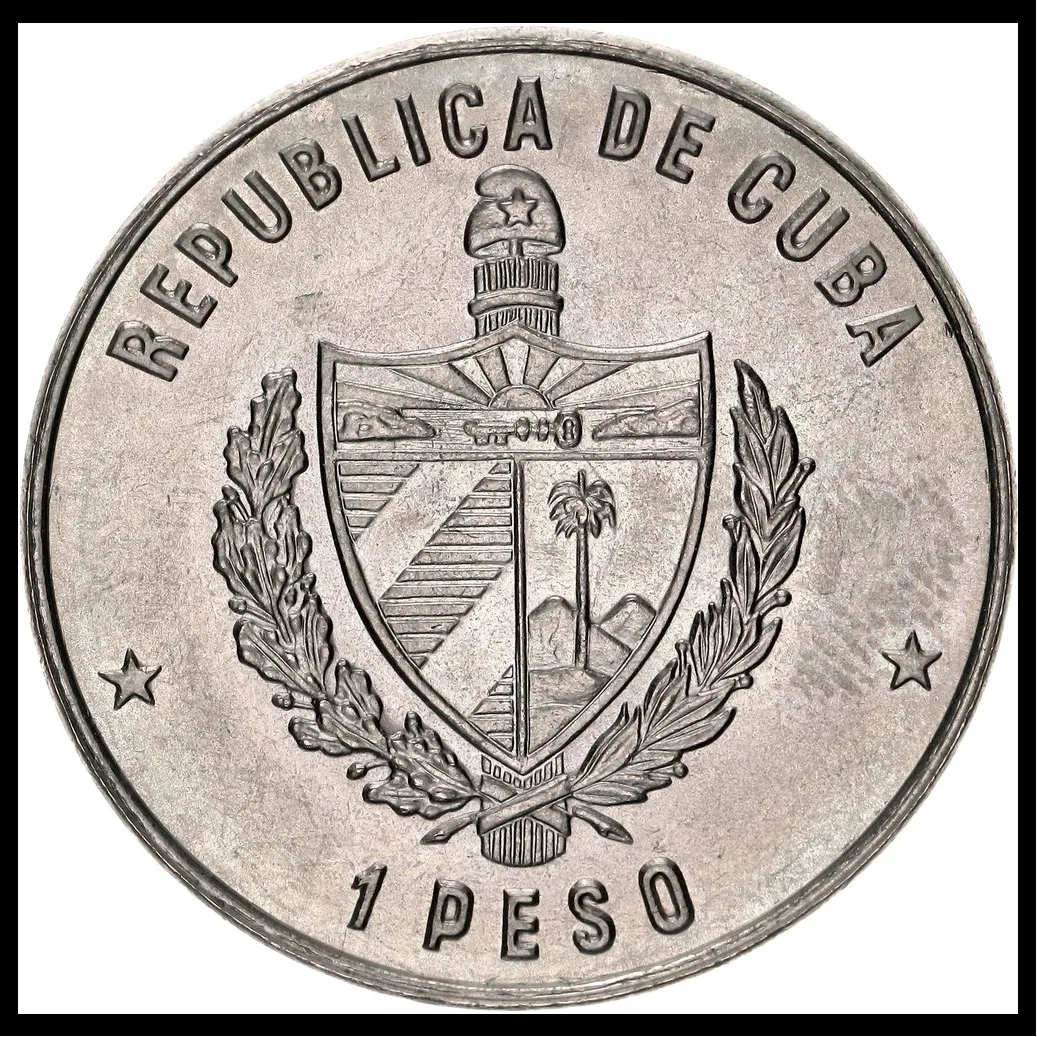
The official side is the same on every coin of the series: the national arms of the Republic of Cuba in Charles Edward Barber’s drawing. The shield is divided into three fields, a Phrygian cap with a star stands above it, with laurel and oak branches on the sides; the inscription REPUBLICA DE CUBA runs along the arc and the coin’s denomination is marked below. The strict heraldry is set against the lively, almost naturalistic image of the animal or bird on the other side and reminds us that this is a state issue. It serves as a single link for the nine coins of the first series.