
Hot air balloon (5 pesos, pattern)
PDFGeneral information

Description
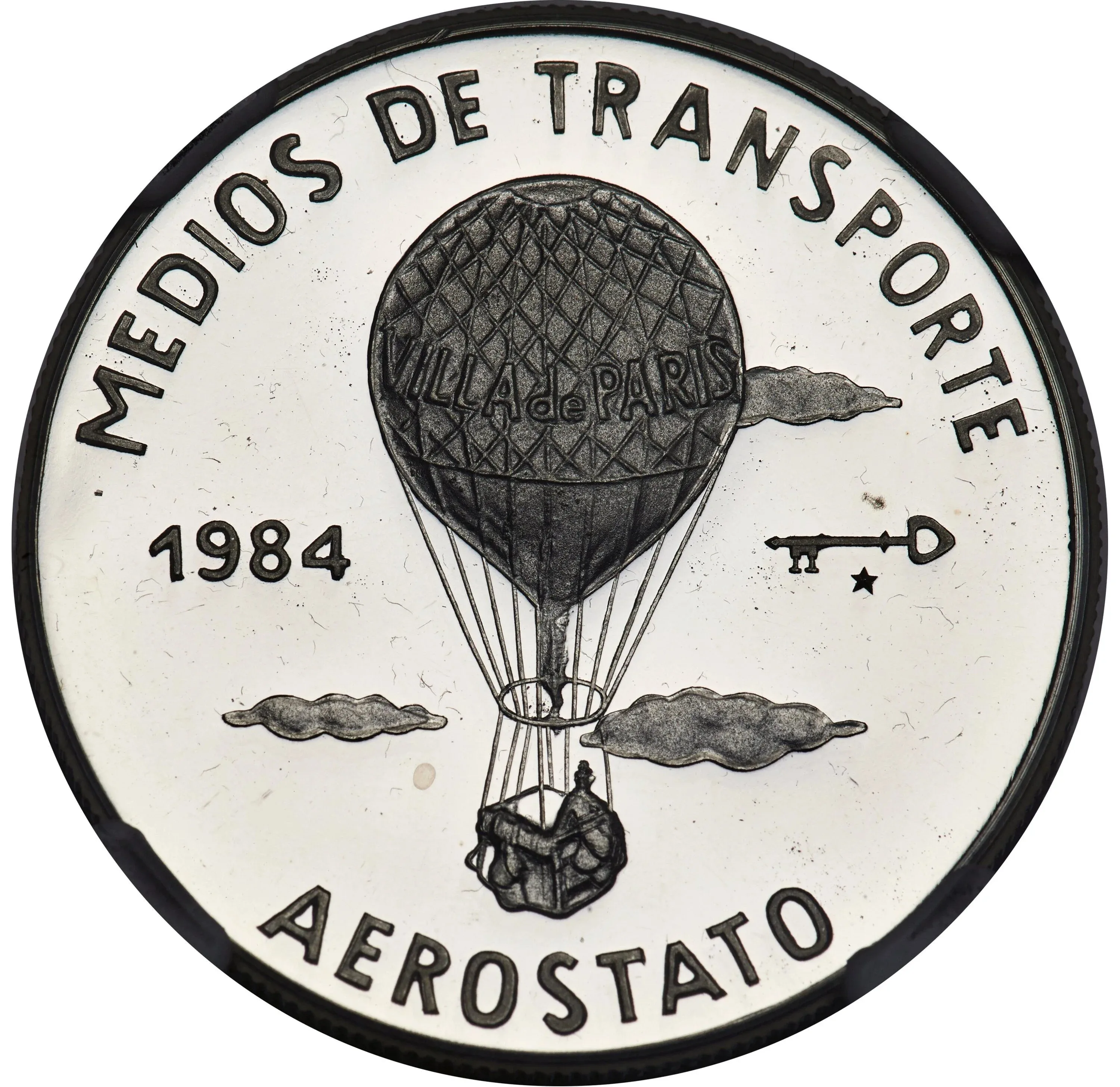
The silver balloon coin is one of the rarest in Cuban numismatics: it is a test piece, a pattern, which was not minted further. The artistic idea with the balloon was not approved, and mass production did not follow; Only a few copies have survived, one of which, according to Aledon’s catalog, is kept in the collection of the Cuban mint. That is why such a coin is valued as a historical document, and not as an ordinary collection item.
Test coins play a special role in numismatics. They are made to check the design and stamps: if the sample is approved, the coin is put into production; if not, test copies are usually destroyed. But sometimes a few pieces end up outside the walls of the mint and become unique witnesses to a failed project. The 1984 balloon is just such a case, and the fate of the silver version is even more modest than that of the copper-nickel one.
The hot air balloon opened the era of aeronautics: 1783, when the Montgolfier brothers lifted the first lighter-than-air apparatus with people into the sky, became the starting point for the dream of flight. The balloons carried scientists and aeronauts over cities and fields, and then gave way to airships and airplanes. In the program dedicated to modes of transport, the balloon was the natural beginning of the “air” line - a step from the ground to the sky.
A rare coin conveys this image in silver: the dome of the ball, the basket and the lines, shown in light lines, seem to float above the field. The story of the failed release makes it especially interesting for a collector: behind it lies the story of how an idea can remain only a sketch on metal.
For collectors, proof coins are not only a rarity, but also an opportunity to look behind the scenes at a mint. They show what solutions were considered, how the masters looked for the composition, and what ideas were not included in the final release. A coin with a balloon reminds that any program has a “parallel history” - failed plots that sometimes remain in several copies and acquire the status of a legend.
The Aledon catalog notes that the silver version of the balloon is one of the rarest items in the program, and information about it has been preserved mainly in the specialized literature on Cuban numismatics.
Obverse
The artistic side shows the balloon: a rounded dome with smooth lines, lines and a basket underneath. The lightness of the image is emphasized by the silver field on which the ball appears to be floating. Around the circle there were supposed to be the inscriptions MEDIOS DE TRANSPORTE and the name of the plot, the year 1984. Like its copper-nickel counterpart, this is an image of a failed mass production - an idea recorded in the metal.
Reverse
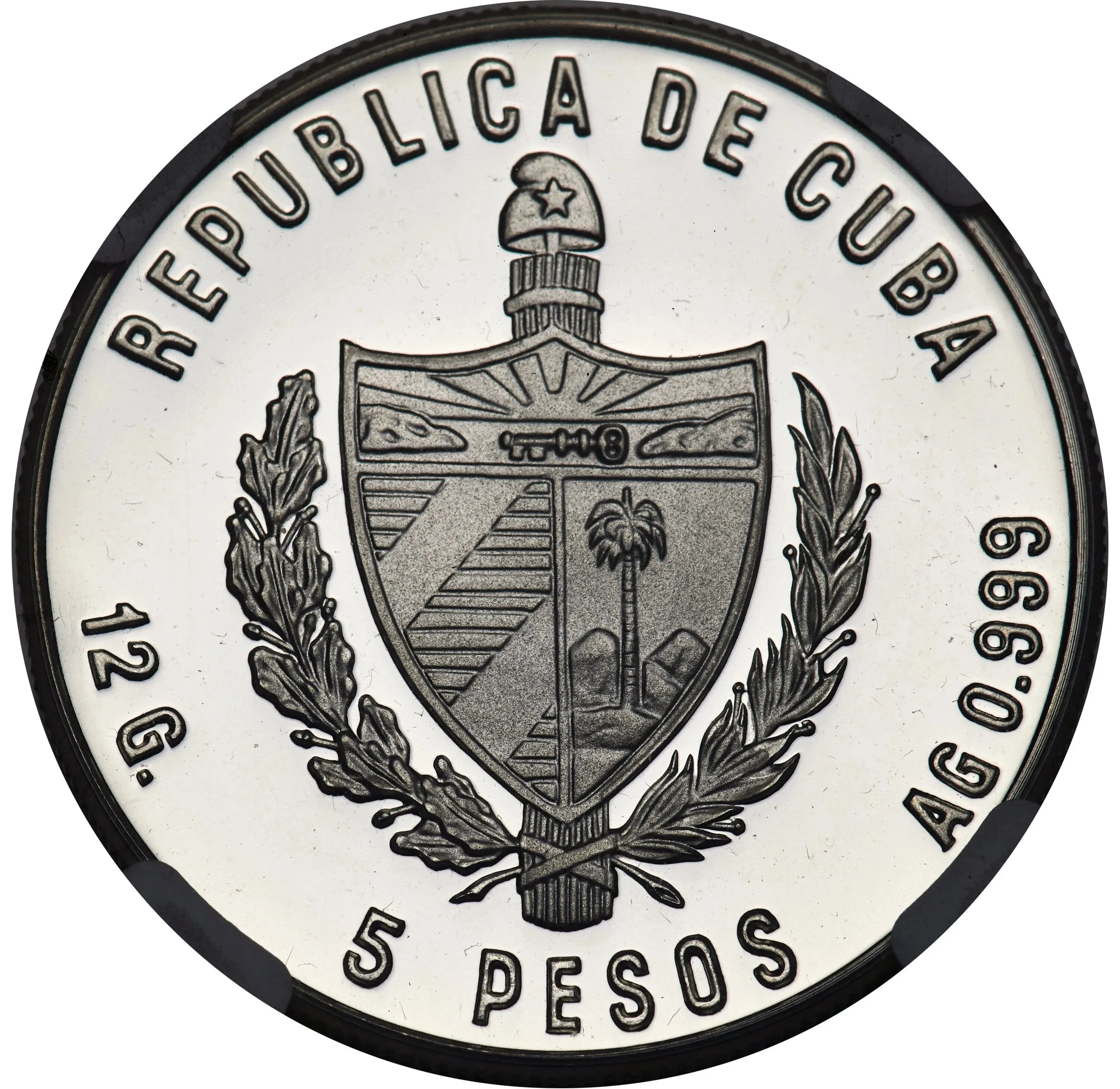
The official side is occupied by the coat of arms of the Republic of Cuba: a shield with a rising sun and a palm tree, a Phrygian cap with a star and laurel branches. The composition harkens back to a design by Charles Edward Barber used on Cuban coins from the early 20th century. Above the shield is the inscription REPUBLICA DE CUBA, below - 5 PESOS. This side is the same for the entire program and links this coin to all other issues, despite differences in subject matter, metal and size.