
Maiasaura (5 Pesos)
PDFGeneral information

Description
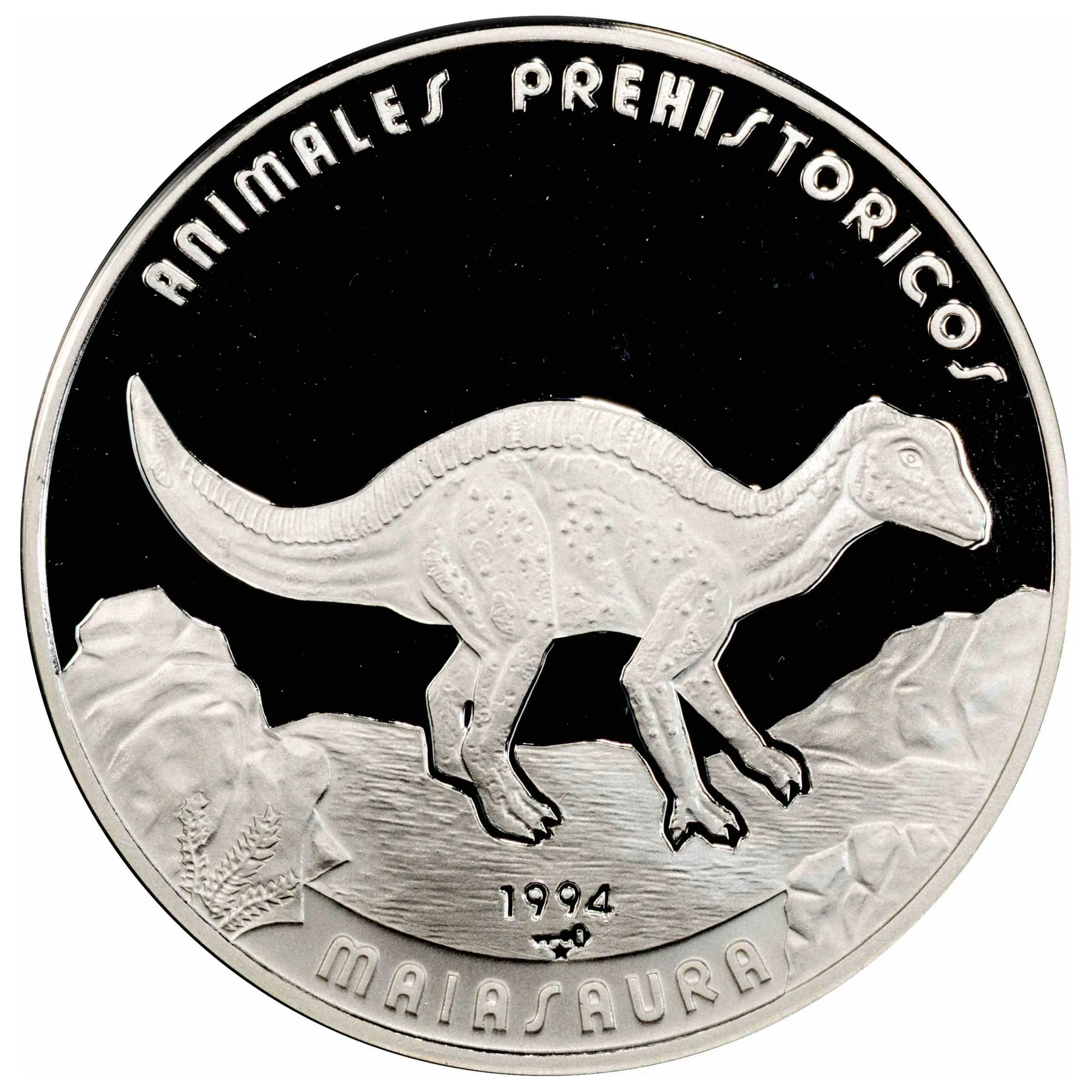
The coin is dedicated to Maiasaura, a dinosaur that entered the history of science as the good mother lizard. It is a duck-billed dinosaur of the hadrosaur family that lived in the Upper Cretaceous, about 76.7 million years ago, in what is now Montana in the USA. The name reflects its chief discovery: beside the remains of adult individuals were found nests with clutches of eggs and skeletons of young. It was the first convincing evidence of parental care among dinosaurs.
The discovery was made in the late 1970s by the American palaeontologists Jack Horner and Bob Makela in Montana. At a site later called Egg Mountain they found clutches and young of various ages. Until then dinosaurs had mostly been imagined as cold and indifferent predators and herbivores that laid eggs and walked away. The find showed a different picture: Maiasaura built nests and guarded clutches, and the young stayed long at the nest, where, it seems, they were fed.
Maiasaura moved on both two and four legs: the second way was convenient for calm feeding, the first for fast movement. It fed on leaves, berries and seeds, grinding its food with a battery of replacing teeth characteristic of hadrosaurs. These animals lived in large herds and gathered at nesting grounds in whole colonies. Such communal life raised the chances of the offspring surviving.
The image of the good mother makes Maiasaura the most peaceful and perhaps the most touching hero of the Cuban programme: beside predatory shapes and giants it tells of the family behaviour of ancient reptiles. For the viewer it is a chance to see dinosaurs not only as fearsome monsters but as living beings who had cares for their young.
The discovery of Horner and Makela changed the view of dinosaurs in general and influenced their image in culture: from sluggish reptiles they turned into active, social animals, and kinship with birds became a generally accepted idea. A coin with Maiasaura recalls this change.
The fate of the word itself is curious: the name Maiasaura has become almost a household term among palaeontologists when it comes to care of offspring in dinosaurs. Studies of the bones of young individuals showed that the young grew fast but needed care in the first months, and the clutches lay in bowl-shaped nests with neatly arranged eggs.
Thus the coin tells not of fearsome strength but of care, and this makes its subject especially human.
Obverse
The artistic side shows Maiasaura. The name of the programme runs in an arc above the drawing, with the animal's name, the year and the mint mark beside it. The dinosaur is rendered in relief only, so the clarity of the lines is especially important, and the mirror field sets off the matt figure. The drawing was made by Alberto González Pereztol and engraved by Jorge Martín Macera.
Reverse
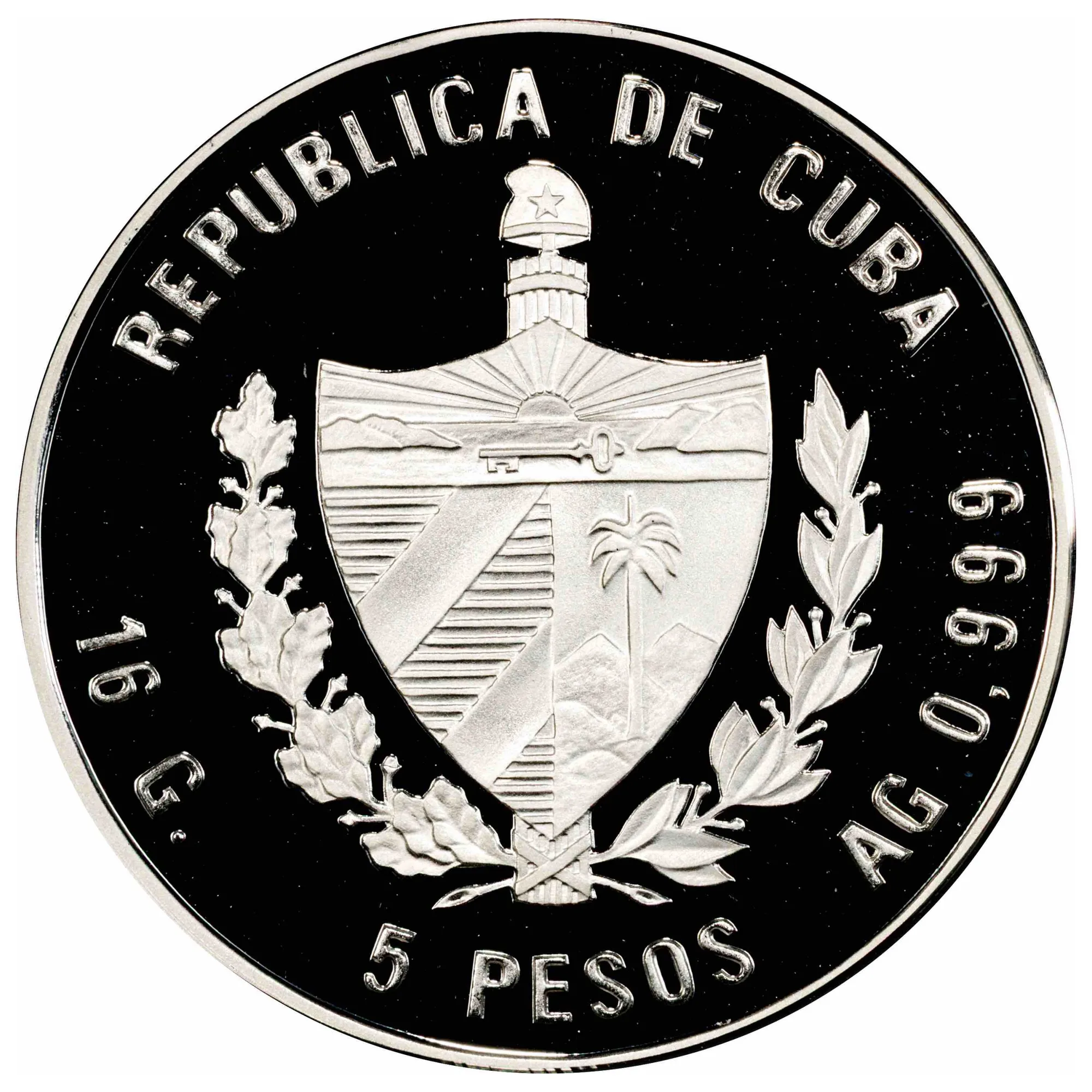
The official side carries the national coat of arms of the Republic of Cuba: a shield with a rising sun, a royal palm and a key, framed by oak and laurel branches and crowned with a Phrygian cap with a star. The design of the arms goes back to the American engraver Charles Edward Barber.