
Stegosaurus (1 Peso)
PDFGeneral information

Description
The coin is dedicated to Stegosaurus, the dinosaur with the most unusual roof on its back. It lived in the Late Jurassic, about 155–150 million years ago, in what are now the western states of the USA and in Portugal. The name Stegosaurus means roofed lizard in Greek: along the animal's back ran two rows of large bony plates that overhung the body and from a distance resembled shingles. It was these plates that made it one of the most recognisable dinosaurs in the world.
What Stegosaurus needed the plates for scientists still debate. They were threaded with channels for vessels, and many therefore believe that the plates helped regulate body temperature, shedding or absorbing heat. Others see in them an element of display within the species: by the size and shape of the plates individuals recognised one another and perhaps attracted partners. The plates may have served both functions, with protection only a side effect.
The weapon of Stegosaurus was its tail. Long spikes sat at its end, and by swinging the tail from side to side the animal could inflict heavy wounds on a predator such as Allosaurus. Finds in which a predator's bones show marks from such spikes suggest that the defence was not a display but real. The head of Stegosaurus was small and held low, the jaws weak, and it fed on soft low-growing vegetation.
Stegosaurus was described in 1877 by Othniel Marsh, and since then it has been the hero of numerous books, films and museum displays. Stegosaurus skeletons with rows of plates and spikes are among the most striking exhibits of palaeontological museums, and in 1982 the state of Colorado proclaimed it its official state fossil animal.
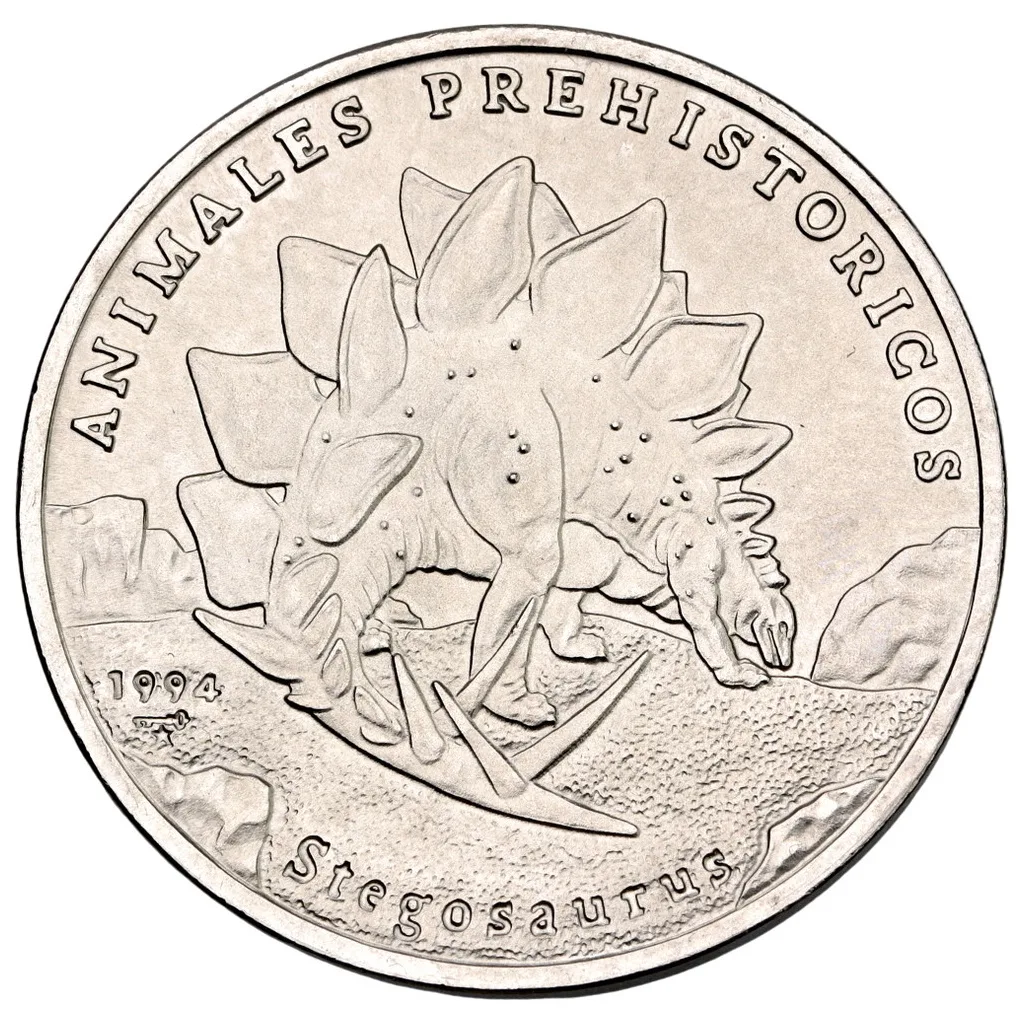
The Cuban coin shows Stegosaurus walking to the right: this is how the artist conveyed the slow and confident step of the animal. The coin belongs to a collector programme in which ancient life is represented by heroes that astonish the imagination with the form of their bodies and the oddness of their adaptations.
The old myth of a second brain in the sacrum of Stegosaurus has long been dispelled: after the skeleton was studied it turned out that the enlargement there is linked by many with glycogen reserves rather than with the nervous system. But even this legend shows how attractive and strange the animal looks, since so many hypotheses arose around it.
For the collector a coin with Stegosaurus is a chance to place in the collection an image familiar from childhood through books and museums and to see it in austere relief rather than in a bright illustration.
Obverse
On the artistic side Stegosaurus walks to the right. The name of the programme runs in an arc above the drawing, with the animal's name, the year and the mint mark beside it. The plates on the back and the spikes of the tail are rendered with a clear contour. The author of both drawing and engraving is Jorge Martín Macera, so the lines of plates and spikes are notable for their expressive clarity.
Reverse
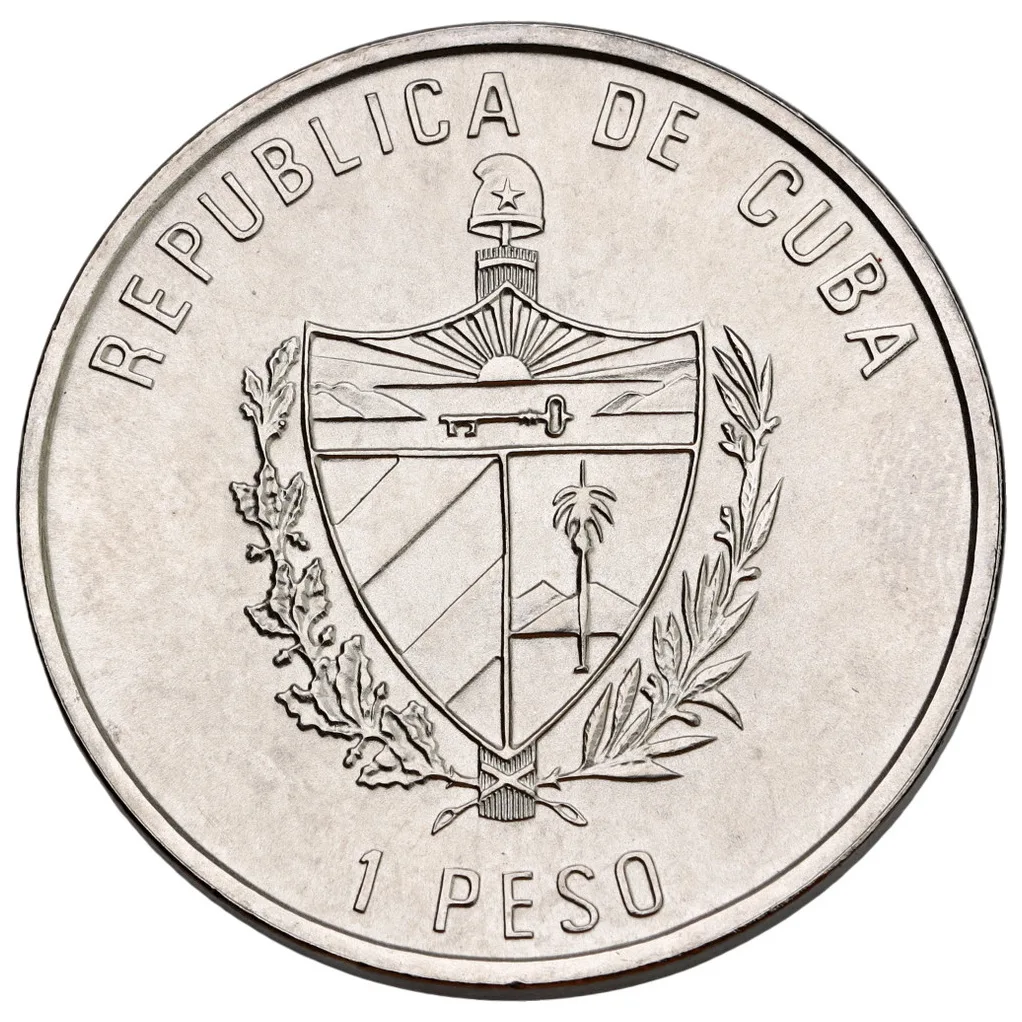
The official side shows the national coat of arms of the Republic of Cuba: a shield with a rising sun, a royal palm and a key, framed by oak and laurel branches and crowned with a Phrygian cap with a star. The design of the arms goes back to the work of the American engraver Charles Edward Barber.