
Triceratops (5 Pesos)
PDFGeneral information

Description
The coin is dedicated to Triceratops, one of the most famous horned dinosaurs and one of the last non-avian dinosaurs on Earth. It lived at the end of the Cretaceous, in the Maastrichtian age, about 68 million years ago, in North America. The name Triceratops means three-horned face and describes the animal's appearance exactly: two long horns above the eyes, one short horn on the nose and a broad bony frill made of expanded skull bones.
The frill is the most unusual feature of the animal. It protected the neck, anchored powerful jaw muscles and probably served for display within the species: by the size and shape of the frill individuals could recognise one another and compete. The horns, too, probably had several purposes, defence against predators and contests between males. Traces of injury on skulls suggest that Triceratops really did lock horns in combat.
The animal reached eight to nine metres in length, making it one of the largest of the horned dinosaurs. It fed on low plants, cutting them with its beak and grinding them with dense rows of teeth. The powerful jaws and strong muscles needed for such a diet made its skull one of the most massive among land animals of all time.
The discovery of Triceratops is linked with the American palaeontologist Othniel Marsh, who described it in the late 1880s, when the race for fossil giants was in full swing in North America. At first the horns found were taken for the remains of an ancient bison, and only then did it become clear that scientists faced an entirely new dinosaur. Since then the image of Triceratops has become one of the most recognisable in the world of palaeontology.
Remains of Triceratops are found in deposits immediately before the Cretaceous–Palaeogene extinction, so it belonged to those dinosaurs that saw the last days of the age of reptiles. The animal's image therefore fits well into a programme of collector coins about prehistoric life: it recalls how suddenly the history of whole worlds can end.
Triceratops has become one of the favourite heroes of popular culture: it appears in museum halls, cartoons and children's books, and its image is almost the first to come to mind at the word dinosaur. The sense of power and reliability produced by the three horns and the bony shield makes it a good subject for a relief coin, where everything rests on the silhouette.
For palaeontologists Triceratops is also an important source of data on the ecosystem of the Late Cretaceous: its remains occur in great numbers in the Hell Creek Formation, and thanks to this more is known about it than about many other dinosaurs.
Obverse
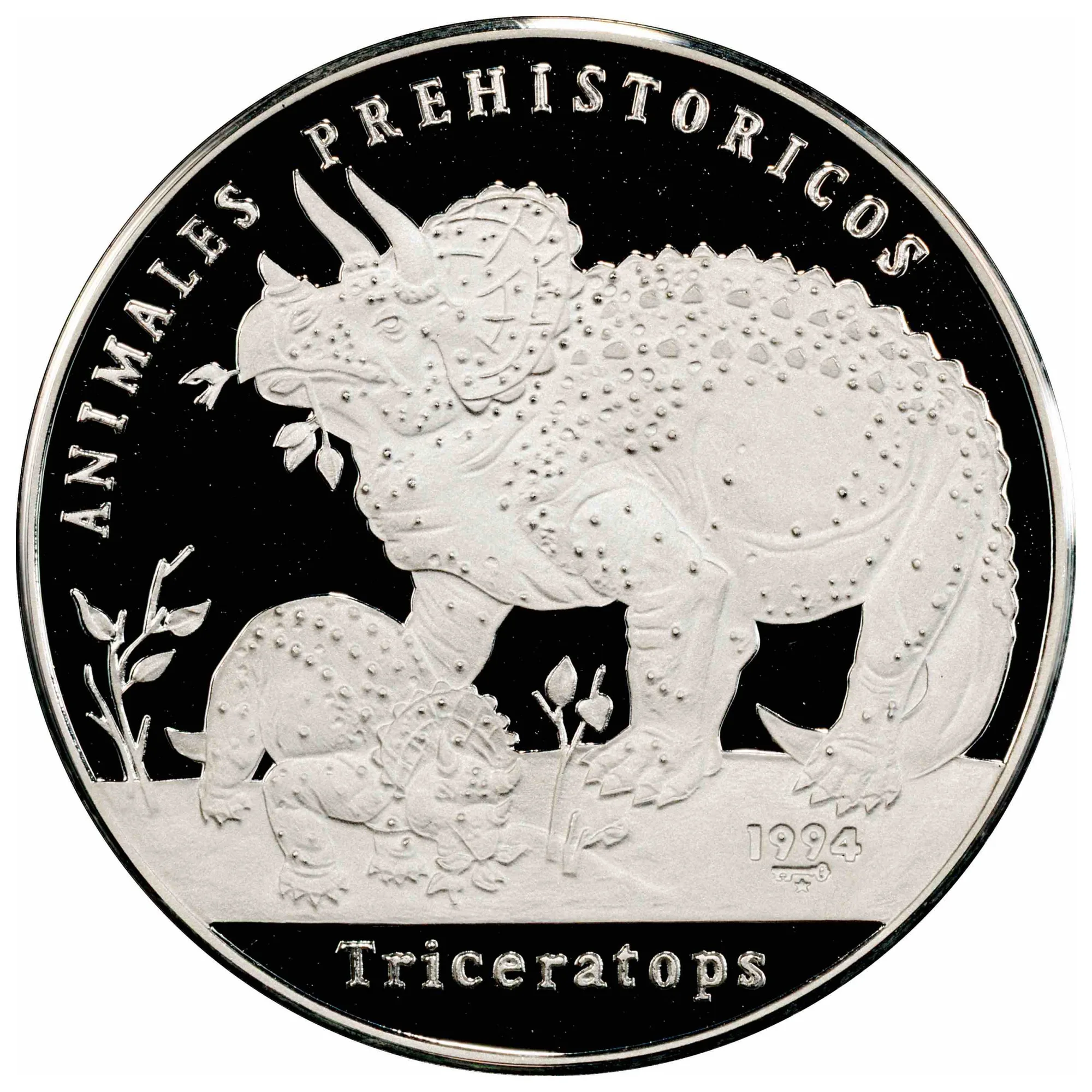
The artistic side shows Triceratops in profile with the characteristic frill and three horns. The name of the programme runs in an arc above the drawing, with the animal's name, the year and the mint mark beside it. The whole composition is rendered in relief without colour, and the mirror field sets off the matt figure. The drawing is by Elena Delgado Álvarez and the engraving by Gianna Díaz Suárez.
Reverse
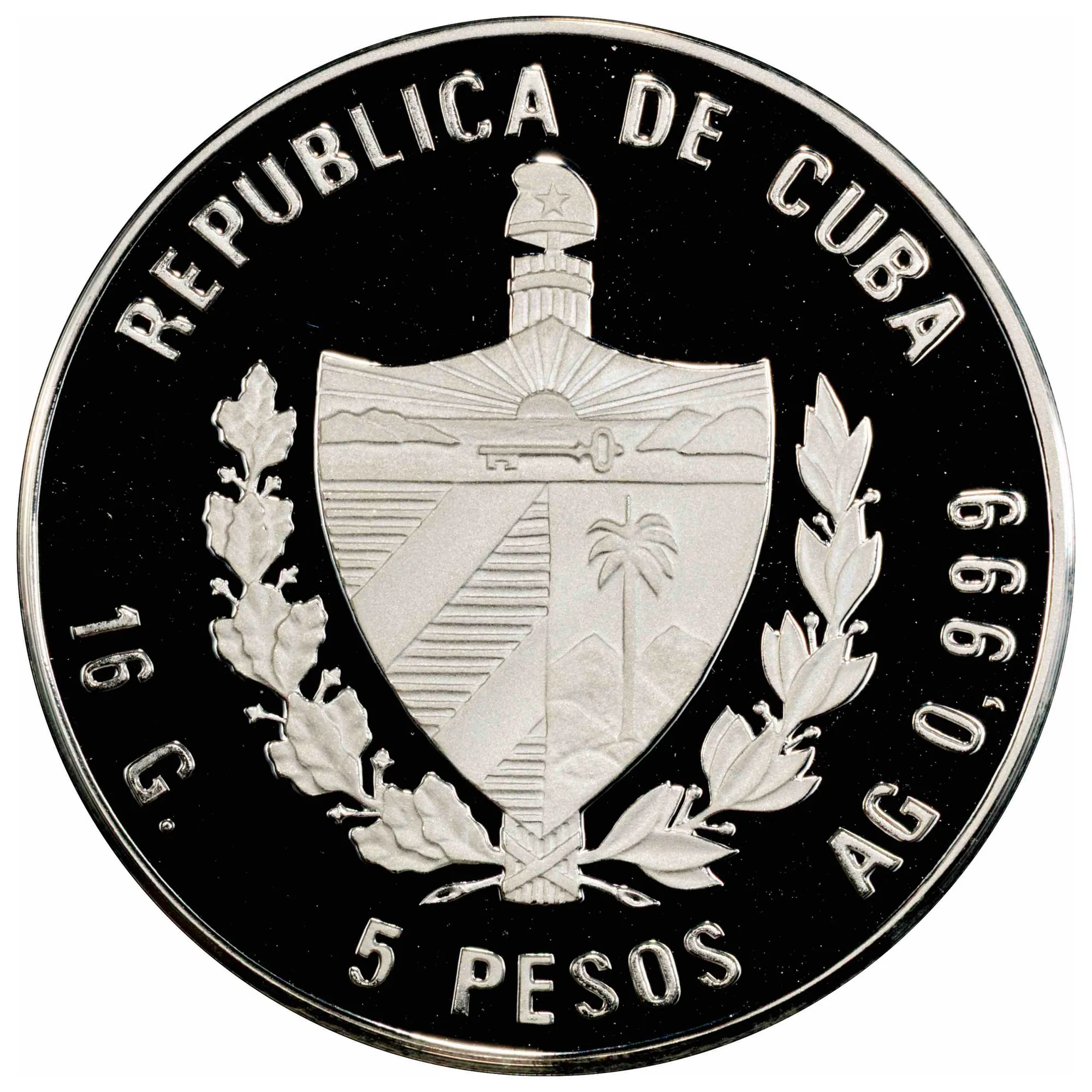
The official side bears the national coat of arms of the Republic of Cuba: a shield with a rising sun, a royal palm and a key, framed by oak and laurel branches and crowned with a Phrygian cap with a star. The design of the arms goes back to the work of the American engraver Charles Edward Barber.