
Jörmungandr
PDFGeneral information
Description
Loki and the giantess Angrboda had three children: the wolf Fenrir, the serpent Jormungandr and the girl Hel. The gods, learning through prophecy that trouble would come from them, decided to act in advance. Fenrir was bound, Hel was sent to rule the world of the dead, and Jormungandr was cast by Odin into the deep ocean surrounding Midgard. There the serpent grew: the Prose Edda says that he became so enormous that he encircled the whole earth and could reach his own tail. The name Jormungandr means mighty staff or great wand. People called him Midgardsormr, the serpent of the middle world.
The image of a serpent coiled around the world is one of the oldest cosmic symbols. The Norse knew that beyond the edge of the earth there was no land, only water, and in that water lived a monster holding the world like a hoop. While Jormungandr lay motionless the world was safe. But on the ocean floor the serpent did not sleep: according to tradition his movements raised waves, and his anger could cause floods. Every earthquake and every storm found its explanation in this image.
The clash of Thor and Jormungandr is recounted twice in the tales. The first time is on the fishing trip with the giant Hymir: Thor cast a line baited with an ox head and the serpent took the bait. The god hauled the monster to the surface, and there they look at each other: the fury of the god and the venomous gaze of the serpent. Hymir, frightened, cut the line and the catch got away. The second time is at Ragnarok. Then the serpent comes out of the sea himself, flooding the land and spewing venom. Thor kills him but dies himself.
These tales show that Jormungandr is not a simple villain but a boundary that has become a living being. His victory or defeat means the collapse of the world. That is why in the Voluspa his emergence from the water is accompanied by a sense of cosmic disaster: Jormungandr writhes in giant rage, the waves rise, the eagle screams with joy.
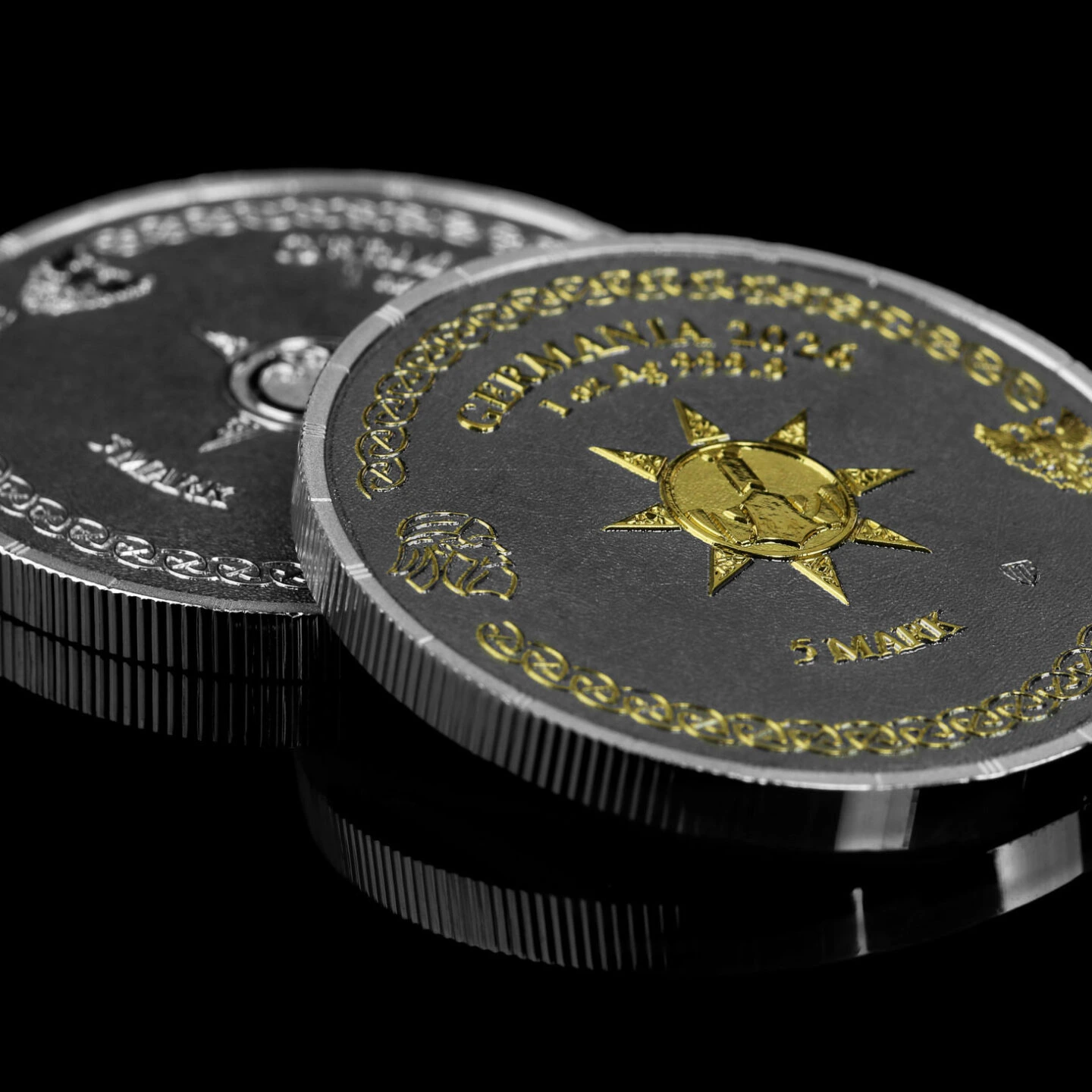
The coin invites us to look at the serpent not as an enemy but as a force that determines the fate of the world. He awaits his hour in the dark waters, and the image loses none of its grandeur for the waiting.
The image of a serpent biting its own tail is known in other cultures too: the Greeks called it the ouroboros, and in Egypt and India it was drawn as a symbol of eternal cycle. The Scandinavian Jormungandr is a relative of this image, but with an important difference. He is not a symbol of endless rebirth but a real monster whose emergence from the sea means destruction after which new life begins. Thus the mythology does not simply repeat an ancient symbol but builds it into a drama in which the serpent has a history, a name and an opponent.
Obverse
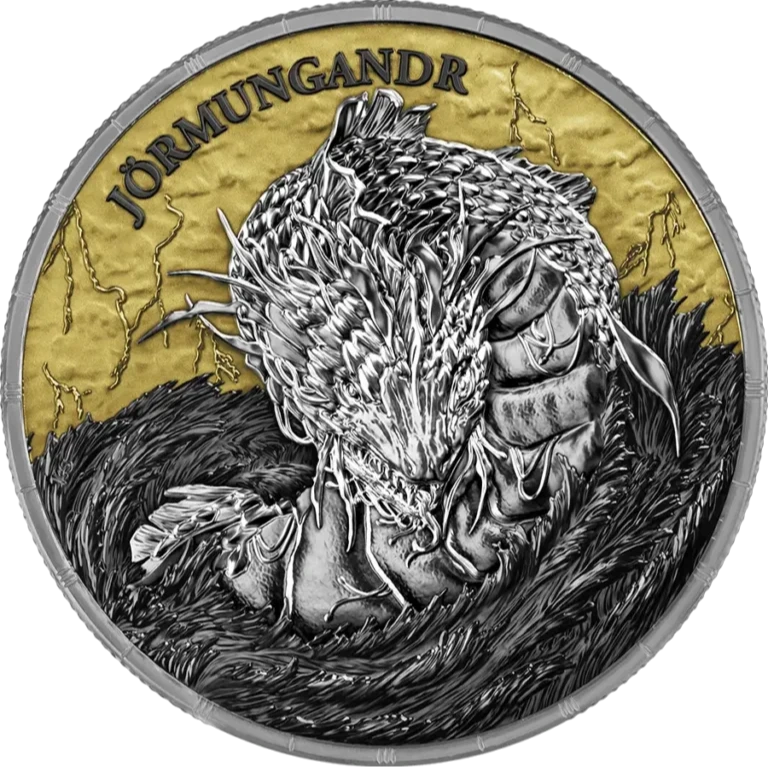
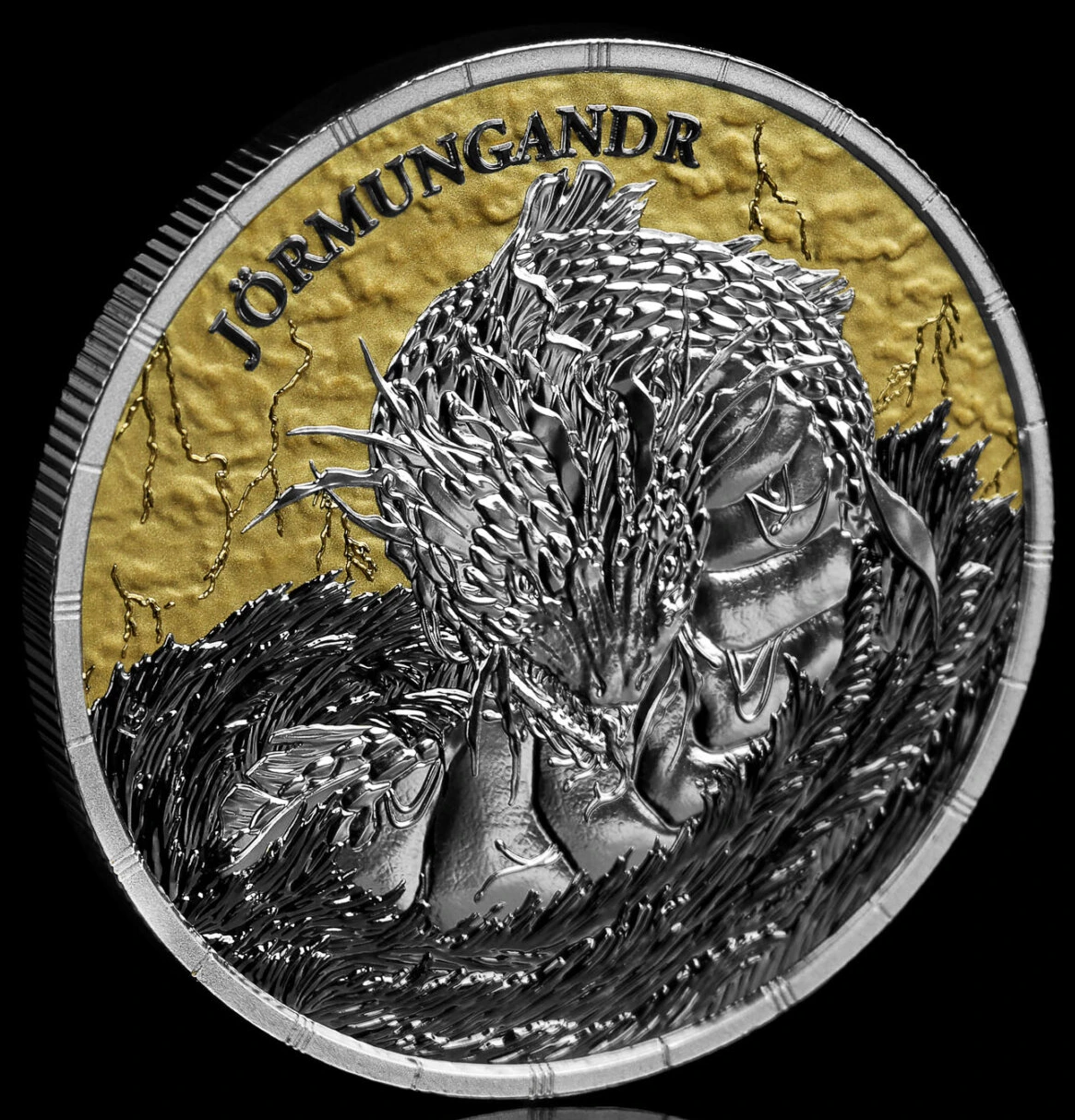
The obverse shows Jormungandr in all his might and terrifying grandeur: the serpent's body coiled in powerful rings on a dark field, with golden details emphasising scales and eye. The silver relief gives the figure volume, and the inscription with the hero's name and runes completes the composition.
Reverse
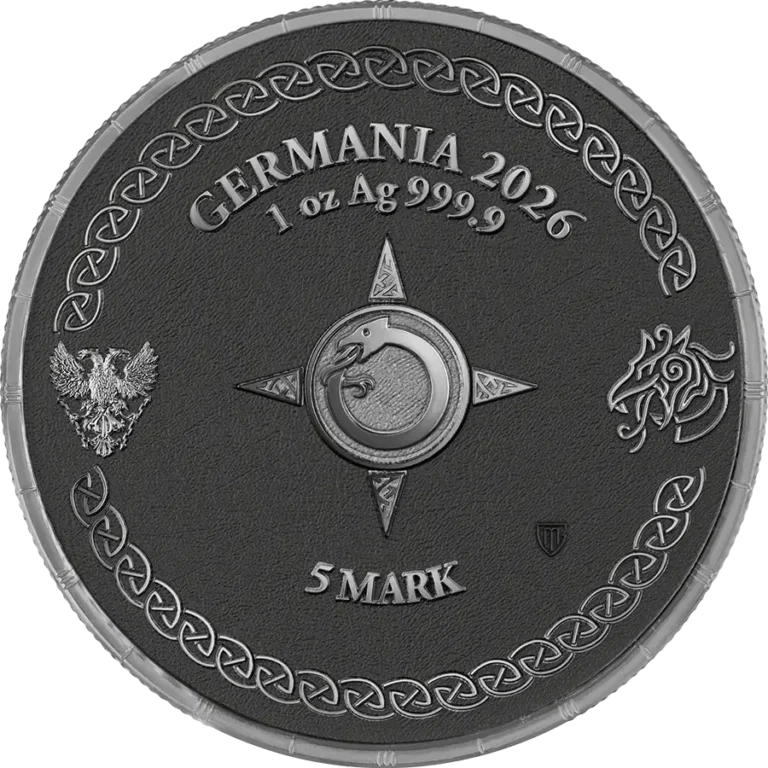
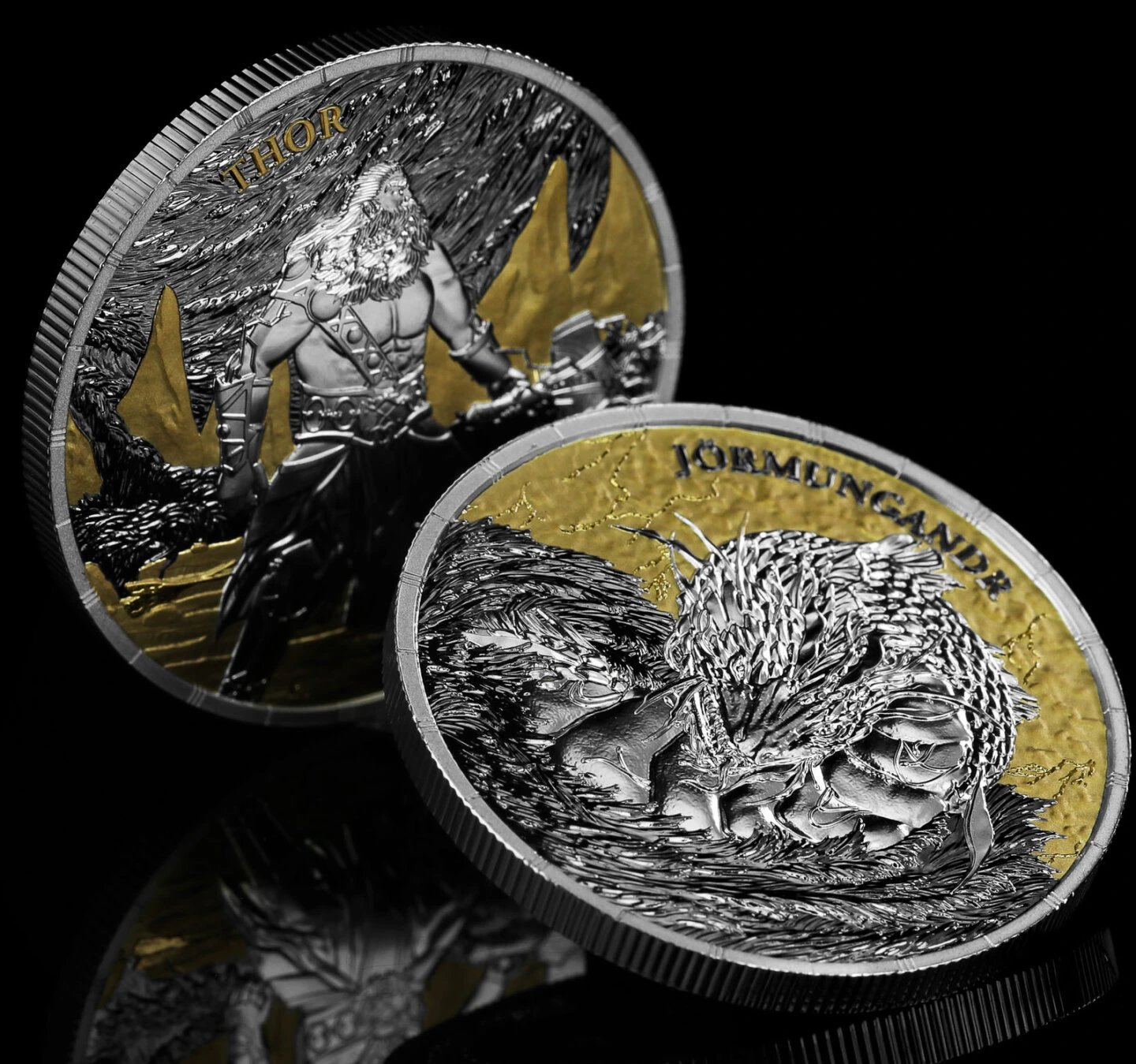
The reverse shows Jormungandr, whose body alludes to his mythological role as the serpent encircling Midgard, and the double-headed eagle, the emblem of the Germania Mint. This side forms a pair with the reverse of the Thor coin, which has the symbol of the hammer. The design is by Kinga Sabatowicz.