
Thor
PDFGeneral information

Description
Thor is the best-loved god of the Norse, and not by chance. He is neither ruler nor sage but a defender: the one who stands between people and giants, between home and darkness. In the Prose Edda he is described as a red-bearded strongman riding a chariot drawn by two goats, Tanngnjostr and Tanngrisnir. In the evening he may eat the goats and in the morning revive them by touching their hides with the hammer. He has three treasures: the hammer Mjolnir, the belt of strength Megingjord and the iron gloves Jarngreipr, without which the hammer cannot be held. Thunder is the echo of his chariot, lightning is the blow of the hammer.
The best-known of Thor's exploits is the recovery of the hammer. In the Thrymskvida the giant Thrym stole Mjolnir and agreed to return it only if Freyja was given to him as a bride. The gods devised a trick: they dressed Thor as the bride, in a veil and the necklace Brisingamen. At the feast the bride ate an ox and eight salmon and drank three casks of mead. The giant was amazed, but Loki, sitting beside her in the guise of a maid, found an explanation. When the hammer was laid in the bride's lap, Thor seized it and struck down all the guests. This story is a model of Norse humour, in which strength and laughter go hand in hand.
But Thor also has a fatal destiny. In the Voluspa he goes out against Jormungandr: a god who fought giants all his life meets the most terrible of enemies. He kills the serpent but takes only nine steps before he falls, poisoned. The people of the North saw in this a scene of the highest heroism: even the strongest of the Aesir cannot escape the price of victory.
After Ragnarok the memory of Thor does not vanish. His sons Modi and Magni, whose names mean Wrath and Might, survive the battle and find Mjolnir among the ruins. The father's hammer passes to the new generation, and the order of the world goes on living. For people of the Viking Age this was an important idea: even when heroes perish, their work passes to those who come after.
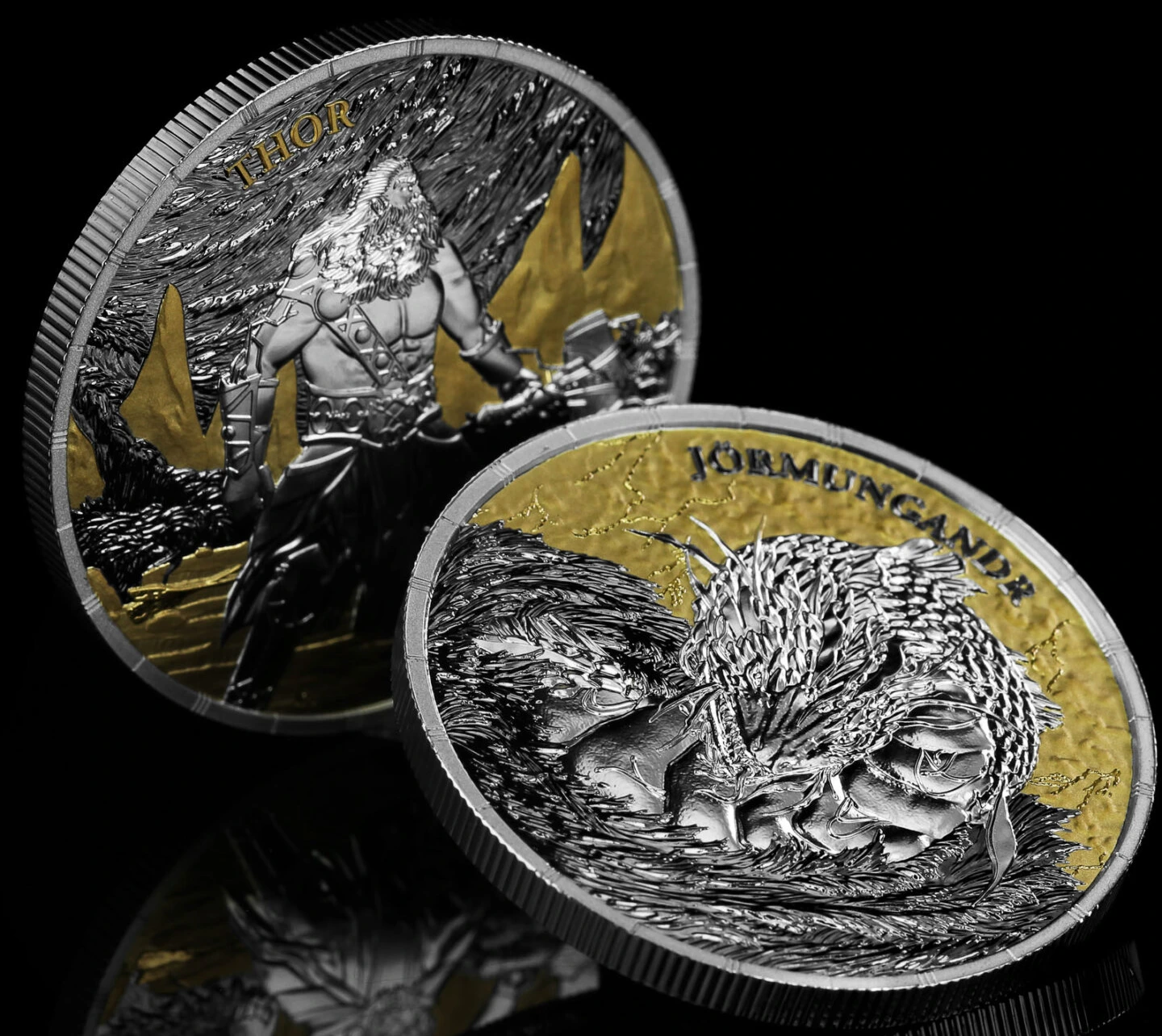
This version of the coin presents the hero as part of a pair: beside Thor stands his opponent Jormungandr, and the composition reads as a single scene made of two coins. Thor is given the half in which his whole image is gathered: determination, might and inevitability.
Once Thor met the cleverest test of his life. In the Prose Edda he went to Utgard to the giant Utgard-Loki, where three trials were set for him. Thor could not drain a horn from which, as it turned out, the sea was flowing, could not lift a cat and lost a wrestling match to an old woman. Only later did it become clear that the cat was Jormungandr in disguise and that Thor had lifted its paw so high that the serpent was almost torn from the ground. The old woman turned out to be Old Age, whom no one can defeat. This story shows that even Thor's strength has limits and that the world is far greater than it seems.
Obverse
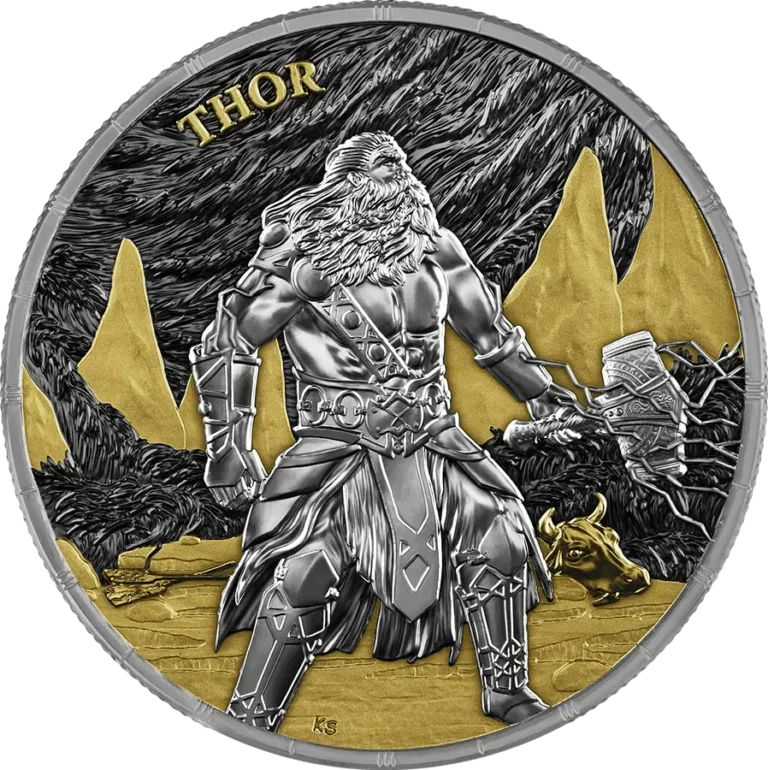
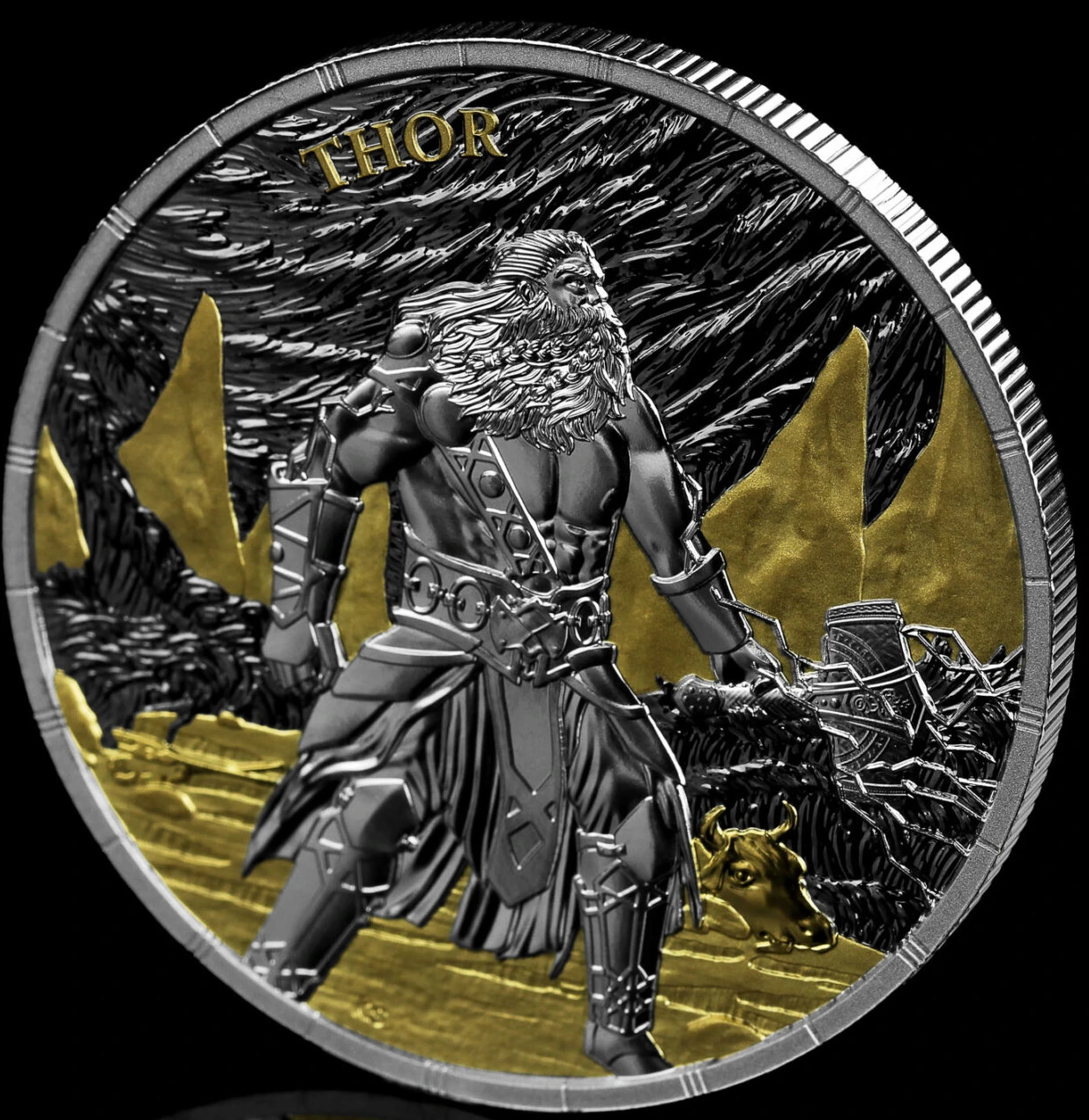
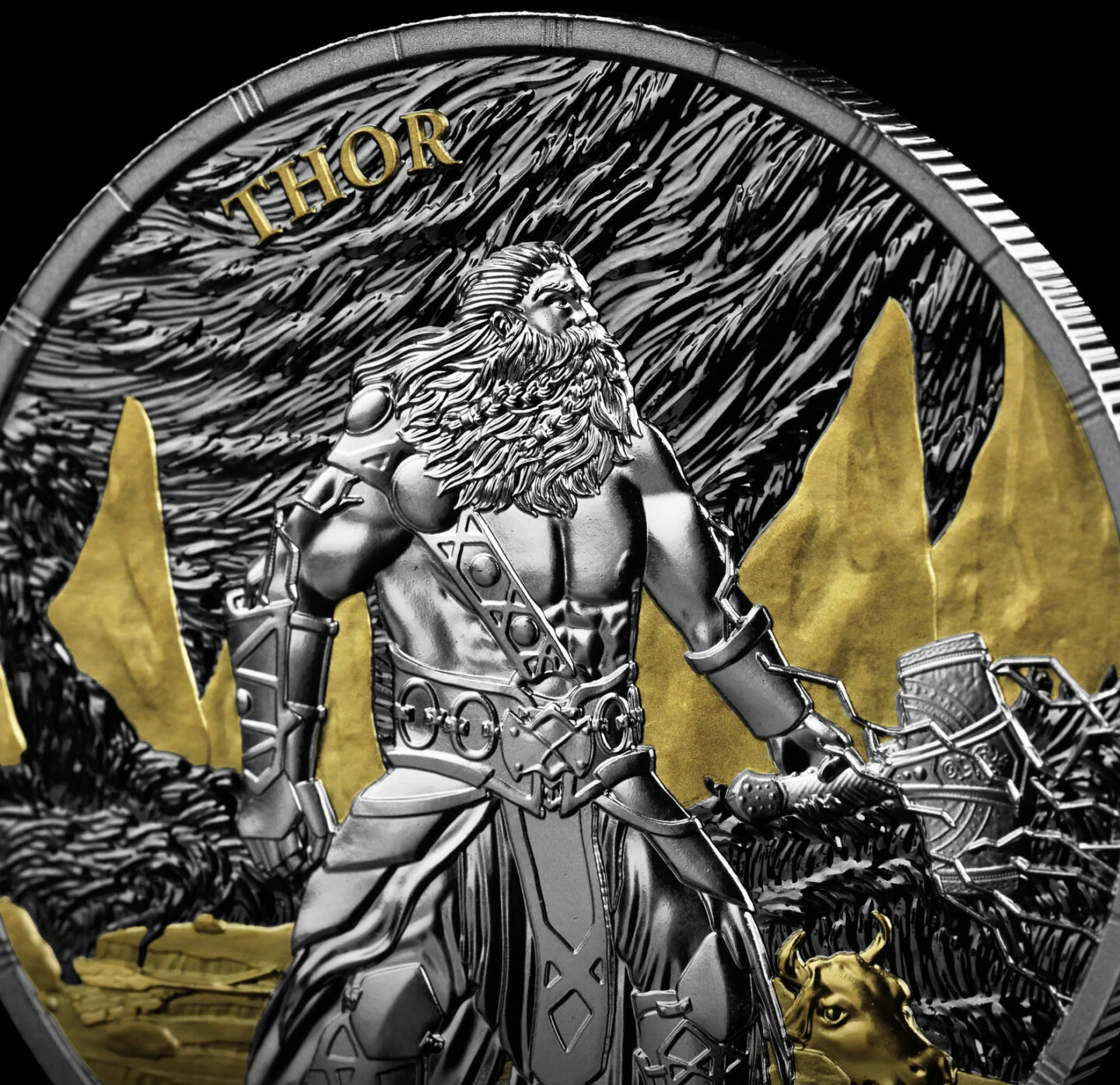
The obverse shows Thor at the moment before battle: the figure of the god on a dark field with golden accents on clothing and weapon, a hammer in hand. The face is modelled in silver relief, and in it one can read the determination and weariness of a man who knows his fate. The inscription with the hero's name and runes completes the composition.
Reverse
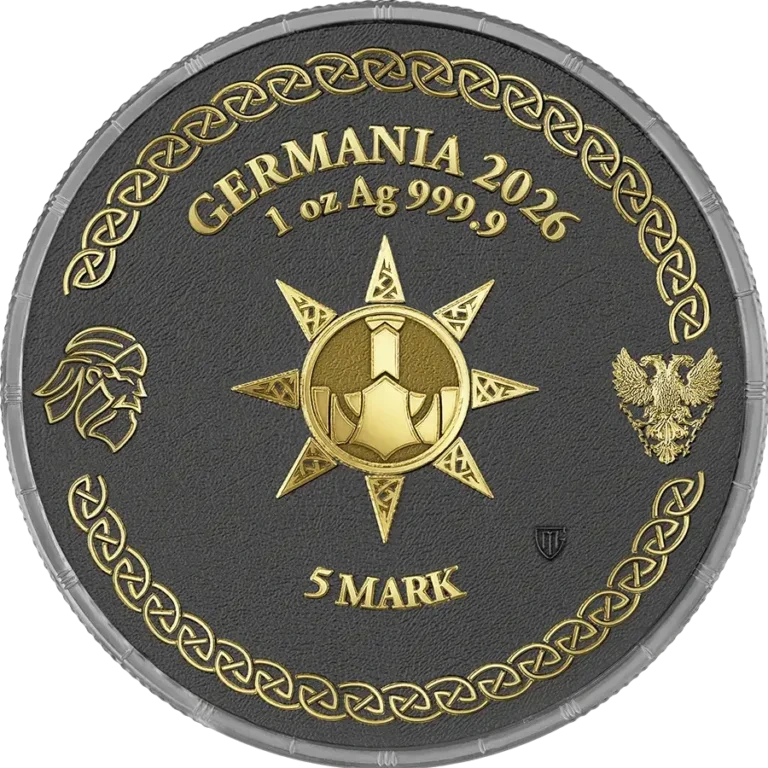
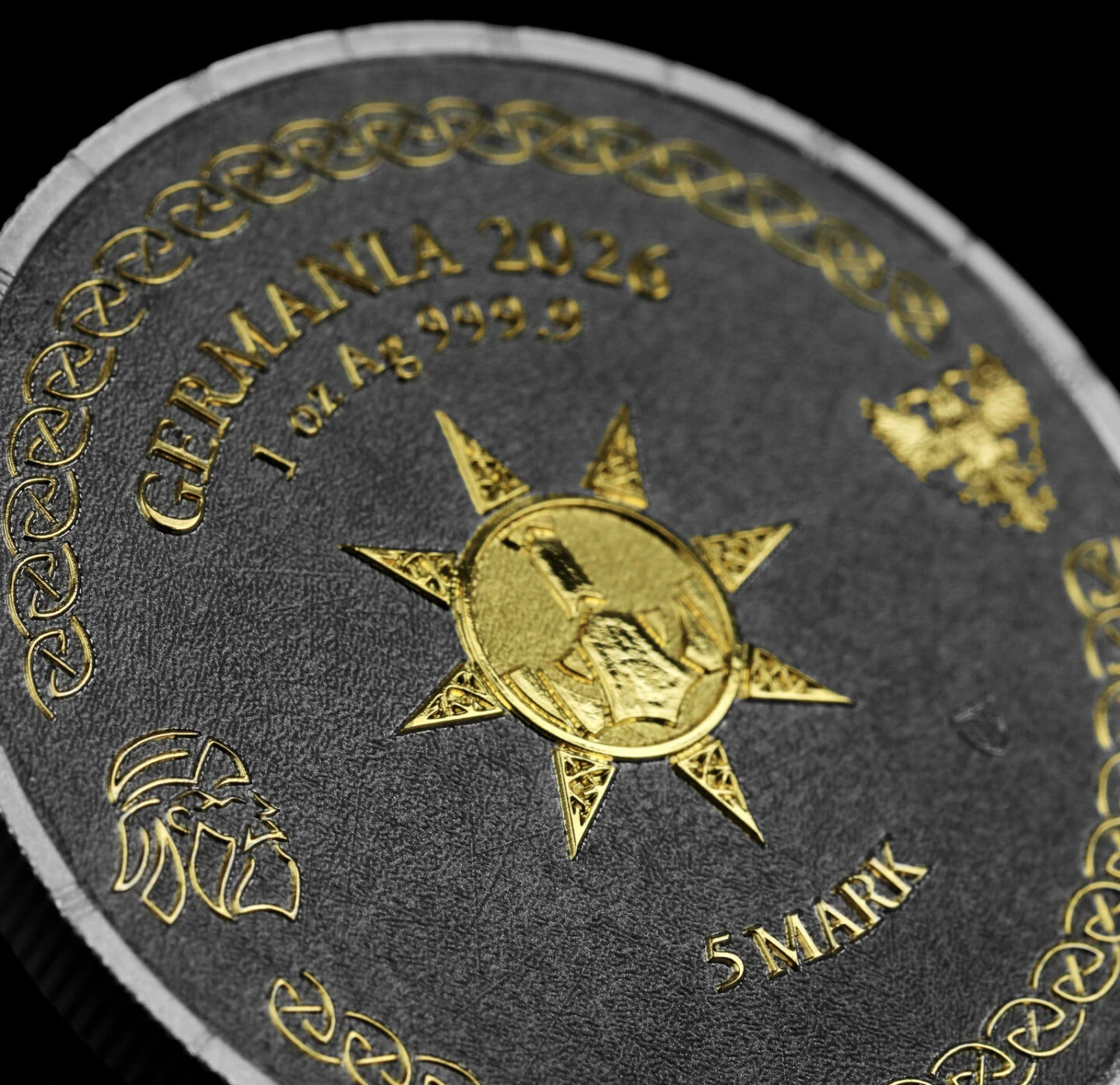
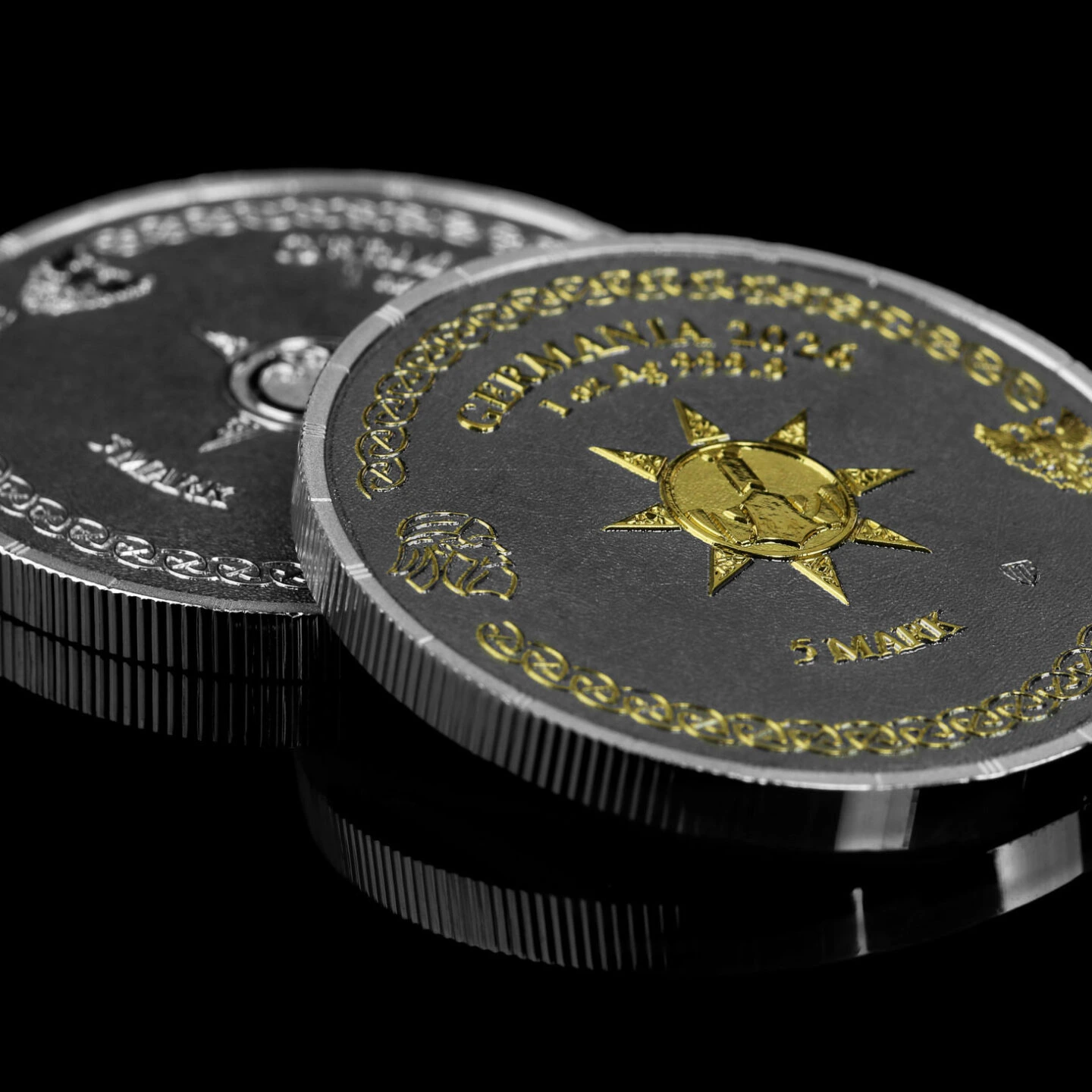
The reverse shows the symbol of the hammer Mjolnir and the double-headed eagle of the Germania Mint. This side forms a pair with the reverse of Jormungandr, which shows the serpent's coil. The design is by Kinga Sabatowicz.