
Swan (Aqqu) blister
PDFGeneral information

Description
The swan Aqqy is considered one of the most ancient totems in the beliefs of the proto-Turks, personifying the female deity, the mother of the Earth and the progenitor of people — Umai. In the press release of the National Bank it is called one of the most powerful and ancient totems. The AQQÝ coins were released on 29 November 2021: in silver with face values of 5,000 and 500 tenge and in cupronickel with face values of 200 and 100 tenge. The silver coins are made using gilding technology and a diamond insert and carry identical obverse and reverse designs; the 200 tenge cupronickel coin is struck in proof-like quality in the same manner, and the 100 tenge coin in brilliant uncirculated quality.
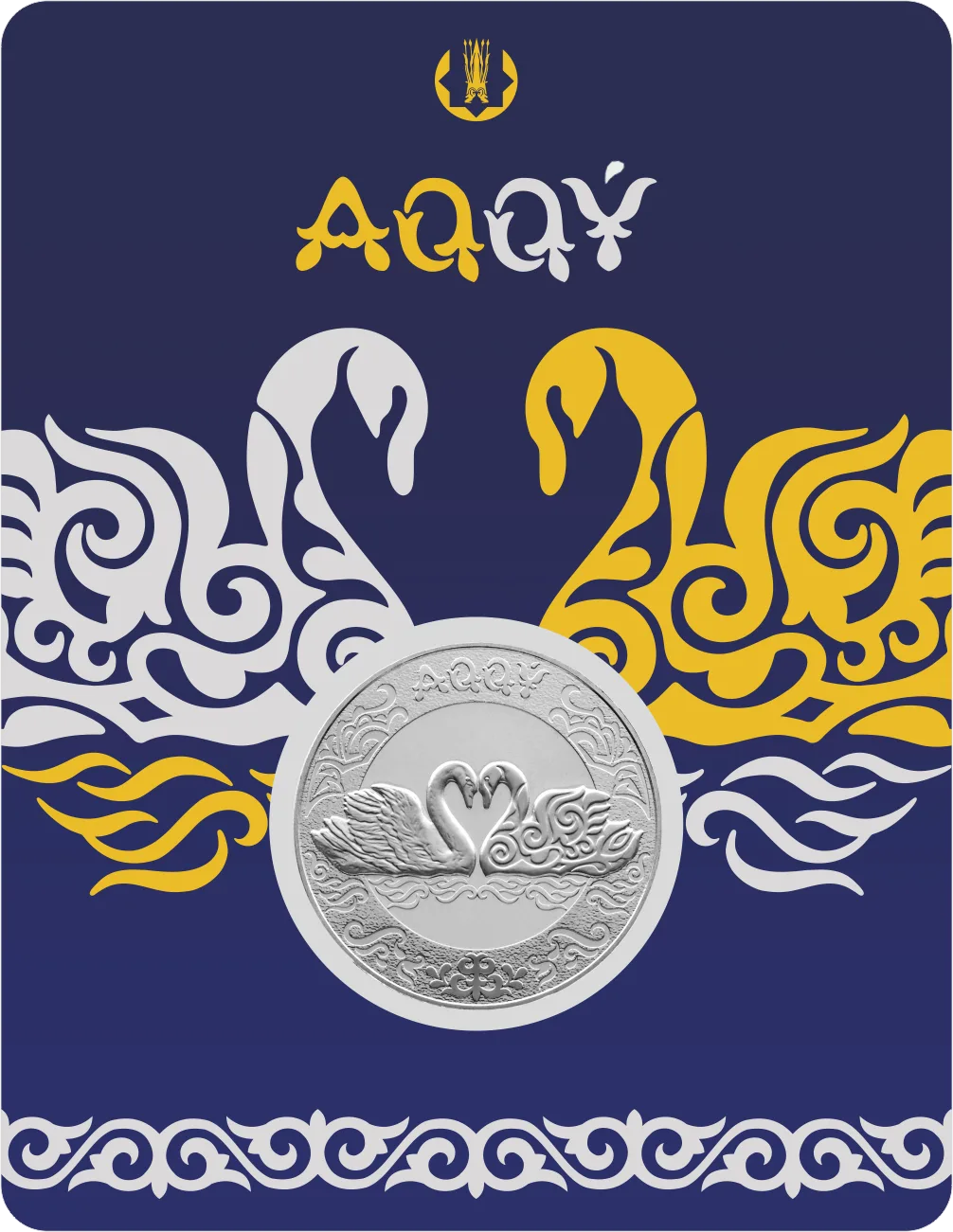
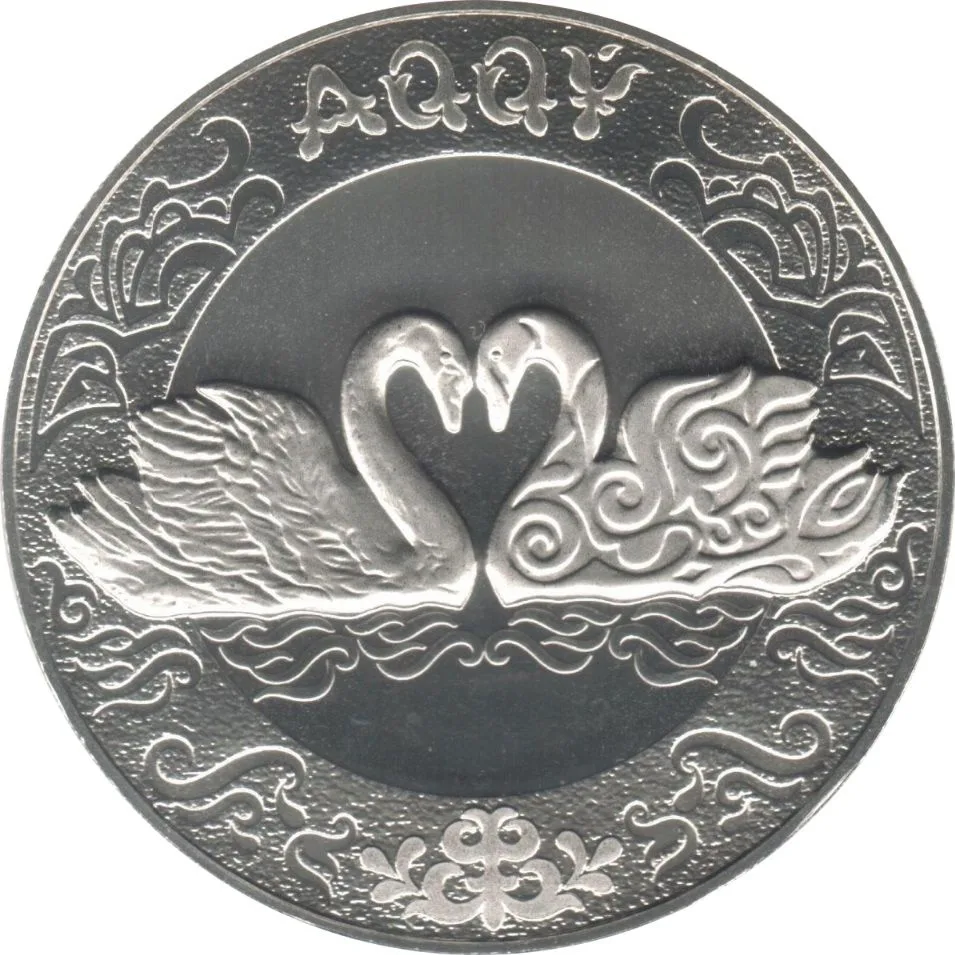
The pictorial side shows swans: long necks, the smooth line of the back and the rhythm of movement characteristic of a pair — the birds are given so that they read both together and separately. One part of the image is rendered naturalistically, the other is turned into a stencil and picked out with gilding, and a diamond insert is set in the eye of one of the birds. In the upper part of the coin stands the inscription "AQQÝ". A wide border with decorative elements around the perimeter closes the composition, and the birds find themselves inside an ornamental circle, as if inside a setting: the image is built not as a scene but as a sign inscribed in the round field of the coin.
Totems in primitive beliefs are animals that served as the object of the cult of a clan or tribe and were regarded as its forebears or guardians. According to historians, some Turkic leaders traced their descent to legendary ancestors born of a totem animal — in this way a clan legend turned a beast or a bird into the first ancestor of a whole people. For a nomad such kinship was not an abstract metaphor but a way of explaining where the clan came from and who answers for it before the sky: the totem is at once a relative and a protector. That is why the image of a totem animal on a coin is not decoration but a sign of protection, which the steppe tradition read without any explanation.
What all the coins of the series share is the union of a naturalistic and a stencilled view of the animal with an allegorical treatment in the Saka animal style: one part is shown as the animal, the other as a gilded mask with an element of mysticism. The illustrator is S. S. Maltsev. In the Saka tradition the figure of a beast is reduced to a sign: what matters is not fur or anatomy but silhouette, rhythm and repetition, so the naturalistic and the sign-like parts on one side read as two views of a single being — the living and the sacred.
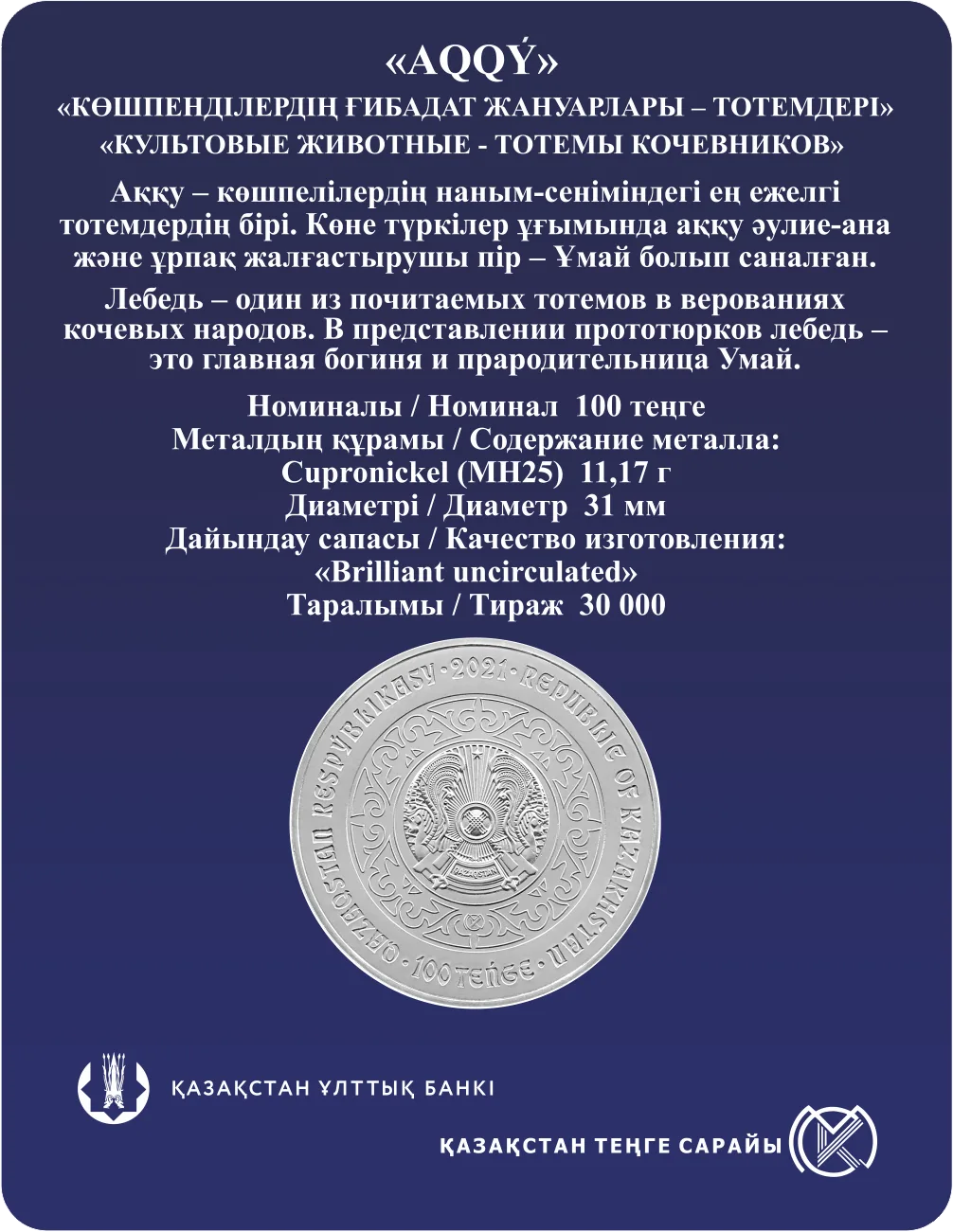
The четвёртая coin of the series appeared on 29 November 2021; this card covers the cupronickel, brilliant uncirculated quality.
The coins are struck at the Kazakhstan Mint and issued in several versions: silver coins in a souvenir pack with a numbered certificate of quality of the National Bank of the Republic of Kazakhstan in the state, Russian and English languages, cupronickel coins of proof-like quality in a souvenir pack, and cupronickel coins of brilliant uncirculated quality in special printed packaging. All the coins must be accepted at their face value throughout the Republic of Kazakhstan for all types of payments, as well as for crediting to bank accounts and for transfer, change and exchange in all banks of the country.
Obverse
A composition of a naturalistic and a stencilled image of swans; the inscription "AQQÝ" is placed at the top. A wide border with decorative elements runs around the perimeter.
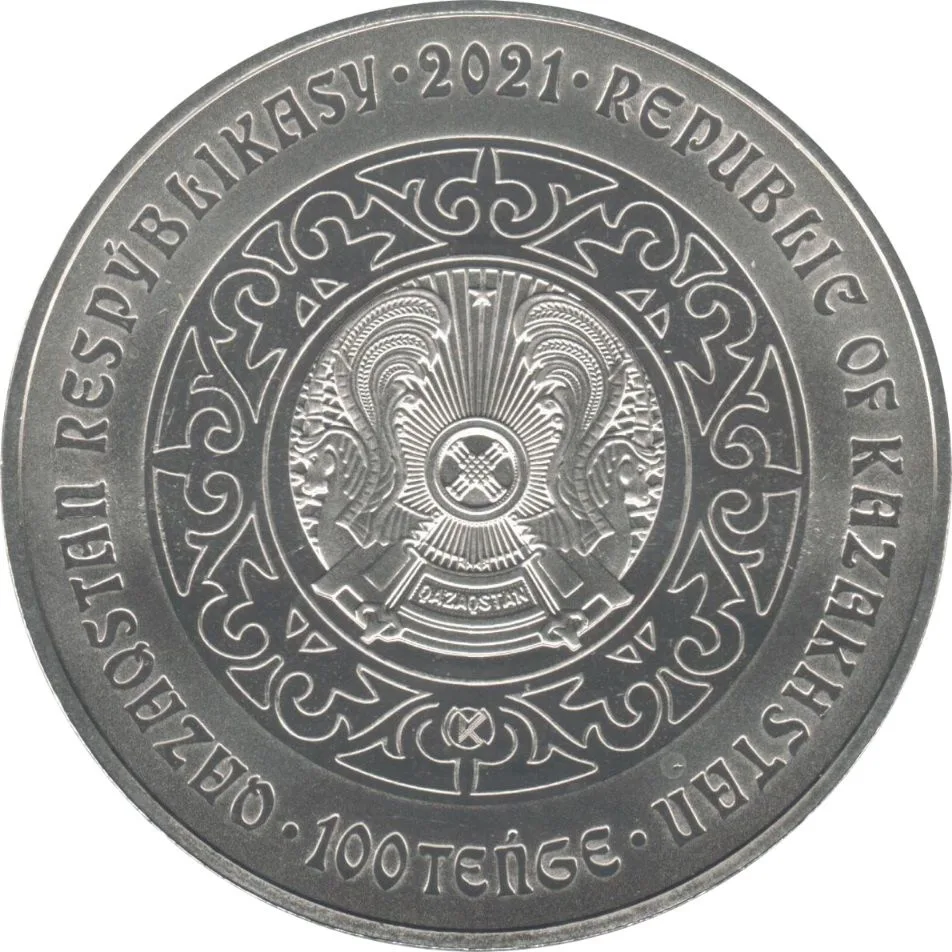
Reverse
Within a frame of national ornament — the year of minting, the denomination and the trademark of the Kazakhstan Mint; the silver coins also carry an inscription naming the metal, its purity and weight. On the cupronickel coins the State Emblem of the Republic of Kazakhstan is placed in the centre within a frame of national ornament, together with the mint trademark and the inscription naming the metal; the year of minting is above and the denomination below. Around the rim run the inscriptions "QAZAQSTAN RESPÝBLIKASY" and "REPUBLIC OF KAZAKHSTAN".