
Chariot. Arpauzen Tract
PDFGeneral information

Description
The 2006 coin is dedicated to the petroglyph Chariot from the Arpauzen tract in the Karatau range of the Turkistan region in southern Kazakhstan. It is an archaeological monument of the Bronze Age, the second half of the second millennium BC, the time when light war and ritual chariots with spoked wheels spread across the steppes of Eurasia. Arpauzen is the largest site of petroglyphs with images of carts in the country, and it was here that ancient craftsmen left a kind of encyclopedia of Bronze Age transport.
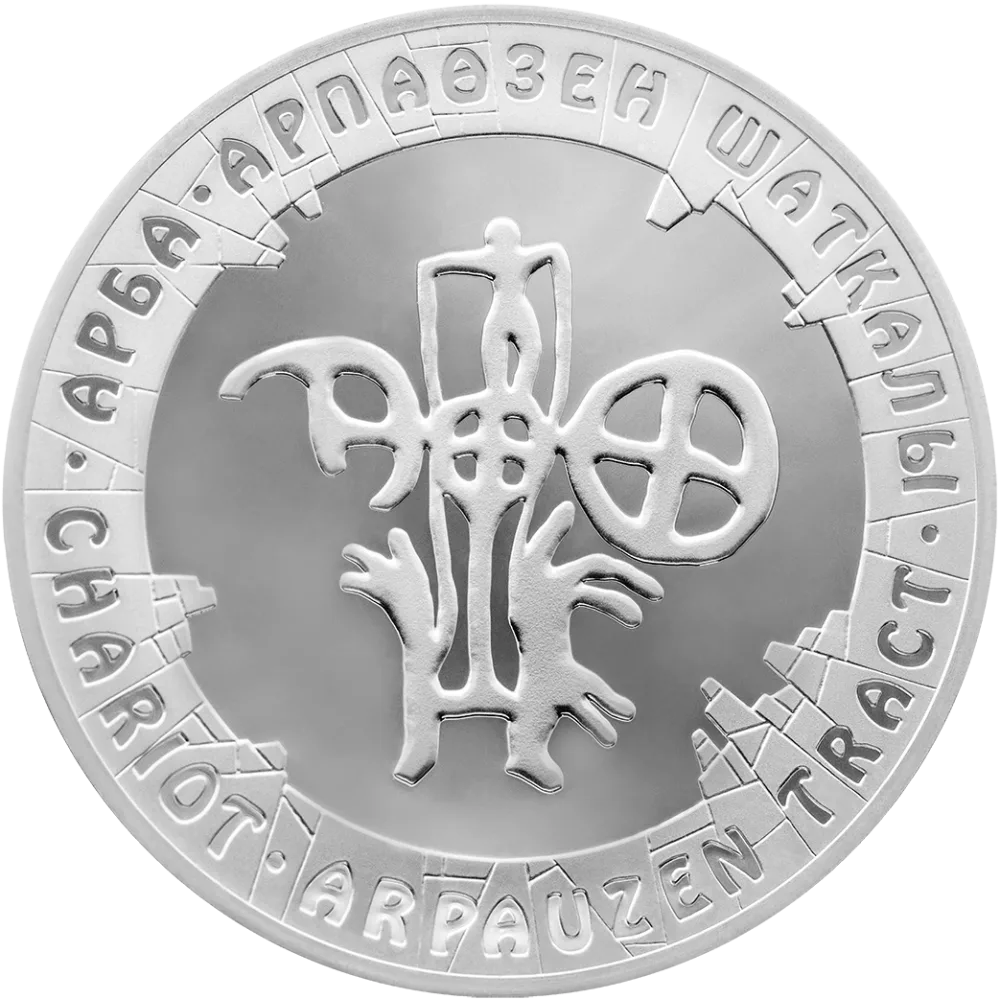
The slabs of Arpauzen carry multi-figure scenes with camels and people, and in the centre of one composition stands a large figure of a Bactrian camel. The coin design uses a detail of the Chariot petroglyph: an anthropomorphic figure on a cart and a spoked wheel divided by crossbars into sectors. The spoked wheel was the key technological achievement of the time: it made a cart light and fast, changed warfare and long-distance travel, and so influenced the fate of whole peoples.
Images of carts and chariots are one of the key motifs of the Bronze Age. They testify to the development of transport, metallurgy and warfare among the ancient herders of Kazakhstan and allow the steppe culture to be linked with well-known archaeological sites of neighbouring regions such as Sintashta and Arkaim in the southern Urals. Chariots were not only weapons: they served as symbols of status and took part in funeral rites, which is why scenes with them on rocks often have a ritual shade.
The drawing is pecked on a dark stone slab, and the outlines of the wheel, axle and the driver's figure can be read even from a distance. For the collector the coin is interesting because it speaks of the technical genius of ancient people: whoever devised the spoked wheel largely set the course of later history. The 2006 coin made one of the best-known motifs of the Bronze Age a part of numismatics.
Today Arpauzen remains a place where one can see with one's own eyes how ancient people perceived movement and speed. The figure on the cart, broken into conventional elements, the wheel, the axle and the driver, has been turned by the artist into a sign, and that sign is easily read by anyone who has seen a chariot in a museum or a drawing. It is this readability that makes the petroglyph a good basis for a coin design: the subject is compact, expressive and needs no additional explanation.
Obverse
The artistic side reproduces the petroglyph on a mirror field: an anthropomorphic figure on a cart and a spoked wheel divided by crossbars into sectors. A raised broad rim with cracks and facets of rock carries recessed inscriptions in Kazakh and English naming the Chariot and the Arpauzen tract.
Reverse
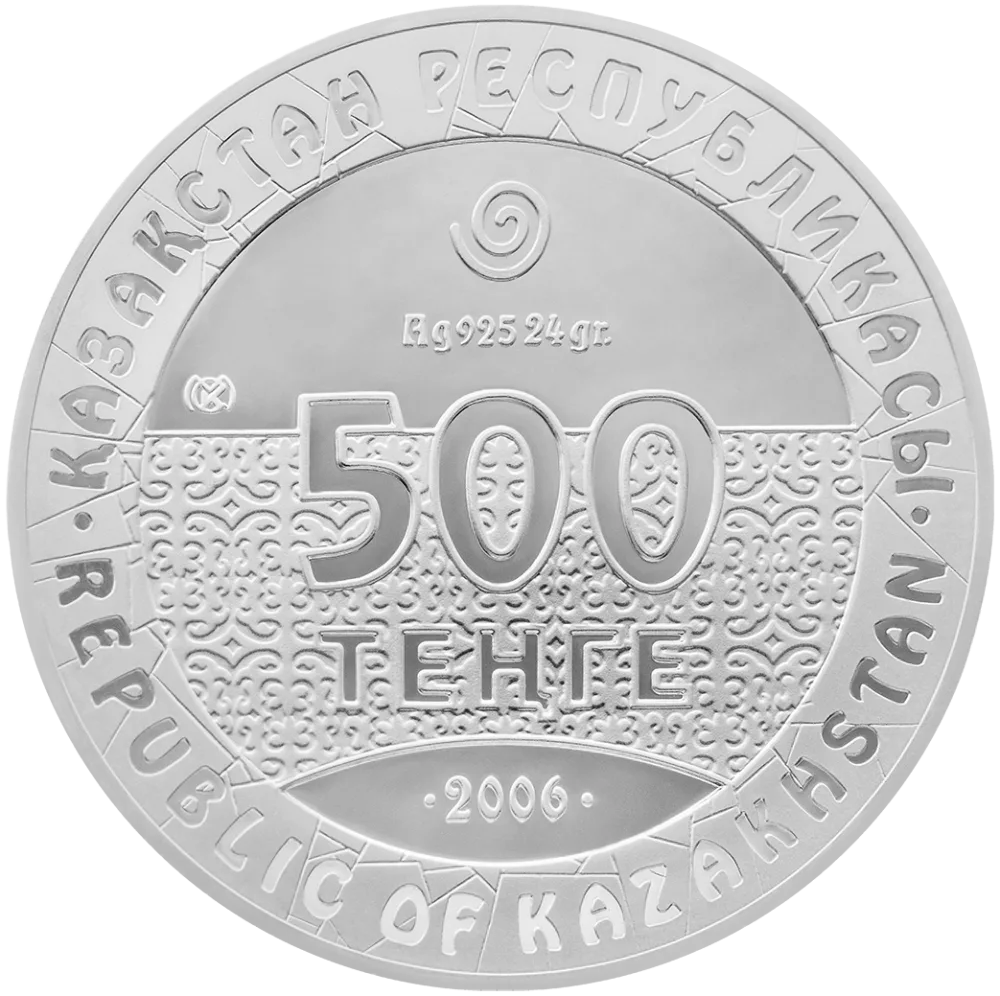
The official side shows elements of national ornament and a heraldic spiral above. A broad rim carries the inscription Republic of Kazakhstan in Kazakh and English and the year 2006, together with the mint mark and the marks of the metal. The composition is laconic and relies on the graphics of the petroglyph itself, keeping its flat manner.