
Football Clubs of Kazakhstan (Zhenis)
PDFGeneral information

Description
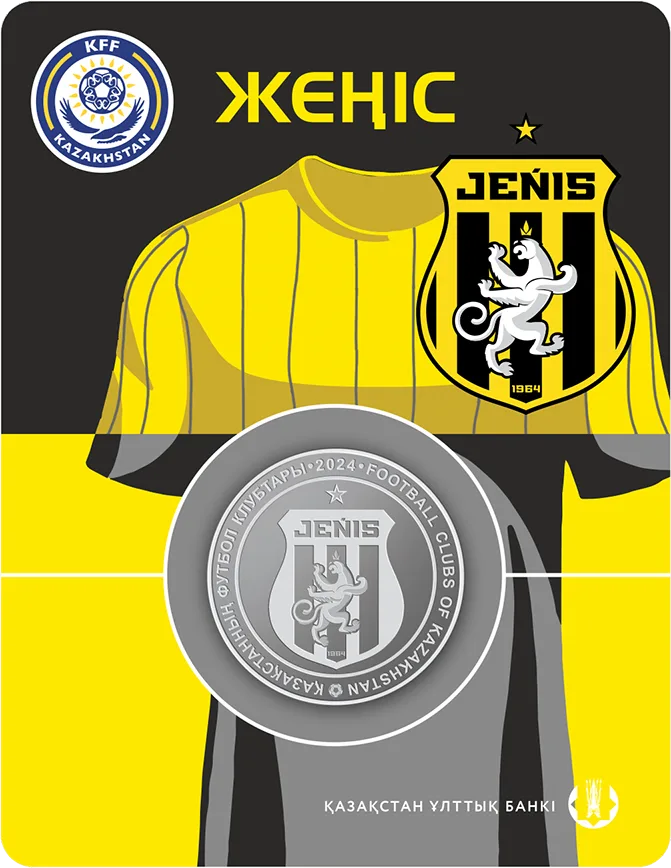
Kazakh football has clubs whose roots go back to the Soviet era and which passed through a dozen names. Zhenis from Astana is one of the most telling examples: the team began as Dinamo of Tselinograd and received its present name twice, in 1999 and again in 2021. In Kazakh the word zhenis means victory. The National Bank collectible coin records it as a club badge of the 2024 season.
The official founding year is 1964. In February 1964 the USSR sports committee, at the request of the Tselinograd regional sports committee, admitted a team from Tselinograd (the name then borne by today's Astana) to the national championship among Class B teams. The new club was under the patronage of the Interior Ministry of the Kazakh SSR and was called Dinamo. Even earlier, Dinamo players from Akmolinsk had played in Kazakh SSR championships, finishing second in the final tournament in Alma-Ata in 1955. In 1968 Dinamo won the first Kazakh SSR Cup ever, beating ADK of Alma-Ata 2-1 in the final.
In 1975 the club passed under the control of the Tselinenergo association and became Tselinnik, a name it kept for almost twenty years. In 1984 Tselinnik won its zone of the Soviet Second League, ahead of Shakhter of Karaganda, and in 1986 it took the Kazakh SSR Cup a second time, beating Meliorator on penalties in the final. Names then followed one another: Tsesna, Tselinnik again, Astana (1997), Zhenis (1999), Astana again (2006), Namys (2009) and Astana-1964 (2011).
The brightest chapter came at the turn of the millennium. On 29 October 2000 in Almaty Zhenis beat Access-Golden Grain 2-0 in a deciding match and became champion of Kazakhstan for the first time; the title was repeated in 2001 and 2006. In 2001 the team won the Kazakhstan Cup, beating Irtysh on penalties, and two more cups followed in 2002 and 2005. In 2002 Zhenis became the first Kazakh team to debut in the Champions League. Forward Arsen Tlekhugov scored 30 goals in the 2001 season and was named footballer of the year.
A hard period followed. Because of financial problems the club dropped into the First League for the first time in 2009, and in January 2015, as English Wikipedia reports, it fell to the Astana city championship. The revival under the name Zhenis came in 2021: that year the club finished third in the Second League, in 2023 third in the First League, and in 2024 it played in the Premier League, finishing tenth and reaching the League Cup final.
The home ground is Astana Arena, which holds 30,200 spectators and is one of six stadiums in the world with a movable roof. Earlier the club played at the Kazhymukan Munaitpasov Stadium. The club colours are yellow and blue, which were kept by Namys, conceived as the successor of Astana. The Legion supporters' movement has existed since 2007 and was one of the first independent ones in the country. This coin recalls both the many changes of name and the first champion years of the Kazakh league.
Obverse
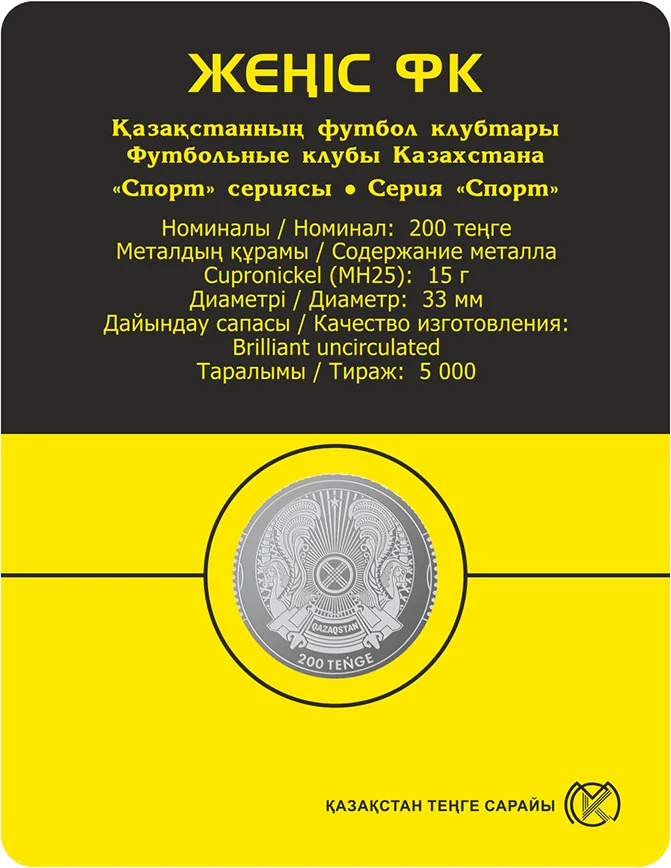
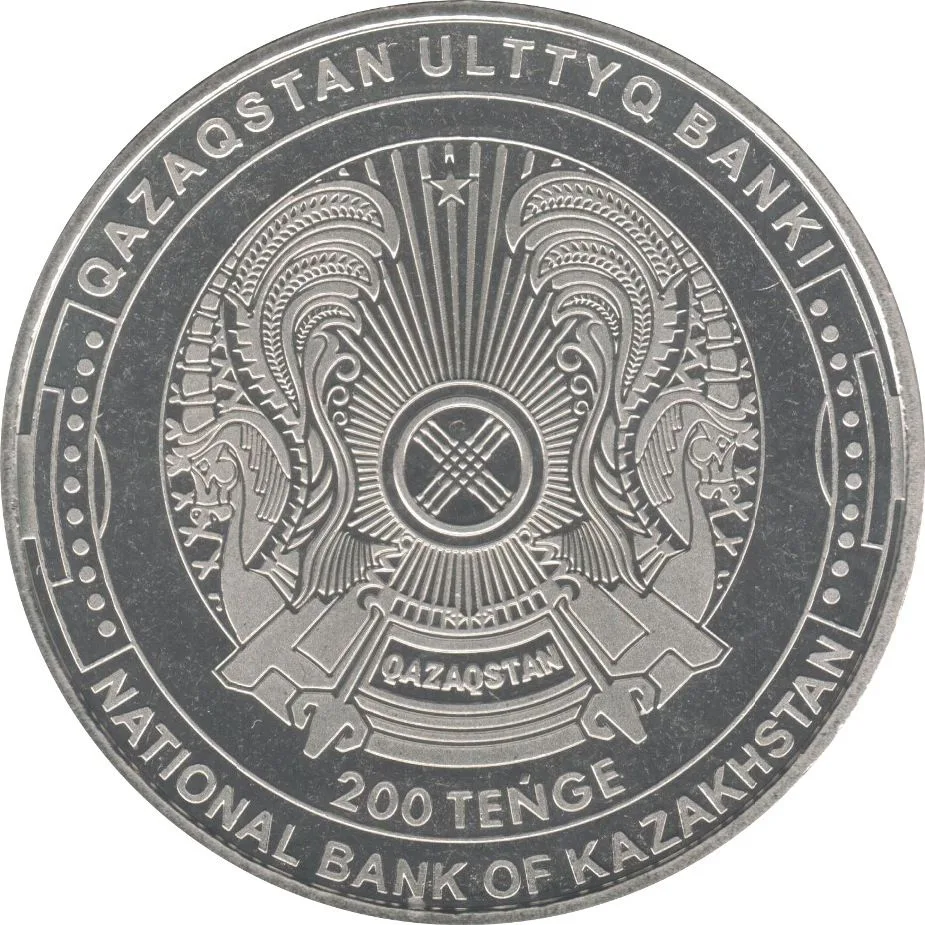
The official side carries the coat of arms of the Republic of Kazakhstan in the centre. The inscriptions QAZAQSTAN ULTTYQ BANKI (above) and NATIONAL BANK OF KAZAKHSTAN (below) run around the rim, separated by dots.
Reverse
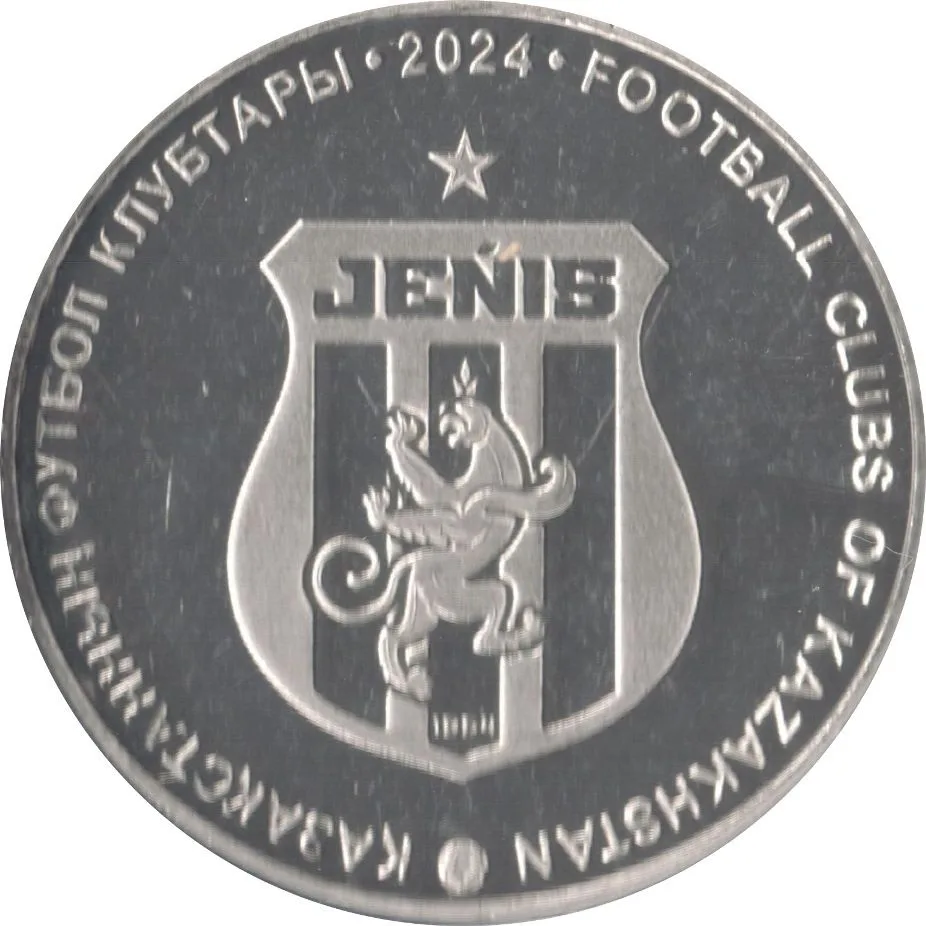
The centre of the pictorial side shows the Zhenis emblem: a shaped shield with pointed upper corners, divided into three vertical bands. In the lower part of the shield is a stylised lion on its hind legs, facing left; at the top a horizontal plate bears the name JENIS, a small five-pointed star sits above the shield, and the year 1964 appears at its base. The year 2024 is above the emblem, and the legends FOOTBALL CLUBS OF KAZAKHSTAN, in Kazakh and in English, run around the rim. The coin is monochrome, and the emblem is rendered in a silvery tone.