
Noble Deer. Terekty Valley
PDFGeneral information


Description
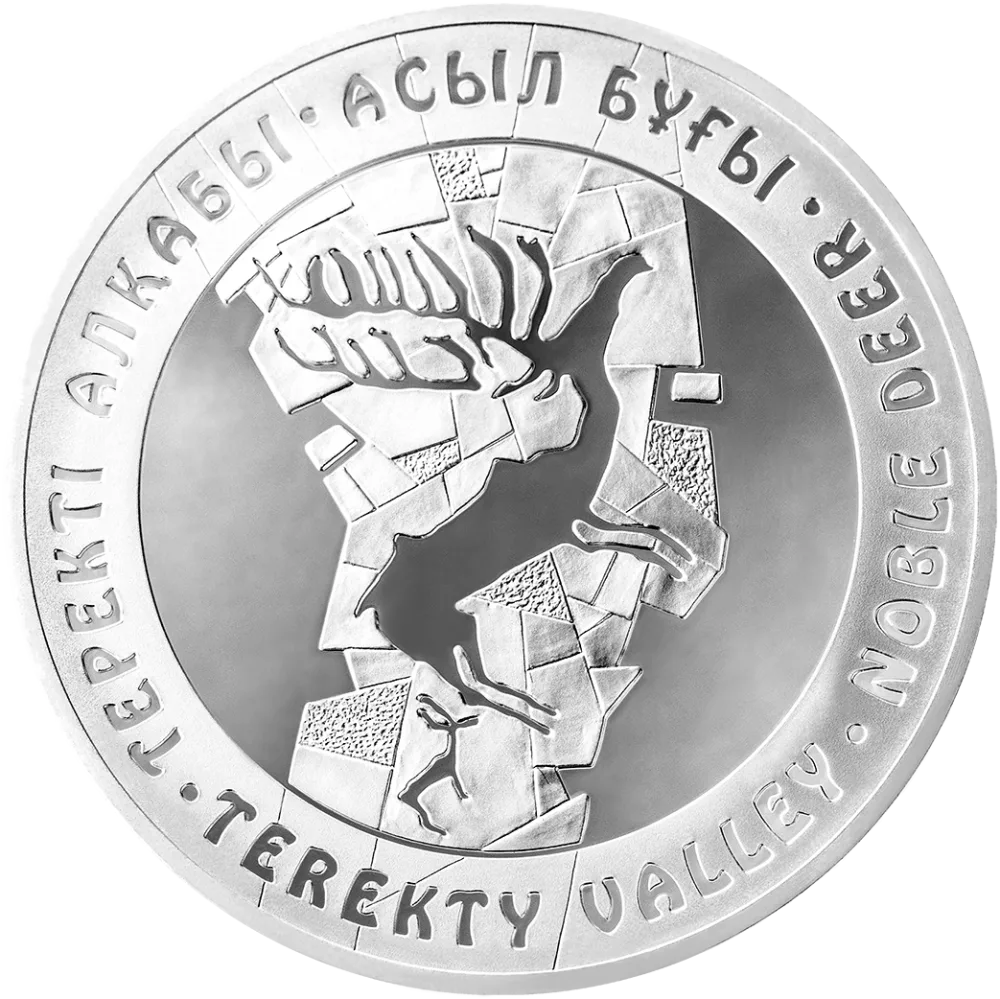
The 2007 coin of the series Petroglyphs of Kazakhstan is dedicated to a petroglyph of a noble deer with branching antlers. The drawing was found in the valley of the Terekty river in the south-western Balkhash region. The deer is one of the most widespread and best-loved images of the rock art of steppe Eurasia: figures of deer with huge, almost fantastic antlers are known from petroglyphs and from the famous deer stones from Mongolia to the Black Sea region.
In the ideas of ancient herders a deer with large branching antlers is tied to the solar cult. The antlers are interpreted as a symbol of the sun, renewal and vital force: every year the animal sheds its antlers and grows new ones, which seemed to people an image of the eternal rebirth of nature. Sometimes the antlers were likened to rays or to the branches of the world tree, and the animal itself was thought a guide between the earthly and heavenly worlds. In a number of traditions the deer was linked with the soul of an ancestor and the protection of the clan.
The figure is pecked on a rock surface among other images of the valley, and the site is one of the petroglyph locations of the south-western Balkhash region. These drawings are less famous than those of Tamgaly, but they show that rock creativity covered almost the whole territory of Kazakhstan, from the Altai mountains to Mangystau, and that everywhere ancient craftsmen used a similar set of sacred images.
The 2007 coin gathers the whole theme together: from the sky deity of Tamgaly through warriors, chariots and riders to an animal that unites the mythology of different eras. The coin closes the story of Kazakh rock art with an image of nature as ancient as it is eternal.
It is interesting to compare the image of the deer with the other subjects of the theme. If the solar deity of Tamgaly embodies the sky, Umai the family and birth, the warrior and rider human history, and the chariot technology, then the deer represents nature itself, living and renewing. Its antlers reminded the ancients of the branches of trees and the rays of the sun, and so the earthly and heavenly worlds met in a single image. Such symbolism was understood by nomads of different eras, from the Scythian-Saka to the Turkic, and explains why the image of the deer stayed alive so long in steppe art, passed from one generation of craftsmen to the next.
Obverse
The artistic side reproduces the petroglyph against a stylised stone slab: a noble deer with large branching antlers. A raised broad rim with cracks and facets of rock carries recessed inscriptions in Kazakh and English naming the Terekty Valley and the Noble Deer.
Reverse
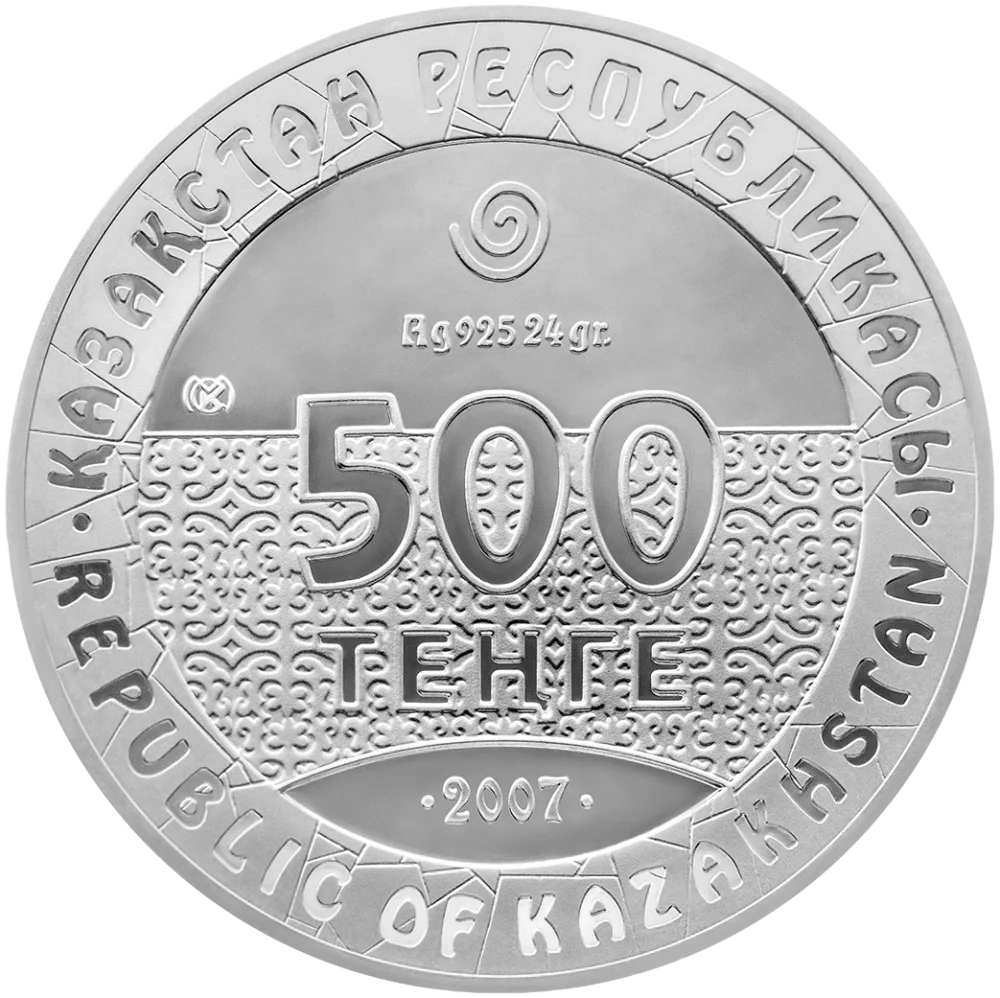
The official side shows elements of national ornament and a heraldic spiral above. A broad rim carries the inscription Republic of Kazakhstan in Kazakh and English and the year 2007, together with the mint mark and the marks of the metal. The animal's silhouette is flat, as on the rock, and the antlers are brought forward as the main semantic detail.