
Turk Warrior. Oi-Jailau
PDFGeneral information

Description
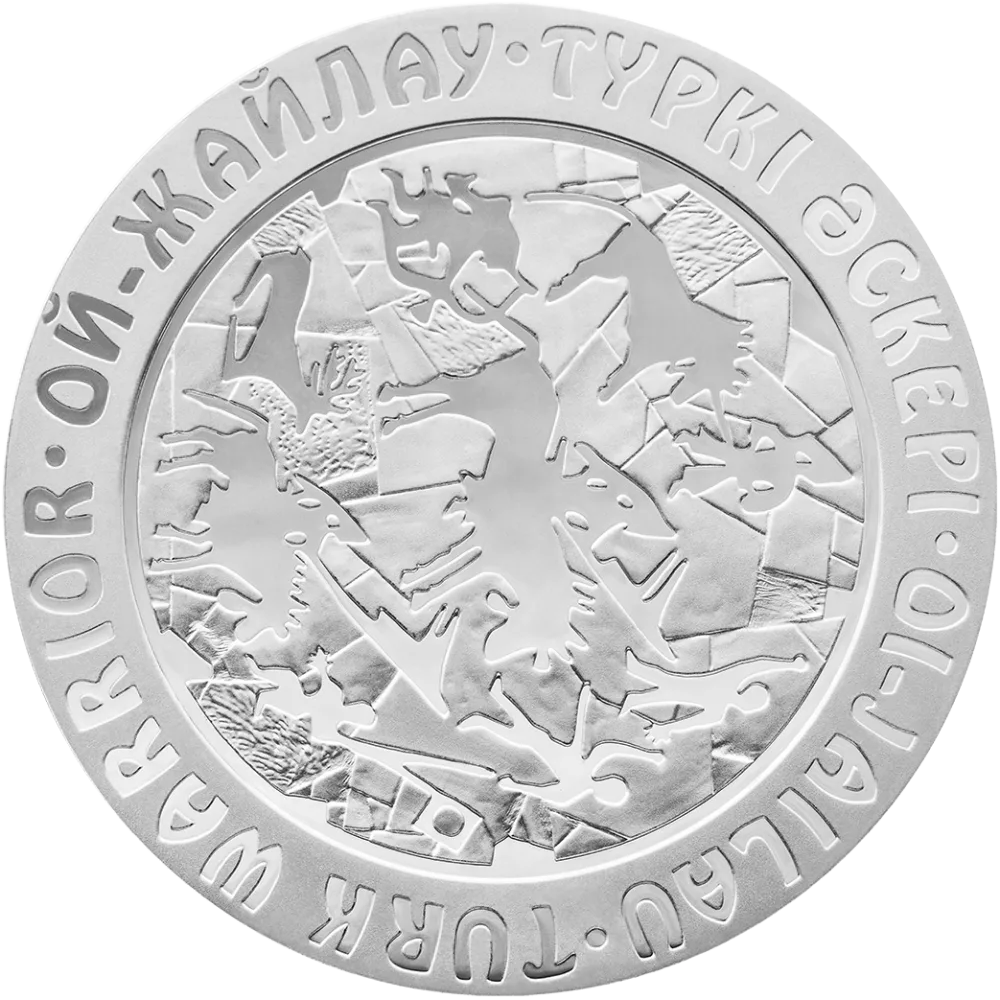
The 2003 coin carries us from the Bronze Age to the early Middle Ages, to a Turkic warrior. The petroglyph is in the Oi-Jailau tract in the Kendyktas mountains of southern Kazakhstan and belongs to the Old Turkic tradition, to the time of the Turks of the sixth to eighth centuries AD. In those centuries the Turkic khaganates stretched from Mongolia to the Black Sea region, and for nomadic society the armed warrior was the chief hero and defender.
The warrior's figure occupies the centre of the composition. The wholeness of the image reflects the ideal of the steppe knight: life for earthly joys, death in battle. Beside the main figure the rock face shows smaller images and signs; together they form a scene that can be read as a tale of martial valour. The site is among the few Kazakh petroglyph locations that belong specifically to the early Middle Ages.
The value of the subject is that Kazakh rock art here moves from mythological and hunting images to historical characters. The weapons, equipment and posture of the warrior give scholars material for studying the military art of the ancient Turks, and the drawing itself, made in the traditional technique of pecking into stone, shows an old art form serving new content.
This coin of the series Petroglyphs of Kazakhstan widens the chronological reach of the theme: from the deities of Tamgaly in the Bronze Age to a historical age also known from written sources.
The Turkic warrior on the rock at Oi-Jailau is not a portrait of a particular man but a generalised image, yet the details make it convincing. In similar drawings attention is paid to weapons, the bow, sword and spear, and to horse harness, and the composition recalls a campaign or hunting scene. For nomads martial glory was the measure of a clan's dignity, and the heroes of the khaganates were celebrated in runic inscriptions on stone, such as the famous monuments of the Orkhon. The Kazakh petroglyphs of Kendyktas belong to the same cultural circle, and so the coin links modern numismatics with the age when Turkic statehood took shape on the steppe. Such a choice of subject shows that the country's petroglyphs are not only antiquity but also an important source for the history of the medieval nomadic world.
Thus the coin tells of the heroic side of nomadic history.
Obverse
The artistic side reproduces the petroglyph against a stylised stone slab: the figure of a Turkic warrior at the centre, with smaller images and signs beside him. A raised broad rim styled as fragments of stone slabs carries recessed inscriptions in Kazakh and English naming Oi-Jailau and the Turk Warrior.
Reverse
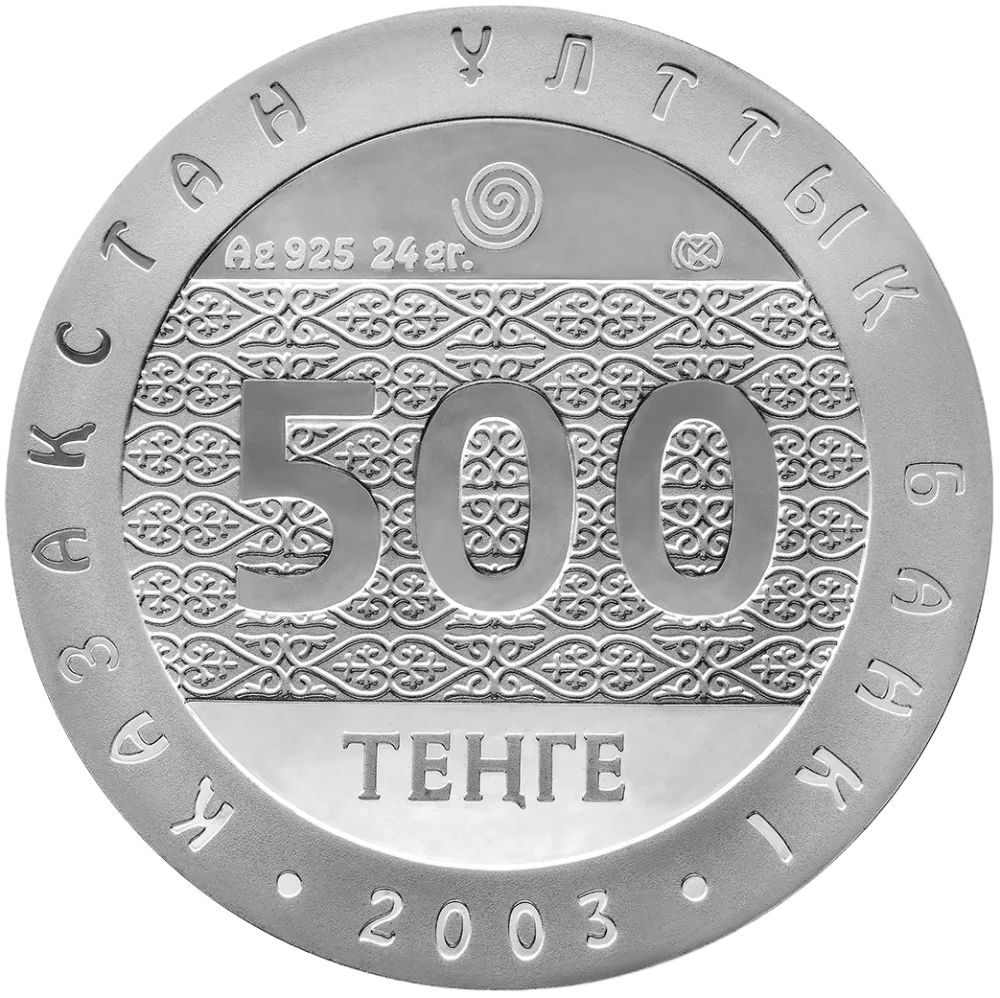
The official side shows elements of national ornament and a heraldic spiral above. A broad rim carries the inscription of the National Bank of Kazakhstan and the year 2003, together with the mint mark and the marks of the metal. The composition keeps to the spirit of rock drawing: flat silhouettes, laconic lines and no superfluous detail. For this reason the warrior reads at once.