
Umay. Altai Mountains
PDFGeneral information

Description
This coin tells of the female deity of the ancient Turks, Umai. In Turkic mythology she is one of the central figures: protectress of the hearth, of mothers and children, guardian of the family and of the health of its offspring. She was imagined as the consort of the supreme sky god Tengri and as an intermediary between people and heaven, so prayers were addressed to her for the well-being of the clan and for the birth of healthy children. The cult of Umai can be traced among Turkic peoples over a vast area, from the Altai to the Volga region.
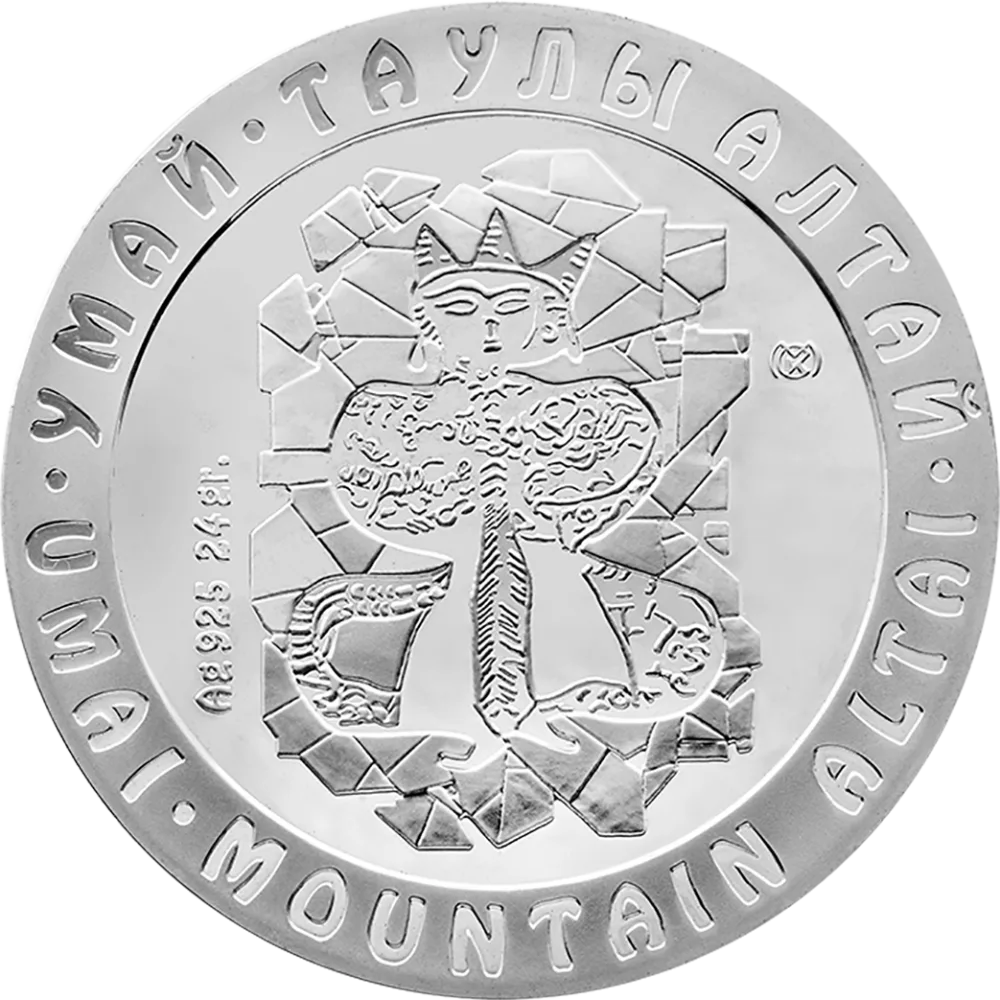
The goddess is pecked into a stone boulder beside the Kudyrge burial ground in the Altai Mountains of eastern Kazakhstan. It belongs to the age of the late nomads, to the early medieval Old Turkic tradition. It is one of the few rock images of Umai to survive, which is why both ethnographers and historians of religion value the petroglyph. The goddess is shown in a long robe and a tall headdress, and beside her the stone bears tamga signs; among the Turks such signs marked membership of a clan and accompanied important images.
Kudyrge belongs to the Altai rock-art tradition, where images of deities, warriors and animals stand side by side, often with runic inscriptions. Finds of this kind show that the ancient Turks not only worshipped the sky but fixed their beliefs in stone for their descendants.
The 2001 coin belongs to the series Petroglyphs of Kazakhstan and shows that the country's rock art records not only hunting and herds but also a complex world of spiritual ideas. Thus the mythology of the ancient Turks met the history of the Kazakh Altai.
It is particularly interesting that the image of the goddess has come down to us not in a written legend but in stone. The ancient Turks revered sky, earth and water, and each element had its patrons; Umai stood out among them because she was tied to the most fragile side of life, birth and childhood. Echoes of her cult survived in later folk rites: children were protected with special charms, and women turned to the patroness for help. The petroglyph at Kudyrge lets us see how the goddess may have looked in the minds of ancient craftsmen, and so the coin is interesting not only as a collector's item but as a small illustration to the religious history of the steppe.
Thus the coin becomes a small page from the history of Turkic religion.
Obverse
The artistic side reproduces the petroglyph against a stylised stone slab: a female figure in a long robe and tall headdress, the goddess Umai, with tamga signs visible beside her. A raised broad rim styled as fragments of stone slabs carries recessed inscriptions in Kazakh and English naming Umai and the Altai Mountains. On the left are the marks of the metal, on the right the trademark of the Kazakhstan Mint.
Reverse
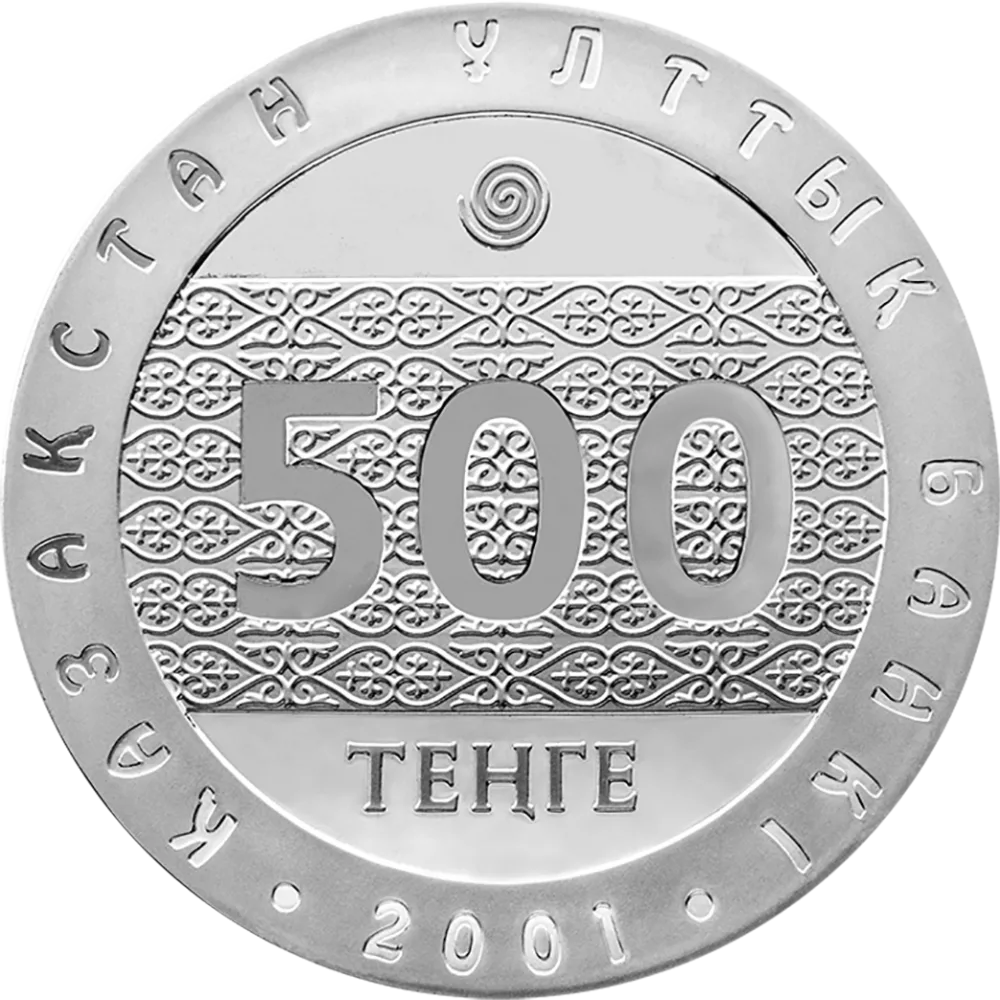
The official side shows elements of national ornament and a heraldic spiral in the upper part. A broad rim carries the inscription of the National Bank of Kazakhstan and the year 2001. The pairing of an Old Turkic image with modern numismatics underlines the continuity of the country's cultural memory.