
Giant deer
PDFGeneral information


Description
The giant deer (Megaloceros giganteus), often called the Irish elk, is one of the most impressive representatives of Ice Age megafauna. It lived across an immense territory from Ireland and Western Europe to Siberia and China. The name Irish elk stuck because peat bogs in Ireland yielded an especially large number of well-preserved bones, although the species lived far beyond the island and was not a true elk. Males were as large as a big modern moose and were famed for their chief adornment, the antlers.
The antlers of the giant deer are a record among all known deer: in large males the span could reach three and a half metres, and the antlers weighed tens of kilograms. Every year they were shed and grown anew, which demanded huge reserves of minerals and food. Scientists debate what they were for, whether duels between rivals, attracting females or scaring off predators, but one way or another it was the antlers that made the animal a symbol of the glacial age.
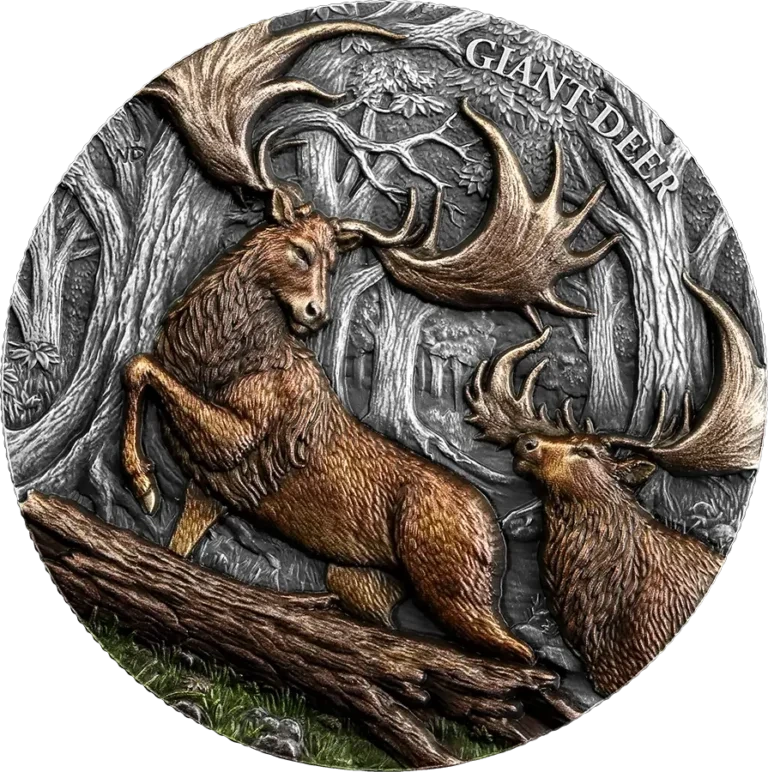
The release forms part of the Megafauna series by Germania Mint, issued on behalf of the Republic of Liberia. The series is devoted to the giants of prehistoric times, and each coin tells of a separate species. The giant on the coin is more than a portrait of an animal: the artist sought to show the scale of the beast, its power and the way the antlers define the whole silhouette. The viewer is carried into a prehistoric forest where such an animal was once part of everyday life.
The giant deer grazed in open meadows and forest-steppes with plenty of grass and shrubs, and it died out as the climate changed and suitable habitat shrank. The last of the species vanished about seven and a half thousand years ago, yet its image survives in cave paintings, and peat bogs still yield skulls with antlers in superb condition. Such finds are held in museums across Europe, and many are among the best-known exhibits in palaeontology halls.
The giant deer remains one of the most recognisable prehistoric animals. Its skeleton with enormous antlers is displayed in natural history museums, and in Ireland, where finds were especially common, antlers were for centuries used as unusual decoration for halls and hunting lodges. For modern people the animal has become a reminder of how majestic and how vulnerable nature can be, which is why its image suits a coin so well: a small object that keeps the memory of a great vanished world.
The story of the giant deer is also the story of how science learned to understand extinction. When enormous antlers began to turn up in Irish bogs in the seventeenth and eighteenth centuries, scholars long could not decide what animal they belonged to and argued whether it still existed. Finds like these helped push naturalists towards the idea that species can vanish from the earth. The coin recalls that turning point in the understanding of living nature.
Obverse
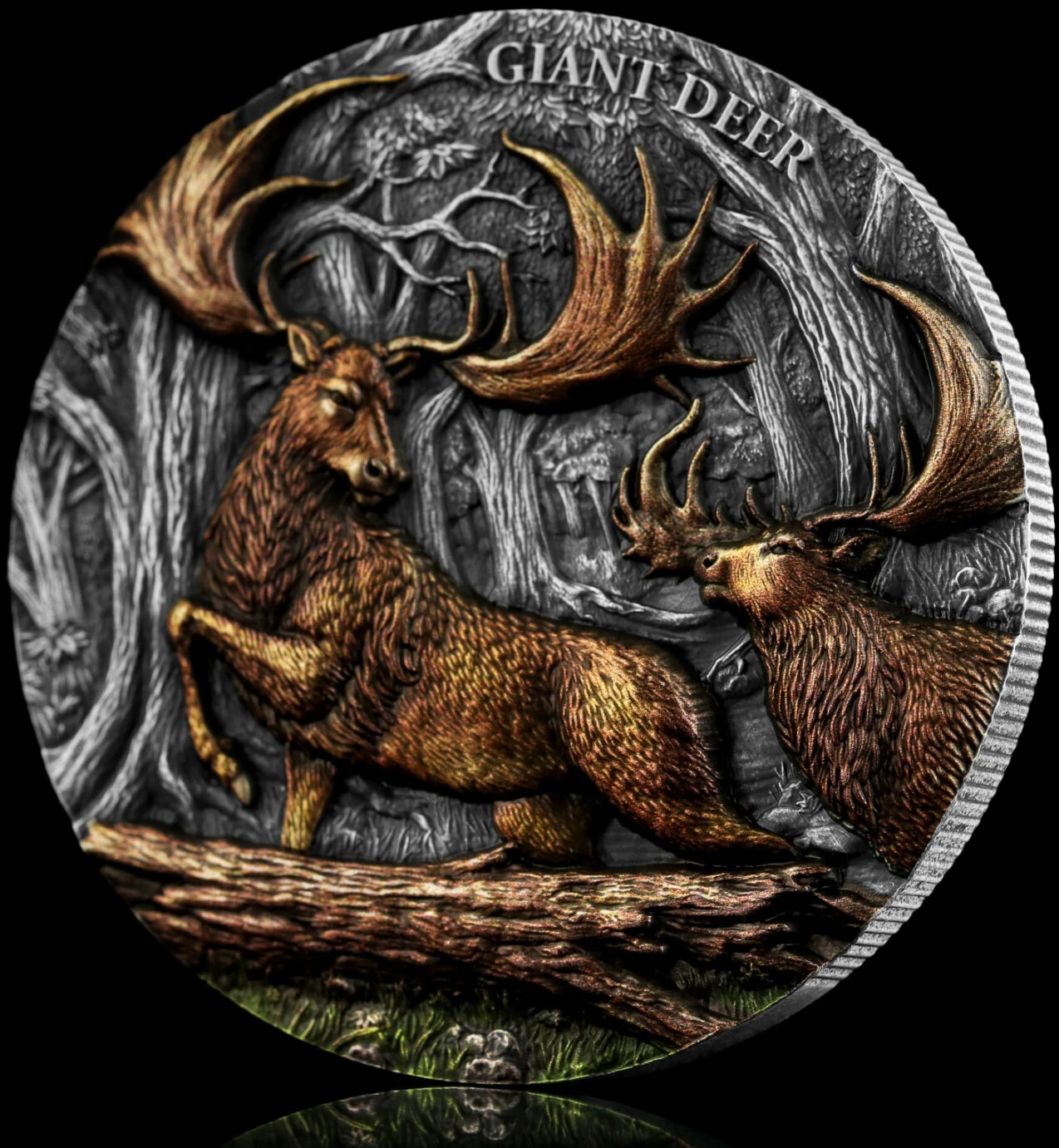
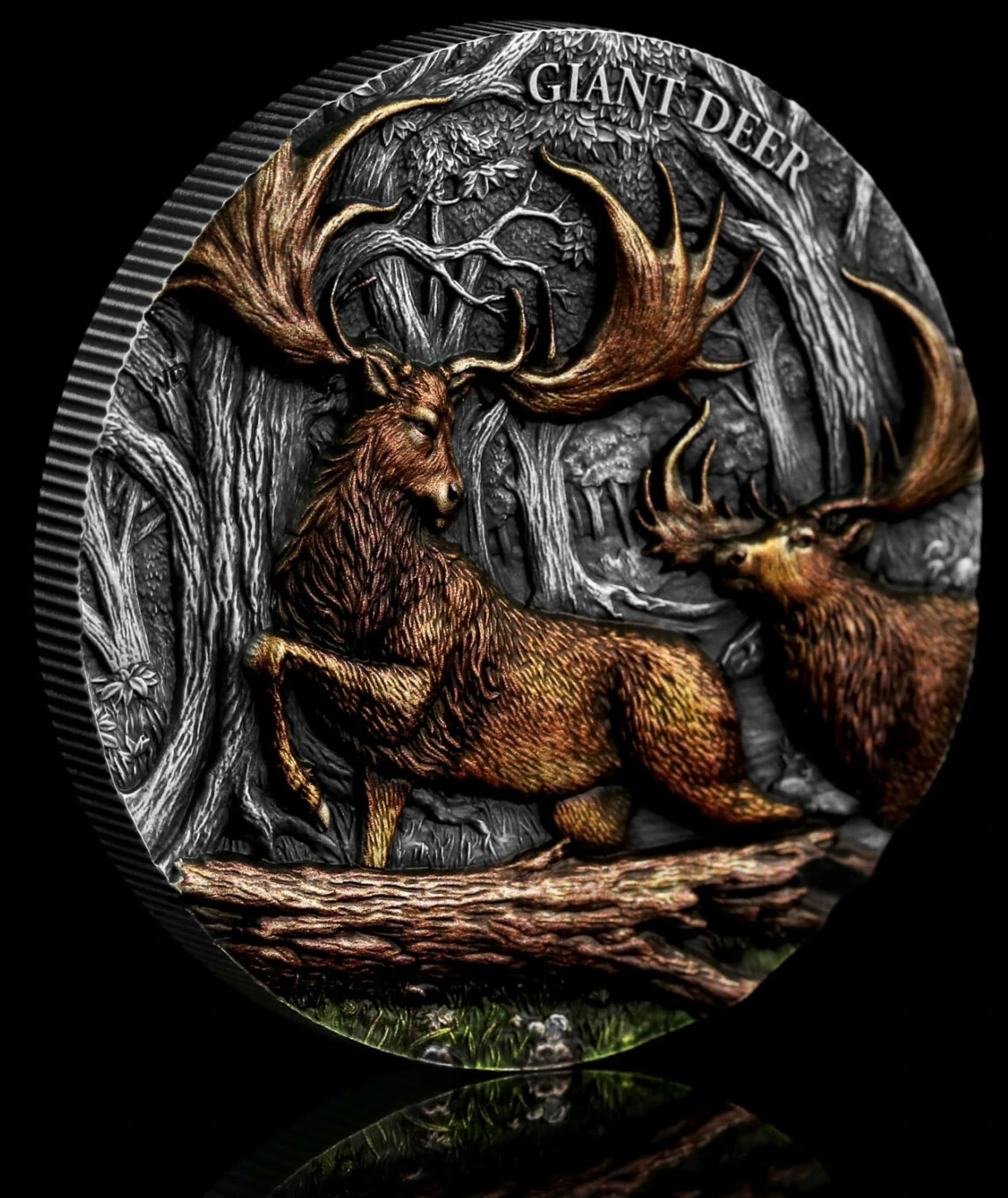
The artistic scene carries the viewer into the primeval habitat of the giant deer. The animal is shown among dense vegetation and prehistoric forest, with special attention to the enormous antlers that dominate its silhouette.
Reverse
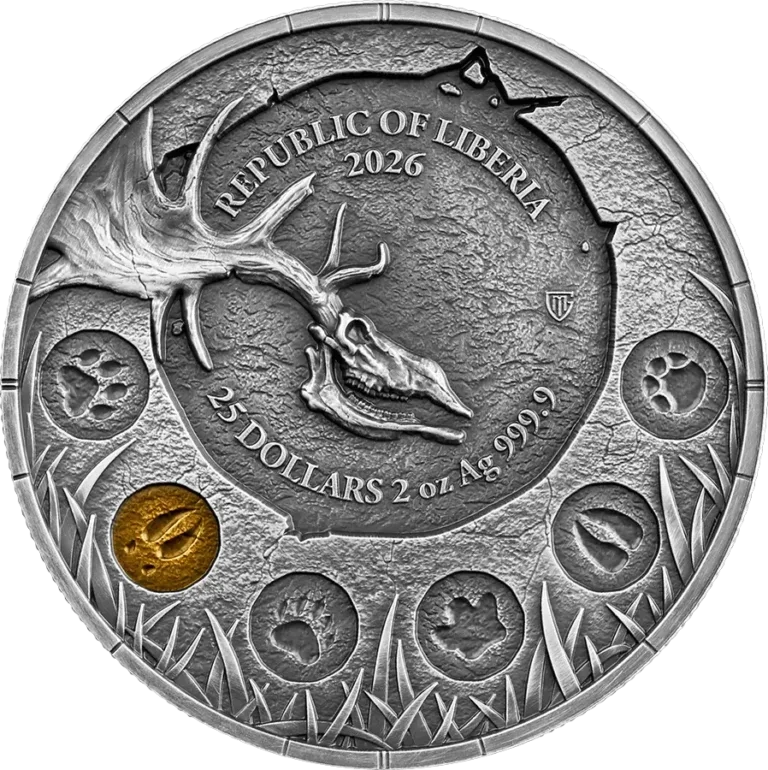
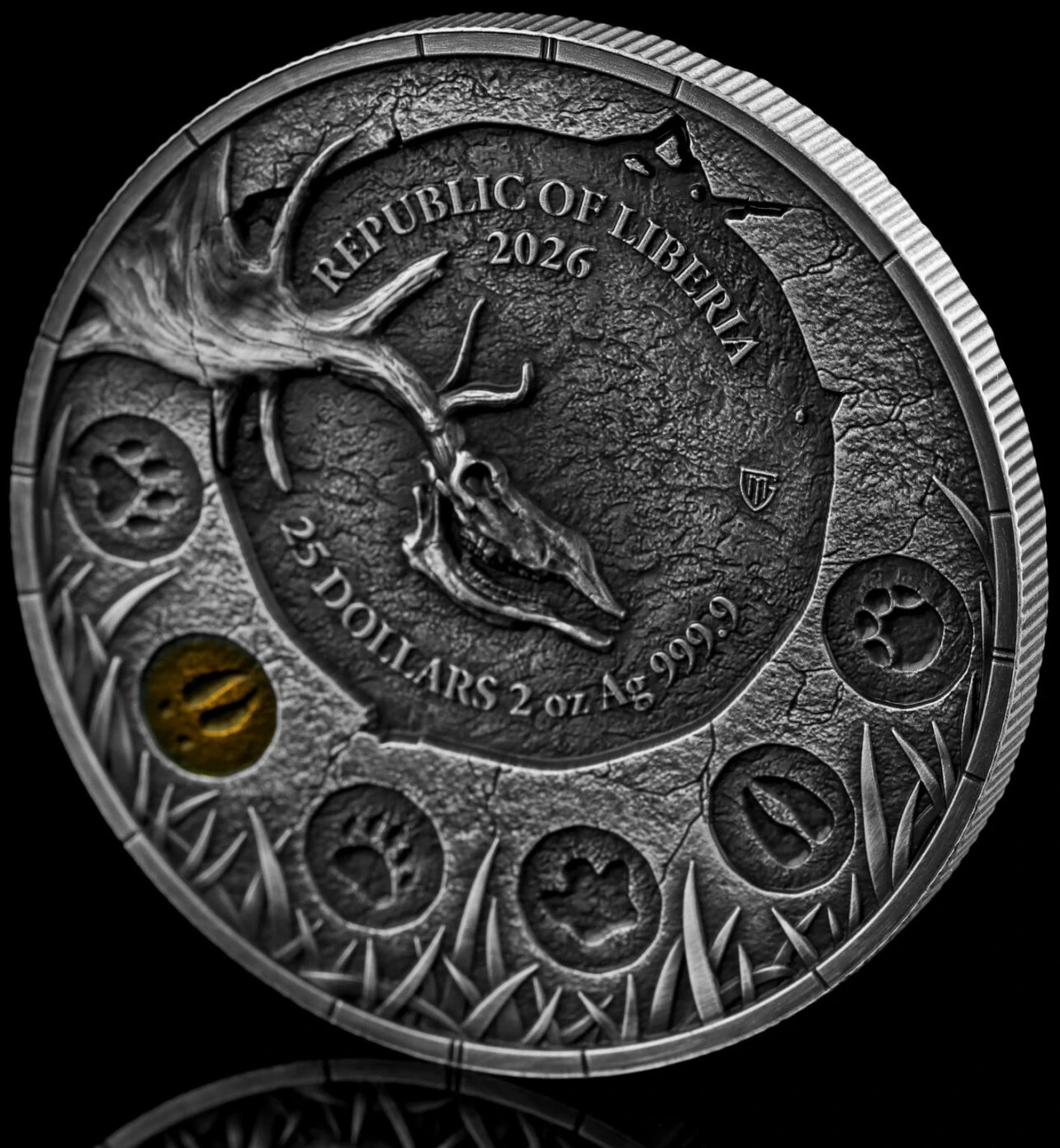
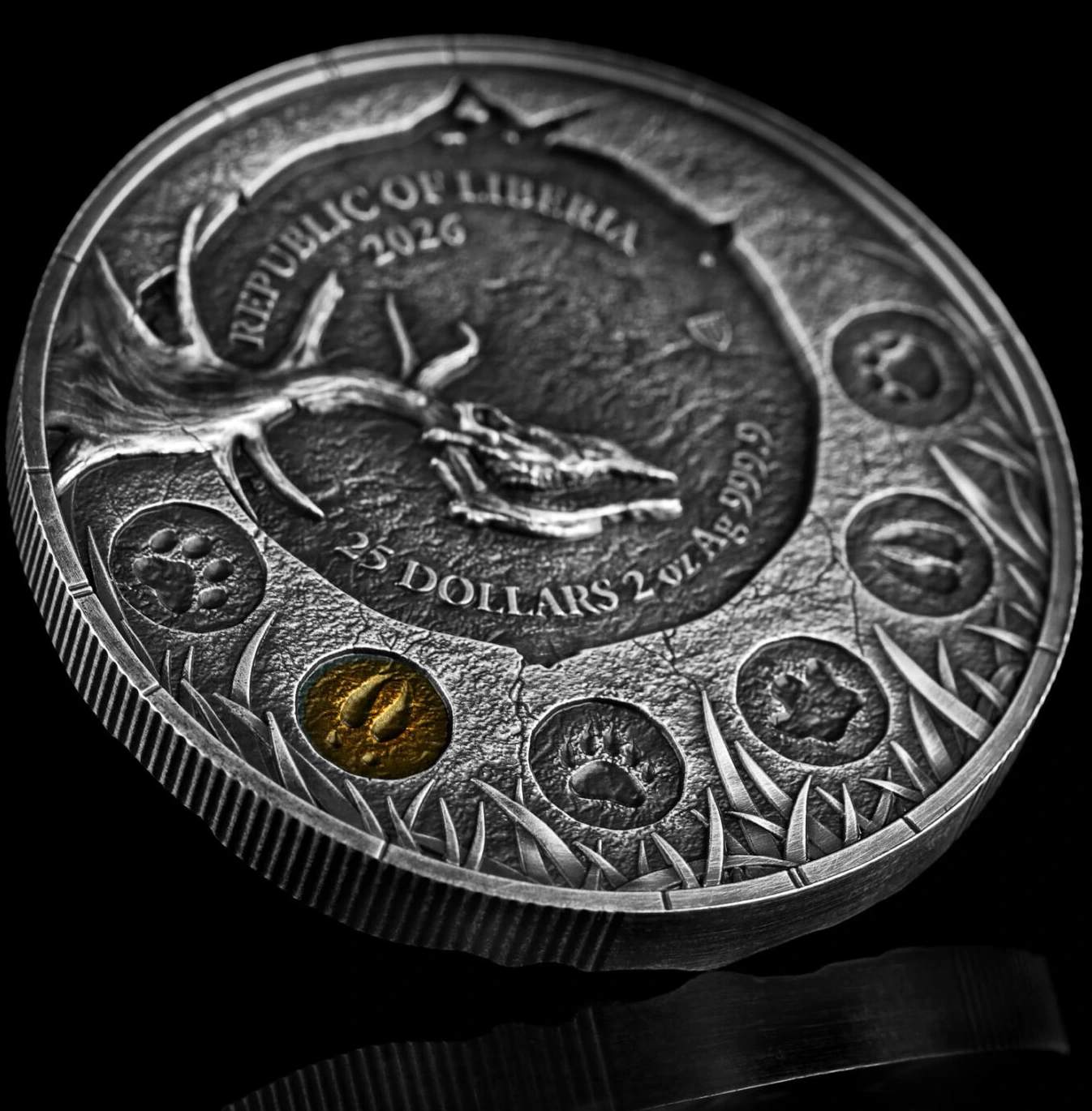
The reverse continues the central motif of the series: it carries the skull, antlers and hoof print of the giant deer. Additional tracks of other creatures link this side with the other coins in the collection, and the emblem of the Republic of Liberia and the Germania mint mark complete the composition.