
The Cave Lion
PDFGeneral information
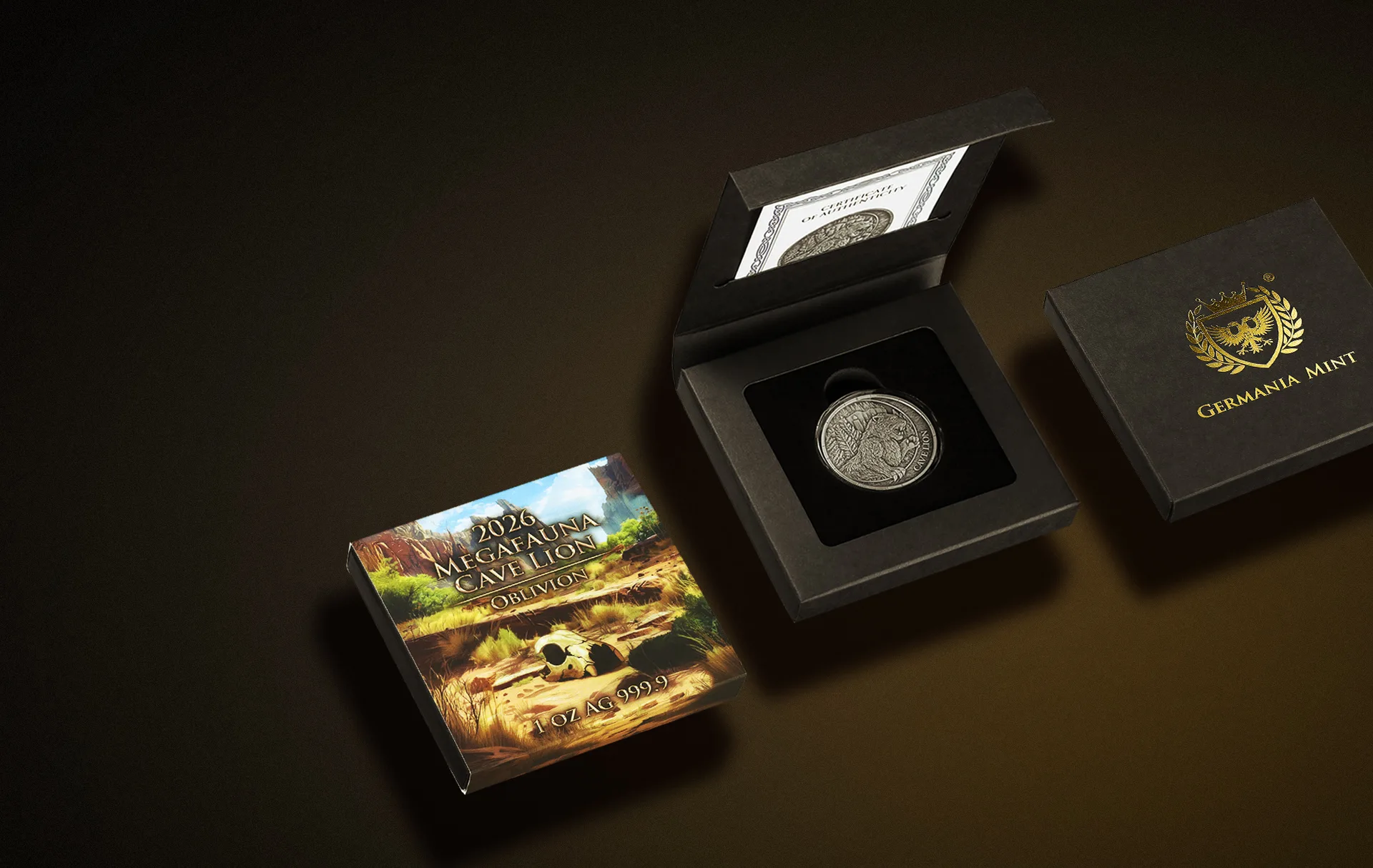


Description
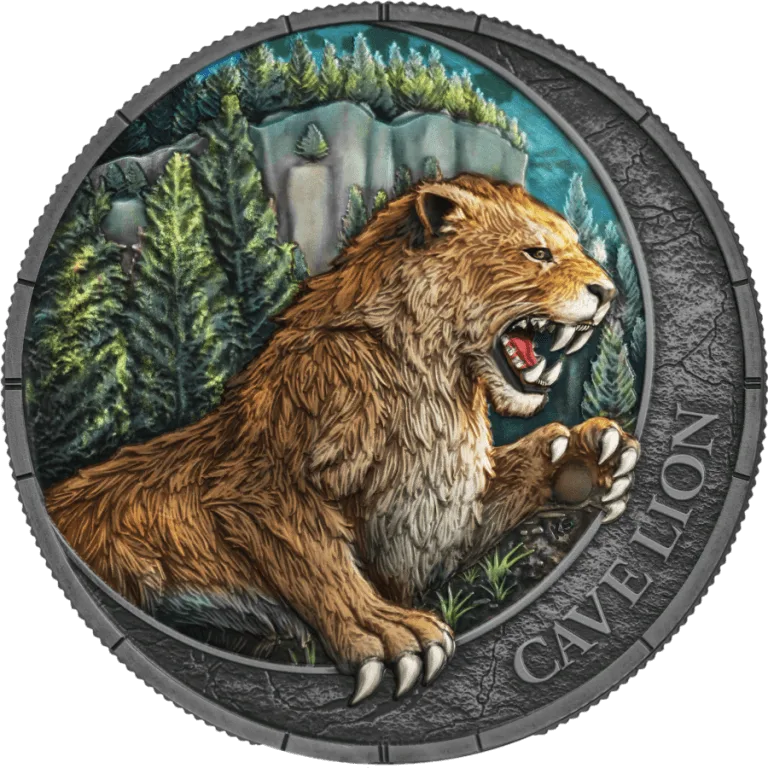
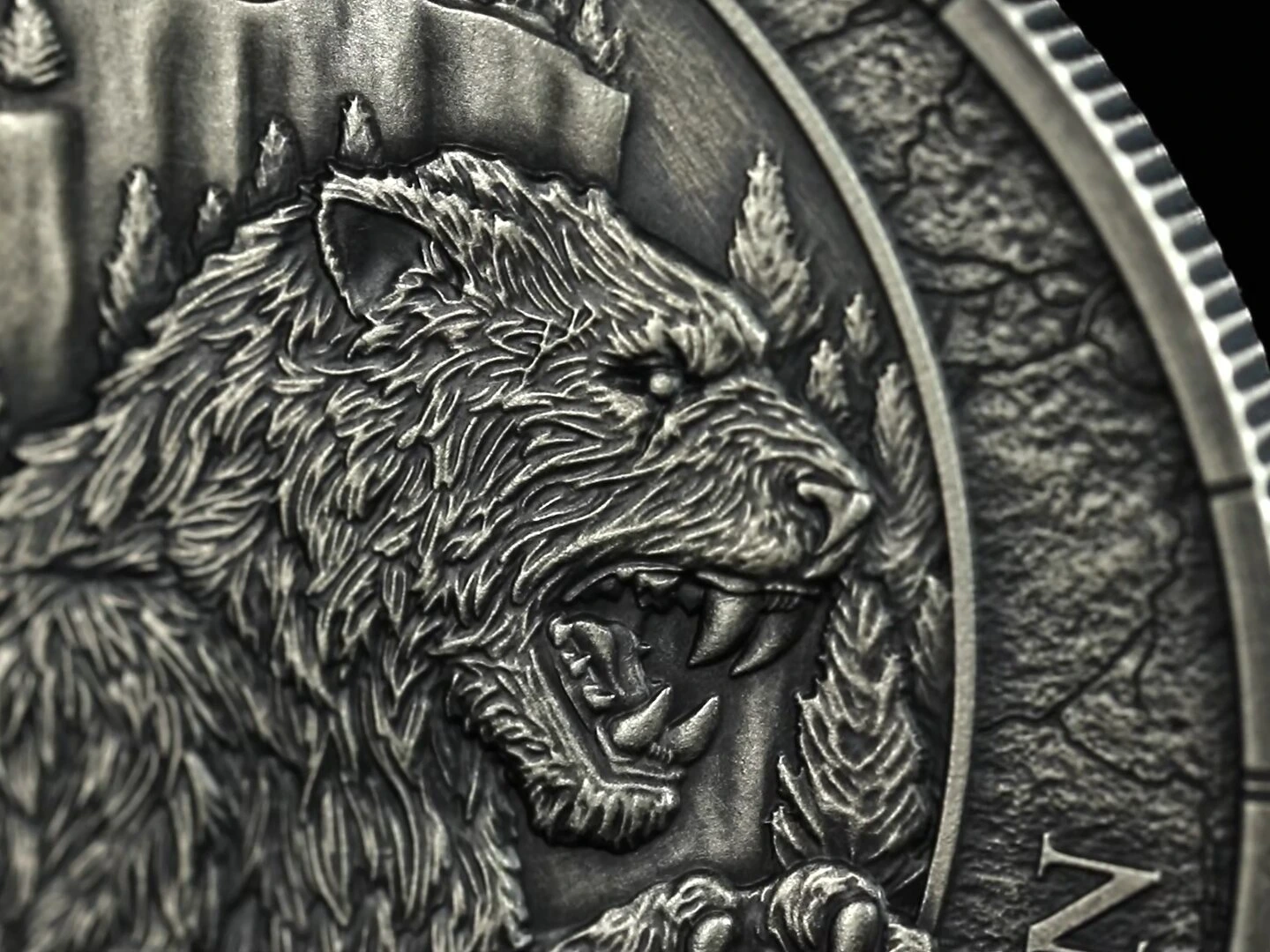
The release belongs to the Megafauna series by Germania Mint, issued on behalf of the Republic of Liberia. The series tells of the giants of the prehistoric world that lived on Earth in the age of glaciers, and each coin presents a separate species. The cave lion design is the work of the artist Kinga Sabatowicz. Her work combines scientific plausibility and expressiveness: the musculature, jaws and claws are shown so that the predator seems ready to leap straight off the surface of the coin.
The cave lion (Panthera spelaea) was one of the most formidable predators of the Ice Age. It lived across vast areas from Western Europe to Asia and reached north-eastern Eurasia, and it was noticeably larger than today's African lions. It hunted large herbivores such as deer, wild horses and bison, and stood at the top of the food chain of the steppes and forest-steppes of its day. The coin takes us back to an age when giants roamed icy plains and humans were only beginning to settle these harsh lands.
The image of the lion has existed in human culture since deep antiquity, from cave paintings to coats of arms and state emblems, and the cave lion is one of its first heroes. It symbolises courage, strength and the primeval power of nature. On the coin this symbol appears not as a heraldic figure but as a living animal in its natural setting, which lets us see in it not only a legend but a real inhabitant of a vanished world.
The people of the Ice Age knew the cave lion well and left its image in their art. Among the cave paintings of Chauvet in France there are depictions of lions, and from Germany comes the famous mammoth-ivory figurine of the lion-man, one of the oldest known works of art, joining a human and a big cat. For ancient hunters the lion was at once a dangerous rival and a symbol of strength, and the memory of that admiration and fear survives in painted stone across thousands of years.
Interest in extinct megafauna does not fade: finds of skeletons and frozen carcasses in Siberian permafrost regularly make headlines, and reconstructions of prehistoric animals take pride of place in museums worldwide. The cave lion has become one of the favourite subjects of such reconstructions, partly because of its resemblance to modern lions and partly because of the dramatic fate of the species. The coin continues that tradition, turning scientific knowledge into a small picture in relief.
The special value of the cave lion image is that it links us to a real world that existed not in fairy tales but on our own planet. From bones and finds, scientists reconstruct how the animal looked, what it ate and how it hunted, probably in prides like modern lions, although this is not certain. Each new discovery changes ideas about the extinct predator, and a coin bearing its portrait becomes not only an ornament of a collection but a reminder of how much remains to be learned about prehistoric nature.
Obverse
The central image is a cave lion against mountains and primeval forest. The powerful body, bared jaws and claws convey a predator frozen before the spring, while the detailed background gives the landscape a sense of depth.
Reverse
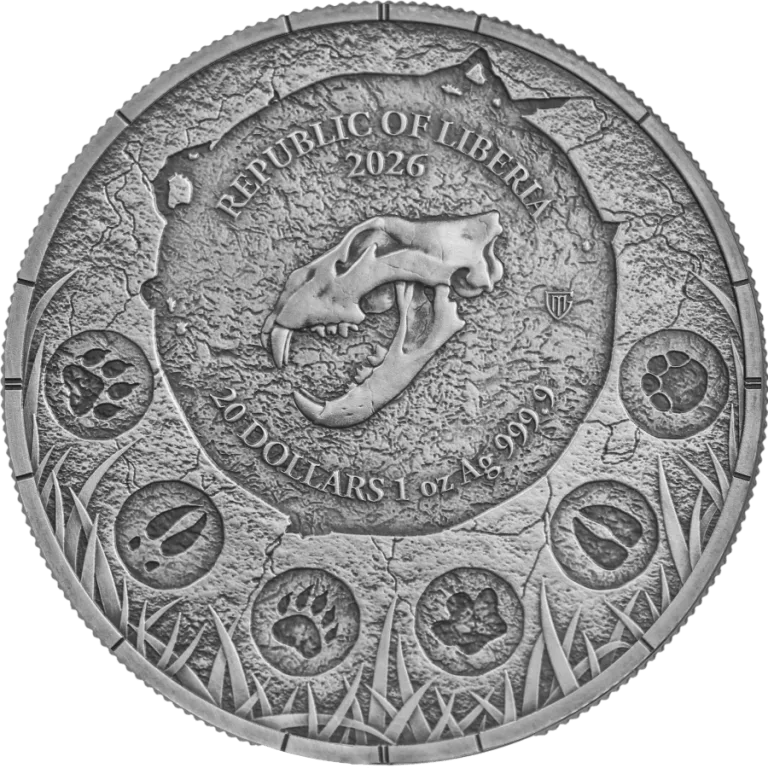
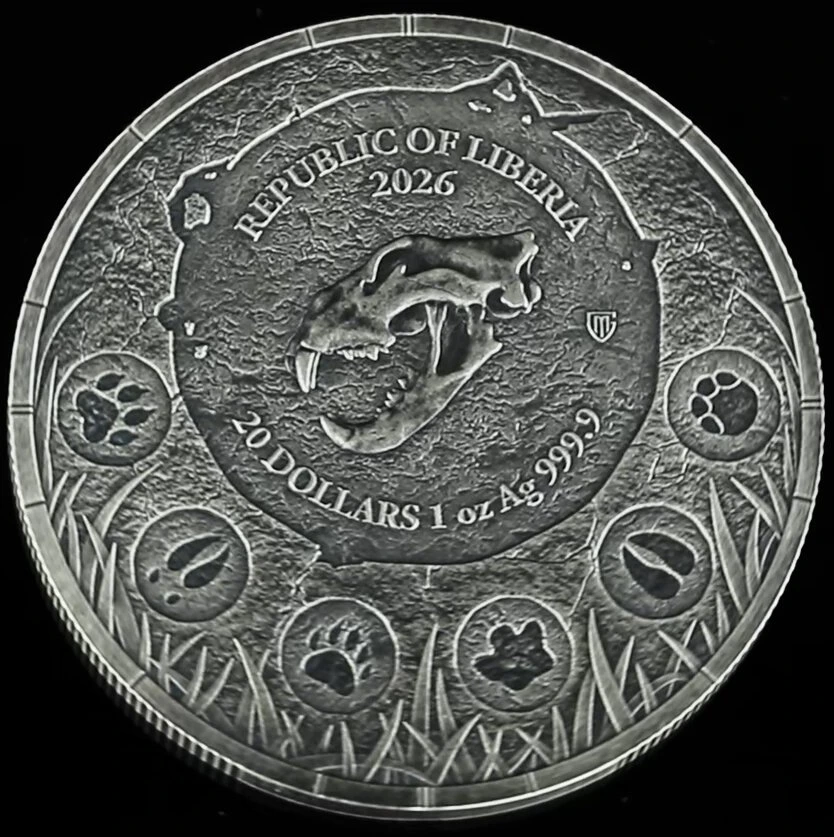
The reverse continues the common motif of the series: a lion skull and a paw print in a ring of tracks of other animals that will appear in future releases. The side is completed by the emblem of the Republic of Liberia and the Germania mint mark.