
Cup (inscription in a circle)
PDFGeneral information

Description
The final of the 2018 World Cup, played on 15 July in Moscow, went down in history as one of the highest-scoring in recent decades. France beat Croatia 4:2. The first goal of the match was an own goal by the Croat Mario Mandžukić, something that had never happened before in a World Cup final. Then Ivan Perišić equalised, Antoine Griezmann put the French ahead from the spot, after the break Paul Pogba and Kylian Mbappé made it 4:1, and Mandžukić pulled one back after a mistake by goalkeeper Hugo Lloris.
The Croats, who in the previous rounds had played three matches in a row that went to extra time, did not give up and won the respect of the whole world; their play was recognised as one of the most courageous at the tournament, and Luka Modrić was named the best player of the championship. The French confirmed their status as the best team: they reached the final for the third time and won it for the second time, after 1998.
The awards ceremony took place in pouring rain. The President of Russia Vladimir Putin, the President of France Emmanuel Macron and the President of Croatia Kolinda Grabar-Kitarović came onto the pitch, and the awards were presented by the heads of state and the FIFA president Gianni Infantino. All these pictures went around the world, and the rain in Luzhniki became for fans a symbol of the tournament.
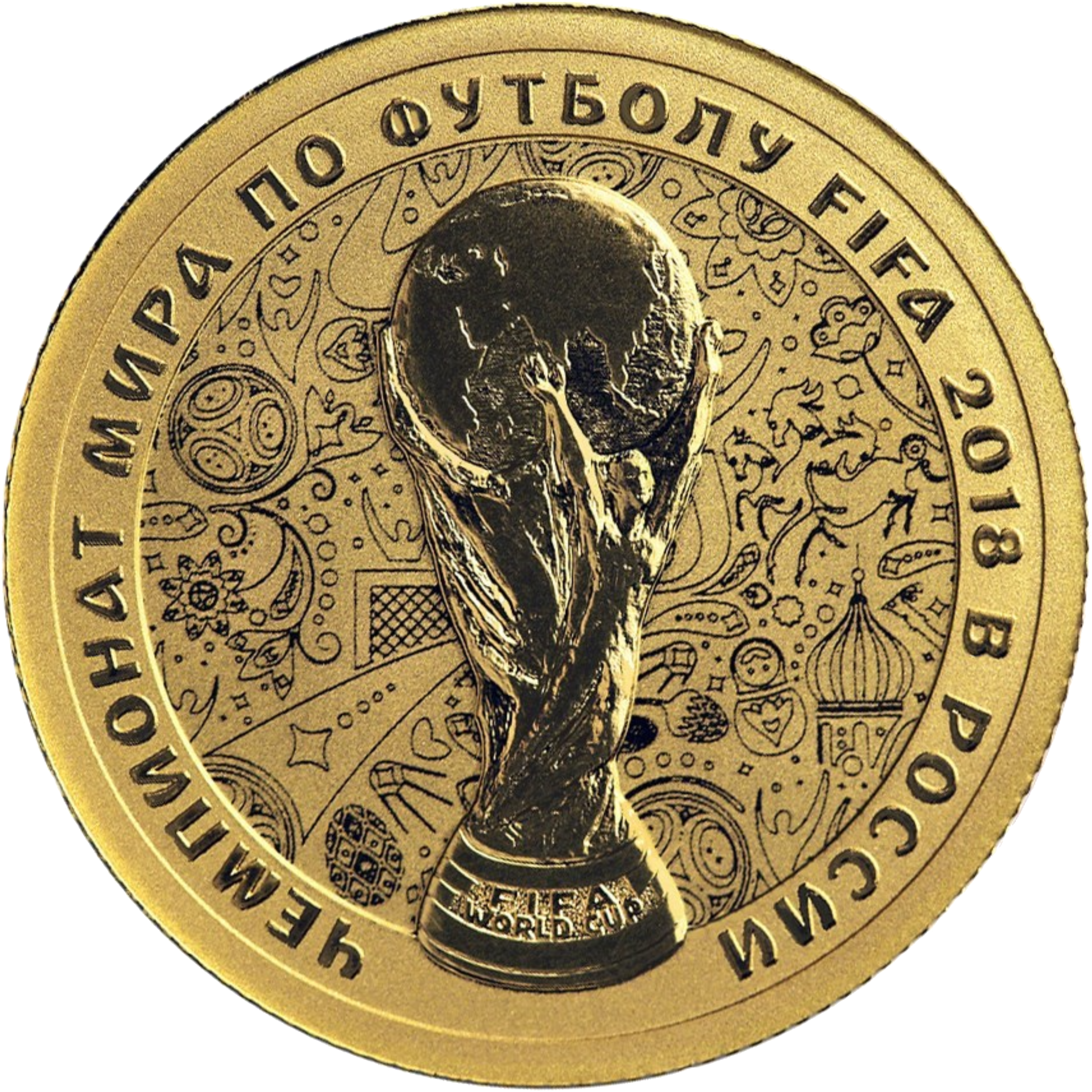
The coin shows the Cup against an ornament of elements of Russian culture, folklore and the football world, and an inscription about the tournament runs around the circumference. This subject was chosen because the Cup is what thirty-two teams played for and what in the end goes to only one.
The final was played at the Luzhniki Stadium. It was built in 1956, hosted the 1980 Olympic Games and the 2008 Champions League final, and for the championship it was reconstructed, keeping the historic bowl and increasing the number of seats. For Moscow this match was the culmination of a month in which the city lived football: the fan zone by the Sparrow Hills gathered tens of thousands of people.
The French victory was the result of the work of a generation of players brought up in national academies and of a coach who knew well how to win big tournaments. After the match Paris and other cities of the country came out onto the streets, and hundreds of thousands of fans gathered on the Champs-Élysées to celebrate the second title.
The victory in Moscow was all the more valuable for France because on the way to it the team beat the strongest opponents: Argentina, Uruguay, Belgium and in the final Croatia. This path showed that the title was no accident but the result of long work.
Obverse
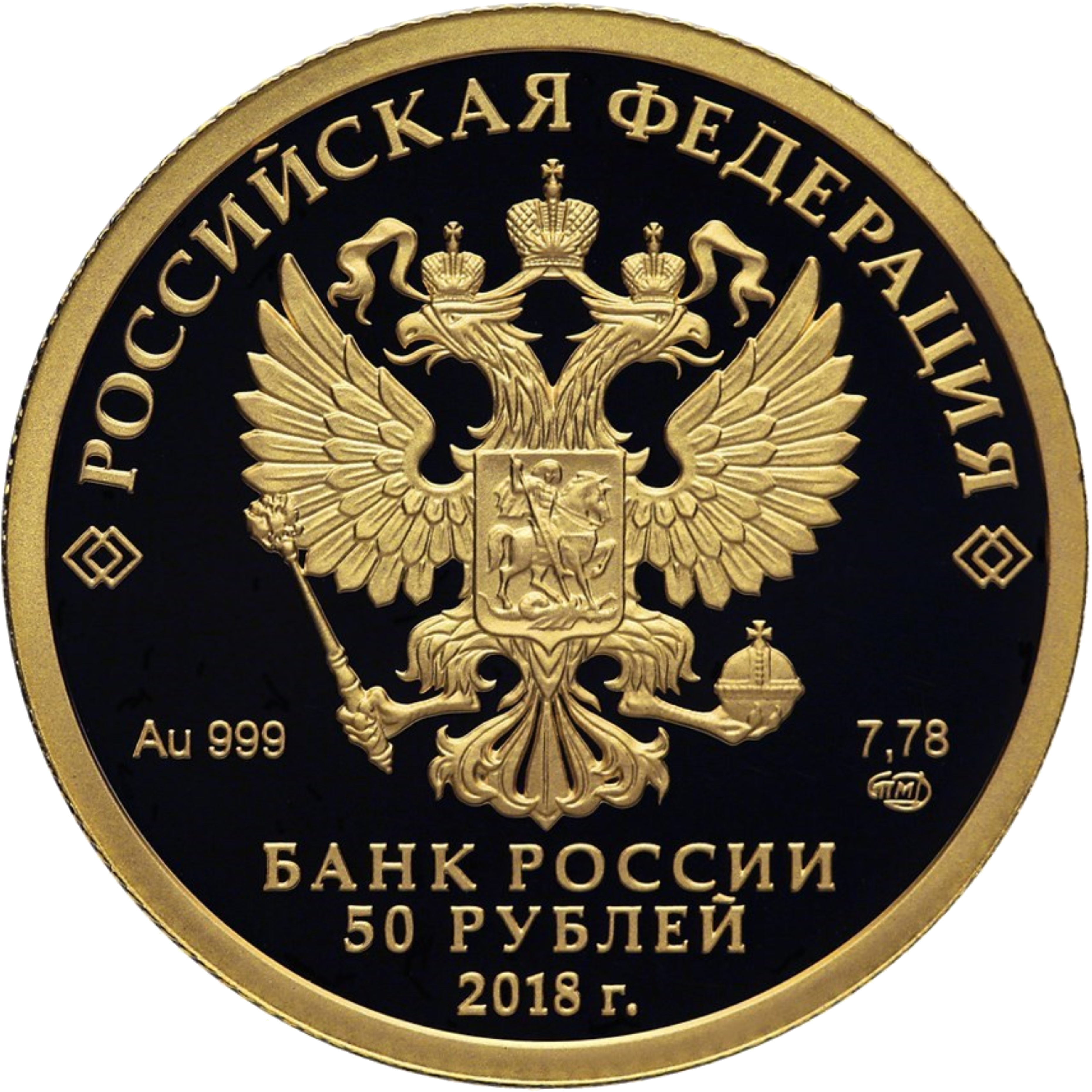
On the mirror field of the disc — the relief image of the State Emblem of the Russian Federation with the double-headed eagle. Along the upper edge, in a semicircle, stretches the inscription RUSSIAN FEDERATION, with two rhombuses on either side of it. Lower down, in three lines, is written BANK OF RUSSIA; next to this inscription the year and the denomination are shown, and the mint mark sits to the side of the emblem. E. V. Kramskaya drew the obverse and A. A. Dolgopolova modelled it.
Reverse
The back of the coin presents the following: the relief image of the FIFA World Cup Trophy against an ornament made of elements reflecting Russian culture, folklore heritage and the football world; around the circumference, the inscription CHEMPIONAT MIRA PO FUTBOLU FIFA 2018 V ROSSII. The reverse was designed by A. A. Brynza and sculpted by A. N. Bessonov.