
200 Years of the Modern Railway (Cupro-Nickel)
PDFGeneral information
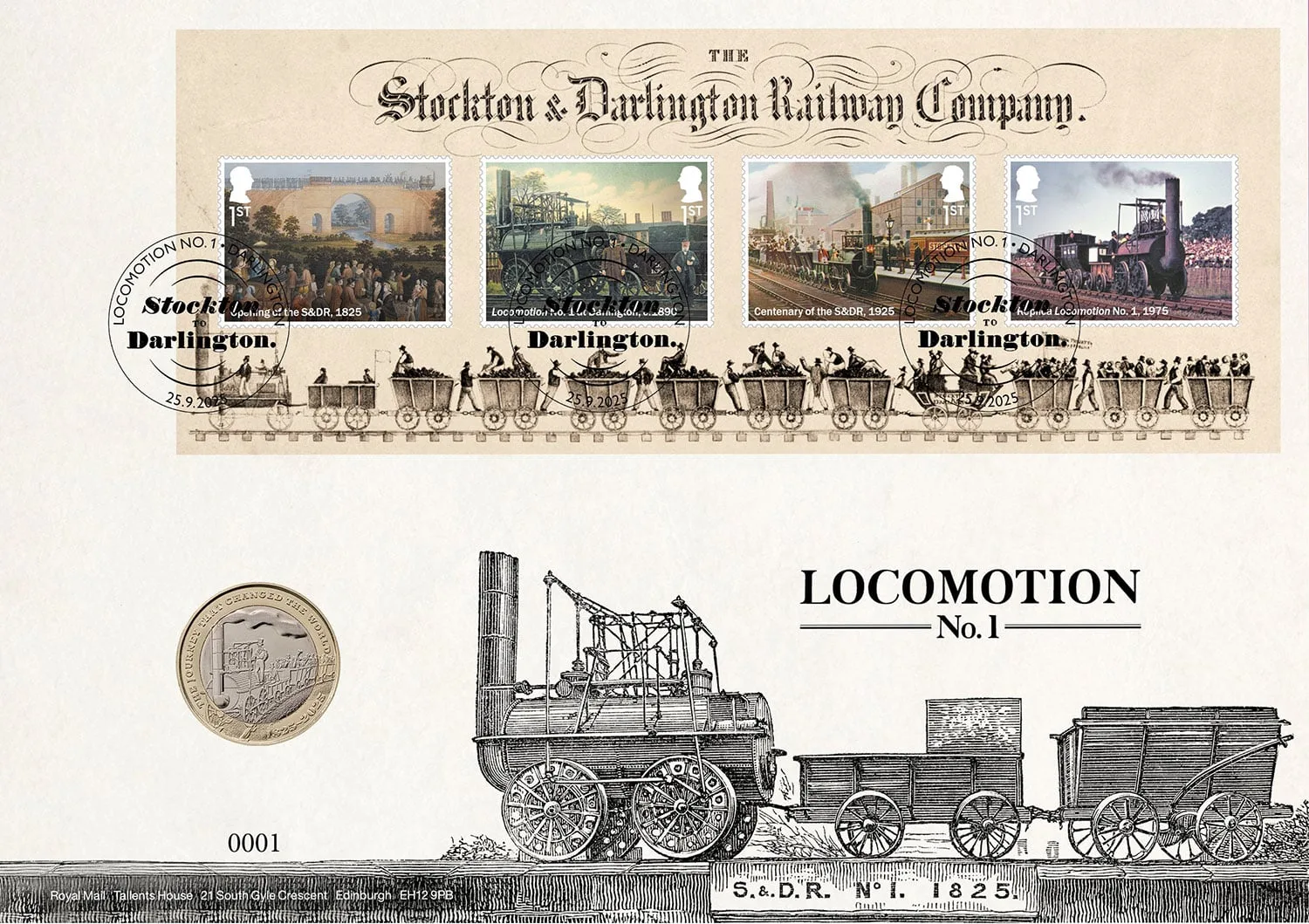
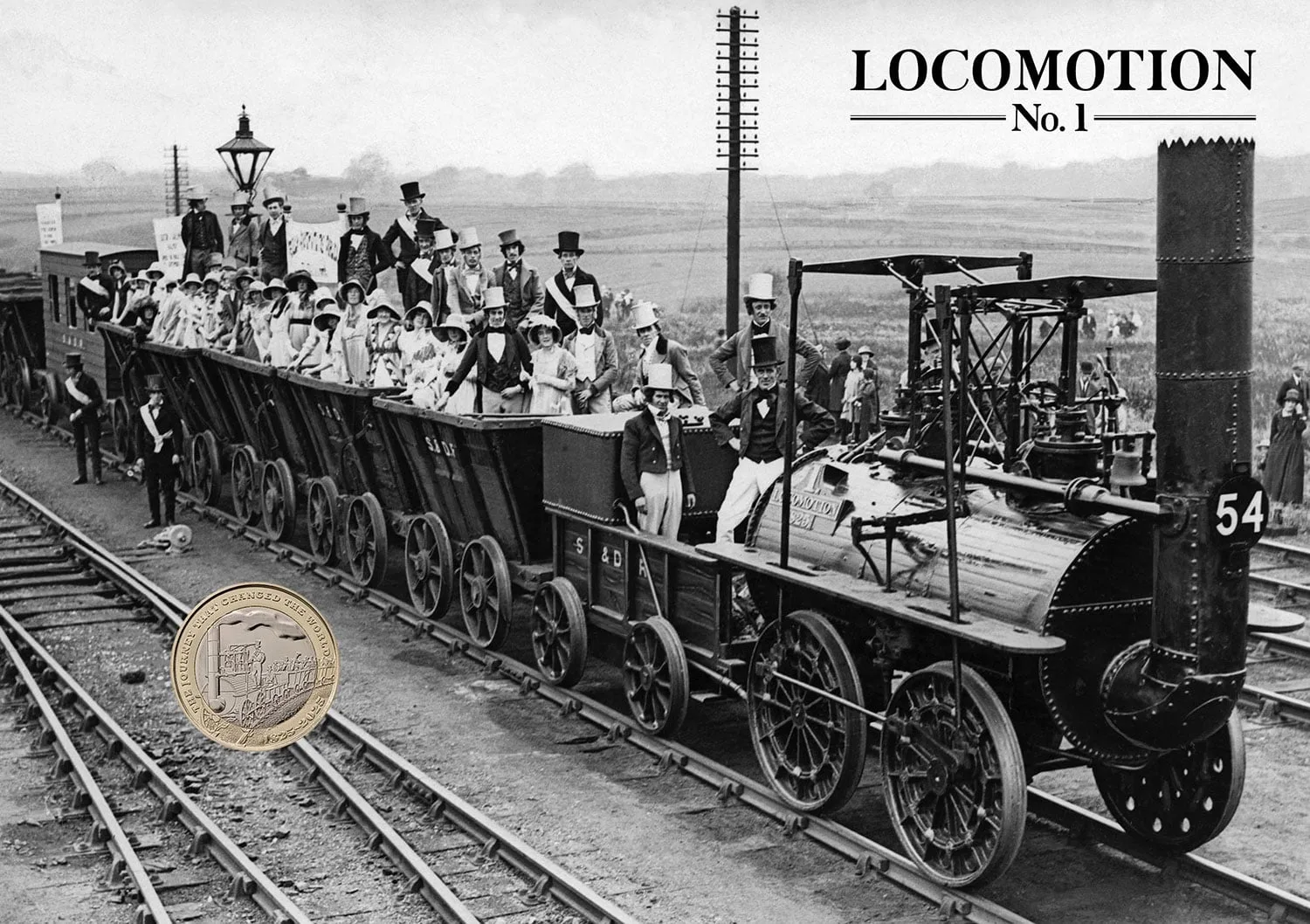
200 лет современной железной дороге — конверт Royal Mail (медь-никель)
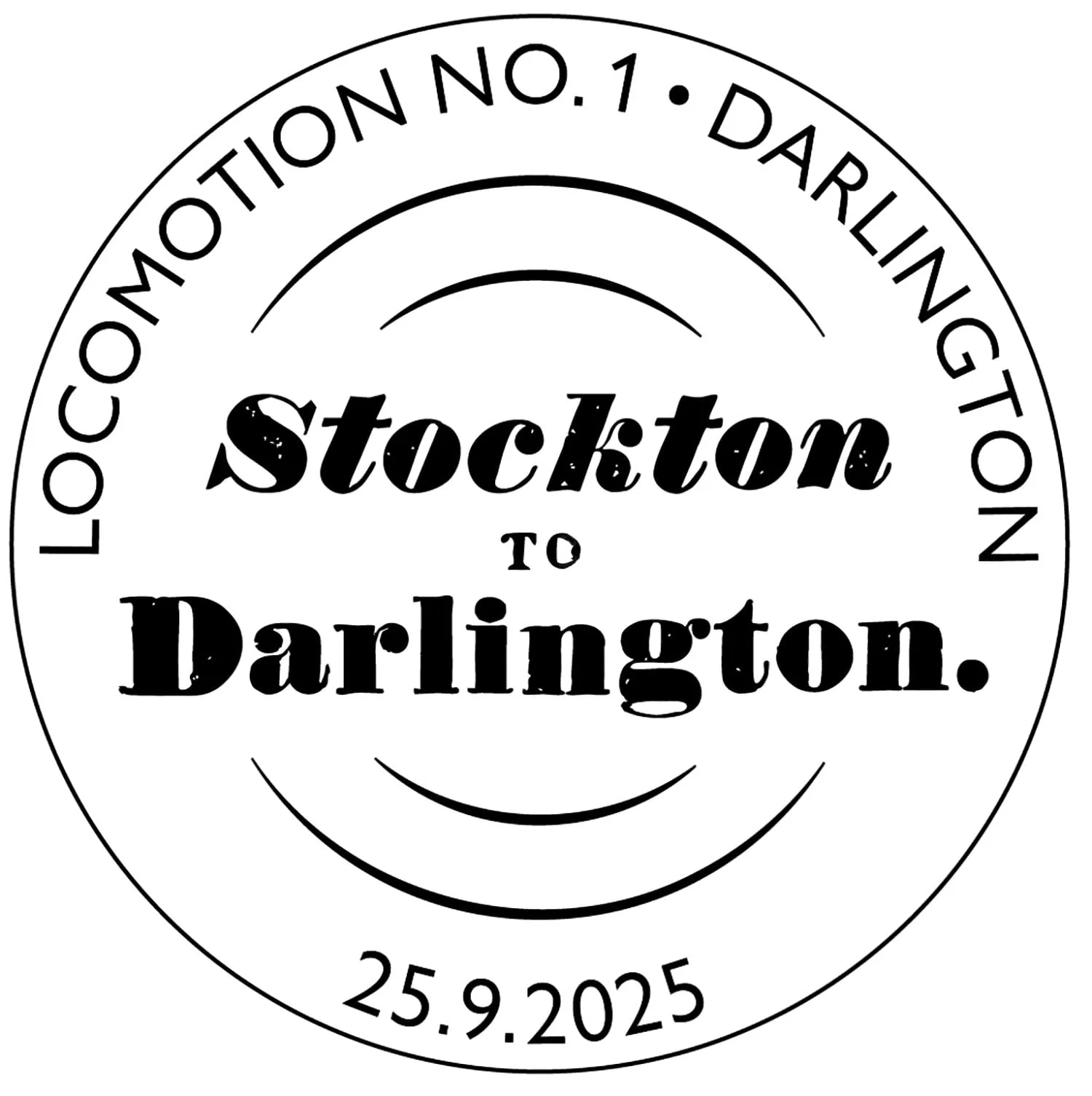
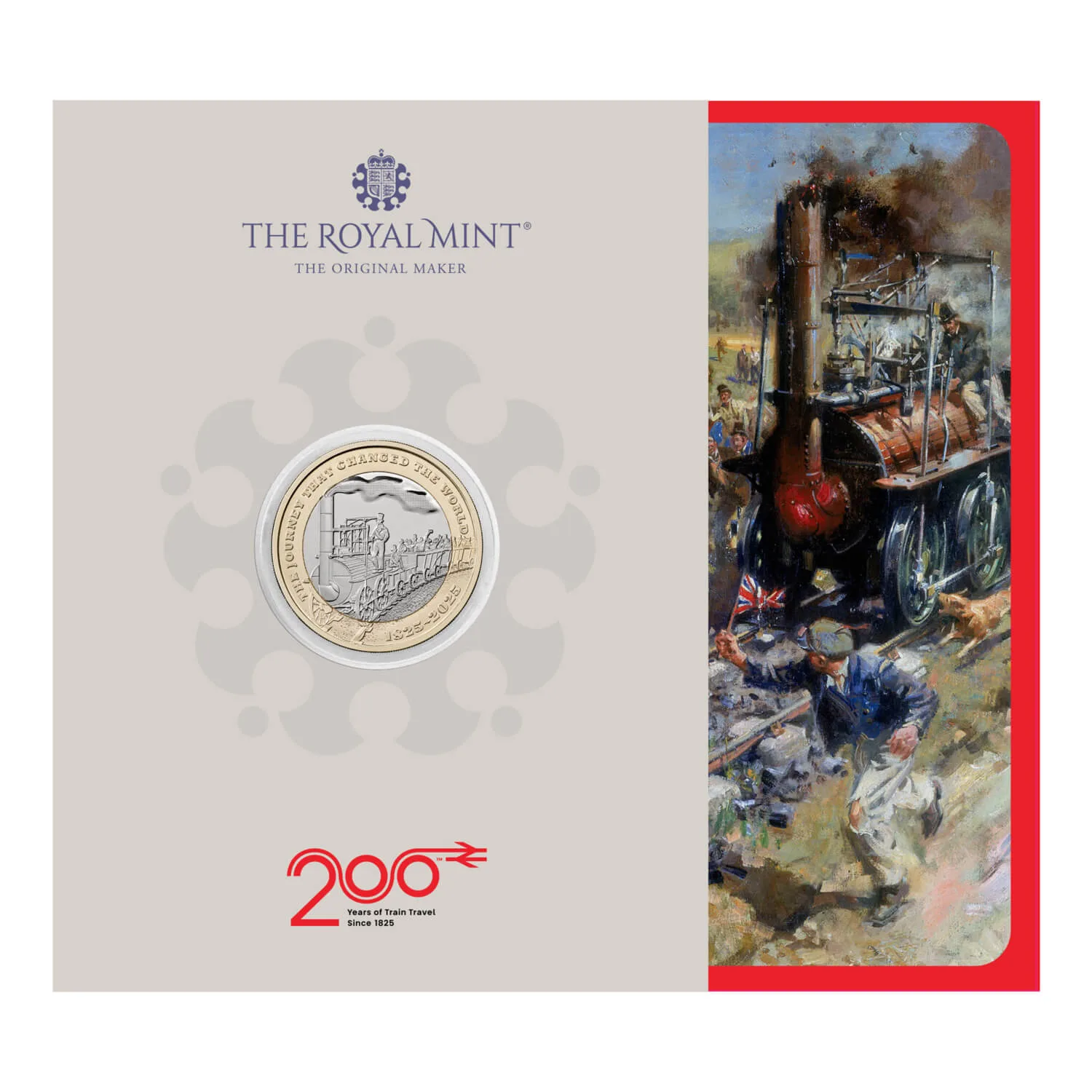
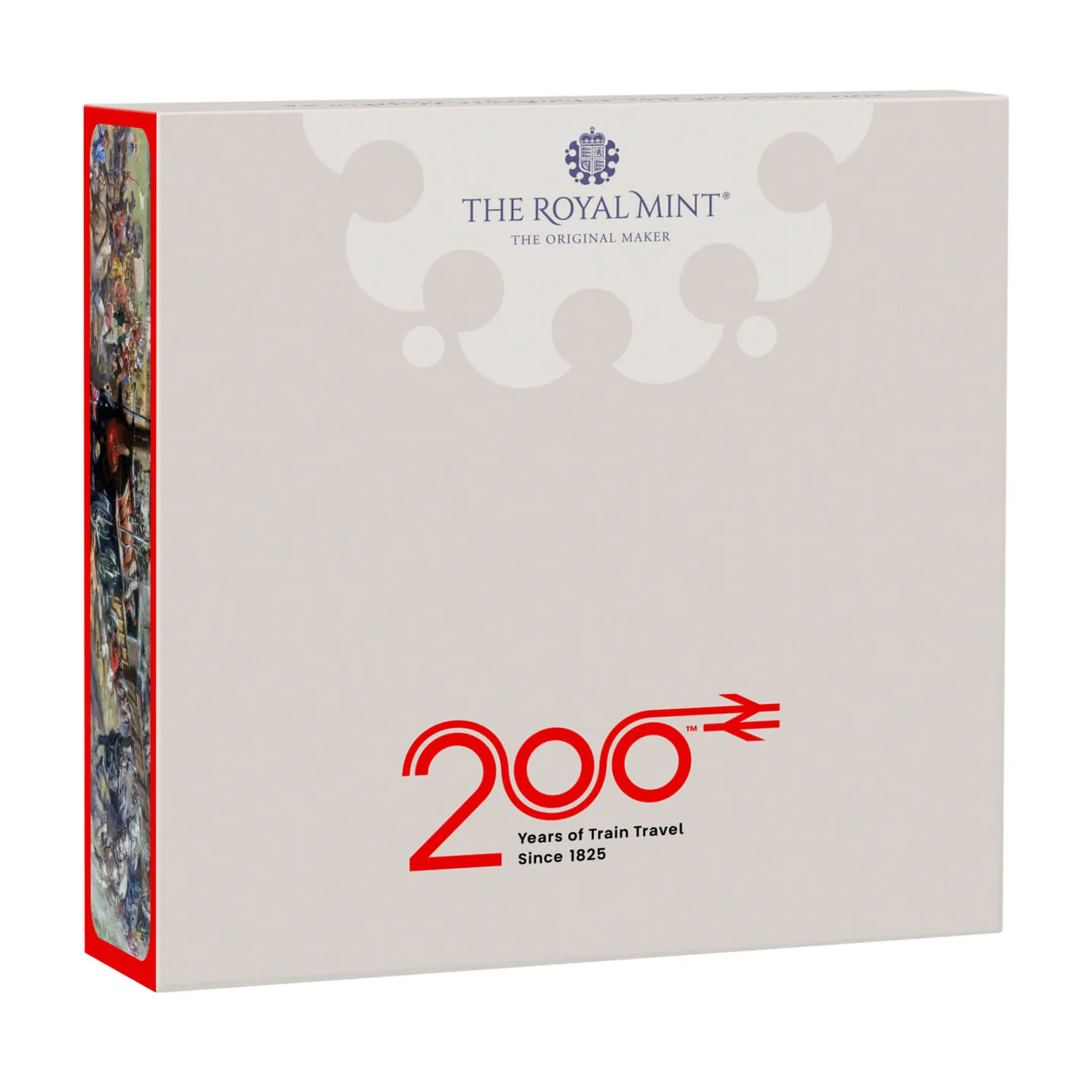
Почтовый конверт (Coin Cover) The Royal Mint к 200-летию современной железной дороги: монета £2 (медь-никель, BU) в оформленном конверте с четырьмя марками Royal Mail номиналом 1st с изображениями Locomotion No. 1 и специальным гашением «Locomotion No. 1 · Darlington» от 25.9.2025 (дата годовщины первого рейса Стоктон–Дарлингтон). Лимит издания — 10 000 экземпляров, цена 21,50 £ (SKU PNCTTBU).
Сама монета та же, что и в отдельной продаже; отличие — упаковка и филателистическая часть: конверт, вкладка-карточка с описанием события, гашение. Дата в карточке — дата гашения на конверте; точная дата начала продаж конвертов двором не указана.
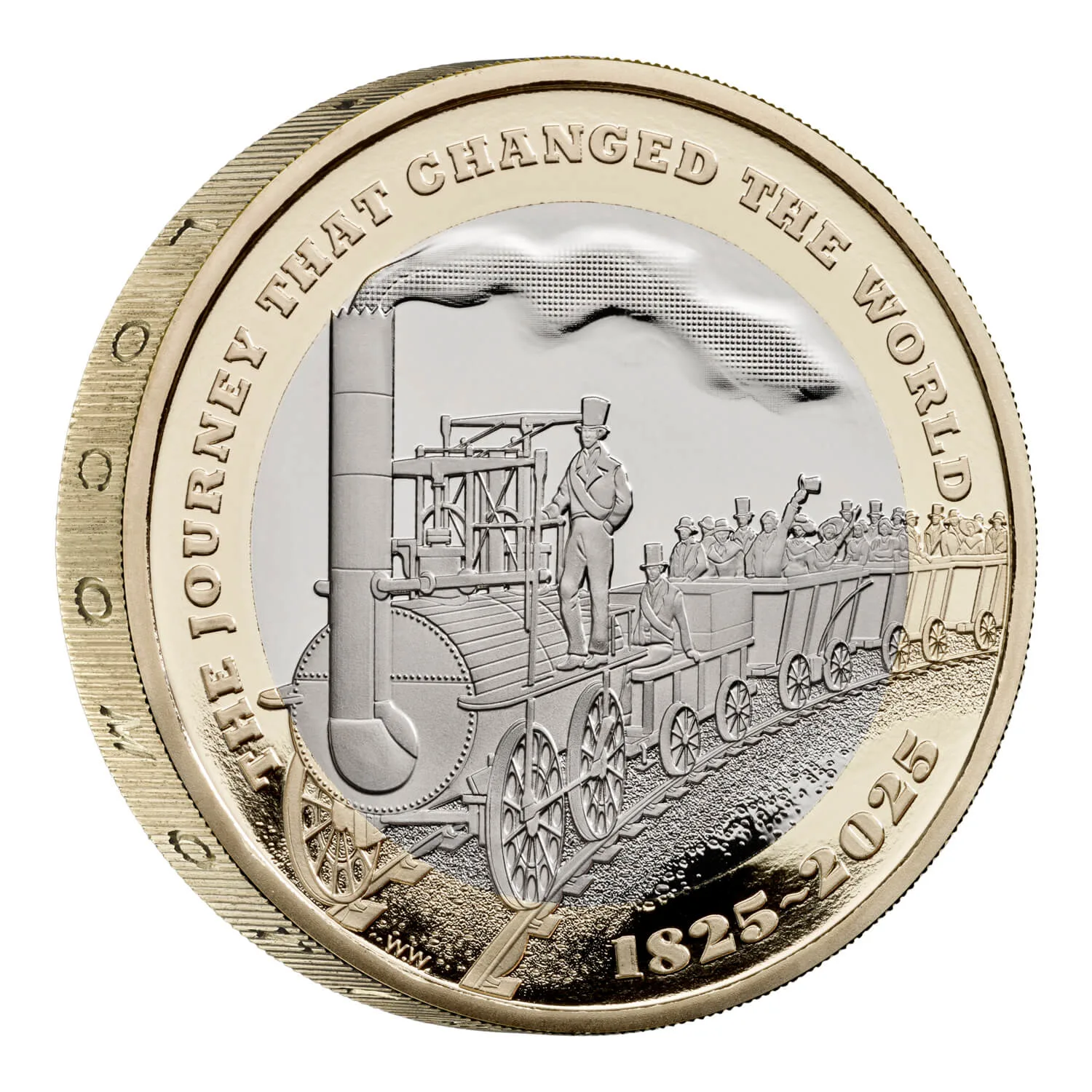
200 лет современной железной дороге — Proof из годовых наборов (медь-никель)
Исполнение Proof из недрагоценных металлов (центр — медно-никелевый сплав, кольцо — никелевая латунь, 12 г, 28,4 мм): отдельно не продавалось и входило только в годовые наборы The Royal Mint 2025 — Proof Coin Set (лимит 7 500) и Premium Proof Coin Set (лимит 2 500). Наборы поступили в продажу со 2 января 2025 года.
Отличие от основной монеты — качество Proof: зеркальные поля и матовый рельеф вместо обычной чеканки BU; рисунок, размеры и надпись на гурте те же. Тираж именно этой монеты двор отдельно не называет: лимиты относятся к наборам целиком.


Description
On 27 September 1825 the steam locomotive Locomotion No. 1, built by George Stephenson, hauled the world's first steam-powered passenger train on a public railway along the Stockton and Darlington Railway. The route of about 26 miles ran from Shildon through Darlington to Stockton in north-east England; hundreds of passengers rode in open wagons by various accounts, and the train also included dozens of wagons of coal and flour. It was an event of unprecedented scale for its day: until then steam engines had worked on private colliery tracks, while here the railway became public transport for the first time. This date is regarded as the start of the modern railway era, and it is the one The Royal Mint chose to mark with a commemorative £2 coin of 2025 for the 200th anniversary of the modern railway.
The issue is tied to Railway 200, the nationwide celebration of two centuries of railways, which brought exhibitions, festivals and journeys on historic trains across the country. The Mint first announced the coin in January 2025 among the first commemorative releases of the year, when it also entered the annual sets (the Brilliant Uncirculated set, the Proof and Premium Proof sets, the silver set, the piedfort set and the gold set). As individual coins — in a card pack for the BU and in cases for the precious-metal versions — it went on sale on 24 July 2025, and for the anniversary of the first journey, 25 September 2025, the Mint prepared postal covers with the coin and a special «Locomotion No. 1 · Darlington» handstamp.
The story of the locomotive itself is just as telling. Locomotion No. 1 was built by Robert Stephenson and Company in Newcastle and was originally named Active — hence the edge inscription «ACTIVE · LOCOMOTION NO 1», in which the Mint pays tribute to the name under which the machine first took to the rails. Today the locomotive is preserved by the UK's National Railway Museum and is usually displayed at Shildon, at the Locomotion museum, alongside other early engines such as Sans Pareil and Stephenson's Rocket. Parts of the original track survive too; the Skerne Bridge in Darlington, which the first train crossed, is still in use and is considered the oldest continuously used railway bridge in the world.
The importance of the Stockton and Darlington line is hard to overstate. The success of the first run won public acclaim and spurred the construction of new public lines; in the 1840s the country was swept by so-called «Railway Mania», and steam traction then reshaped trade, migration, tourism and the very sense of distance around the world. A £2 coin is a familiar denomination, but this issue is not meant for circulation: like all the Mint's commemorative two-pound pieces it was made for collectors, and it tells of an event that truly changed the world.
The cupro-nickel BU version is the most accessible form of the issue: a bimetallic disc (cupro-nickel centre, nickel-brass ring) weighing 12 g and measuring 28.4 mm, with a milled edge and incuse lettering. It sold for £17.50 in a card pack describing the event; the Mint does not publish a mintage for the individual BU version, so no mintage is entered on the card, and a stated limit exists only for the cover version (10,000). The same coin is included in the annual Brilliant Uncirculated set, so the real number of pieces is noticeably larger than the number of individual sales. For a collector this is the main «working» example of the issue: it is where most people begin collecting British commemorative £2 coins and what they compare the precious-metal versions against.
Obverse
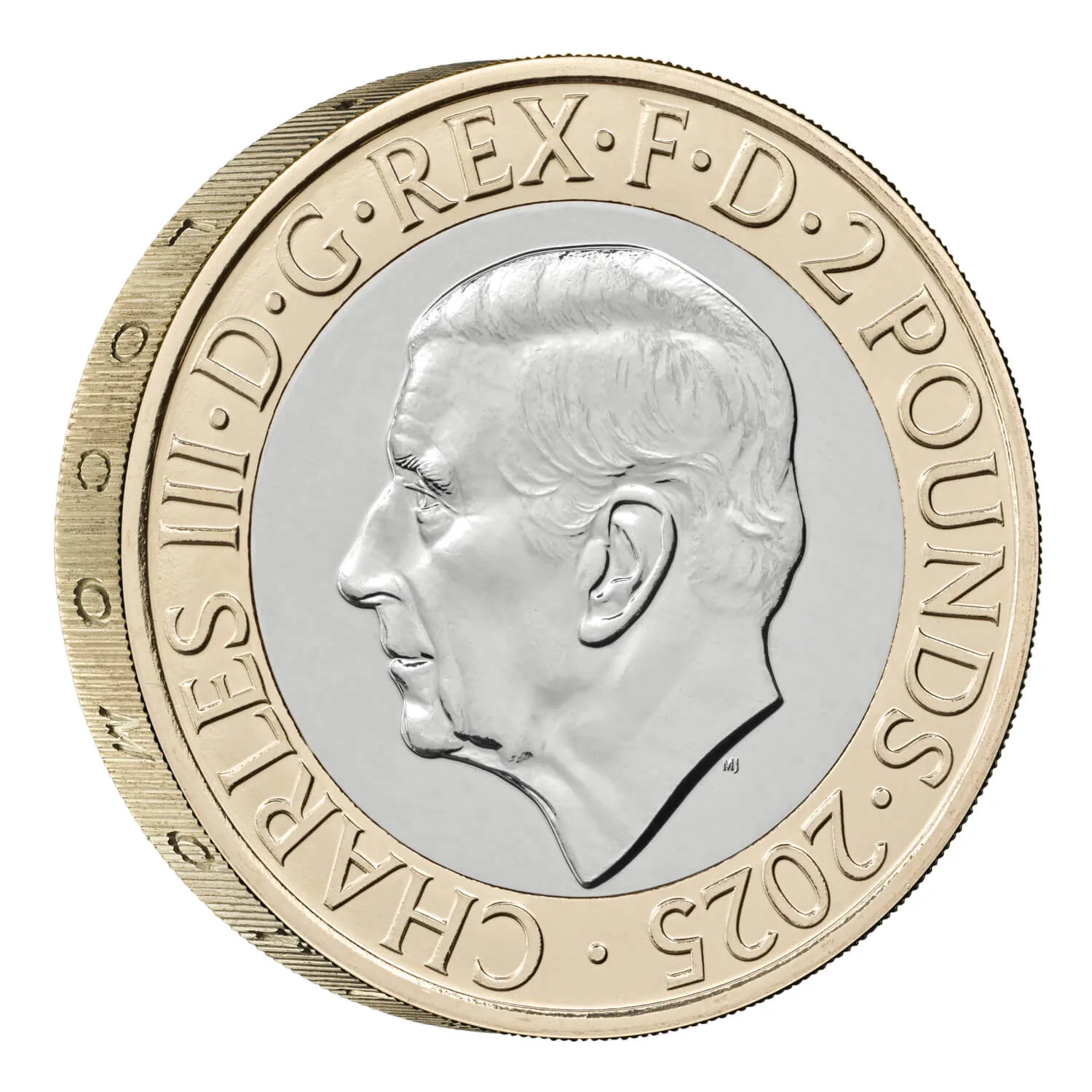
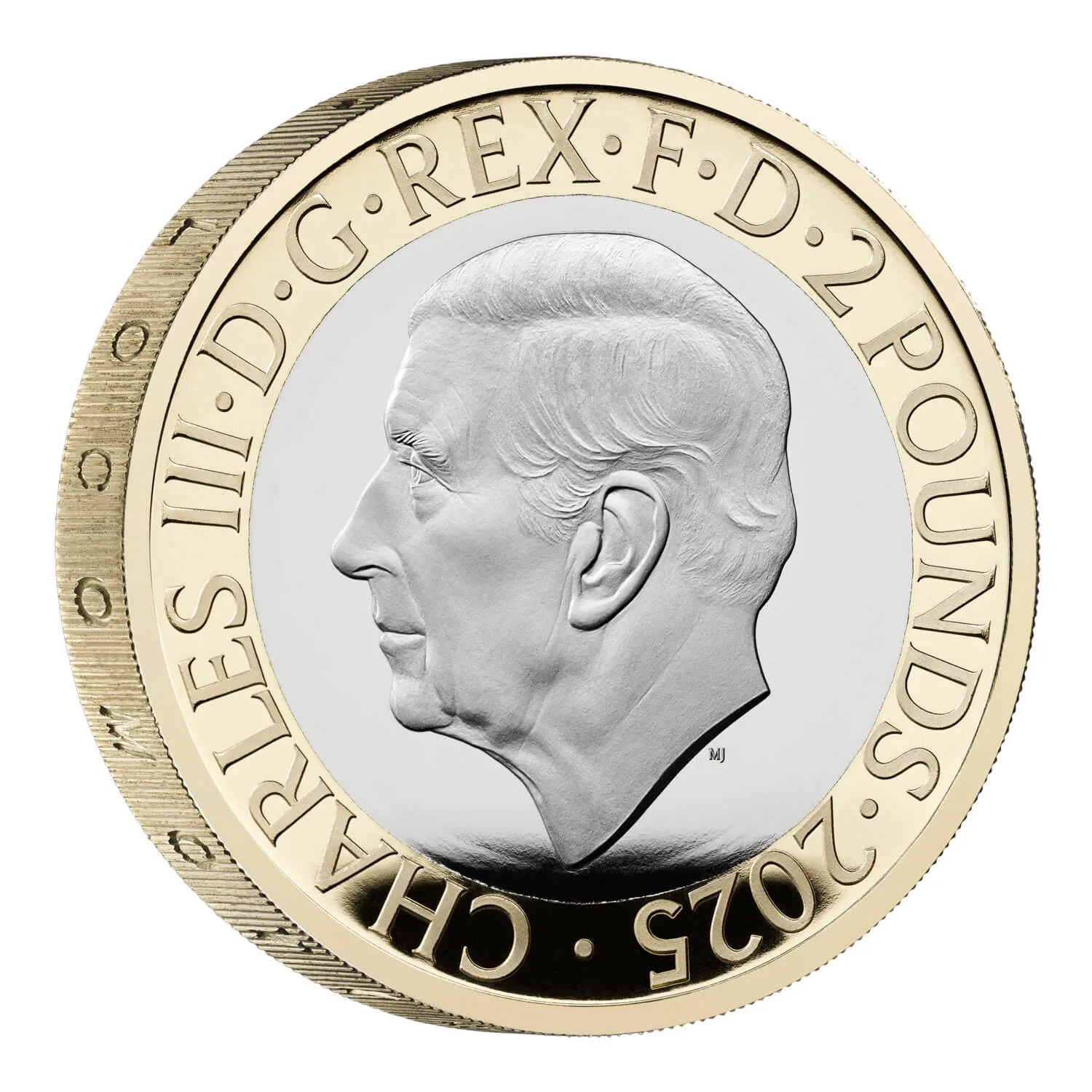
The official side carries the first portrait of King Charles III by Martin Jennings — an uncrowned head facing left. The legend «CHARLES III · D · G · REX · F · D · 2 POUNDS · 2025 ·» runs around, with the artist's initials «MJ» at the truncation of the portrait. This is the standard obverse of Charles III coins and is the same across all versions of the issue.
Reverse
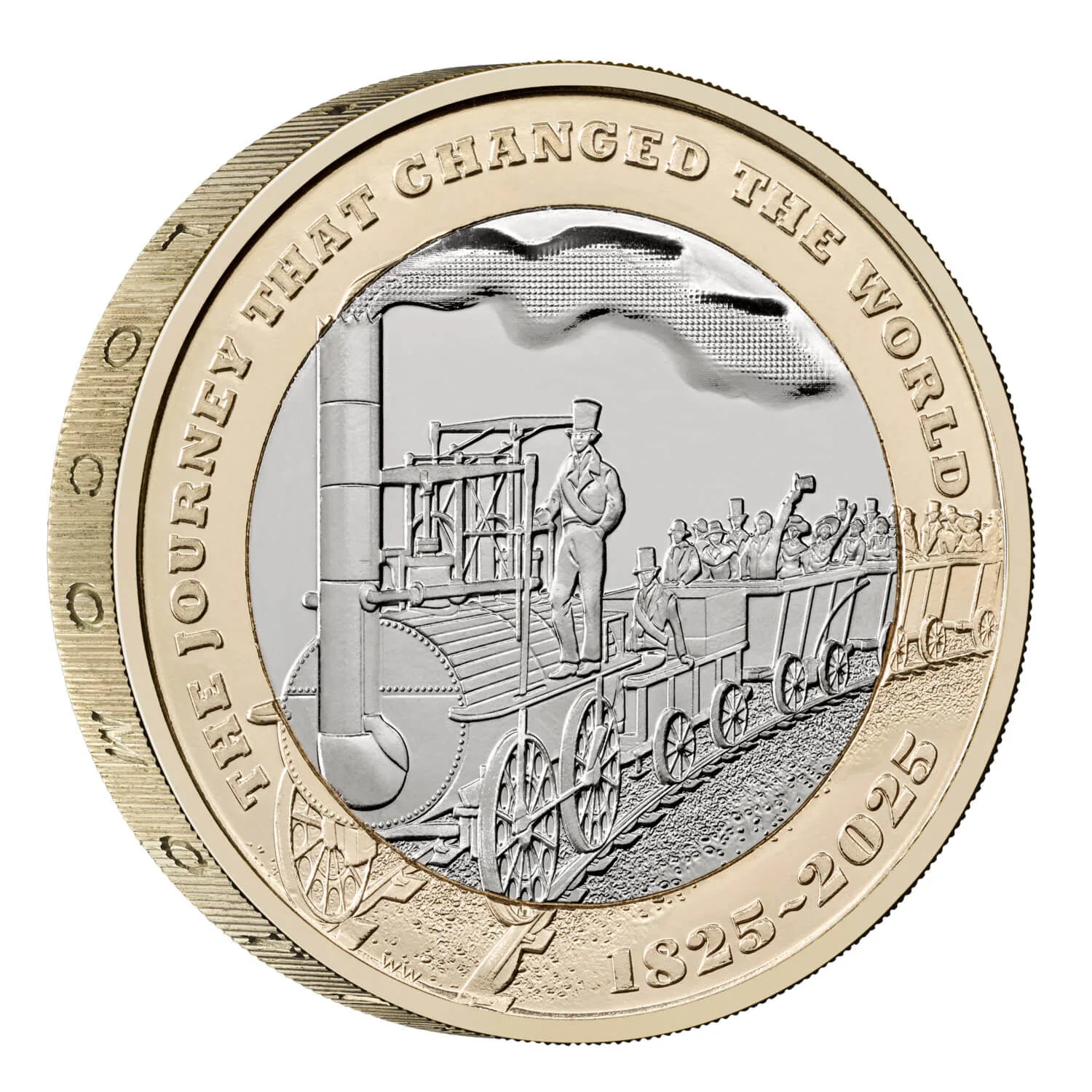
The artistic side is the work of William Webb. Locomotion No. 1 with its tender and three open wagons travels to the left; engineer George Stephenson stands on the locomotive's side plate, with passengers visible in the wagons. Around runs the inscription «THE JOURNEY THAT CHANGED THE WORLD» and the dates «1825–2025». The edge bears the incuse lettering «• ACTIVE • LOCOMOTION NO 1».