
Brilliant Uncirculated Hylaeosaurus 2020 UK 50p Coin
PDFGeneral information


Description
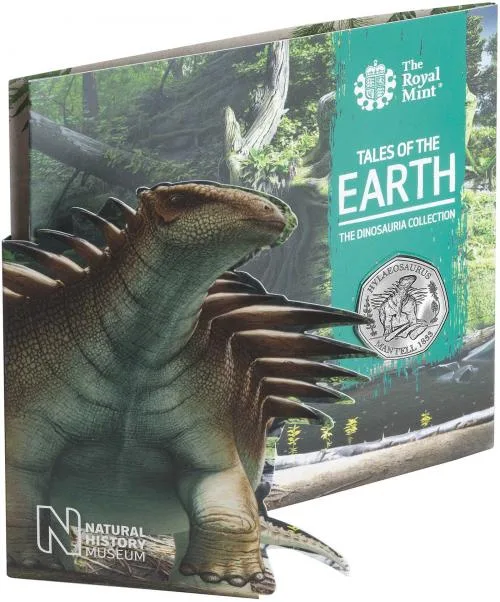
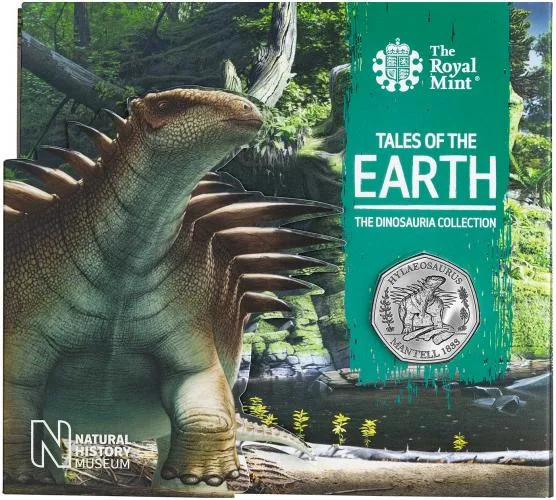
The “Hylaeosaurus” coin belongs to “The Dinosauria Collection” of the “Tales of the Earth” series, which the Royal Mint of Great Britain issues jointly with the Natural History Museum in London. The coin was released on 1 June 2020.
Hylaeosaurus, described by Gideon Mantell in 1833, became the first armoured dinosaur known to science. Its remains were found in Early Cretaceous deposits in the south of England; the name means “woodland lizard”. The animal’s back was protected by rows of bony plates and long spines along the sides of the body, while a powerful pelvis supported the heavy trunk. Together with Megalosaurus and Iguanodon, Hylaeosaurus formed the first triad of dinosaurs united by Richard Owen under the name Dinosauria — and it was precisely these three animals that, almost two centuries later, made up the first collection of the “Tales of the Earth” coin series.
Hylaeosaurus (Hylaeosaurus armatus) lived in the Early Cretaceous, around 135 million years ago; it reached about 5 metres in length and was herbivorous (an armoured dinosaur). The best-known finds come from the region of Sussex, England. Hylaeosaurus is considered one of the earliest representatives of the armoured dinosaurs, the ankylosaurs; its spines and plates are the earliest convincing example of defensive armament among dinosaurs.
“The Dinosauria Collection” opened the “Tales of the Earth” series, issued by the Royal Mint jointly with the Natural History Museum in London. In 2020 dinosaurs appeared for the first time in the history of the United Kingdom on coins: Megalosaurus, Iguanodon and Hylaeosaurus — the very three animals whose description in 1824–1833 began scientific palaeontology. The designs were created by the well-known British palaeoartist Robert Nicholls, and the scientific consultant was Sandra Chapman, a member of the Earth Sciences department of the Natural History Museum.
Obverse
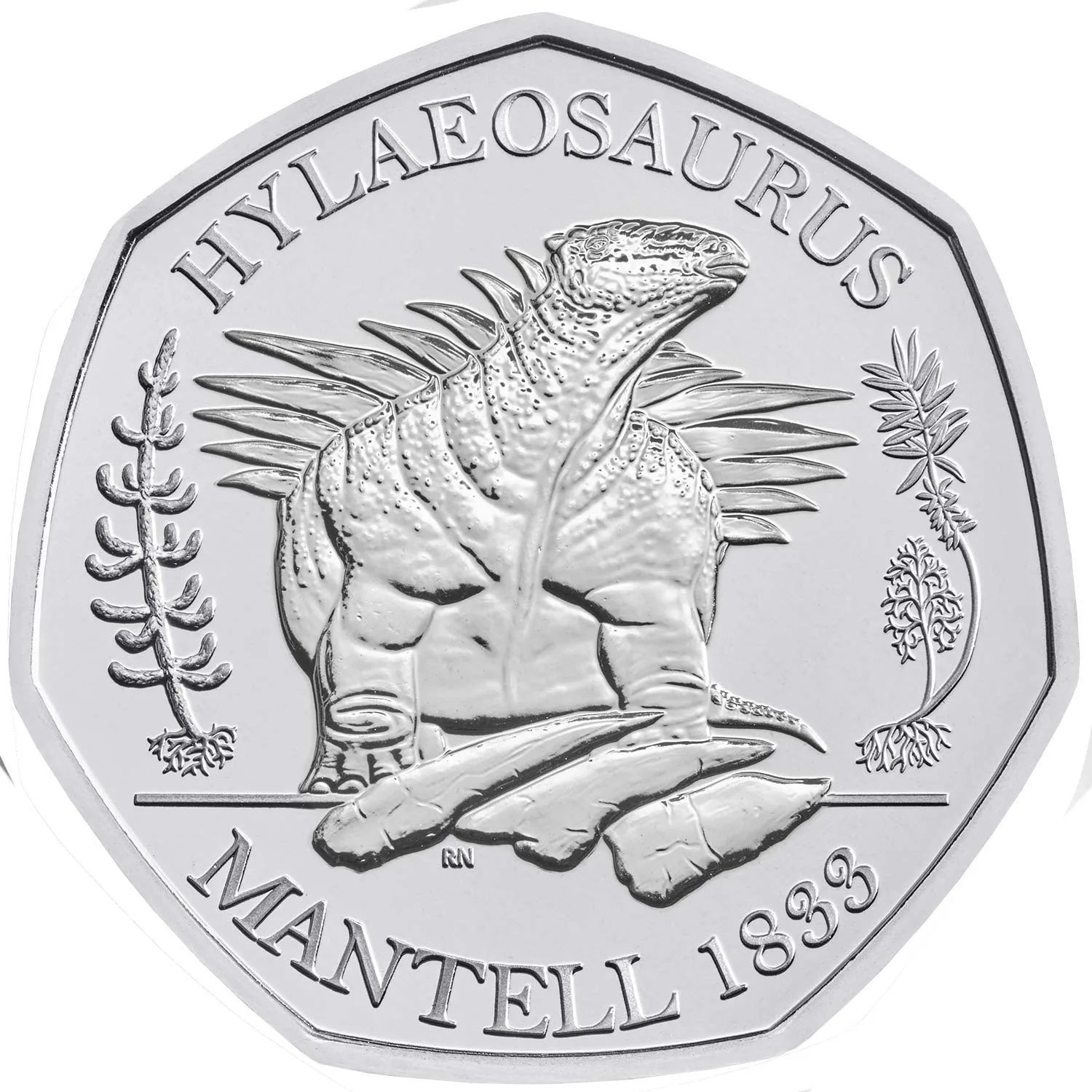
The reverse of the coin, by Robert Nicholls, depicts Hylaeosaurus in a defensive stance: the spines along its back raised, the head lifted, the tail serving as a counterweight. In the lower part are the animal’s skeleton and the inscription MANTELL 1833; along the edge of the coin runs the name HYLAEOSAURUS. The design of the artistic side was created by the palaeoartist Robert Nicholls — one of the most authoritative masters of palaeontological illustration, whose works are distinguished by scientific accuracy and attention to the habitat of ancient animals. The composition is built to show the animal in motion and at the same time give the viewer an idea of its size and structure.
Reverse
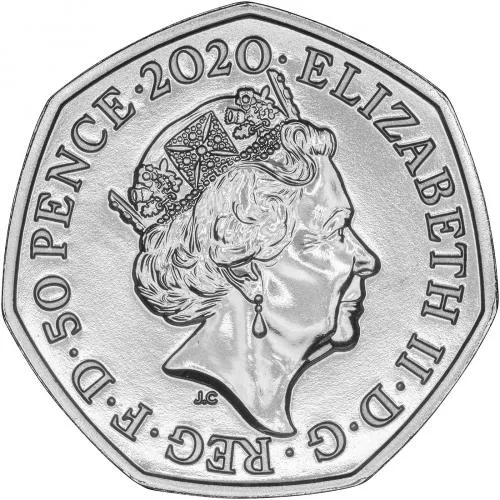
The official side carries the fifth royal portrait of Queen Elizabeth II, executed by the sculptor Jody Clark. The portrait is surrounded by a legend indicating the face value and year of issue, characteristic of coins of the United Kingdom. Thanks to the mirror field and matte relief the image of the monarch on coins of the collection reads especially clearly and underlines the status of the issue as official.
The coin is legal tender of the United Kingdom and was issued for collecting purposes. For collectors such issues are interesting not only for their artistic execution but also because each of them documents a particular stage in the scientific study of ancient life: from the first descriptions of fossil bones in the 19th century to modern reconstructions based on data from palaeontology, biomechanics and comparative anatomy. The Royal Mint and the Natural History Museum stress the educational aim of the series: the coins are meant to remind us that the history of life on Earth is measured in hundreds of millions of years, and that knowledge of it is built from finds, observations and the scientific debates of several generations of researchers. Each coin of the collection has a detailed relief: the figure of the animal is shown in its characteristic environment, while the skeleton beside it recalls the fossil finds thanks to which these creatures became known to science.