
Elizabeth II — The First Effigy
PDFGeneral information


Description
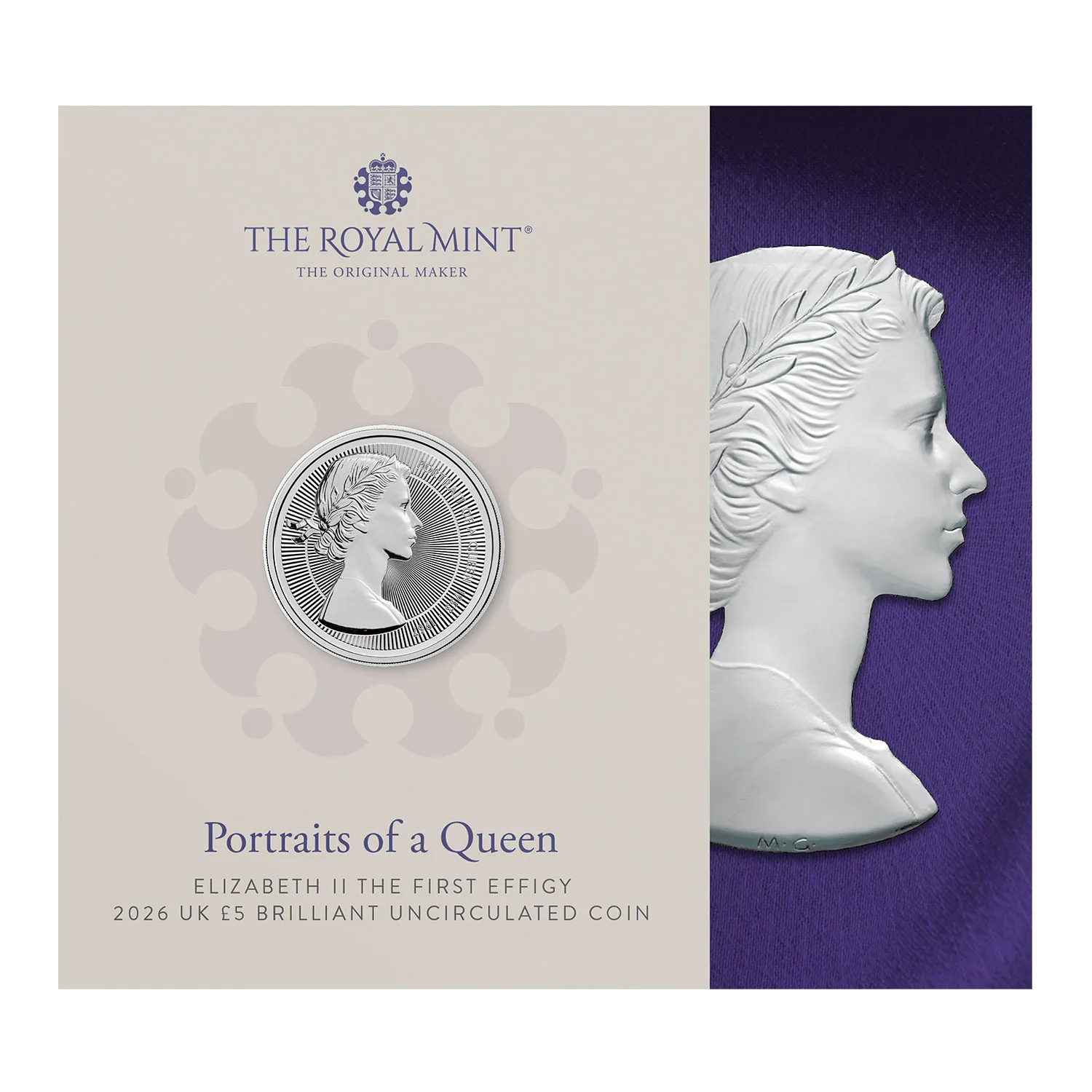
The year 2026 marks one hundred years since the birth of Queen Elizabeth II, and The Royal Mint celebrates the centenary with the Portraits of a Queen series. During her seventy-year reign five definitive portraits of the monarch appeared on British coins, and each of them is a mark of its era: by following the profile on the change in people’s pockets one can follow the changes in the country. The series opens with the first portrait, by the sculptor Mary Gillick, with which the Elizabethan image on coins began.
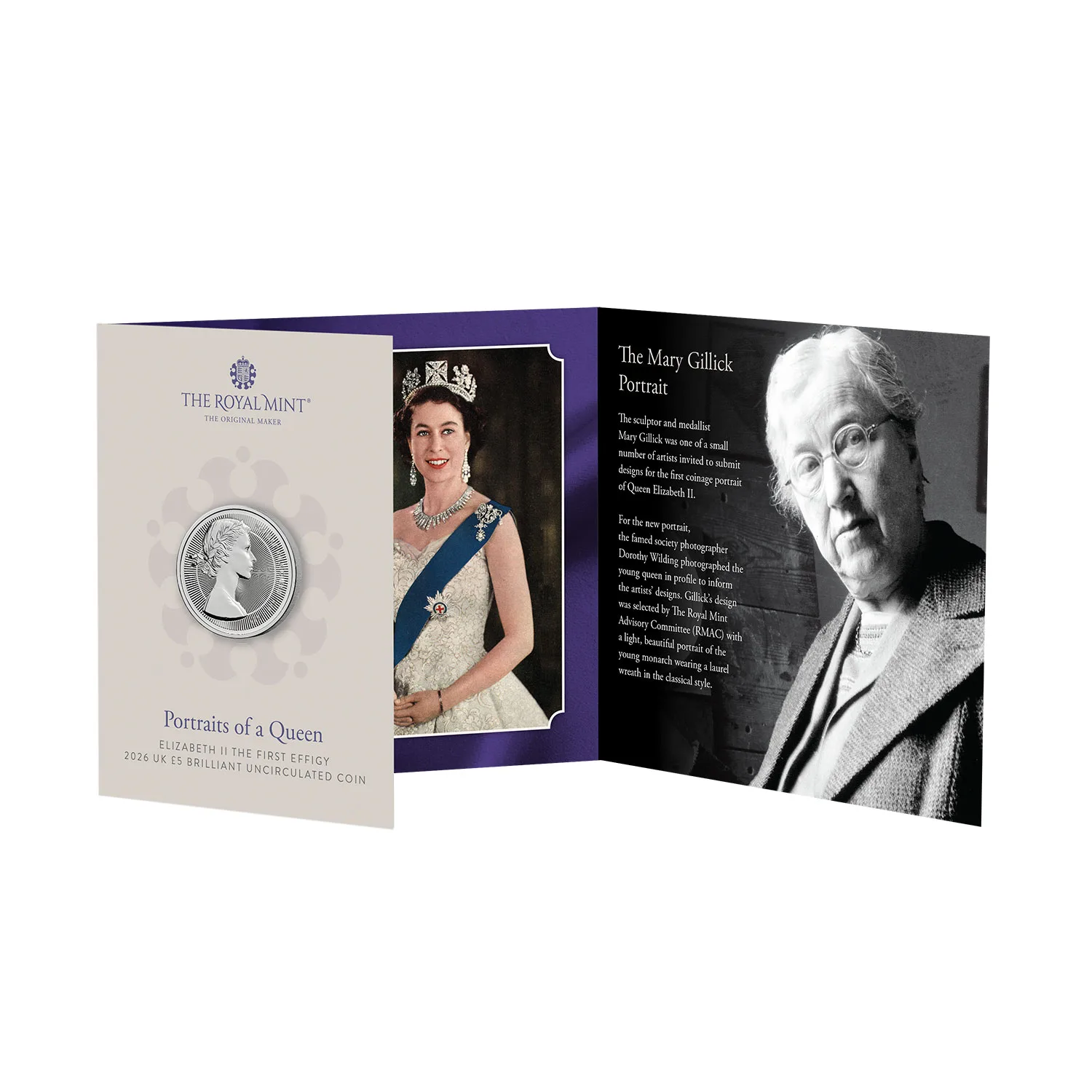
Elizabeth II came to the throne in February 1952 and was crowned on 2 June 1953; in the same year, 1953, her first official portrait appeared on coins. It stood for the start of a new era after the Second World War and the long years of rationing: the Queen looked youthful, fresh and optimistic, and the country, as people said at the time, was entering a “new Elizabethan age”. The competition to design the portrait was won by Mary Gillick (1881–1965), a sculptor and medallist whose career spanned the first half of the twentieth century. She received the commission in her seventies, which lends the story a particular beauty: the youngest image of the Queen was made by an artist in her mature years.
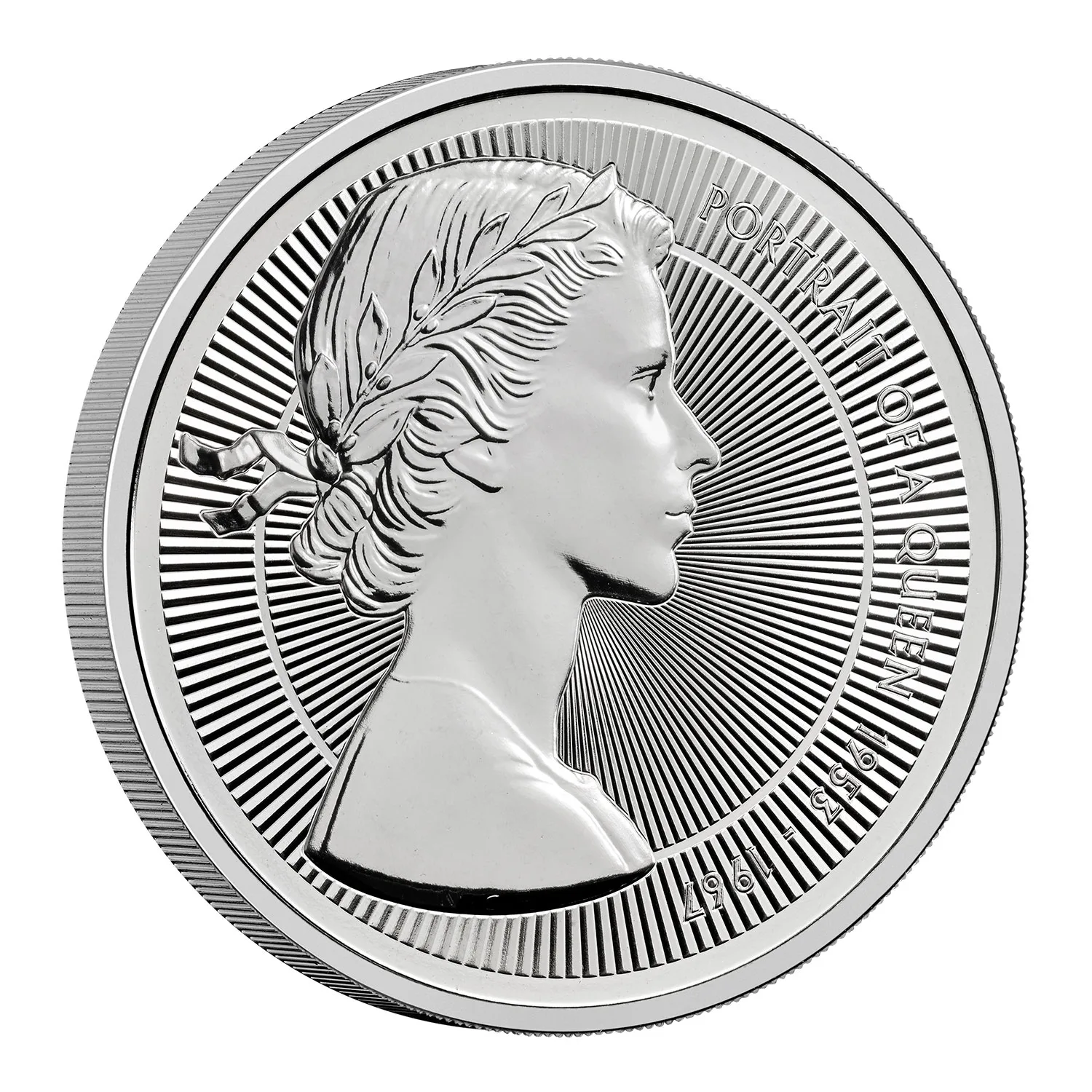
Gillick showed the Queen in profile facing right, bare-shouldered and without a crown: in its place her head is wreathed in laurel, tied with ribbons at the back, and her hair is swept back and rolled into a knot. The laurel wreath is a classic motif of British coinage, familiar from the coins of the seventeenth to early nineteenth centuries, and it gives the portrait a classical simplicity. The truncation follows the curve of the coin, and the image is gentle and free of ceremonial heaviness. The portrait was used on all British coins from 1953 until decimalisation at the end of the 1960s and afterwards remained on the annual Royal Maundy coins, the silver coins the monarch distributes on Maundy Thursday.
In the Portraits of a Queen release the image has been remastered by Gordon Summers, Chief Engraver at The Royal Mint: its lines have been redrawn, and radial lines run across the field to catch the light when the coin is turned, lending the portrait an aura of elegance and permanence. The inscription around the edge names the years when this profile led British coinage: “PORTRAIT OF A QUEEN 1953-1967”. The coin appeared on 8 September 2025 and opened the series; the portraits of Arnold Machin, Raphael Maklouf, Ian Rank-Broadley and Jody Clark followed.
This version of the release is in Brilliant Uncirculated quality, the most accessible for a collector: the strike is noticeably finer than on coins in everyday circulation, and the first effigy by Mary Gillick reads crisply. For many collectors the series begins with this version: a coin with the portrait of the years 1953–1967 is a modest enough purchase to collect all five effigies in turn. The radial lines engraved by Gordon Summers are easy to see on such a coin when it is turned under a lamp, and the details, namely the laurel wreath with ribbons and the bare shoulders, are clear and well defined. The coin with the work of Mary Gillick is legal tender in the United Kingdom, but it is made not for the purse: its place is in a collection beside the other portraits of the Queen.
Obverse
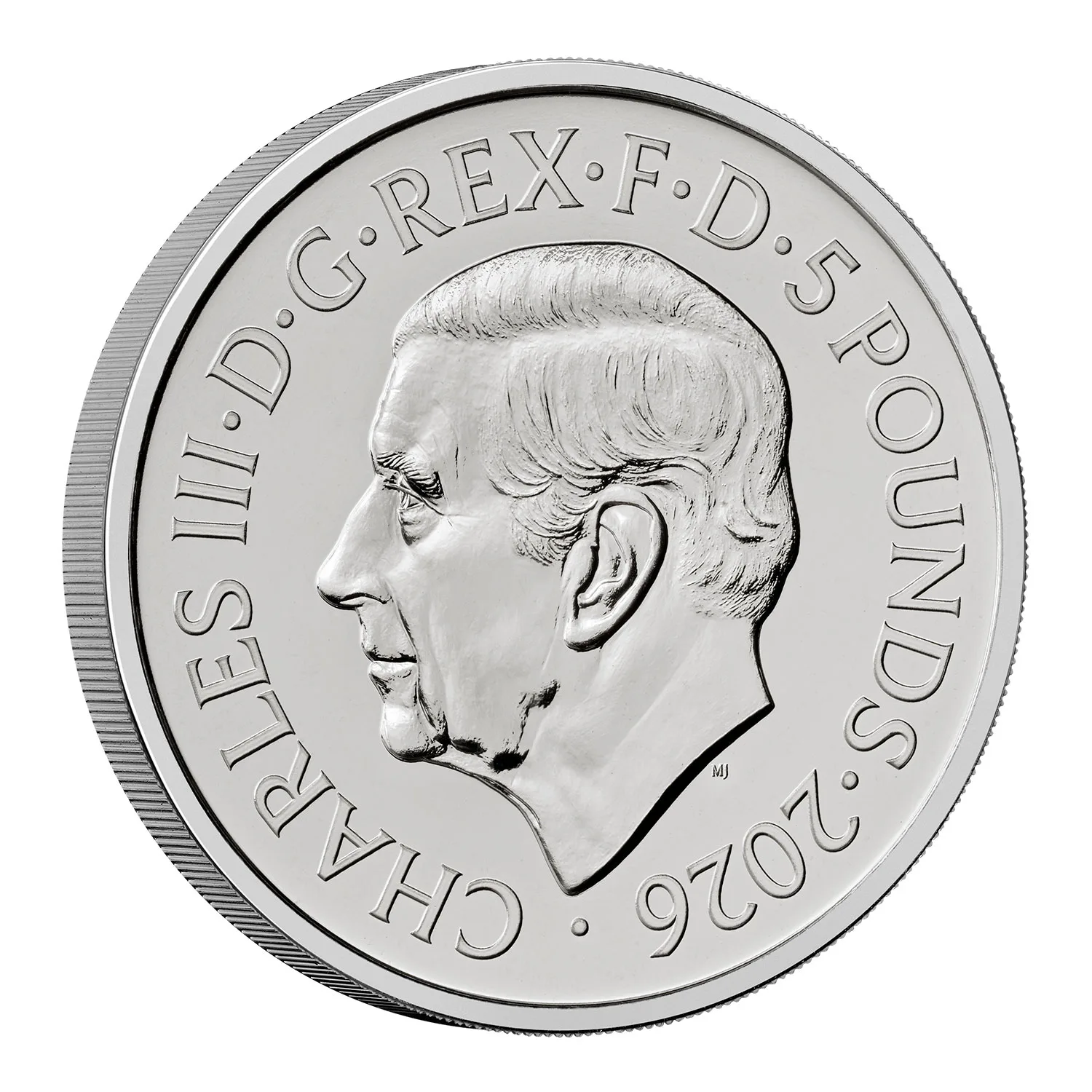
The official side bears the portrait of King Charles III by Martin Jennings, the reigning monarch under whom the coin was issued. The legend runs around the rim: “CHARLES III · D · G · REX · F · D · 5 POUNDS · 2026”, giving the King’s title, the denomination of five pounds and the year. Thus mother and son meet on a single coin, a tradition the mint stresses throughout the series.
Reverse
The artistic side shows the young Elizabeth II in profile facing right, wearing a laurel wreath tied with ribbons and with bare shoulders: Mary Gillick’s portrait of 1953, redrawn by Gordon Summers. Radial lines run across the field and play in the light. The legend “PORTRAIT OF A QUEEN 1953-1967” names the years when this portrait graced British coins.