
Elizabeth II — The Second Effigy
PDFGeneral information


Description
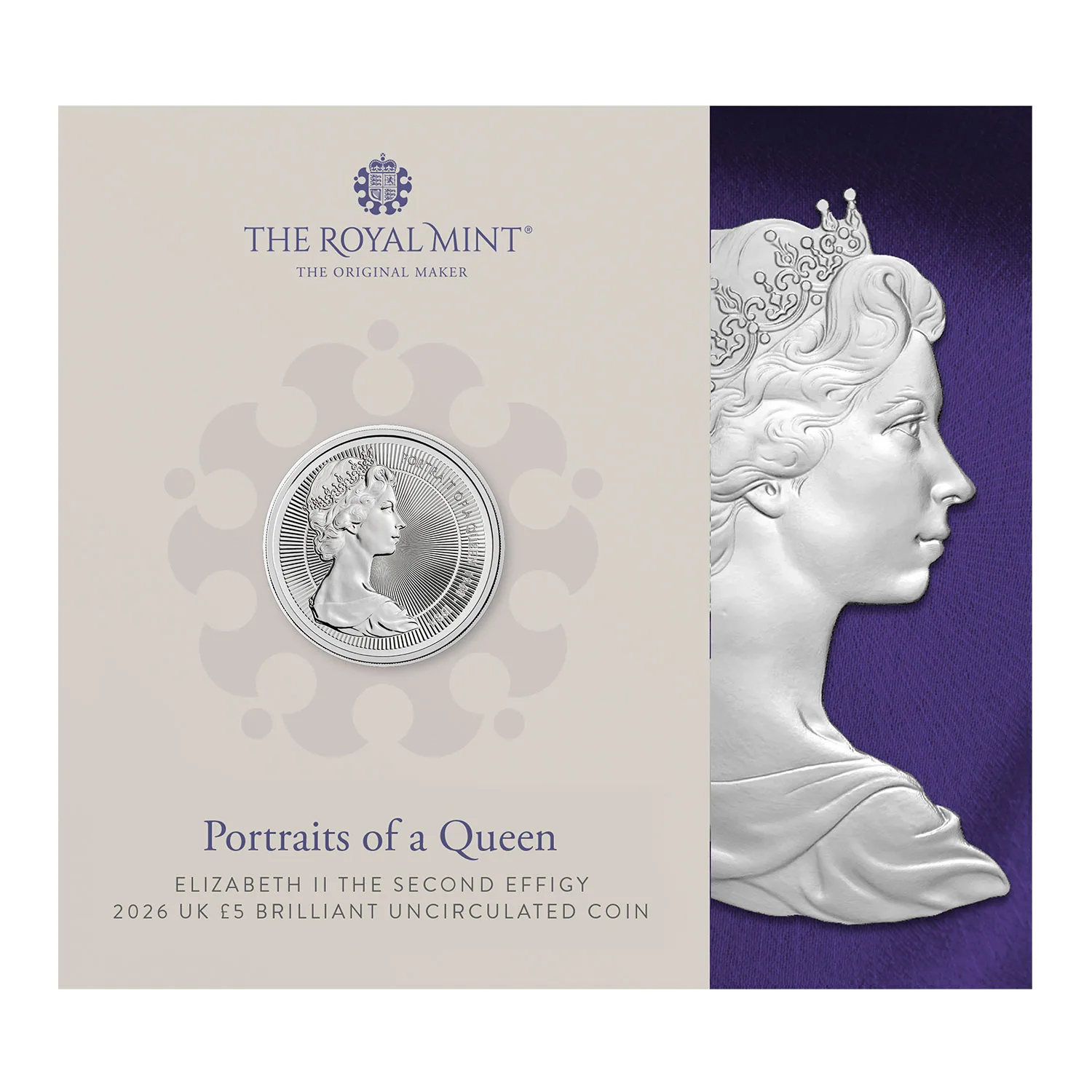
The year 2026 marks one hundred years since the birth of Queen Elizabeth II, and The Royal Mint celebrates the centenary with the Portraits of a Queen series. During her seventy-year reign five definitive portraits of the monarch appeared on British coins, and each of them is more than a likeness: it is a mark of its era, and by following the profile on the small change in people's pockets one can follow the changes in the country itself. The second coin in the series is devoted to the portrait by Arnold Machin, which millions of people held in their hands without ever wondering who had made it.
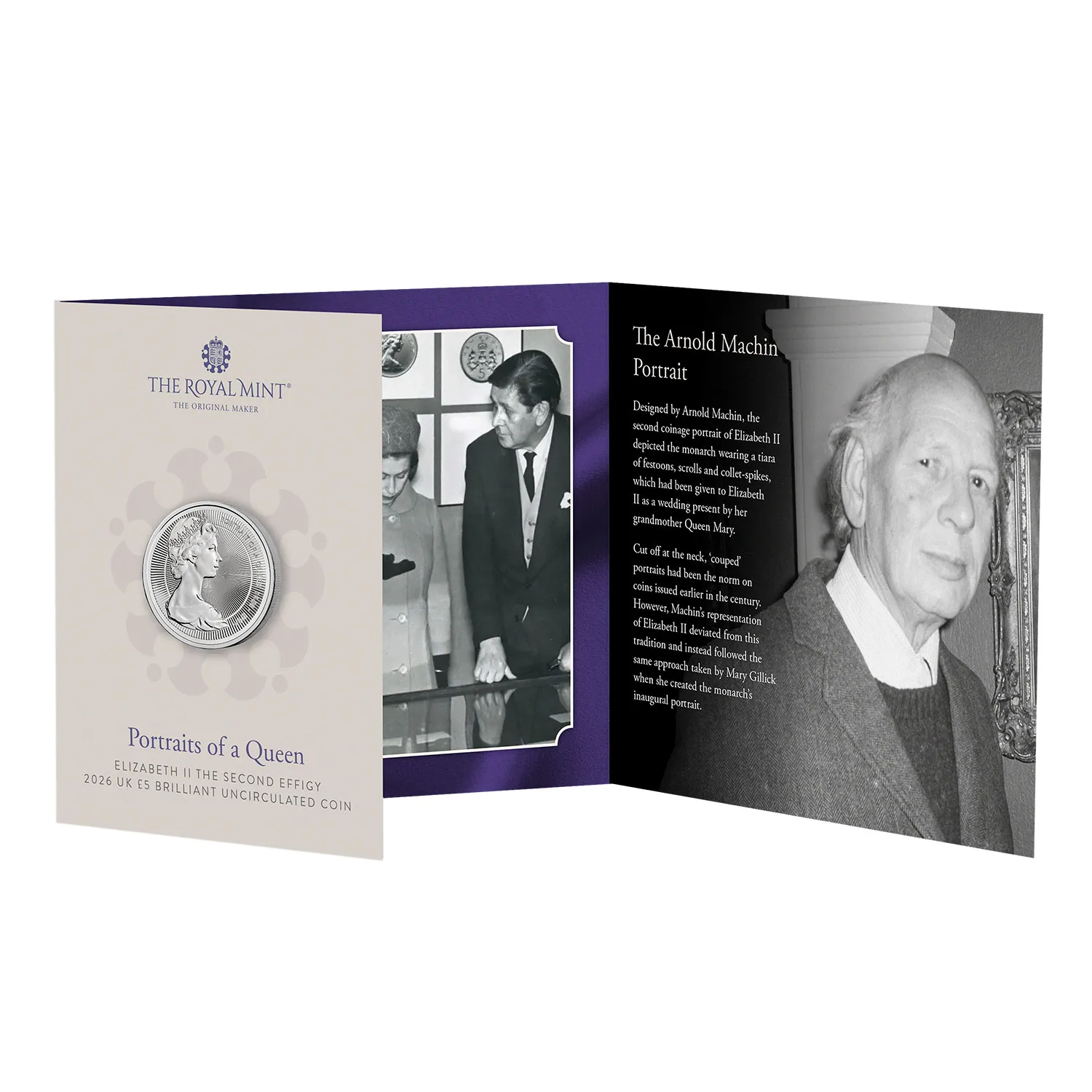
The portrait was needed because of decimalisation. Machin was chosen to design the new image of the Queen in 1964, when decimal coinage was being prepared. A sculptor and artist, he was born in 1911 in Stoke-on-Trent, began at fourteen as an apprentice china painter at Minton, later learned to sculpt, rose to the Royal Academy and was appointed OBE in 1965. The first decimal coins, the 5p and 10p, entered circulation as early as 1968, three years before Decimal Day on 15 February 1971. They matched the size and value of the old shilling and florin and circulated alongside them as “decimal twins”, preparing the public for the change. To make the new coins stand out from the old ones, they carried a fresh portrait of the Queen.
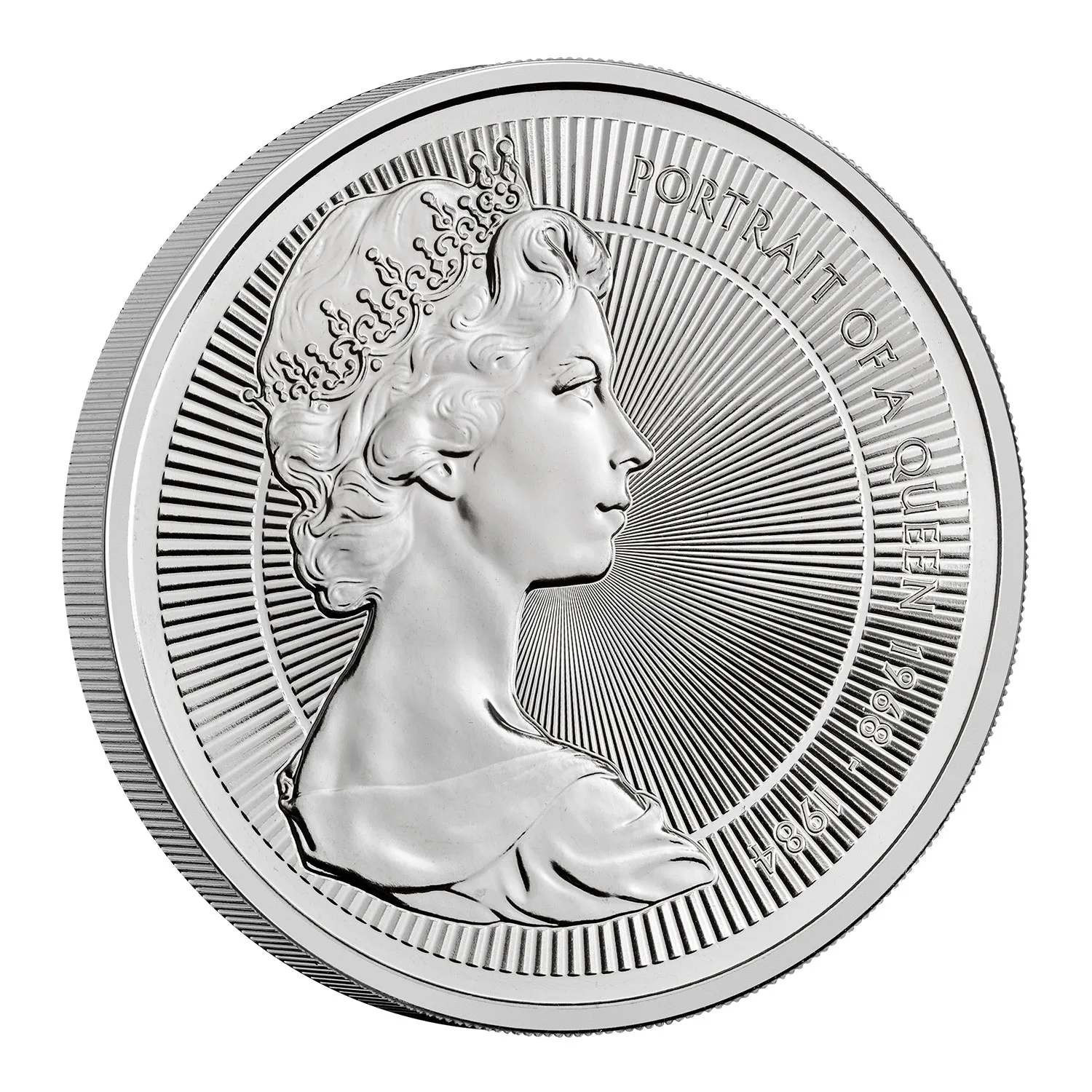
Machin showed Elizabeth II wearing a tiara of festoons, scrolls and collet-spikes. It is the Girls of Great Britain and Ireland tiara, a wedding present from her grandmother Queen Mary in 1947. Like Mary Gillick before him, Machin avoided the “couped” portrait cut off at the neck that had been the norm on coins earlier in the century: the shoulders and drapery remain in view, and the result is both soft and solemn. The hair falls in gentle waves, the face is calm and focused. It was the likeness of a young woman already carrying the crown with assurance, a queen of an age of change.
The same artist created the famous postage stamp: in 1966 the Queen approved his bas-relief profile for the Machin definitive stamps, first issued in 1967. It is thought to be one of the most reproduced works of art in history, with some 320 billion copies. The coin portrait remained in use on British coins until 1984, and abroad on the coins of Canada (1965–1989), Australia (1966–1984) and New Zealand (1967–1985). For sixteen years, from 1968 to 1984, this profile was the face of British decimal coinage, accompanying the country from the first “decimal twins” through Decimal Day and on into everyday change.
In the new Portraits of a Queen release the image has been remastered by Gordon Summers, Chief Engraver at The Royal Mint: the design has been faithfully restored for a new generation of collectors, and radial lines engraved across the field catch the light when the coin is turned, lending the portrait an aura of elegance and permanence. The inscription around the edge recalls the years when this profile led British coinage: “PORTRAIT OF A QUEEN 1968-1984”. The release appeared on 4 November 2025 and, as the second in the series, continued the story begun with Mary Gillick’s portrait (1953–1967); the portraits of Raphael Maklouf, Ian Rank-Broadley and Jody Clark follow.
This version of the release is in Brilliant Uncirculated quality, the most accessible for a collector: the strike is noticeably finer than on coins in everyday circulation, and the second effigy by Arnold Machin reads crisply. For many collectors the series begins with this version: a coin with the portrait of the years 1968–1984 is a modest enough purchase to collect all five effigies in turn. The radial lines engraved by Gordon Summers are easy to see on such a coin when it is turned under a lamp, and the details, namely the tiara of festoons, scrolls and collet-spikes, are clear and well defined. The coin with the work of Arnold Machin is legal tender in the United Kingdom, but it is made not for the purse: its place is in a collection beside the other portraits of the Queen.
Obverse
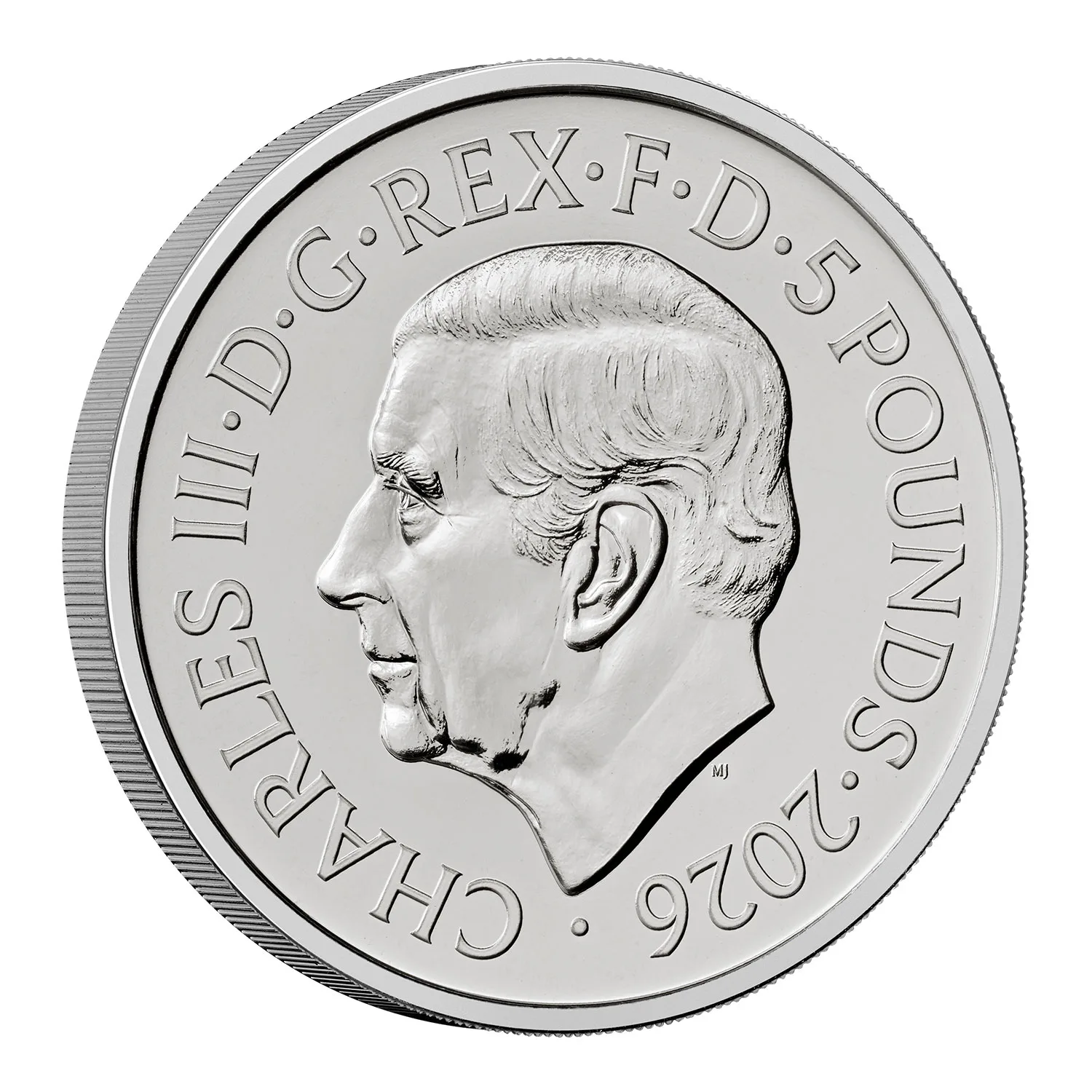
The official side bears the portrait of King Charles III by Martin Jennings, the reigning monarch under whom the coin was issued. The legend runs around the rim: “CHARLES III · D · G · REX · F · D · 5 POUNDS · 2026”, giving the King’s title, the denomination of five pounds and the year. Thus mother and son meet on a single coin, a tradition the mint stresses throughout the series.
Reverse
The artistic side shows the profile of the young Elizabeth II facing right, wearing a tiara of festoons, scrolls and collet-spikes with drapery at the shoulders: Arnold Machin’s portrait of 1968, redrawn by Gordon Summers. The field is struck with radial lines that play in the light. The legend “PORTRAIT OF A QUEEN 1968-1984” names the years when this portrait graced British coins.