
Elizabeth II — The Third Effigy (silver proof piedfort)
PDFGeneral information


Description
The year 2026 marks one hundred years since the birth of Queen Elizabeth II, and The Royal Mint celebrates the centenary with the Portraits of a Queen series, in which each of the monarch’s five definitive coinage portraits has a release of its own. The third coin of the series tells the story of the portrait by Raphael Maklouf — the image that looked out from British coins from 1985 to 1997 and gave them a formal, emphatically regal tone.
By the mid-1980s the mint decided to refresh the image of the monarch, and the commission went to the sculptor Raphael Maklouf. He worked at first from photographs, but then the Queen twice agreed to sit for him in person, and minor adjustments were made to the portrait following those sittings. The result was a stylised effigy: not an everyday snapshot but an image-symbol. Critics accused him of making the Queen look “flatteringly young”, but Maklouf replied that his intention had been “to create a symbol, regal and ageless”, and he was proud of it. It was a deliberate choice of ceremony and timeless sculptural form over likeness to her everyday appearance.
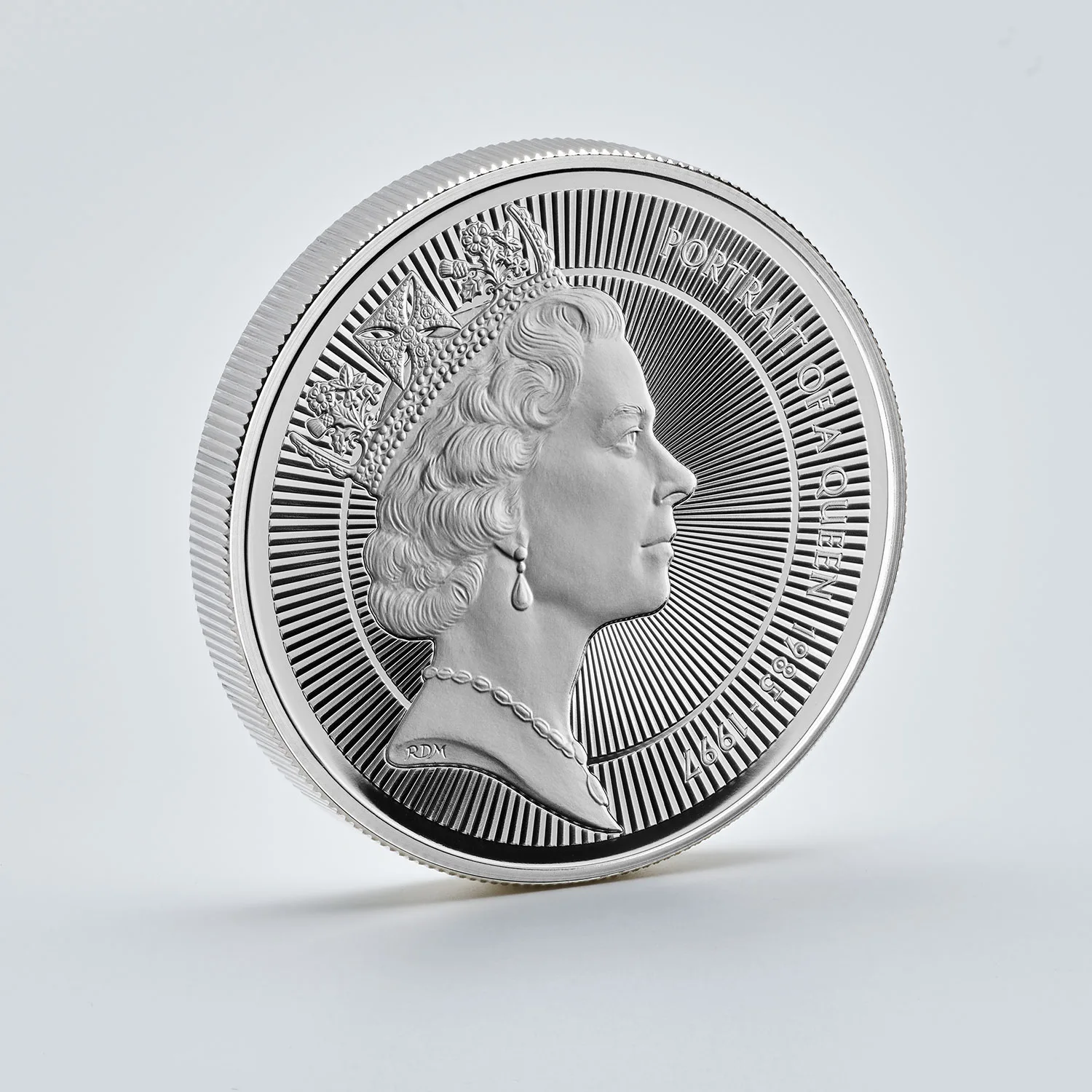
The bust is “couped”, cut off at the base of the neck, which the mint notes returned to a coin tradition that Gillick and Machin had set aside. The Queen is shown wearing the royal diadem that she wears on her way to and from the State Opening of Parliament, together with a necklace and earrings, reportedly a first for Elizabeth II’s coinage portraits. Specialists identify it as the George IV State Diadem. Below the truncation the artist’s initials “RDM” are just visible: Maklouf included his middle initial, D for David, to make sure the monogram would not be mistaken for a reference to The Royal Mint.
In the Portraits of a Queen release the effigy has been remastered by Gordon Summers, Chief Engraver at The Royal Mint. Radial lines run across the field and catch the light when the coin is turned, lending the image an aura of elegance and permanence. The inscription around the edge recalls the years when this portrait led British coinage: “PORTRAIT OF A QUEEN 1985-1997”. The coin appeared on 11 December 2025 as the third in the series, after the portraits of Mary Gillick and Arnold Machin; the releases with the portraits of Ian Rank-Broadley and Jody Clark followed.
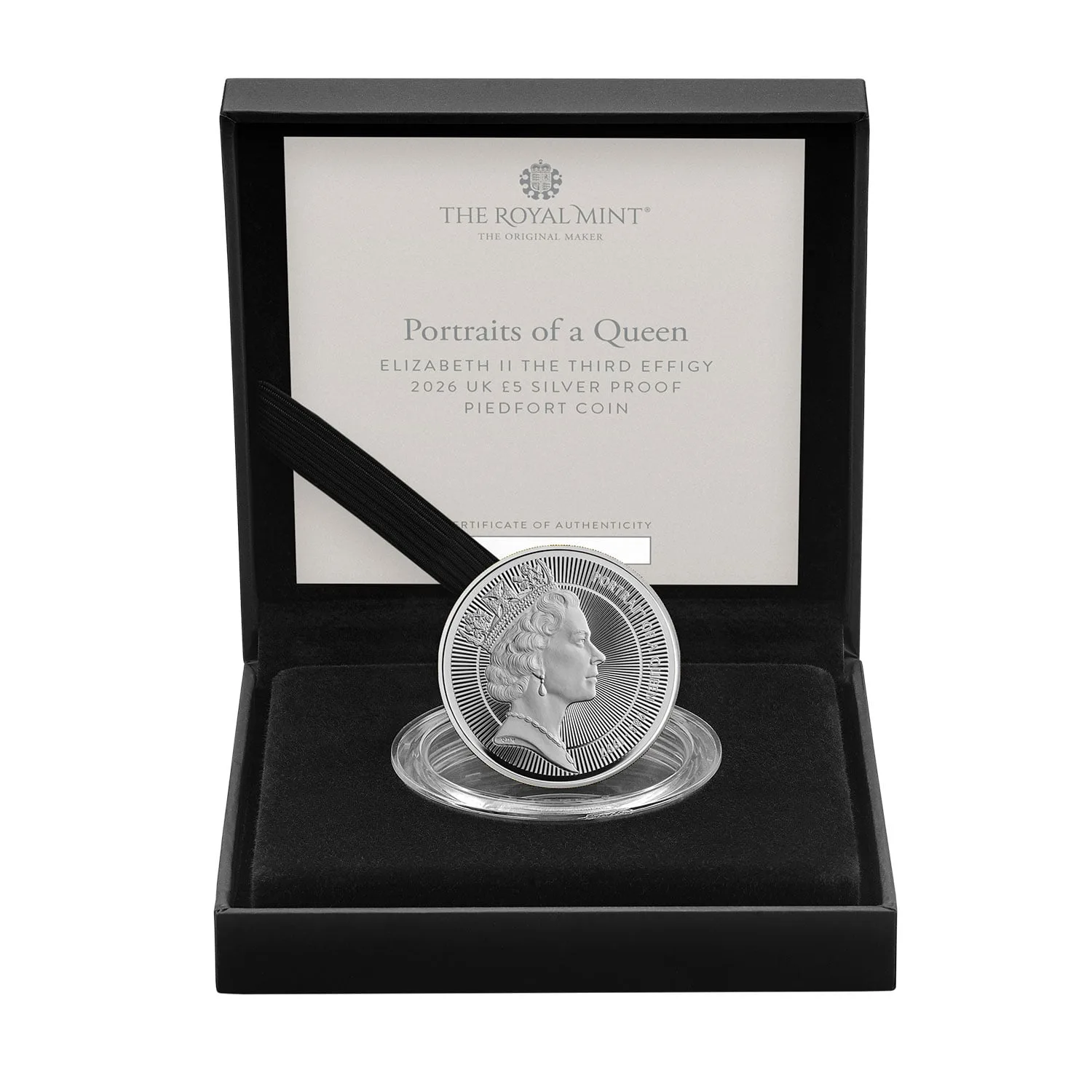
The silver piedfort is a separate version of the release. The word comes from the French pied fort, “strong foot”: a coin struck on a blank twice as thick and heavy as usual, on which the third effigy by Raphael Maklouf looks especially solemn. The tradition of piedforts reaches back to the Middle Ages, when they were made as gifts, patterns and keepsakes rather than for the purse, and the portrait of the years 1985–1997 continues that line. Here it is joined to proof quality: the mirror field and frosted relief set off the royal diadem, necklace and earrings. For the collector the piedfort with the work of Raphael Maklouf is the most substantial version of the release, issued in smaller numbers than the standard silver proof.
Obverse
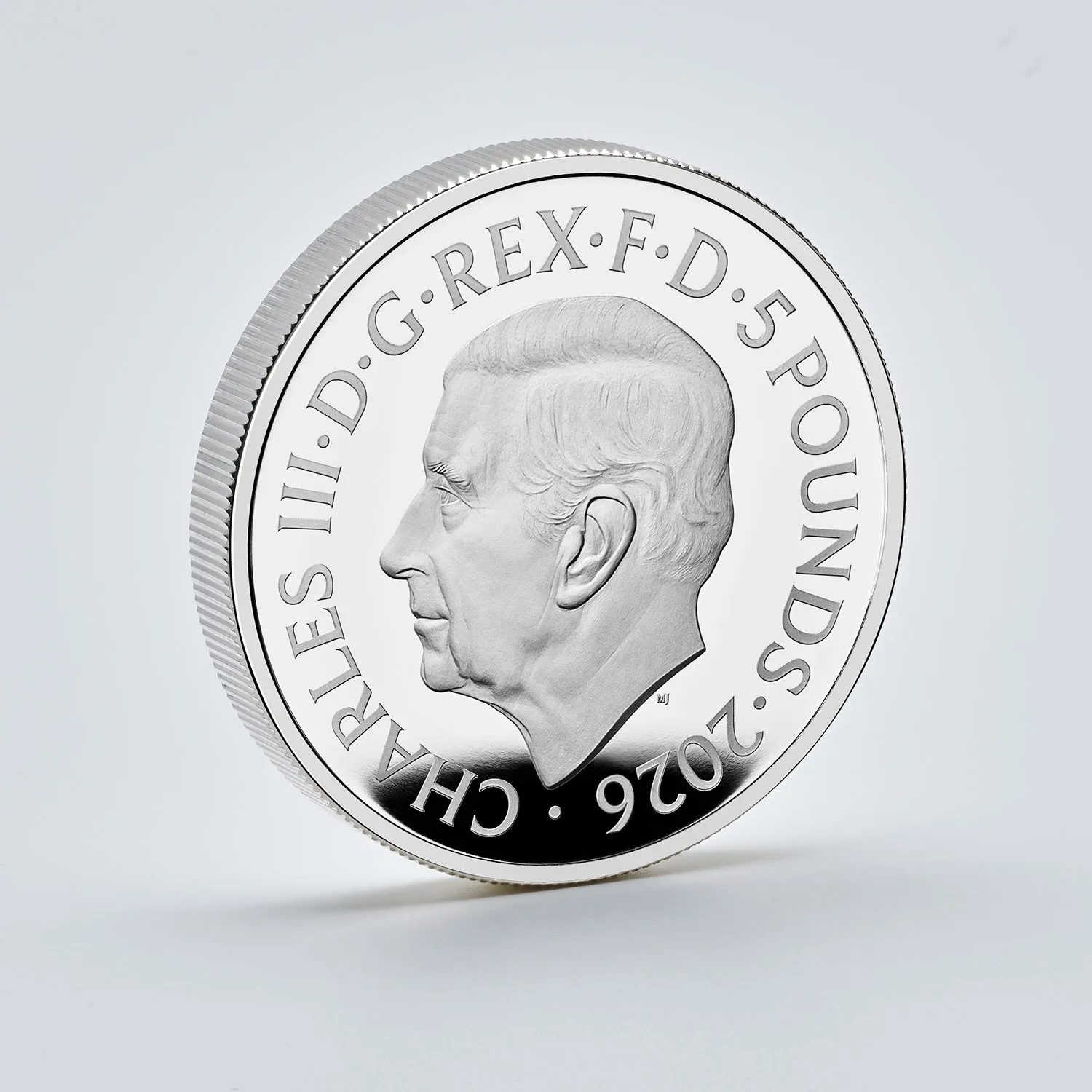
The official side bears the portrait of King Charles III by Martin Jennings, the reigning monarch under whom the coin was issued. The legend runs around the rim: “CHARLES III · D · G · REX · F · D · 5 POUNDS · 2026”, giving the King’s title, the denomination of five pounds and the year. Thus mother and son meet on a single coin, a tradition the mint stresses throughout the series.
Reverse
The artistic side shows Elizabeth II in profile facing right, wearing the royal diadem, a necklace and earrings: Raphael Maklouf’s portrait of 1985, redrawn by Gordon Summers. The artist’s initials “RDM” can be seen below the truncation. Radial lines run across the field and play in the light, and the legend “PORTRAIT OF A QUEEN 1985-1997” runs around the rim.