
Giant Deer 2024 UK 50p Brilliant Uncirculated Coin
PDFGeneral information
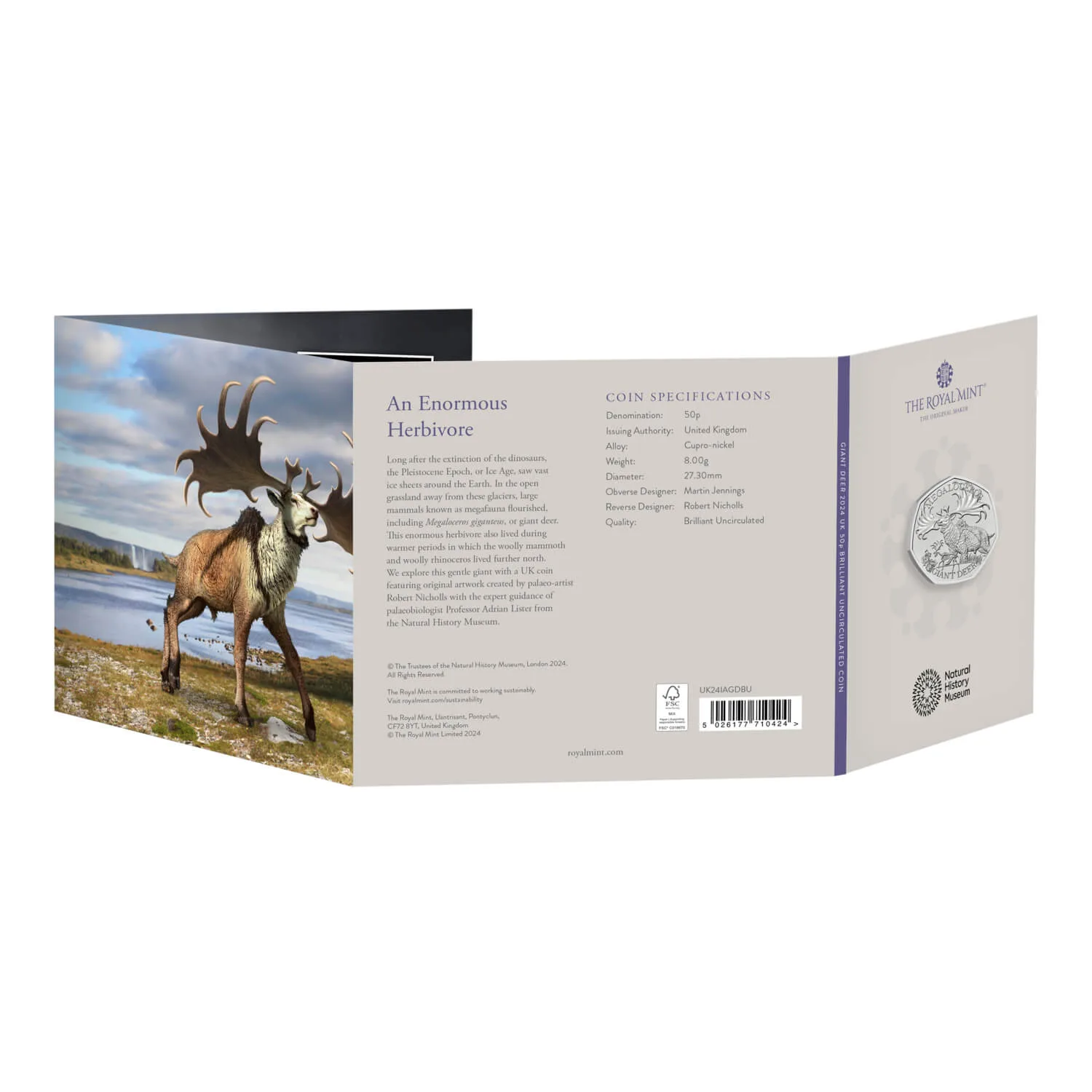


Description
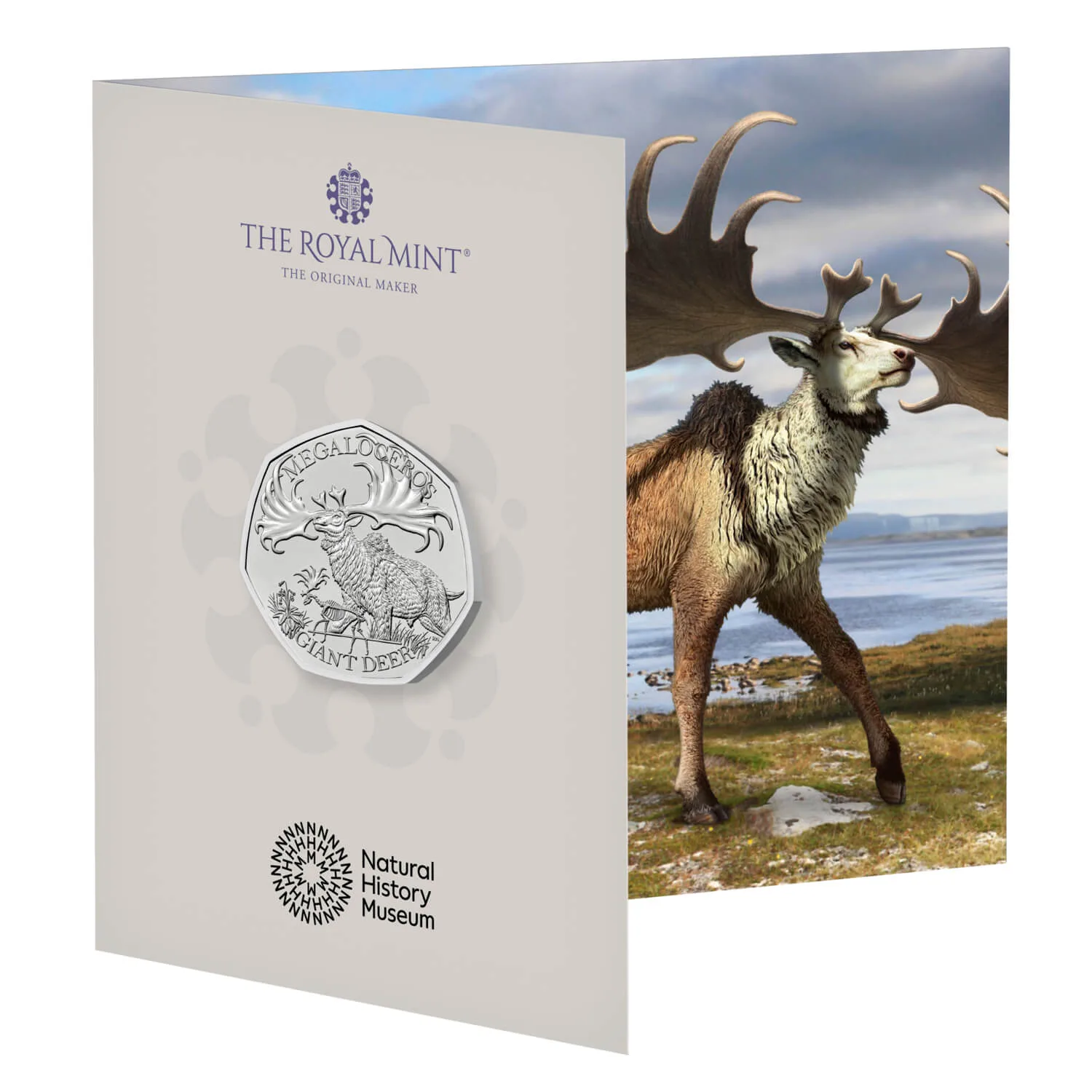
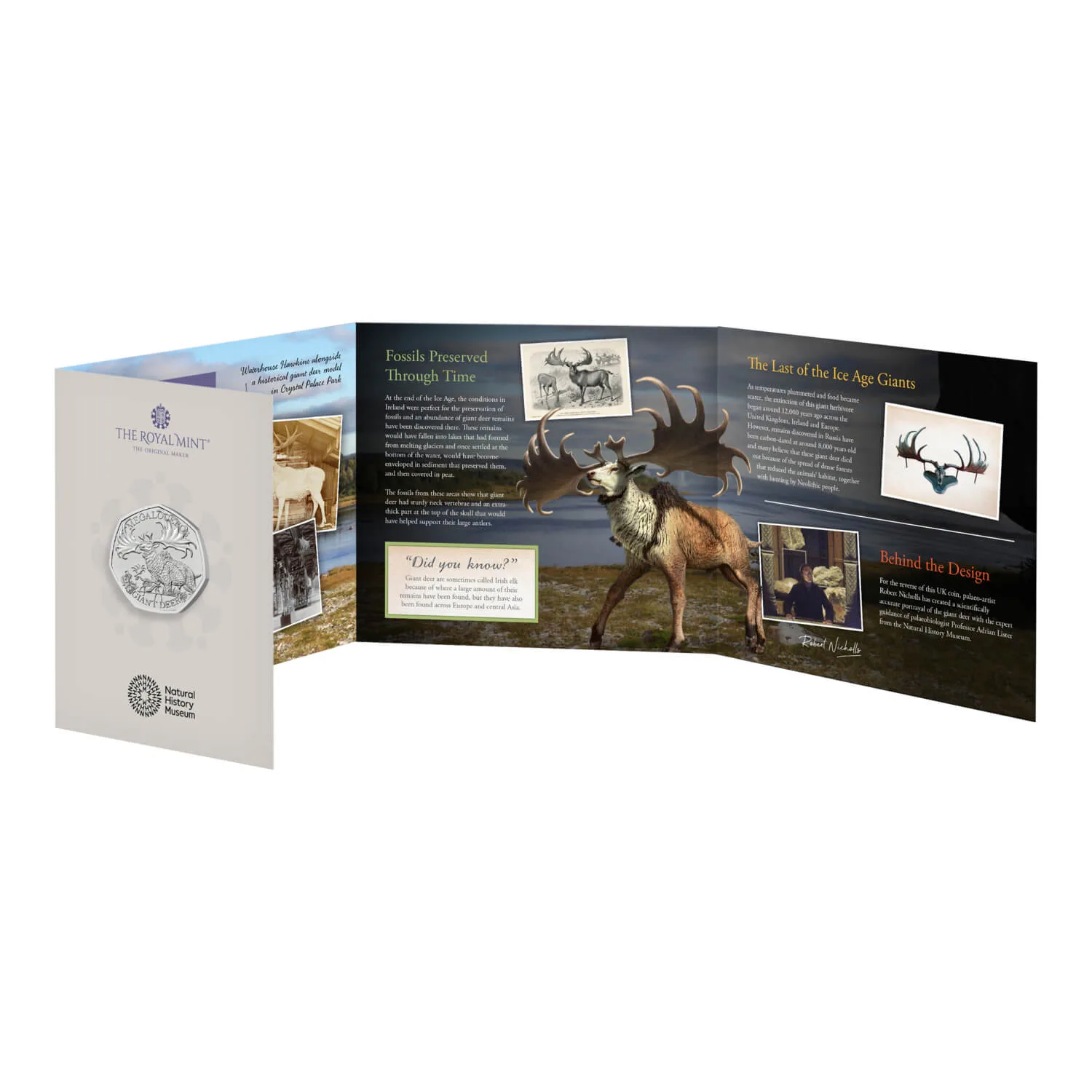
The “Giant Deer” coin belongs to “The Ice Age Giants” collection of the “Tales of the Earth” series, which the Royal Mint of Great Britain issues jointly with the Natural History Museum in London. The coin was released on 2 December 2024.
The giant deer, also known as the “Irish elk”, had the largest antlers of any known deer: their span reached three and a half metres and their weight forty kilograms. Adult males weighed up to seven hundred kilograms. These animals lived in the cold steppes and forest-steppes of Eurasia and died out at the end of the last ice age, around eight thousand years ago. Impressive skeletons of giant deer found in Irish peat bogs have become an adornment of the natural history museums of Europe, and the species was long regarded as a symbol of the ice-age epoch.
The giant deer (Megaloceros giganteus) lived in the Pleistocene, from about 400,000 to 8,000 years ago; it stood up to 2 metres at the shoulder, with an antler span of up to 3.5 metres, and was herbivorous. The best-known finds come from Ireland, Britain and Eurasia. The giant deer closes the “Ice Age Giants” collection and symbolises the megafauna that vanished after the end of the last glaciation.
“The Ice Age Giants” is the fourth part of the “Tales of the Earth” series, which appeared in 2024. After the dinosaurs the Royal Mint and the Natural History Museum turned to the megafauna of the Pleistocene: the steppe mammoth, the woolly rhinoceros and the giant deer appeared on coins — animals that lived in the cold steppes of Eurasia in the ice-age epoch. All three designs were created by the palaeoartist Robert Nicholls, with Professor Paul Barrett of the Natural History Museum in London as consultant.
Obverse
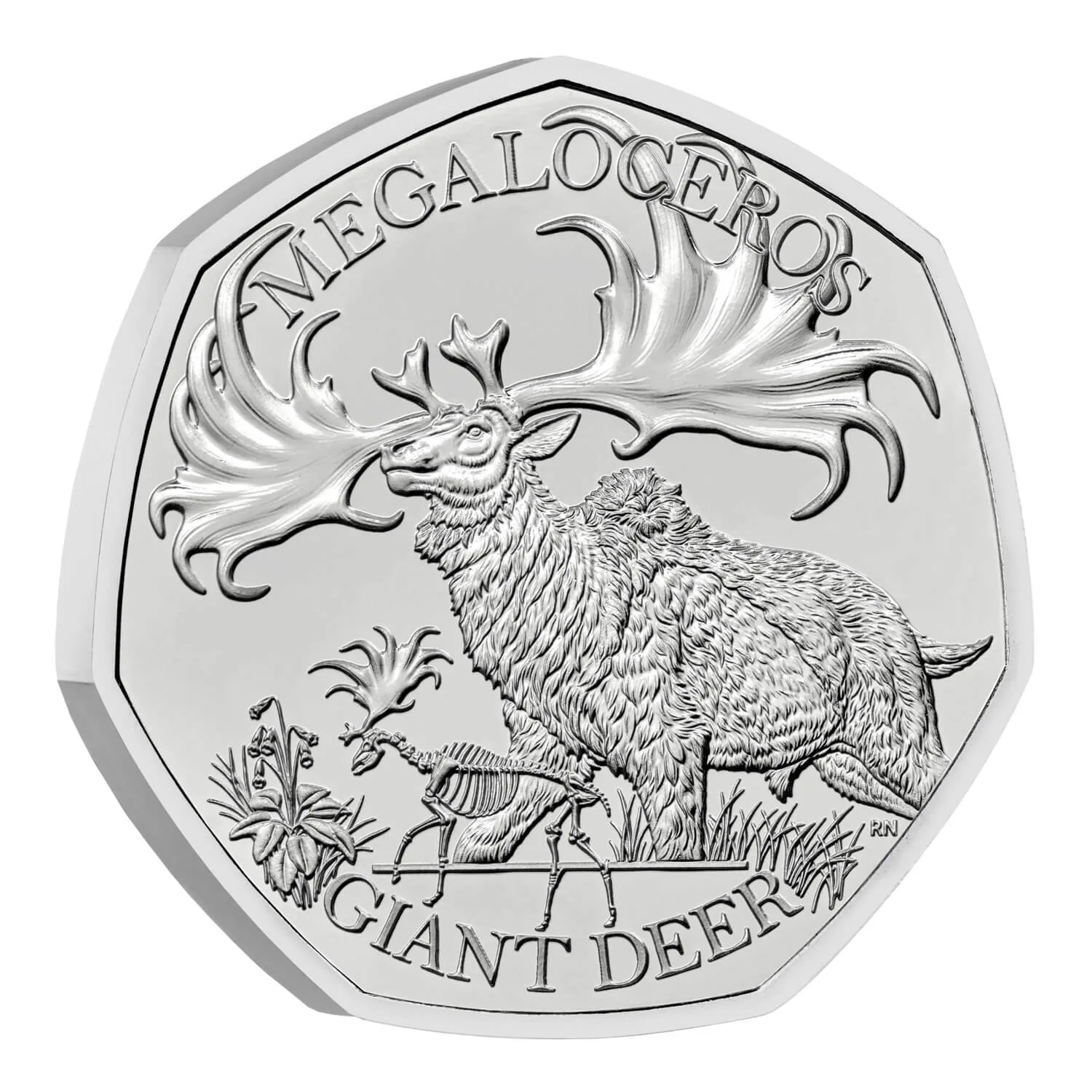
On the reverse of the coin, by Robert Nicholls, the giant deer is depicted at full height: enormous palmate antlers spread above the head, while the powerful neck and long legs emphasise the animal’s strength. Beneath the figure a skeleton is shown, along the edge of the coin run the inscriptions MEGALOCEROS and “GIANT DEER” with an indication of the epoch. The design of the artistic side was created by the palaeoartist Robert Nicholls — one of the most authoritative masters of palaeontological illustration, whose works are distinguished by scientific accuracy and attention to the habitat of ancient animals. The composition is built to show the animal in motion and at the same time give the viewer an idea of its size and structure.
Reverse
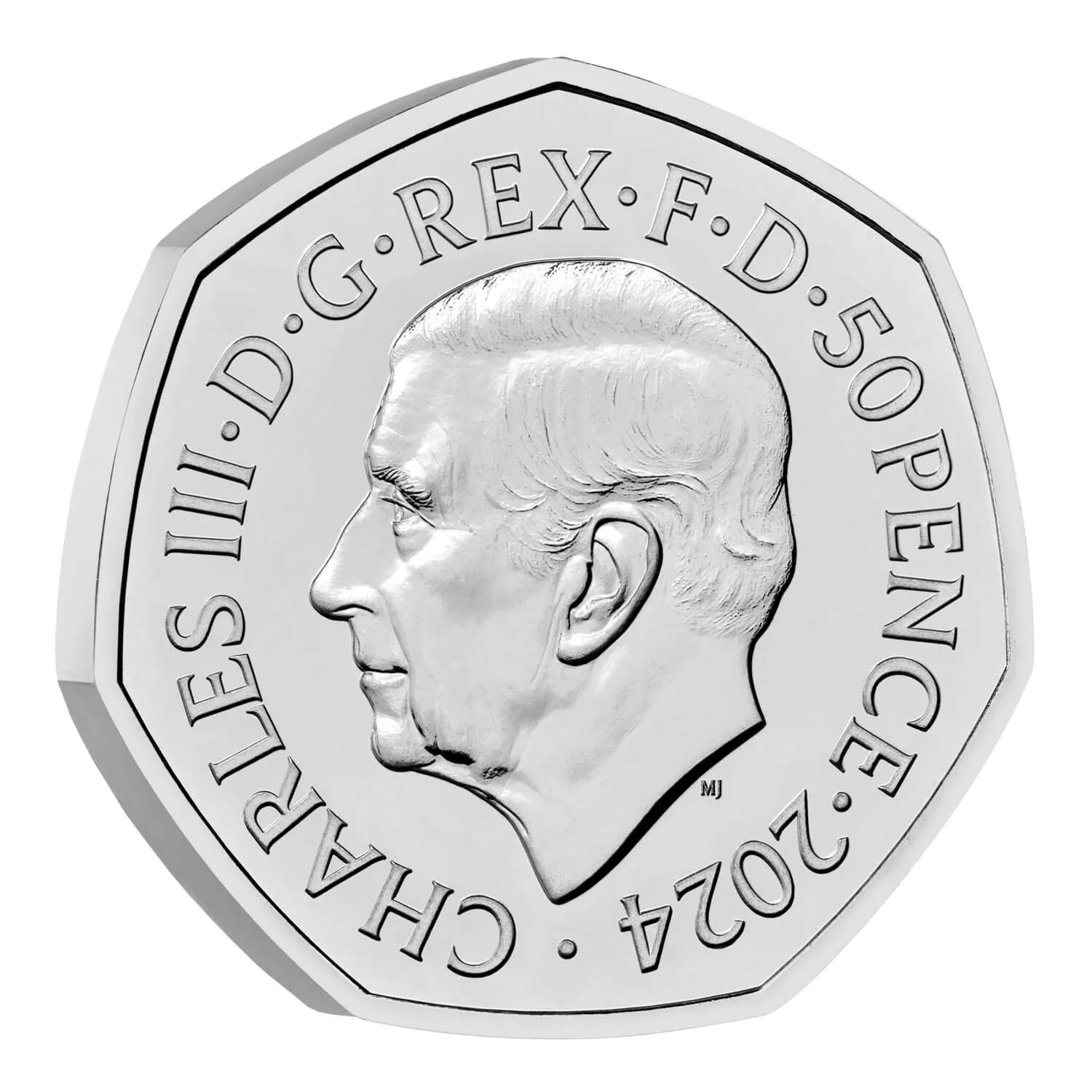
The official side carries the first official portrait of King Charles III, executed by the sculptor Martin Jennings. The portrait is surrounded by a legend indicating the face value and year of issue, characteristic of coins of the United Kingdom. Thanks to the mirror field and matte relief the image of the monarch on coins of the collection reads especially clearly and underlines the status of the issue as official.
The coin is legal tender of the United Kingdom and was issued for collecting purposes. For collectors such issues are interesting not only for their artistic execution but also because each of them documents a particular stage in the scientific study of ancient life: from the first descriptions of fossil bones in the 19th century to modern reconstructions based on data from palaeontology, biomechanics and comparative anatomy. The Royal Mint and the Natural History Museum stress the educational aim of the series: the coins are meant to remind us that the history of life on Earth is measured in hundreds of millions of years, and that knowledge of it is built from finds, observations and the scientific debates of several generations of researchers. Each coin of the collection has a detailed relief: the figure of the animal is shown in its characteristic environment, while the skeleton beside it recalls the fossil finds thanks to which these creatures became known to science.