
Shirley Bassey
PDFGeneral information
Ширли Бесси буклет
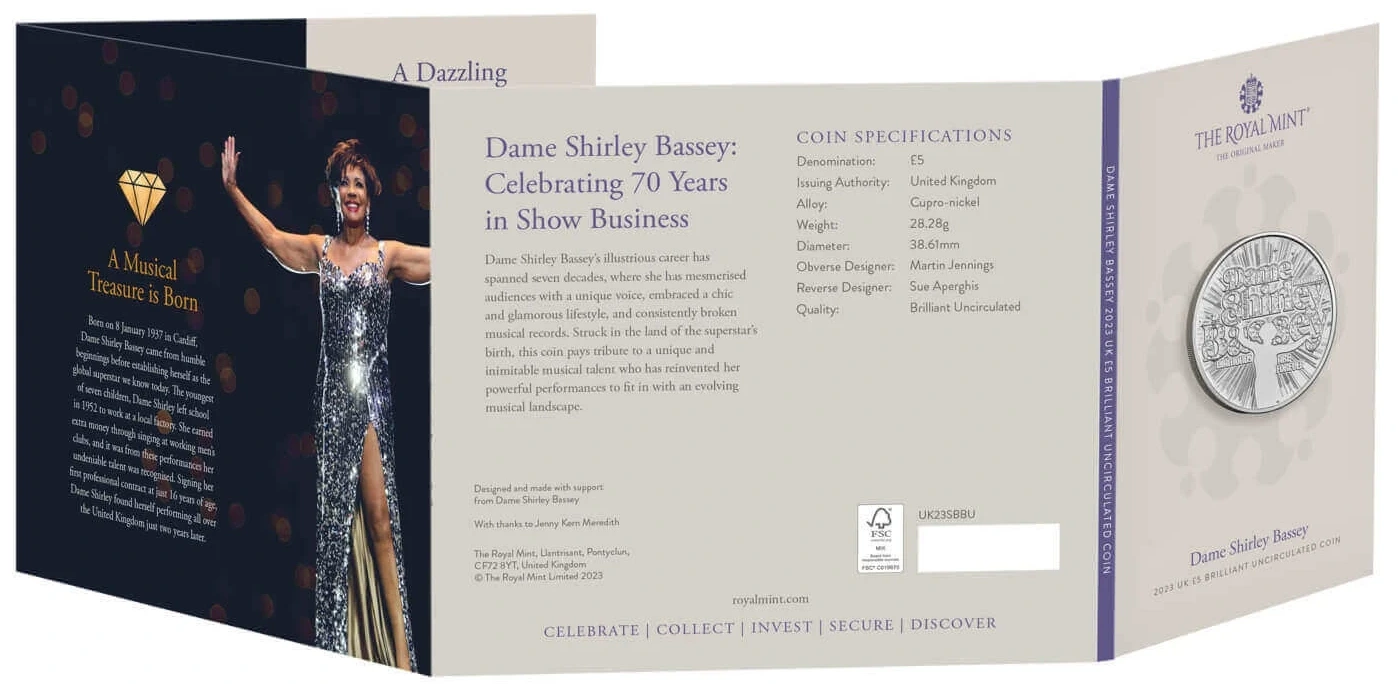
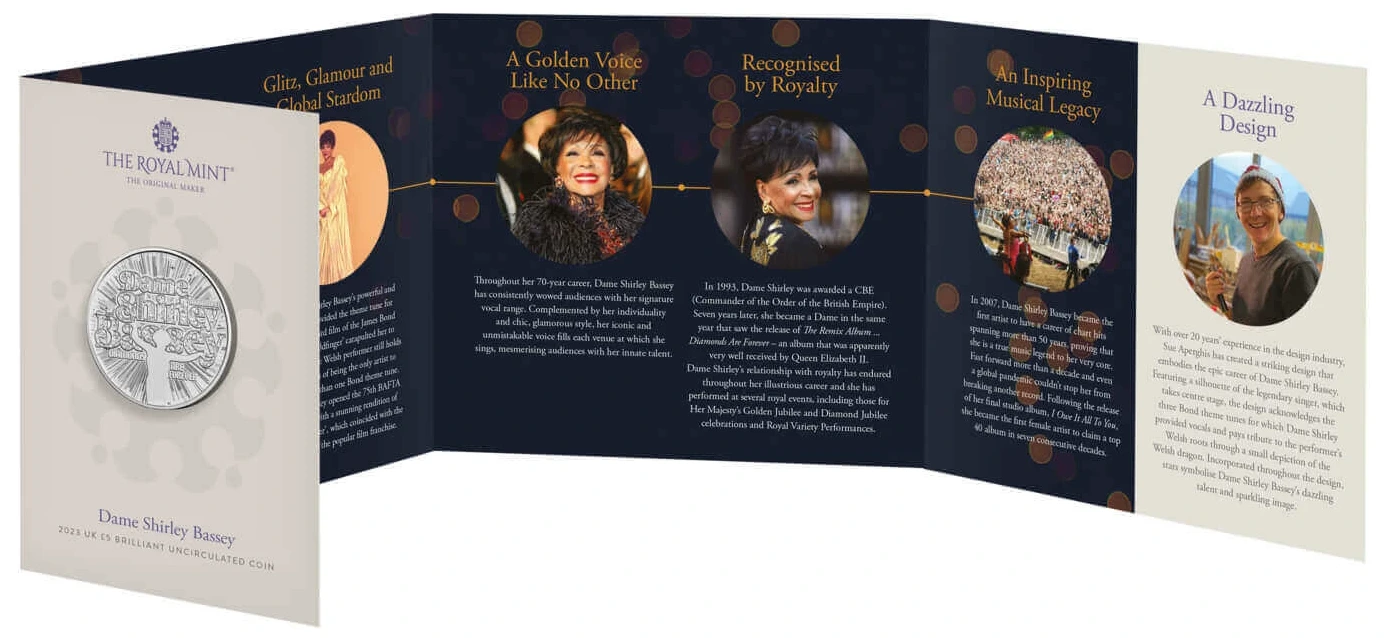
Буклет
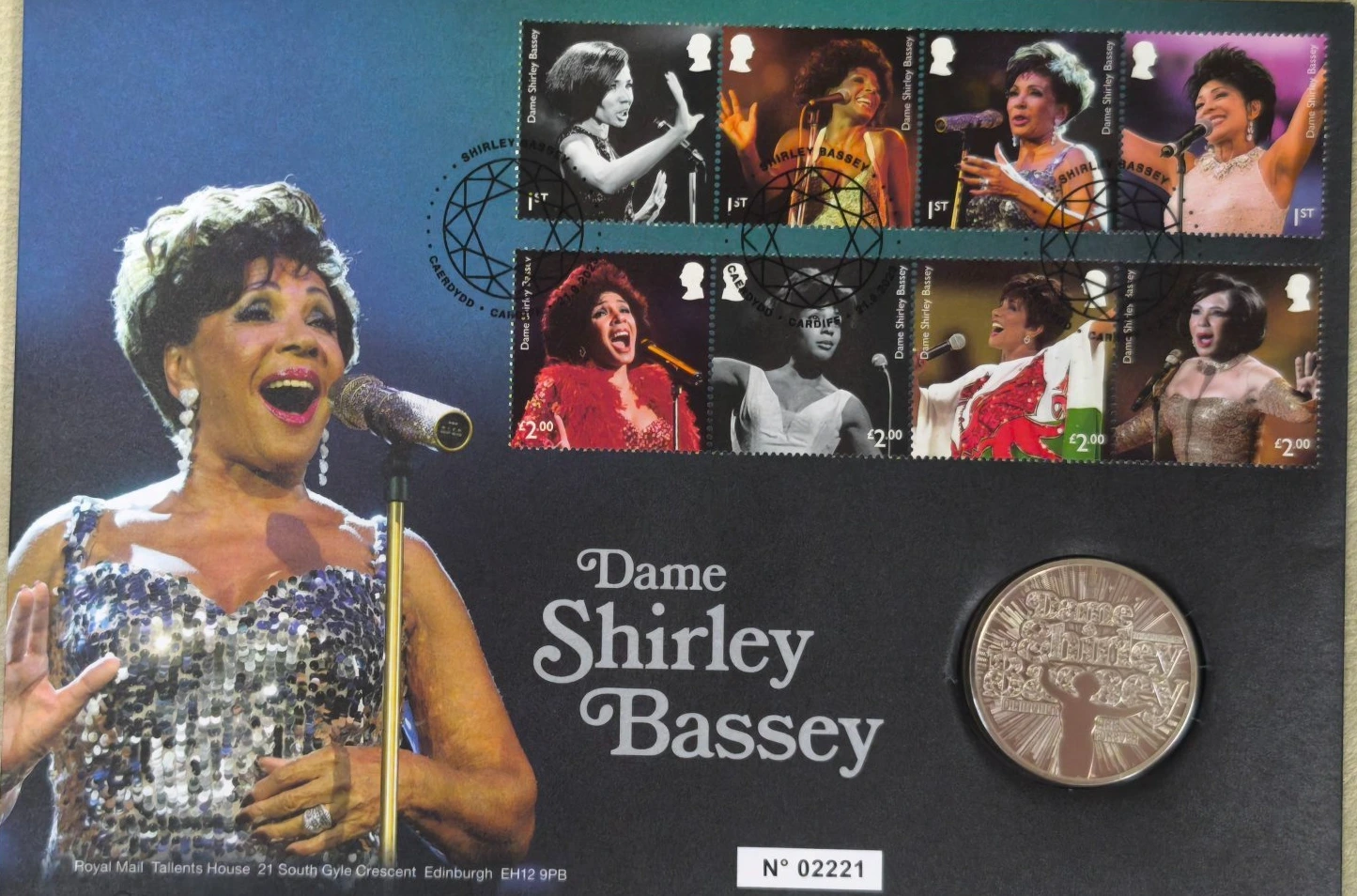
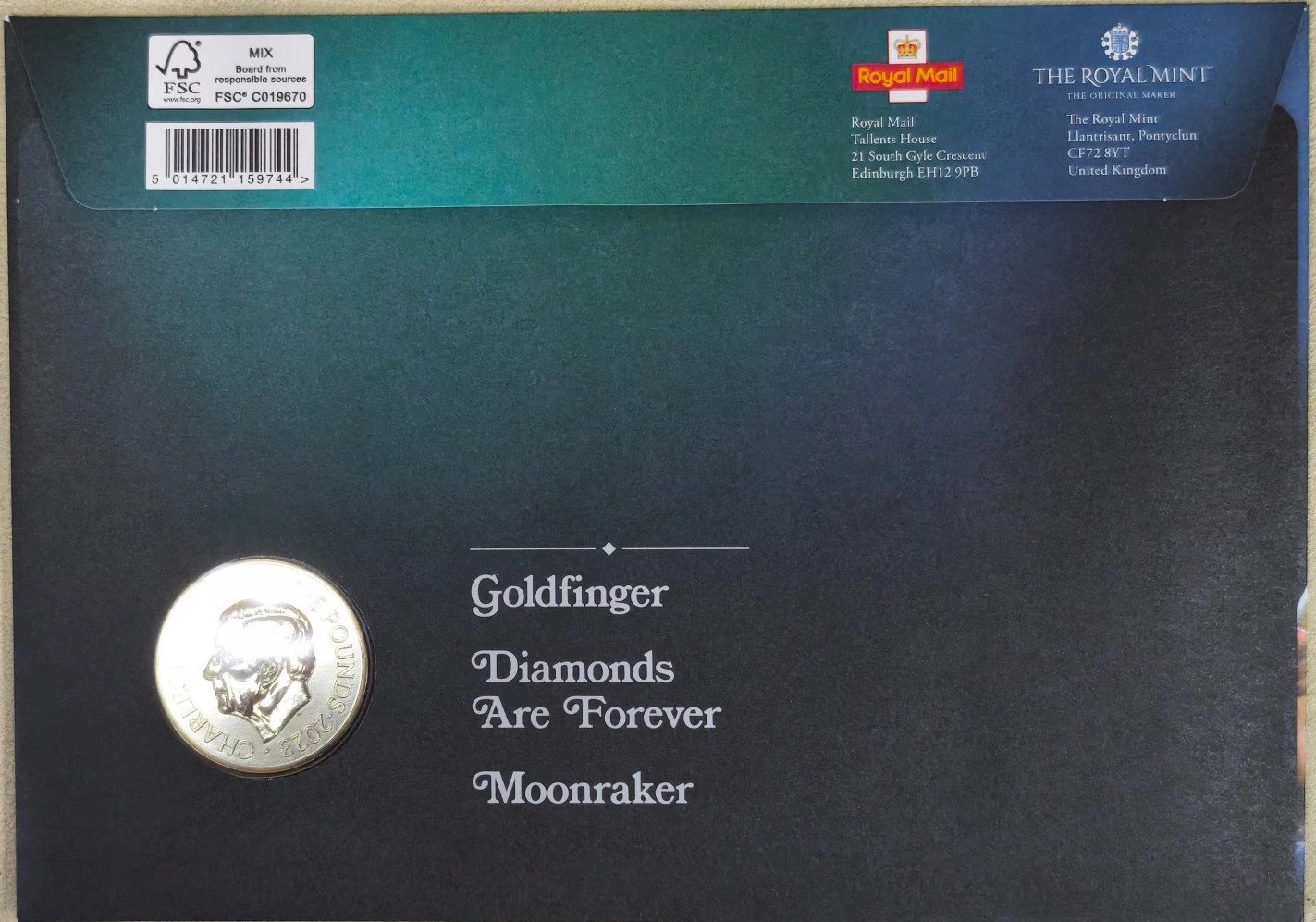
Ширли Бесси в конверте
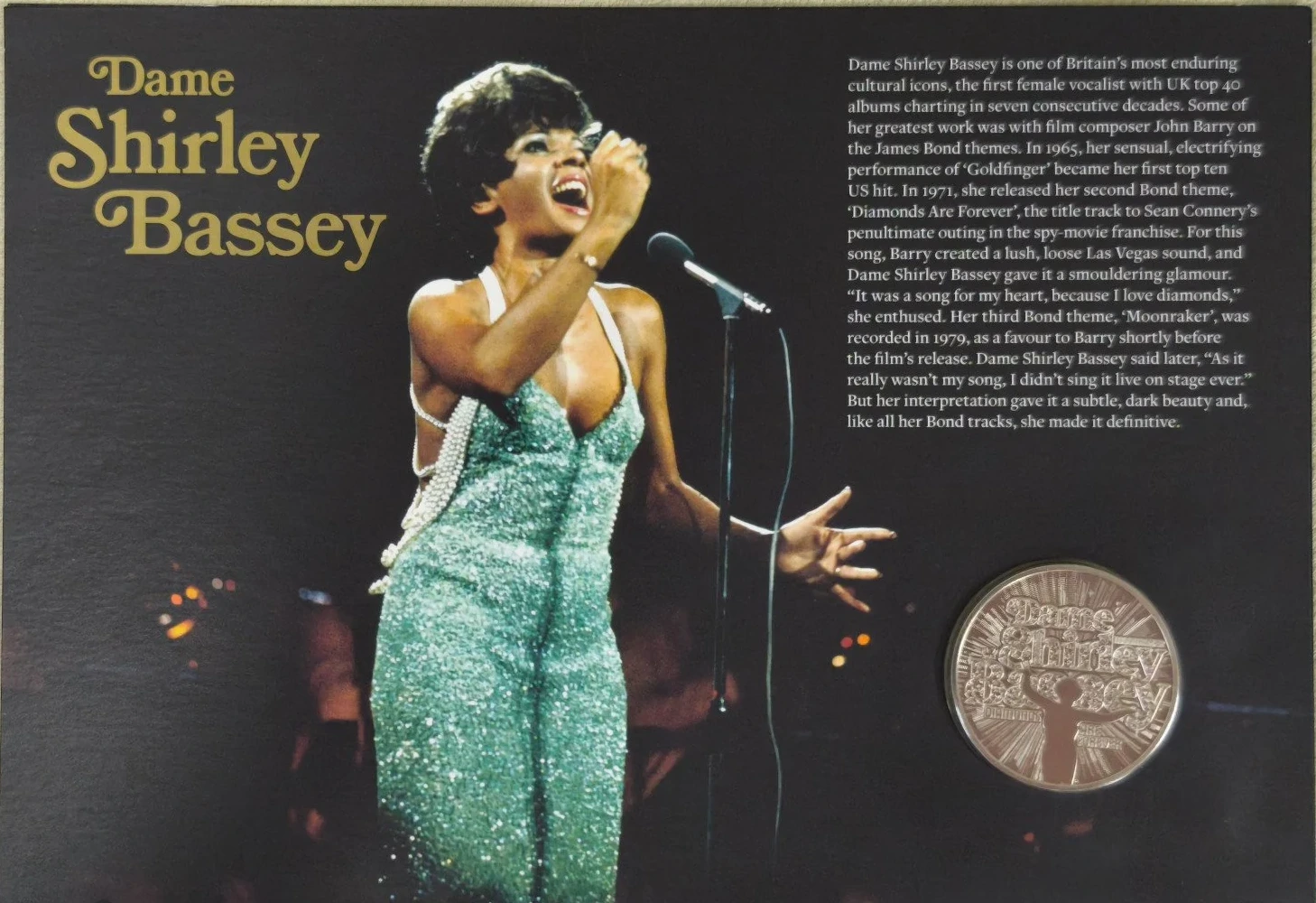
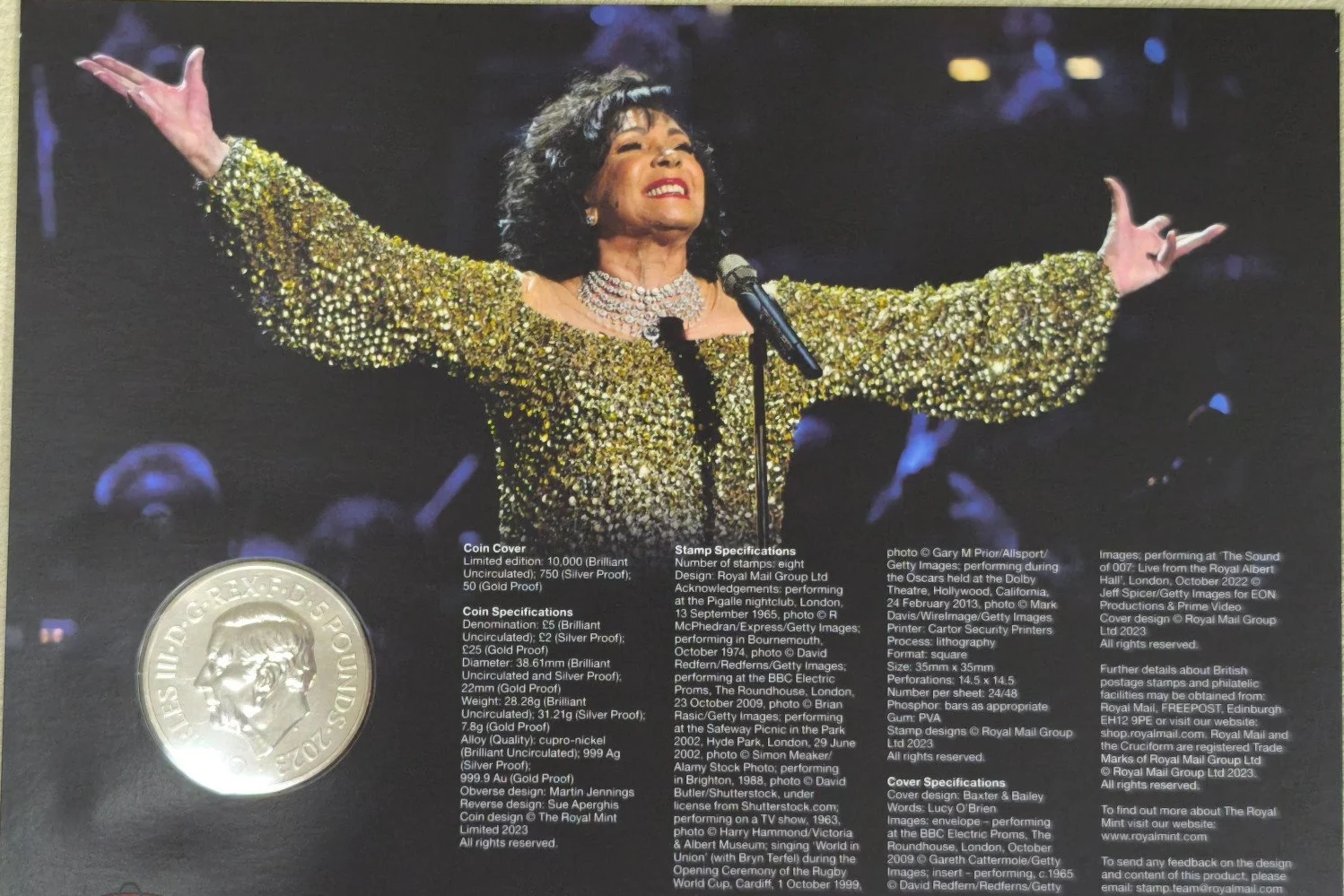
Совместный выпуск Королевского монетного двора и Королевской почты. Номерной конверт первого дня с марками и монетой.


Description
Shirley Bassey was born on 8 January 1937 in Cardiff, in the docklands district of Tiger Bay, a place that lived on a mixture of languages, cuisines and the stories of sailors from around the world. She was the youngest of seven children: her father was a Nigerian seaman and her mother was English. She left school early and worked in a factory, singing in clubs and working men's pubs in the evenings. It was there that her powerful, dramatic voice was first noticed.
The end of the 1950s brought her first hits. "As I Love You" reached the top of the British chart in 1958, making her the first Welsh-born woman to achieve that. Her repertoire soon filled with songs now regarded as classics, among them "Big Spender", "This Is My Life" and "Something", and in 1997 an unexpected collaboration with the electronic group Propellerheads, "History Repeating", introduced her to a new generation.
Yet her name will always be tied to agent 007. In 1964 Bassey recorded the title song for "Goldfinger", with its brassy fanfare and a final note she holds until the listener runs out of breath. "Diamonds Are Forever" followed in 1971 and "Moonraker" in 1979. She is the only singer to have recorded three James Bond title songs, and in six decades nobody has matched that.
Her stage image was built on glitter: beaded gowns, sweeping gestures and a sense that what was happening was not a concert but an event. Critics have often noted her rare gift for turning even the quietest ballad into something a whole hall can share. That is why she stayed in demand in her seventies and eighties, and in 2007 she performed on the main stage at Glastonbury.
"Big Spender" was written by Cy Coleman and Dorothy Fields for the Broadway musical "Sweet Charity" (1966), but it became truly famous in Bassey's 1967 recording: a low, slightly husky voice and a frank delivery turned a show number into a hit in its own right. Her version of George Harrison's "Something" reached the British top five in 1970, a rare case where a cover of a Beatles song was heard as a statement in its own right.
Queen Elizabeth II made her a Dame Commander of the Order of the British Empire, so since 2000 she has officially been Dame Shirley Bassey. That is the name that appears on the coin.
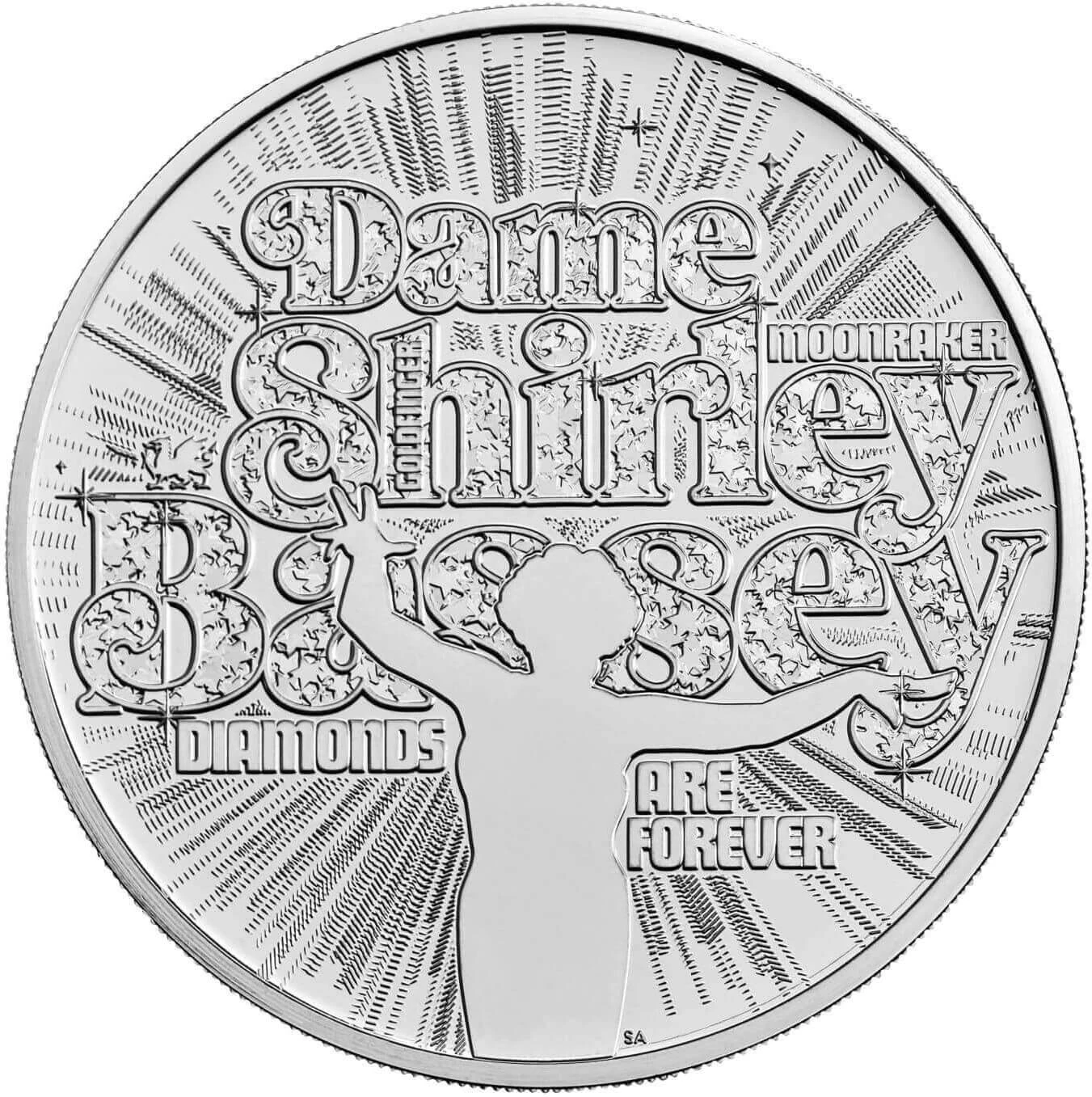
The Royal Mint included the singer in its Music Legends programme, devoted to British performers who shaped the nation's musical culture. Designer Sue Aperghis built the image around the stage and the sparkle: a figure with outstretched arms, shimmering lettering and the titles of the three Bond songs for which Bassey is best known.
Obverse
Large lettering reads "Dame Shirley Bassey", its letters given a glittering, diamond-like texture. Song titles are woven into the design: MOONRAKER at the upper right, GOLDFINGER beside the name, and DIAMONDS ARE FOREVER at the bottom. Below the name stands a silhouette of the singer with arms flung wide, and behind her radiate rays with bars that recall an equaliser display. The initials SA at the lower left are those of Sue Aperghis.
Reverse
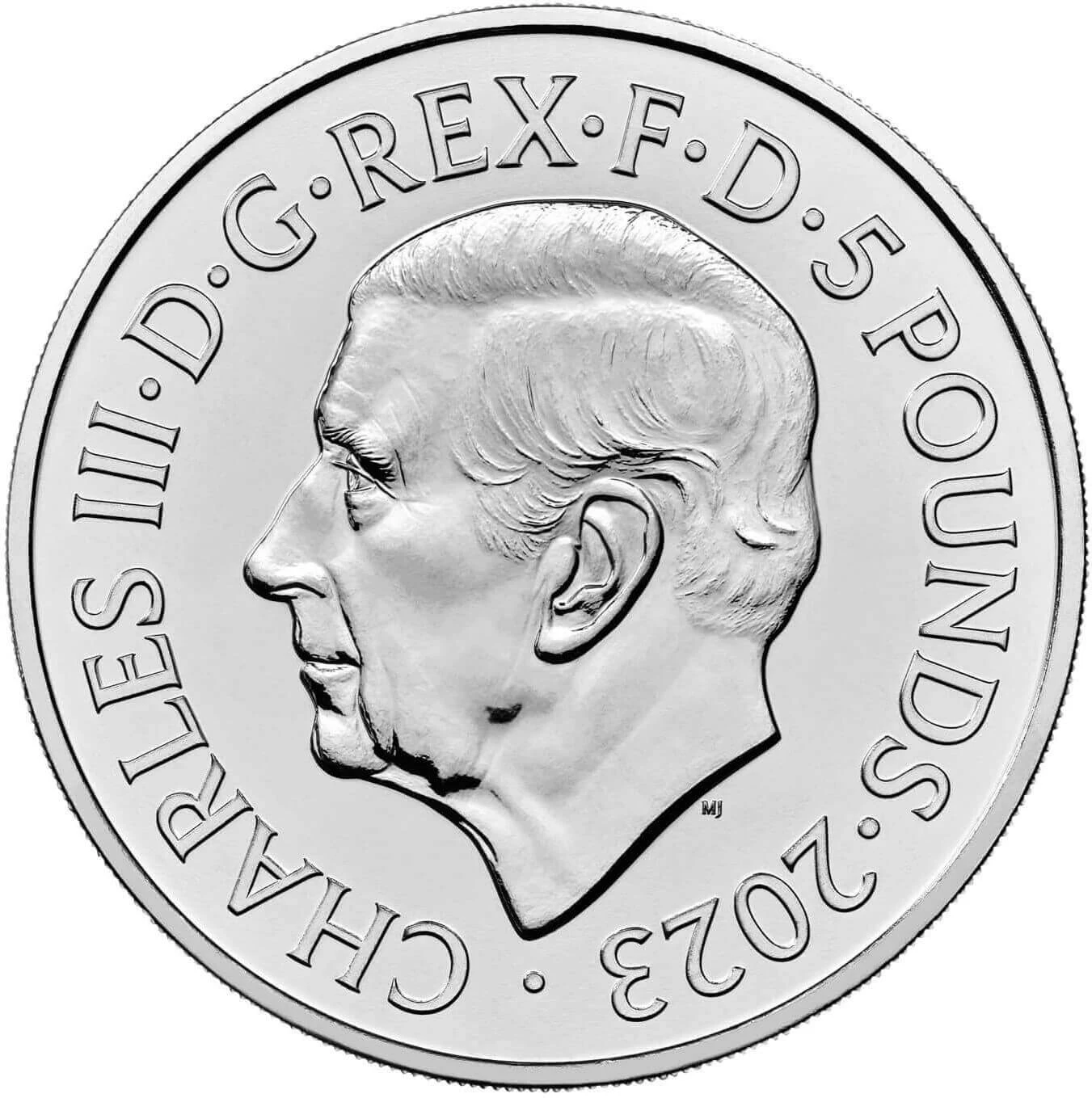
An uncrowned portrait of King Charles III by Martin Jennings (initials MJ). Around the edge run his name and title in abbreviated Latin (CHARLES III · D · G · REX · F · D ·) and the year, 2023.