
Best of the Mint 1804 Silver Dollar Gold
PDFGeneral information

Description
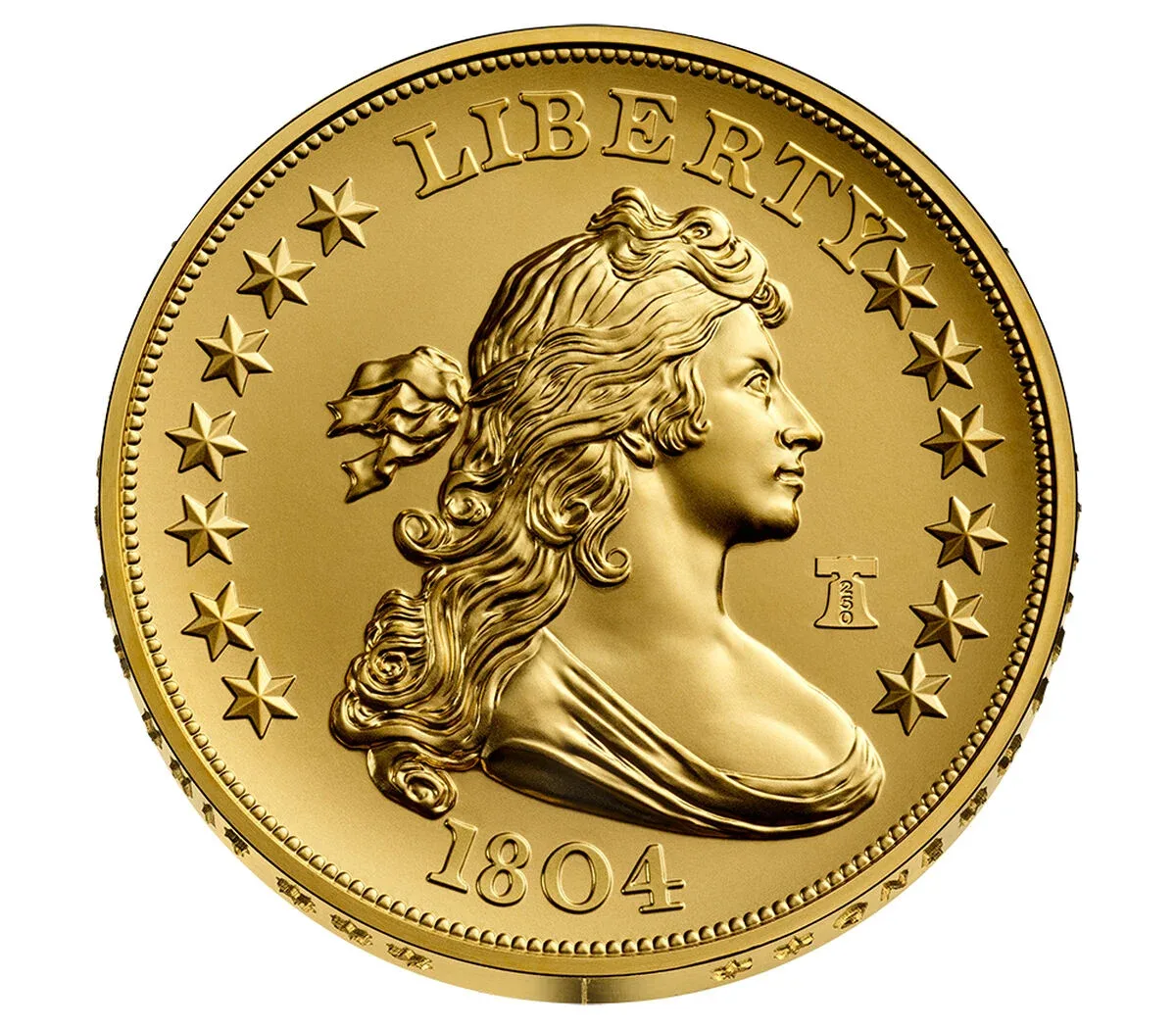
The gold 1804 Dollar is a repetition of the most famous American coin in a modern noble material. At its base is the silver dollar of the Draped Bust type created by the engraver Robert Scot. It is precisely this design that the United States Mint chose for the fourth set of the Best of the Mint programme for the 250th anniversary of independence, and what makes the issue special is that the original design had never before been transferred to gold.
The history of the 1804 dollar is complicated and fascinating. Silver dollars of this design were struck from 1795, but by 1804 production had stopped, and the last coins came out dated 1803. Then in 1834 a diplomatic mission to Asia needed gifts for rulers, and among them were sets of coins with a dollar dated 1804. Such examples are today called Class I, and very few survive.
Later, in the 1850s, a few more coins with this date were struck, and a legend of its own grew up around the dollar. Record sums are paid for these coins at auction, and numismatic literature calls them the King of American Coins. But the jubilee gold version does not try to inflate the legend: it simply returns to the viewer a handsome, pure design created in the age of the young republic.
On the front is a bust profile of Liberty with a ribbon in her hair and thirteen stars around. The legend LIBERTY and the date 1804 make clear which coin is meant. The ribbon in the hair is a characteristic detail of the Draped Bust type: Liberty's hairstyle is shown tied, and the design has the classicism of the late eighteenth century. A privy mark with the Liberty Bell and the figure 250 has been added.
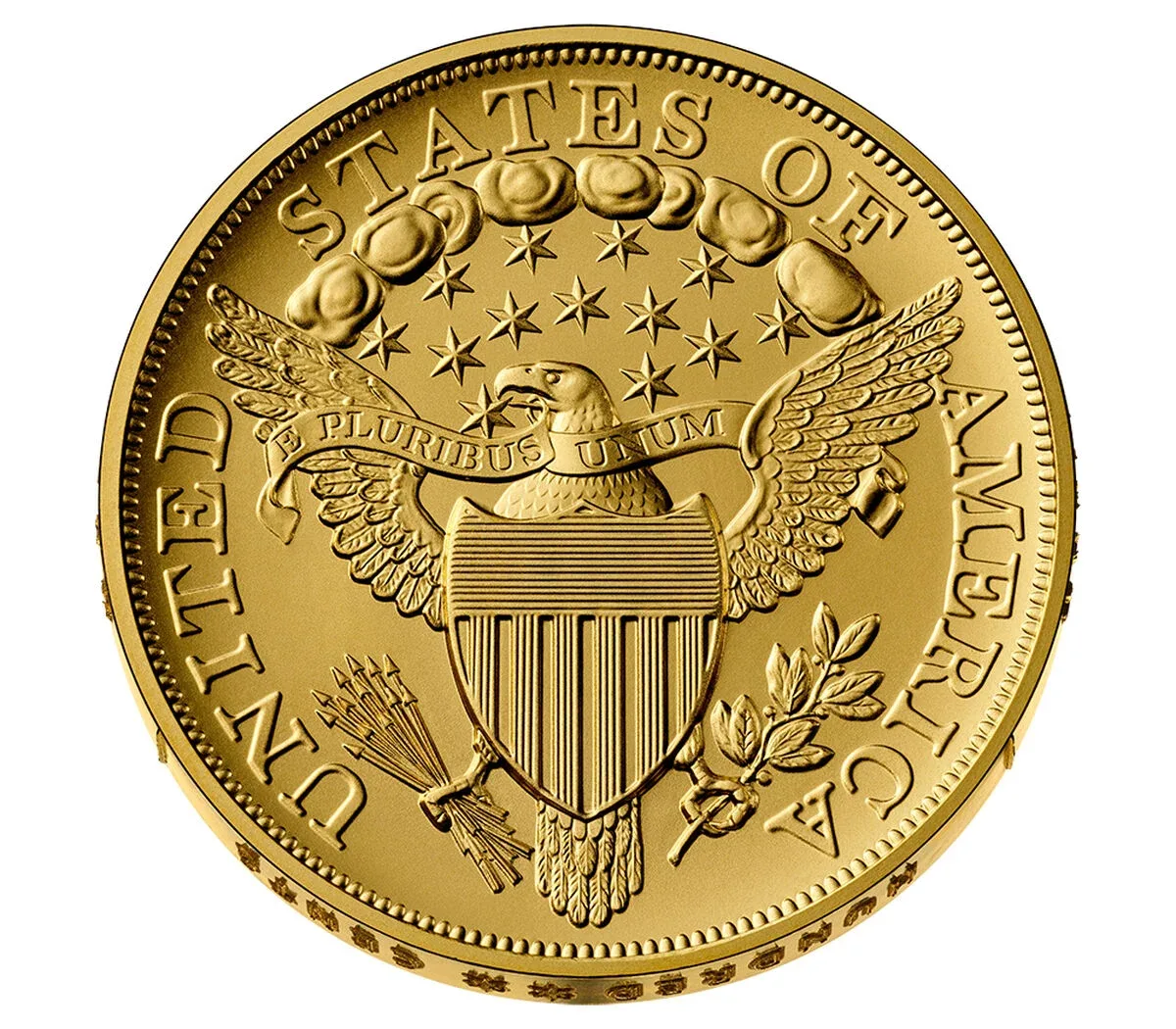
On the reverse is a heraldic eagle with raised wings and a shield on its breast. In its beak is a scroll with the motto E PLURIBUS UNUM, in its talons an olive branch and arrows, and above its head clouds with stars. The arrows and branch express readiness to defend the country and a striving for peace, a formula that has accompanied American heraldry from the beginning.
For a collector the gold version is a chance to hold an image of which one could previously only read. Together with the silver medal, which tells of the diplomatic journey, it forms a story of how one coin becomes the symbol of an age. This double reading, classic and interpretation, characterises the whole jubilee programme.
It is notable that the 1804 dollar never circulated as money in the usual sense: it was made for diplomatic gifts and collections, and so became a rarity long before numismatics took notice of it. The jubilee gold version continues that line, turning from a means of payment into an object of memory and beauty.
Obverse
A bust profile of Liberty facing right, with a ribbon in her hair and thirteen stars around. The legend LIBERTY and the year 1804 are placed here, as is a privy mark with the Liberty Bell and the figure 250. The thirteen stars symbolise the first states. The author of the original design is Robert Scot.
Reverse
A heraldic eagle with raised wings, a shield on the breast and a scroll E PLURIBUS UNUM in the beak; an olive branch and arrows in the talons, clouds and stars above. UNITED STATES OF AMERICA runs around the rim. The eagle expresses the unity of the nation, and the arrows and branch readiness for defence and for peace.