
Best of the Mint Mercury Gold
PDFGeneral information

Description
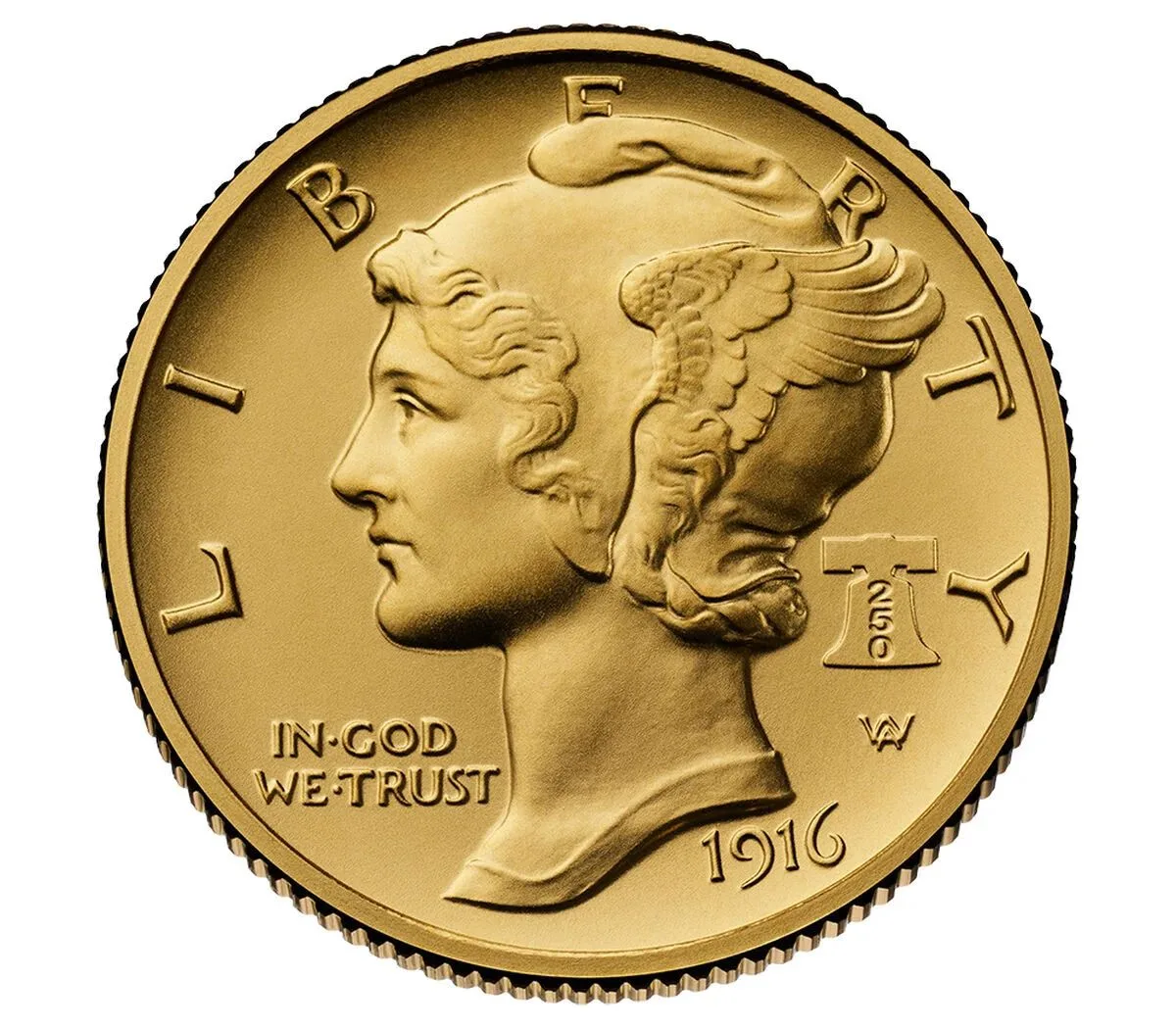
The Mercury dime is one of the most beautiful American coins of the twentieth century, and it is no accident that the jubilee programme Best of the Mint began with it. The United States Mint selected five designs from its history worthy of a new embodiment, and the first of them is the dime of 1916 by the sculptor Adolph Alexander Weinman. The 2026 gold coin repeats this design, and a paired silver medal is issued with it.
The nickname Mercury is a mistake that stuck for good. Many took the winged head on the front for the Roman messenger god in his winged cap. In fact Weinman depicted Liberty in a Phrygian cap to which he added wings as a sign of freedom of thought. But the name has taken hold so firmly that it is used in catalogues, in collectors' conversation and in the name of the jubilee coin.
The dime of 1916 was part of a large renewal of American small change: that year, together with it, appeared the Standing Liberty quarter and the Walking Liberty half dollar. The old Barber designs used since 1892 were replaced with more modern ones, and the three new coins became the summit of American coin art of the early twentieth century. The Mercury stayed in circulation until 1945, when it was succeeded by the dime with the portrait of Roosevelt.
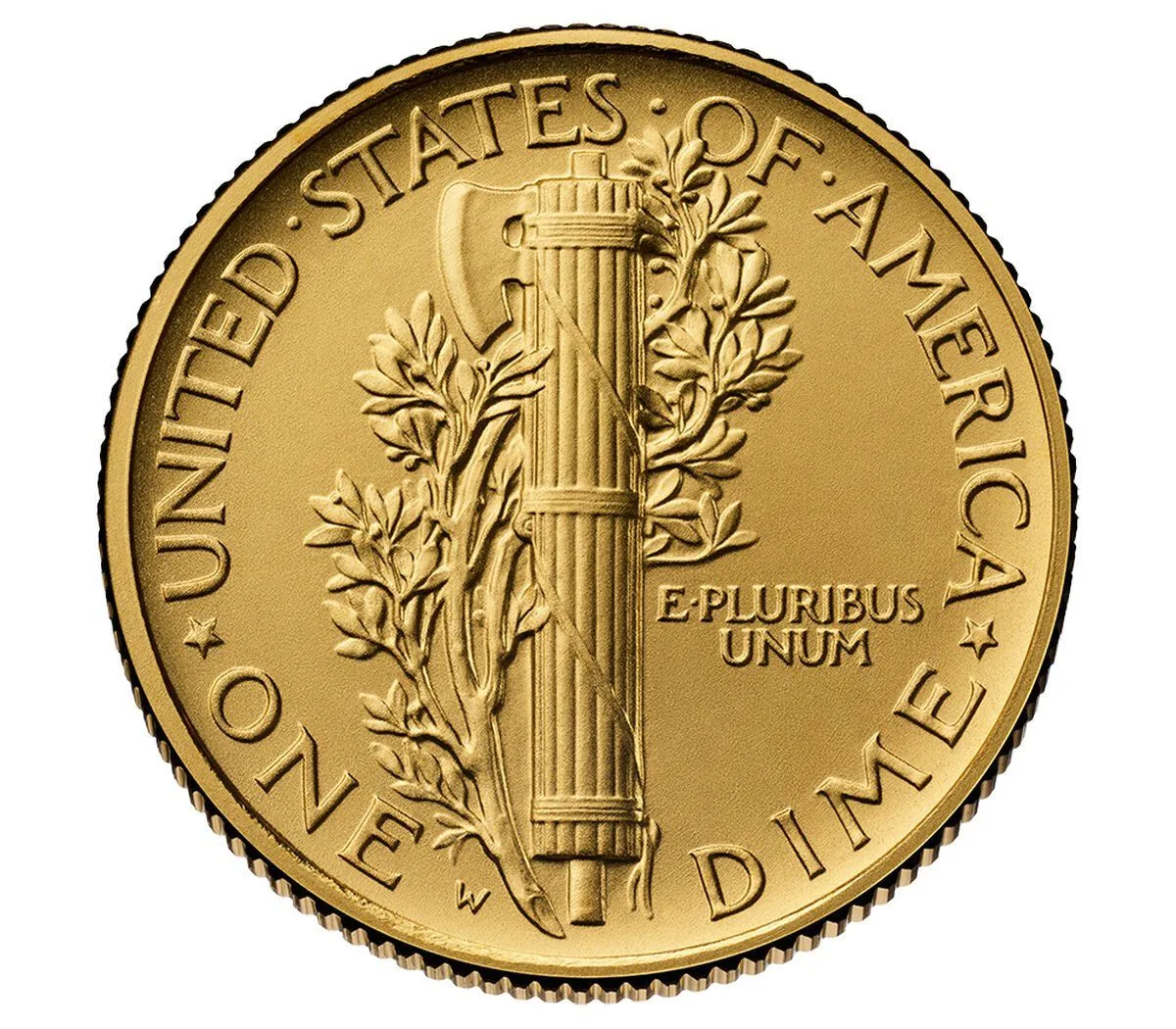
On the reverse of the original are fasces, a bundle of rods with an axe, a symbol of strength through unity, and an olive branch as a sign of peace. These images go back to ancient Rome, where fasces were carried before the highest magistrates. In American symbolism they recall that the strength of the country lies in the concord of its citizens, and the olive branch adds a note of peacefulness. In the years of the world wars such an image sounded especially significant.
The jubilee embodiment of 2026 repeats Weinman's design exactly, supplemented by a special privy mark, the Liberty Bell with the figure 250. The old image thus gained a new mark linking it to the 250th anniversary of independence. The Mint did not publish the names of the engravers of the reissue: authorship remains with Weinman, and such modesty underlines that the hero of the jubilee coin is the original design.
For collectors the gold Mercury is a chance to see a classic in a noble execution in which the fine details of the wings, locks and cap read as the master conceived them. Together with the silver medal, which interprets the same image in a modern way, it forms a story of how the American coinage tradition turns to its own past.
Obverse
The artistic side shows the profile of Liberty in a winged Phrygian cap by Adolph Weinman. The wings mean freedom of thought, and the profile itself is one of the most recognisable images in American numismatics. A privy mark with the Liberty Bell and the figure 250 marks the jubilee. The names of the modern engravers were not published.
Reverse
The official side shows fasces, a bundle of rods with an axe, a symbol of strength through unity, and an olive branch, a sign of peacefulness. The composition stresses readiness to defend one's values and at the same time a striving for peace. It is the same design as on the 1916 dime, and one of the most quoted in American numismatics.