
Best of the Mint Saint-Gaudens High Relief Gold
PDFGeneral information

Description
The Saint-Gaudens double eagle of 1907 is one of the most beautiful American coins in the whole history of coinage. It was created by the sculptor Augustus Saint-Gaudens at the request of President Theodore Roosevelt, who wanted American coins to be as beautiful as the ancient Greek. The jubilee gold coin of 2026 repeats this design, and stands last in the five releases of the Best of the Mint programme.
Roosevelt saw in coins a chance to show the world the dignity of the republic. He turned to the best American sculptor of the age, Augustus Saint-Gaudens, Irish by birth and raised in New York. The sculptor took up the work with enthusiasm but was already ill with cancer and could not finish it: he died in August 1907. Even so, his designs were carried out, and the coin became a masterpiece.
The first version of the coin, known as high relief, turned out so prominent that several blows of the press were needed to strike it, and such coins could not be stacked. A flatter variant was soon made for circulation, but the high-relief version remained the finest. For these coins the date of 1907 was written in Roman numerals, MCMVII, which gave them the solemnity of old medals.
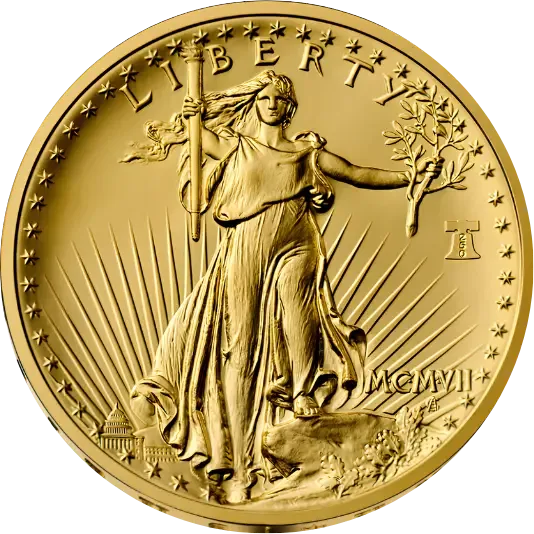
The design on the front is Liberty striding forward with a torch in one hand and an olive branch in the other, while behind her the sun rises, its rays spreading across the field. The torch symbolises enlightenment, the branch peace, and the radiant sun the dawn of a nation. The figure is clad in classical dress, and one feels the influence of the classical art that Roosevelt so loved.
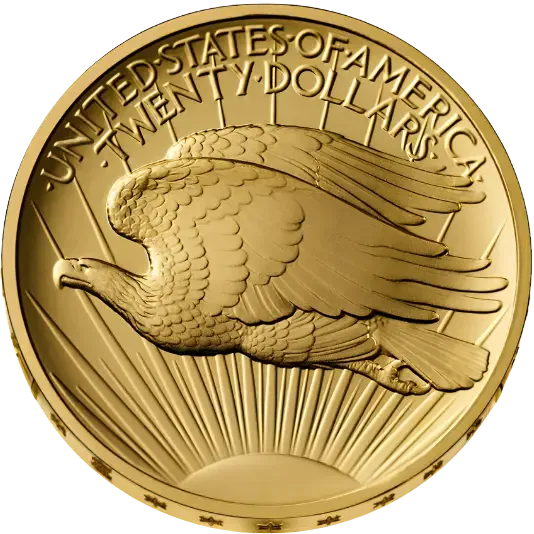
On the reverse is an eagle in flight above a rising sun. The wings are spread wide, the rays spread across the field, and at the bottom the date is visible. The image is extremely simple and at the same time majestic: nothing superfluous, only a bird, a sun and the sky. On the jubilee embodiment a privy mark with the Liberty Bell and the figure 250 has been added, and the date is given double: the old Roman MCMVII and the modern MMXXVI.
For the programme this is the best finale: the Saint-Gaudens coin has long been regarded as the summit of American coin art, and its repetition in the jubilee year confirms that the nation remembers its own achievements. The Mint did not publish the names of modern engravers, so authorship still belongs to Saint-Gaudens. The coin, with the paired silver medal, closes the row.
It is interesting that Roosevelt insisted on omitting the traditional inscription IN GOD WE TRUST, believing that the name of God should not appear on a coin, and the coin appeared without it. Such details show how personal the president's conception was and how insistently he pursued beauty.
Obverse
Liberty strides forward with a torch and an olive branch, with the sun rising behind her. The torch is a sign of enlightenment, the branch a sign of peace. The year is given in Roman numerals MCMVII and MMXXVI. A privy mark with the Liberty Bell and the figure 250 has been added. The author of the original design is Augustus Saint-Gaudens.
Reverse
An eagle in flight above a rising sun; rays spread across the whole field. The design repeats the 1907 original, the best-known high-relief double eagle. The composition is extremely simple: a bird, a sun and the sky, without superfluous details, and for that reason it looks monumental.