
Best of the Mint Walking Liberty Gold
PDFGeneral information

Description
The Walking Liberty half dollar is one of the finest achievements of American coin art. It was created in 1916 by the sculptor Adolph Alexander Weinman, the same master who designed the Mercury dime. For the jubilee programme Best of the Mint the United States Mint returned to this design, repeated it in gold and accompanied it with a paired silver medal. This is the third issue of the programme.
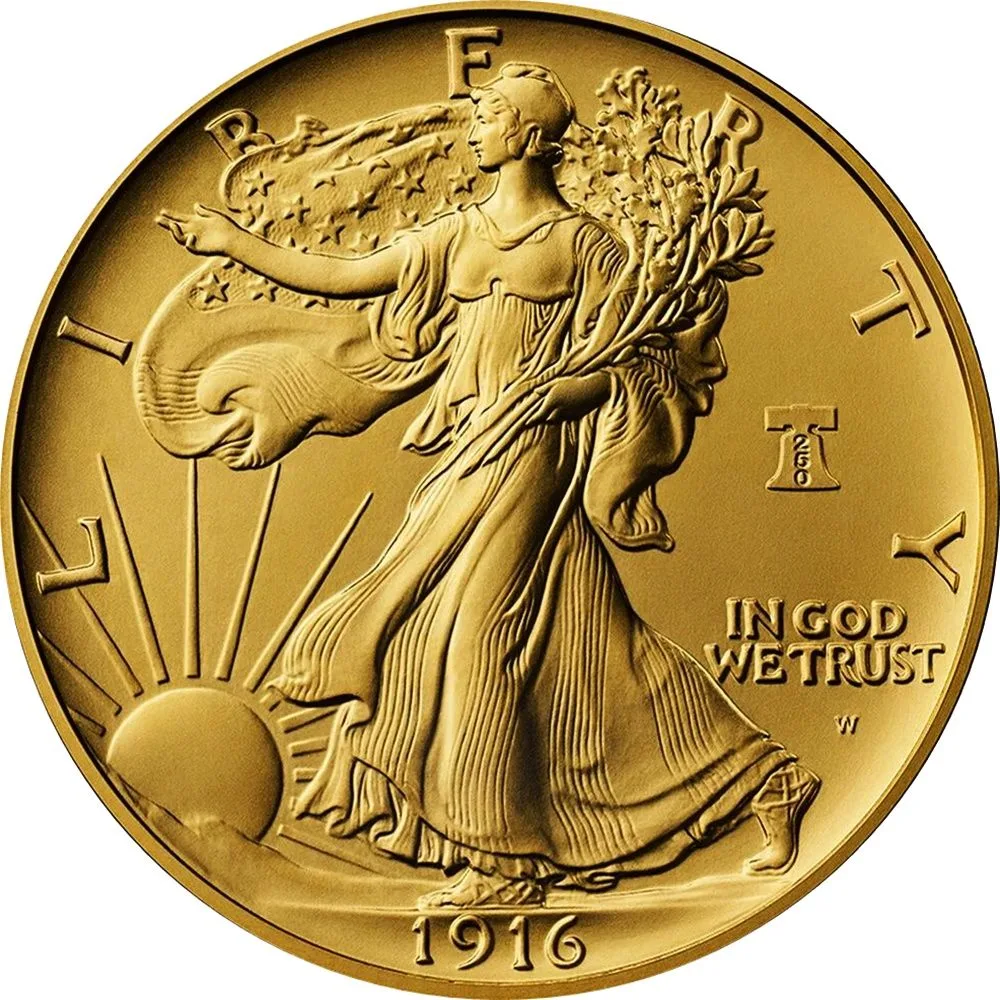
Weinman's design shows Liberty at full height, striding toward a rising sun. She is wrapped in the folds of a flag, carries branches of laurel and oak in her left hand, and stretches out her right hand forward. Movement, rhythm and a sense of space made the coin one of the most beautiful in American history, and collectors still prize it.
The half dollar was issued from 1916 to 1947. Those decades contained two world wars and the Great Depression, and the image of a walking woman looking to the future acted on contemporaries as a reminder of perseverance and hope. The choice of this image for an independence jubilee is logical: a walking Liberty expresses the idea that the country does not stop but moves forward even when the road is hard.
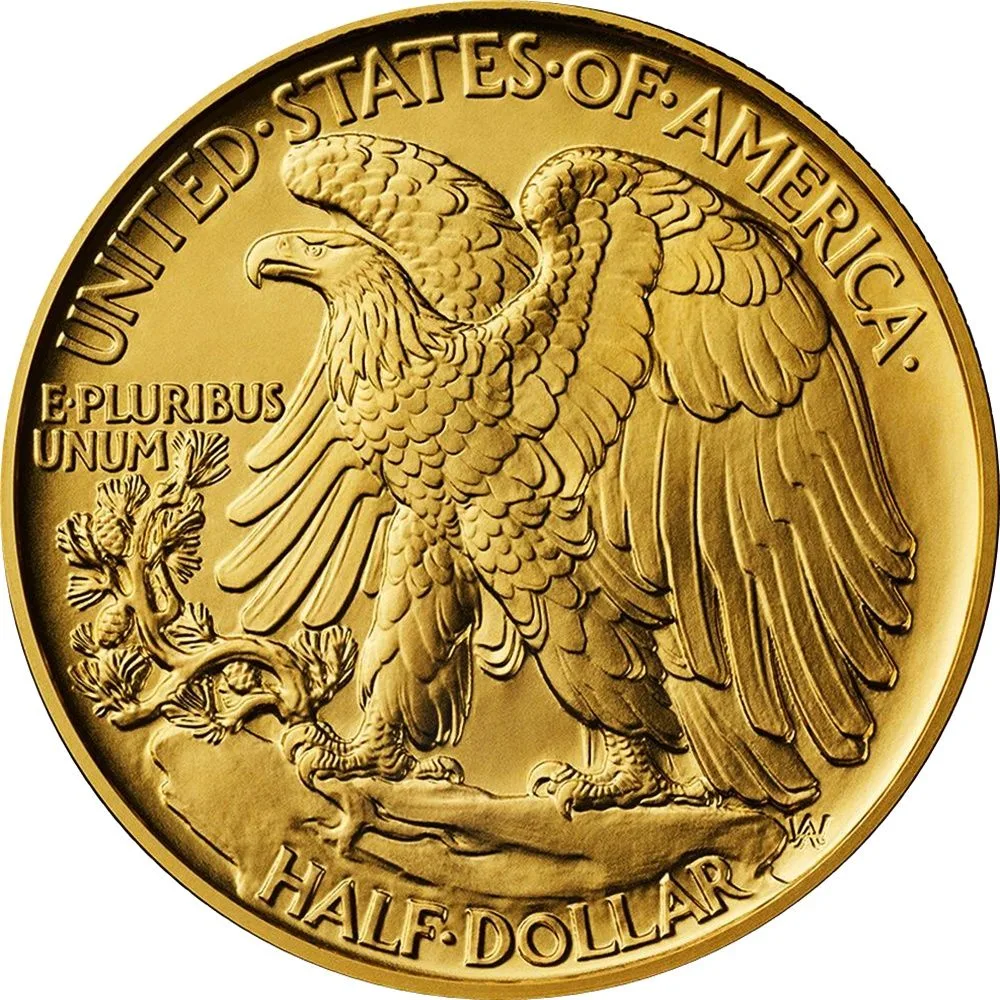
On the reverse of the original is an American eagle rising from a mountain peak. Its wings are spread, its head is turned aside, and a pine grows on the rock. The image is dynamic and at the same time concise, and it balances well the active figure on the front. The beloved figure of Liberty later returned to American coinage in 1986, on the silver bullion Eagle.
In the jubilee embodiment of 2026 Weinman's design is repeated, and a privy mark has been added to the front, the Liberty Bell with the figure 250. The Mint did not name modern engravers, so Weinman is regarded as the author. This approach stresses that the jubilee coin is not a new interpretation but a careful reproduction of a classic in a precious material.
For a collector the gold Walking Liberty is a chance to see the most dynamic of American allegories in a quality where the light and shade on the folds of the flag and the laurel branches read as the master intended. Together with the medal, which carries the theme into a rural landscape, it forms a story of two ways of speaking about freedom.
Historians of coinage note that Weinman's design proved remarkably durable: it was chosen again and again in later years, with repeated returns to the image of the walking Liberty. This shows how well the artist managed to combine a national symbol with living movement and explains why the jubilee programme could not do without this coin.
Obverse
Liberty strides at full height wrapped in the folds of a flag; in her left hand are branches of laurel and oak, and below is a radiant rising sun. The branches mean victory and civic valour, the sun the dawn of a new nation. A privy mark with the Liberty Bell and the figure 250 stands on the coin. The author of the original design is Adolph Alexander Weinman.
Reverse
An eagle rises from a mountain peak on which a pine grows; its wings are spread and its head turned. The design goes back to the reverse of Weinman's original 1916 half dollar and is considered one of the most expressive eagles in American numismatics. The composition balances the front with its vertical dynamism.