
Centennial Olympics Baseball (Half Dollar)
PDFGeneral information
Пруф (Сан-Франциско, знак S)
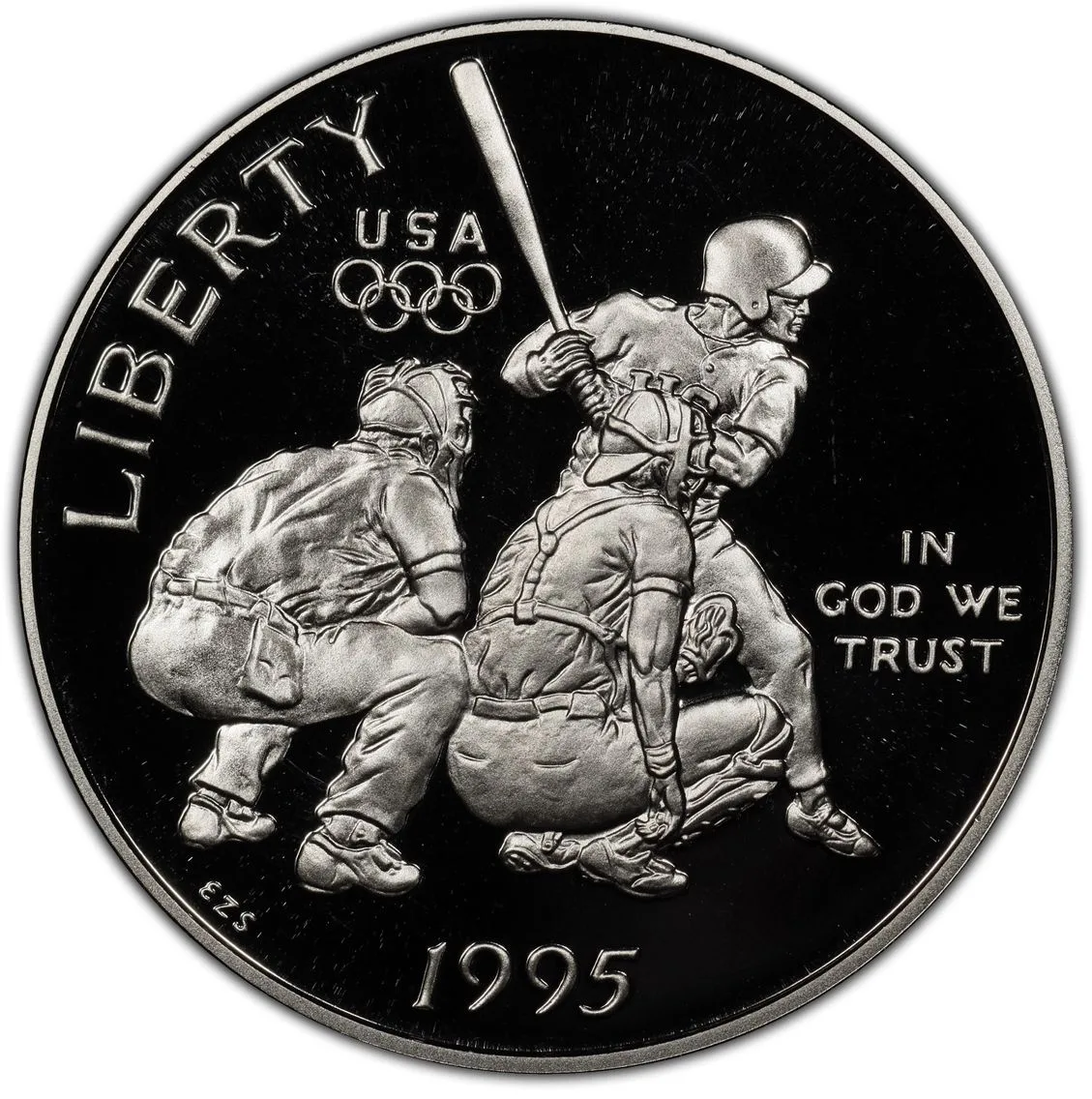
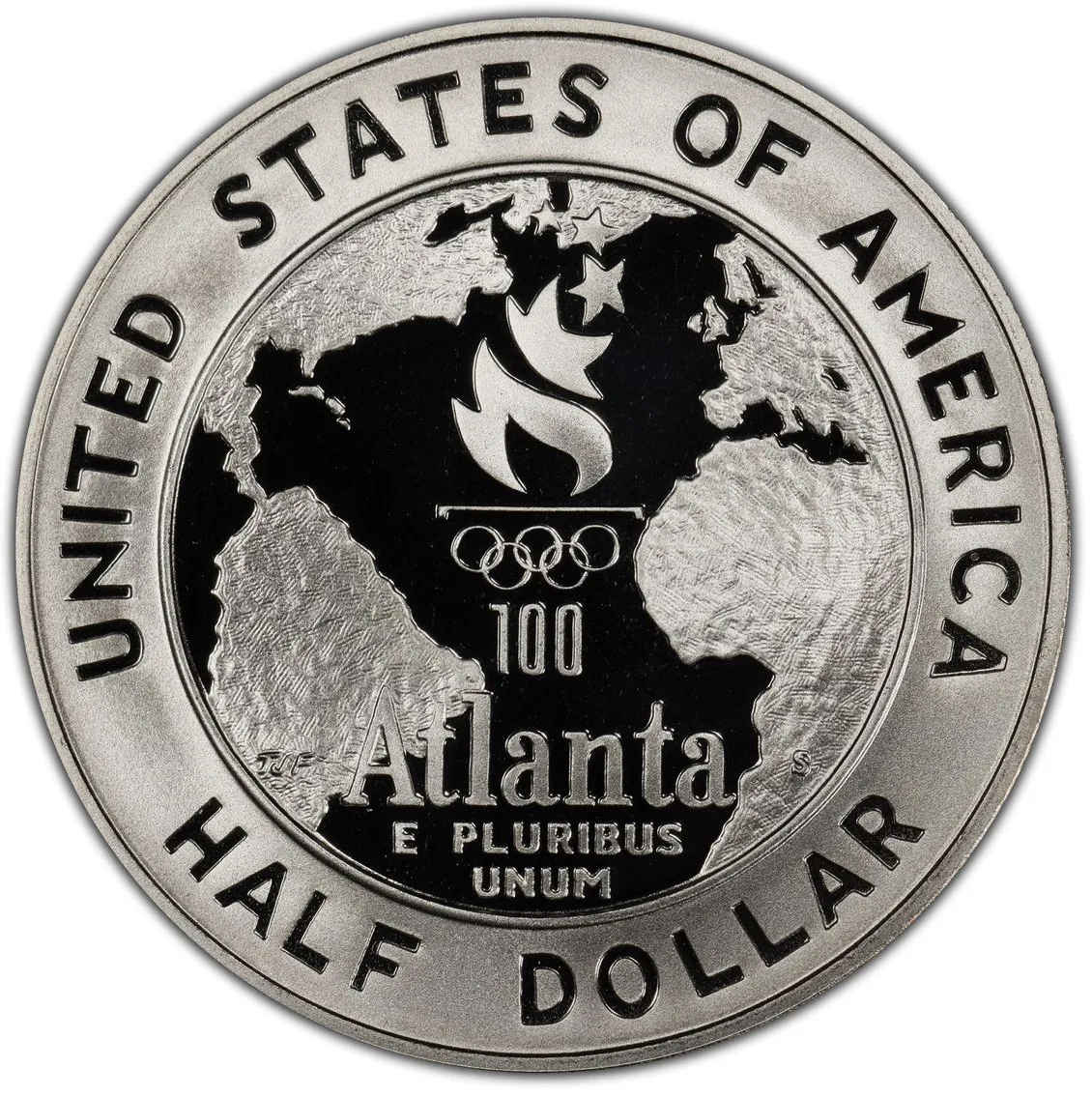
Бейсбол (0,5 доллара). Исполнение Proof: монета отчеканена на полированных заготовках двумя ударами, поэтому фон получил зеркальную поверхность, а рельеф — матовую, контрастную. Именно пруф программа продавала как основное коллекционное исполнение: продано 119 396 экземпляров по официальному итоговому отчёту Монетного двора США (сентябрь 1998), цена при выпуске $12.50 (в предзаказ — $11.50), предзаказ открылся до официального начала продаж. Монета отчеканена на монетном дворе Сан-Франциско и несёт знак двора «S», поставлялась в футляре с сертификатом подлинности.
Анциркулейтед (Сан-Франциско, знак S)
Бейсбол (0,5 доллара). Исполнение Uncirculated: монета чеканилась на полированных заготовках с повышенным усилием, зеркального поля нет — рельеф читается на матовой, слегка зеркальной в отдельных зонах поверхности. продано 164 759 экземпляров по официальному итоговому отчёту Монетного двора США (сентябрь 1998), цена при выпуске $11.50 (в предзаказ — $10.50). Двор — Сан-Франциско, знак двора «S»; монета продавалась в футляре с сертификатом подлинности и участвовала в наборах выпуска.

Description
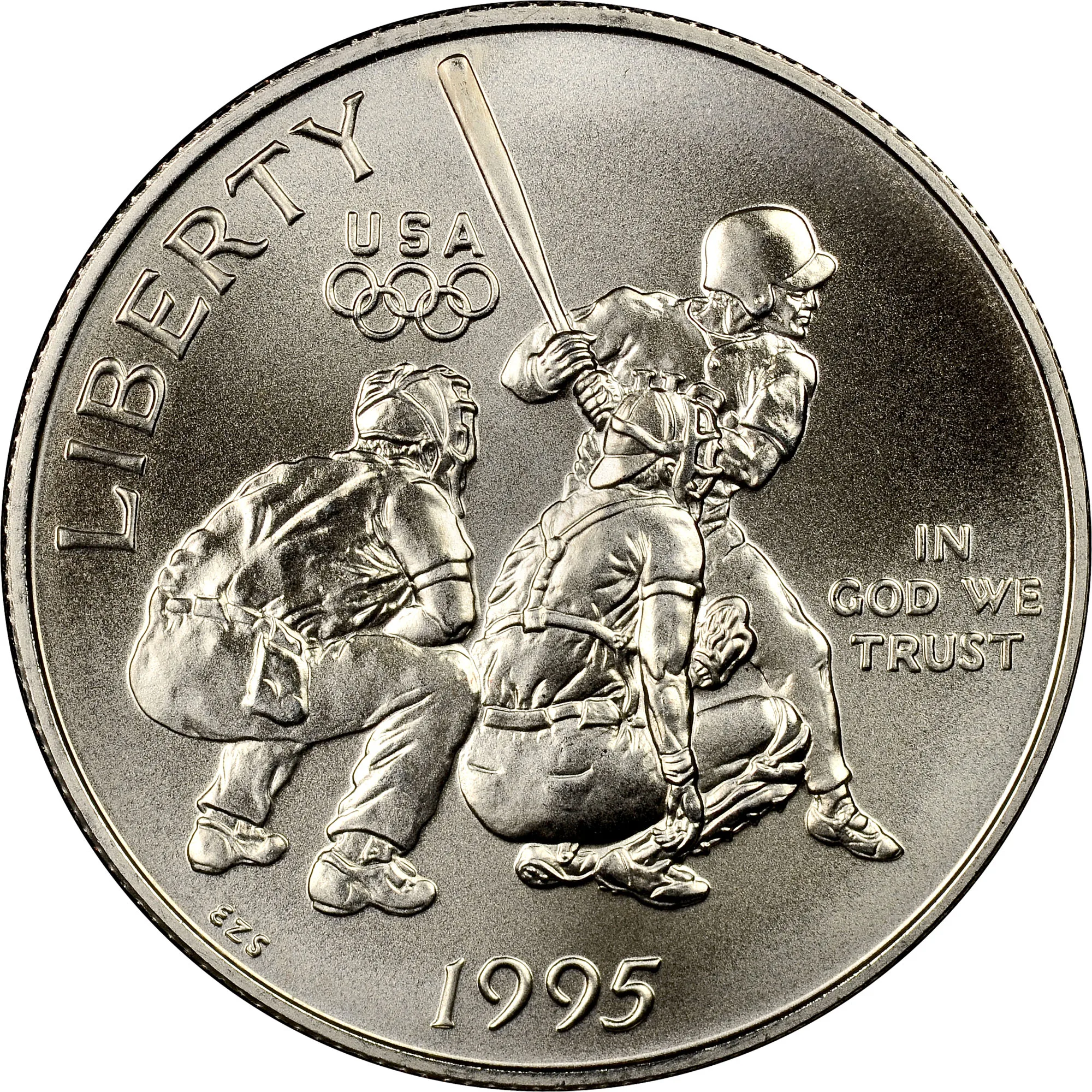
Baseball was long a sport on the edge of the Olympic Games. It was shown as a demonstration event in Stockholm in 1912, then in Berlin in 1936, in Melbourne, Tokyo, Los Angeles and Seoul, and became a full medal sport only in 1992 in Barcelona. For Americans it is the national game, but at Olympic tournaments the strongest teams proved to be those of Cuba and Japan. In Atlanta the gold went to Cuba, who beat Japan in the final. After the 2008 Games baseball was dropped from the programme and returned only at Tokyo 2020, where the host nation, Japan, won. The design has no accidental details: the batter, the catcher and the umpire are three figures without whom the key episode of the game, the pitch and the swing, cannot be imagined.
The Games of the XXVI Olympiad were held in Atlanta, Georgia, from 19 July to 4 August 1996, and coincided with the centenary of the revived Olympic Games: the first modern Games took place in Athens in 1896, and many had hoped to see the centenary there, but the right to host went to Atlanta. More than ten thousand athletes from 197 countries competed for 271 sets of medals in 26 sports. These Games saw the debut of women's football and softball, and the opening ceremony ended with an episode considered one of the most memorable in Olympic history: the cauldron was lit by Muhammad Ali.
The design belongs to the US Olympic programme: the 1992 law allowed the Mint to issue coins in 1995 and 1996 in honour of the Atlanta Games, with the proceeds from their sale going to the organisation of the Games and the preparation of American athletes. In all, sixteen different compositions were created, each devoted to one sport of the Olympic programme or one episode of the Games.
The 1996 Olympic baseball tournament gathered eight teams, and the American team, made up of college players and minor-leaguers, won bronze: gold went to Cuba and silver to Japan. For the national game of the United States this was a modest result, but it showed that world baseball had long ago outgrown America and that Cuba, Japan and Korea could compete with the best.
In the centre of Atlanta a Centennial Olympic Park was created for the Games, a venue for concerts, exhibitions and meetings of fans that turned a business district into an open space. The park became part of the legacy of the Games and survives in the city as a public place. The 1996 Games were also, at that time, the largest in the history of the Olympics in the number of participating countries.
Television made the Atlanta Games available to billions of viewers around the world: hundreds of broadcasters took part in the coverage, and athletes' feats, such as Michael Johnson's record or Kerri Strug's vault, became common property. For American viewers, Games in their own country were both a sporting and a national event.
Obverse
The artistic side is devoted to baseball: it shows a batter at the moment of the swing, the catcher behind him and the umpire following the pitch. On the left are the Olympic rings and the logo of the US team, and along the arc run the inscriptions LIBERTY, XXVI OLYMPIAD and the year 1995.
Reverse
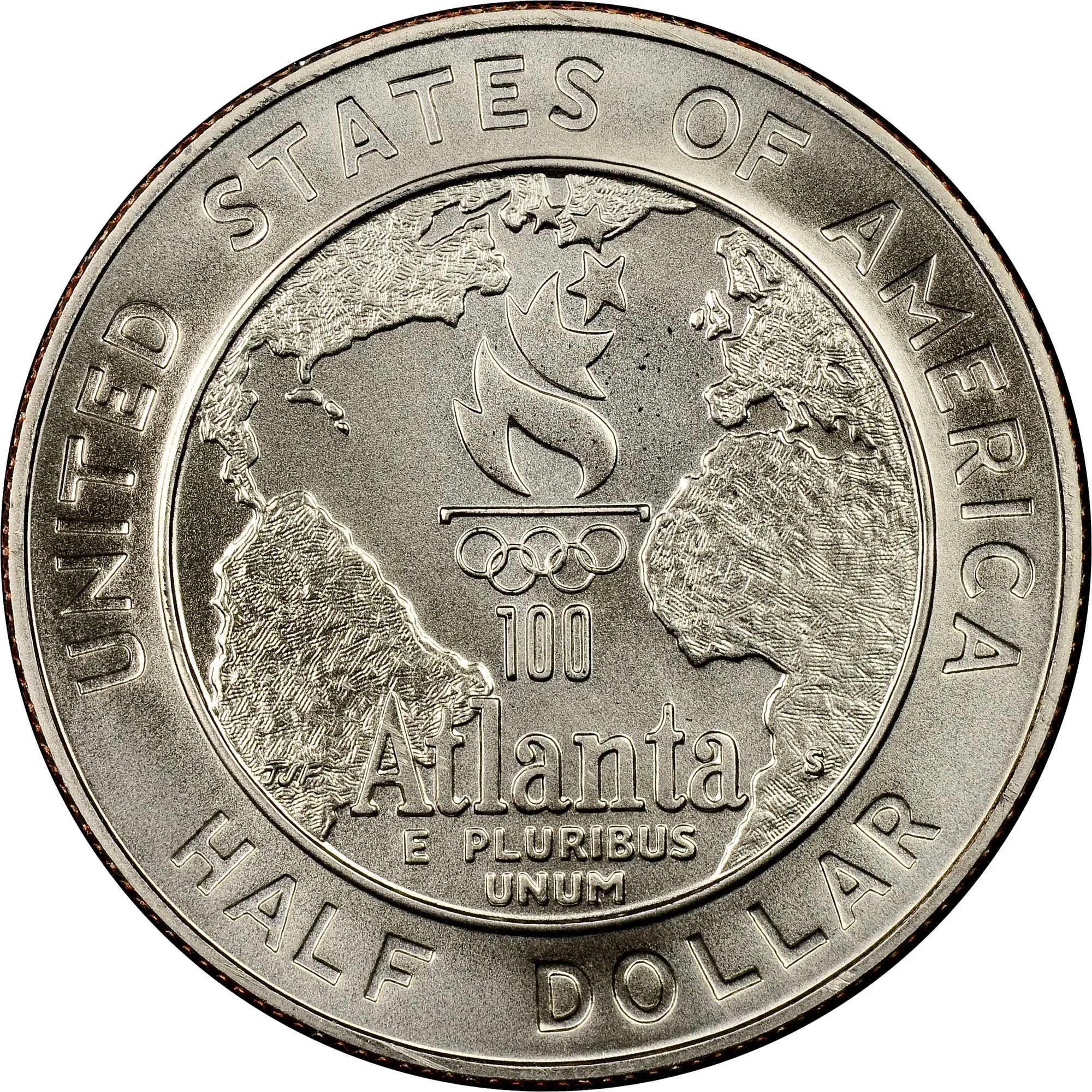
The official side is crowned by a globe with the emblem of the Atlanta Organising Committee at its centre. The legend repeats the design of all the 1995 half dollars: UNITED STATES OF AMERICA, E PLURIBUS UNUM, ATLANTA and HALF DOLLAR, while the mint mark S recalls San Francisco.