
Centennial Olympics Women's Soccer (Half Dollar)
PDFGeneral information
Пруф (Сан-Франциско, знак S)
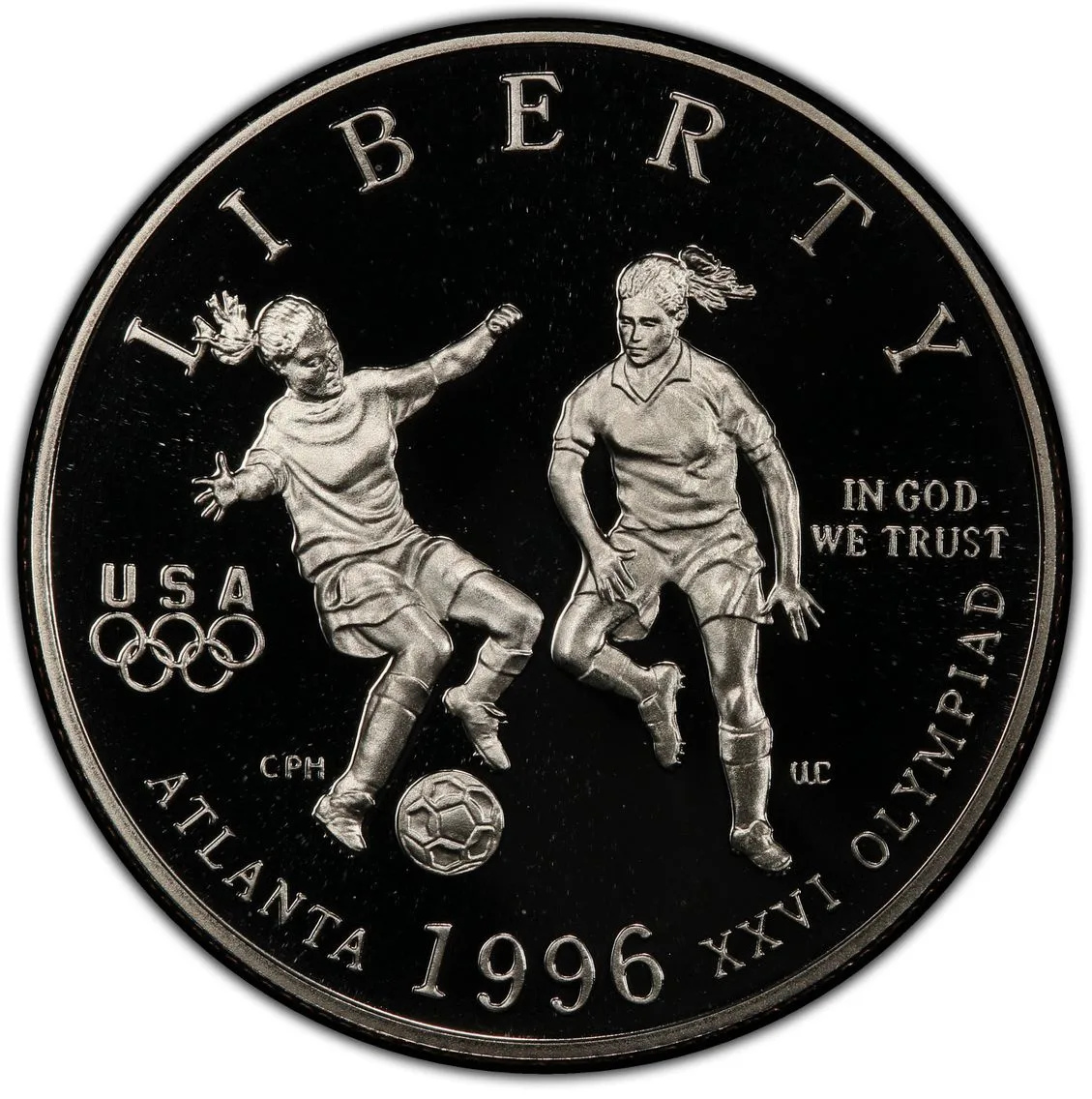
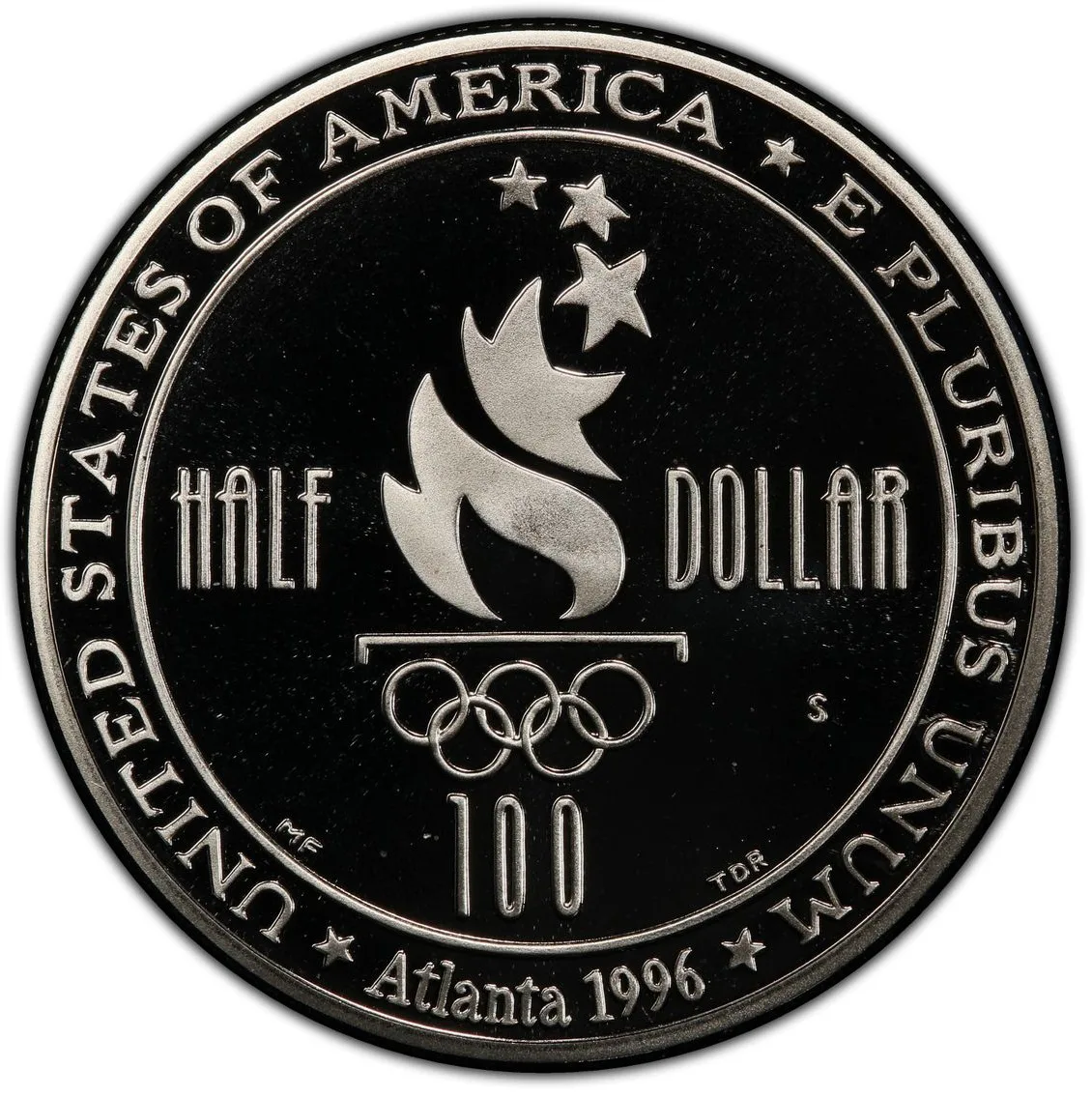
Женский футбол (0,5 доллара). Исполнение Proof: монета отчеканена на полированных заготовках двумя ударами, поэтому фон получил зеркальную поверхность, а рельеф — матовую, контрастную. Именно пруф программа продавала как основное коллекционное исполнение: продано 123 860 экземпляров по официальному итоговому отчёту Монетного двора США (сентябрь 1998), цена при выпуске $12.50 (в предзаказ — $11.50), предзаказ открылся до официального начала продаж. Монета отчеканена на монетном дворе Сан-Франциско и несёт знак двора «S», поставлялась в футляре с сертификатом подлинности.
Анциркулейтед (Сан-Франциско, знак S)
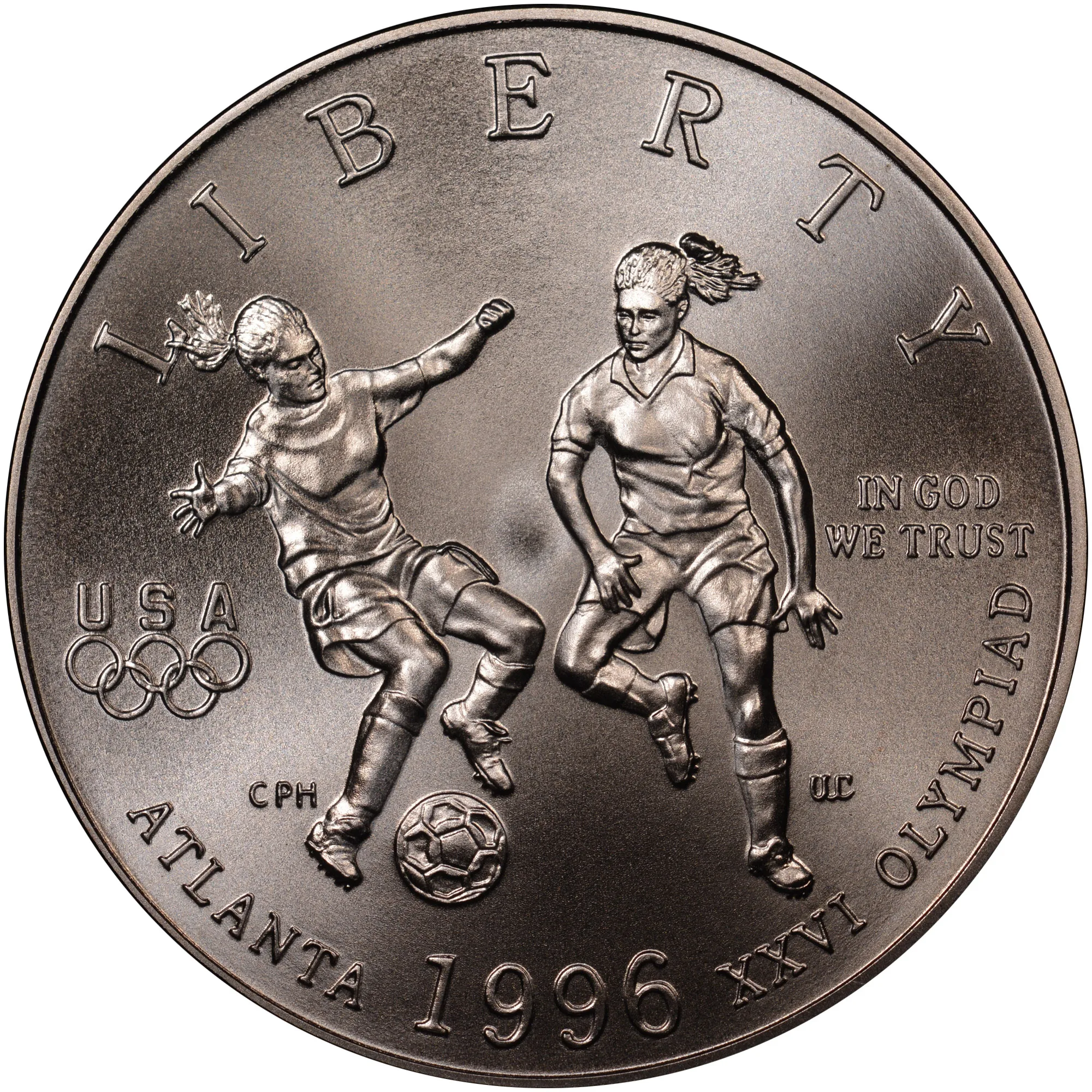
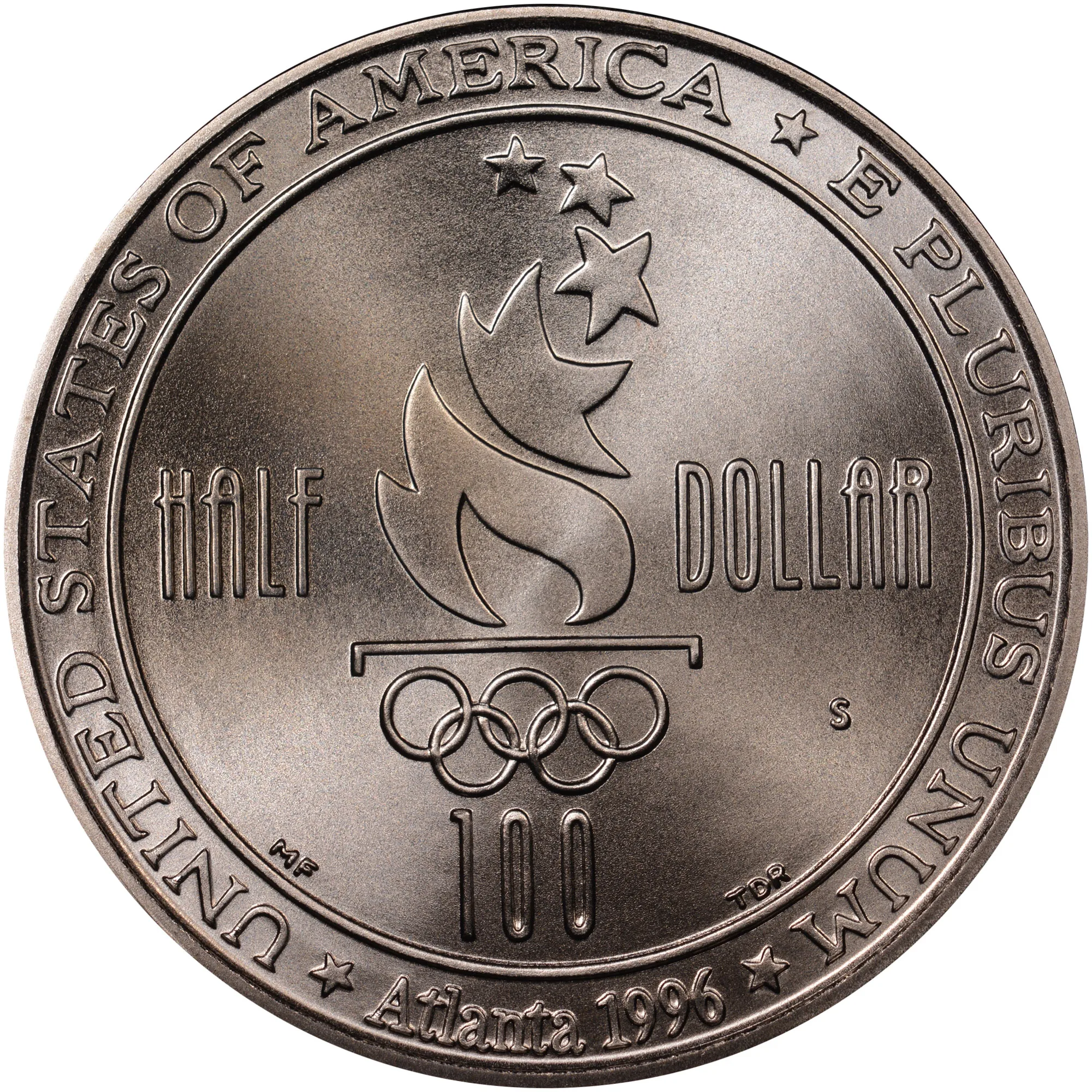
Женский футбол (0,5 доллара). Исполнение Uncirculated: монета чеканилась на полированных заготовках с повышенным усилием, зеркального поля нет — рельеф читается на матовой, слегка зеркальной в отдельных зонах поверхности. продано 53 176 экземпляров по официальному итоговому отчёту Монетного двора США (сентябрь 1998), цена при выпуске $11.50 (в предзаказ — $10.50). Двор — Сан-Франциско, знак двора «S»; монета продавалась в футляре с сертификатом подлинности и участвовала в наборах выпуска.

Description
It was the Atlanta Games that opened the Olympic history of women's football: in 1996 the women's tournament was for the first time given medal status, and the first gold was won by the United States, who beat China 2–1 in the final. The final was played at a stadium in Athens, Georgia, before packed stands. The men's football tournament of the Olympic programme had by then been held since 1900, but until 1996 it remained a competition of amateur and youth teams: the format with players under 23 took hold at precisely these Games. The subject of the coin is women's football: two players contest the ball, one dribbling and the other going in for the tackle.
The Games of the XXVI Olympiad were held in Atlanta, Georgia, from 19 July to 4 August 1996, and coincided with the centenary of the revived Olympic Games: the first modern Games took place in Athens in 1896, and many had hoped to see the centenary there, but the right to host went to Atlanta. More than ten thousand athletes from 197 countries competed for 271 sets of medals in 26 sports. These Games saw the debut of women's football and softball, and the opening ceremony ended with an episode considered one of the most memorable in Olympic history: the cauldron was lit by Muhammad Ali.
The design belongs to the US Olympic programme: the 1992 law allowed the Mint to issue coins in 1995 and 1996 in honour of the Atlanta Games, with the proceeds from their sale going to the organisation of the Games and the preparation of American athletes. In all, sixteen different compositions were created, each devoted to one sport of the Olympic programme or one episode of the Games.
The final in Athens drew about seventy-six thousand spectators, a record for a women's sporting event of that time. The American squad featured Mia Hamm, Michelle Akers and Julie Foudy, and a winning goal was scored by Tiffeny Milbrett. This success became one of the impulses for the growth of the popularity of women's football in the United States and the world.
In the centre of Atlanta a Centennial Olympic Park was created for the Games, a venue for concerts, exhibitions and meetings of fans that turned a business district into an open space. The park became part of the legacy of the Games and survives in the city as a public place. The 1996 Games were also, at that time, the largest in the history of the Olympics in the number of participating countries.
Television made the Atlanta Games available to billions of viewers around the world: hundreds of broadcasters took part in the coverage, and athletes' feats, such as Michael Johnson's record or Kerri Strug's vault, became common property. For American viewers, Games in their own country were both a sporting and a national event.
Obverse
The artistic side shows two women footballers in a duel for the ball: one dribbles, the other goes in for the tackle. On the left are the Olympic rings, and along the arc run the inscriptions LIBERTY, XXVI OLYMPIAD, USA and the year 1996.
Reverse
The reverse of the 1996 half dollars takes the form of a torch: the Olympic flame, the emblem of the Atlanta Games and the figure 100 make up its silhouette. The inscriptions are UNITED STATES OF AMERICA, E PLURIBUS UNUM, ATLANTA, HALF DOLLAR and the year 1996.