
Freedom Ringing Liberty Bell 1/2 oz Silver Medal
PDFGeneral information

Description
The silver Liberty Bell medal completes the trio of pieces in the Freedom Ringing series for the 250th anniversary of independence. Unlike the two gold coins, it is not meant for payments and is not money: it is a commemorative object issued by the Mint for collectors. Its design and shape are nonetheless the same, the outline of the Liberty Bell itself, chosen as the image of the idea that unites the whole series.
The bell's story begins in 1752, when it was cast for the building in which the assembly of the colony of Pennsylvania sat. A few decades later that hall became the stage on which the fate of the country was decided: the Second Continental Congress sat here, adopted the Declaration of Independence, and in 1787 the Constitution was written. The bell hung in the tower of the building and rang on days of important events, so it became a mute witness to and participant in history.
The words on it, a line from Leviticus about proclaiming liberty throughout the land, were chosen for the jubilee of the colony's founding but gained a new life in the age of revolution and later, in the nineteenth century, when anti-slavery campaigners gave the bell the name we know today. Since then it has been regarded as the voice of American freedom, and the crack as a sign that freedom needs constant attention.
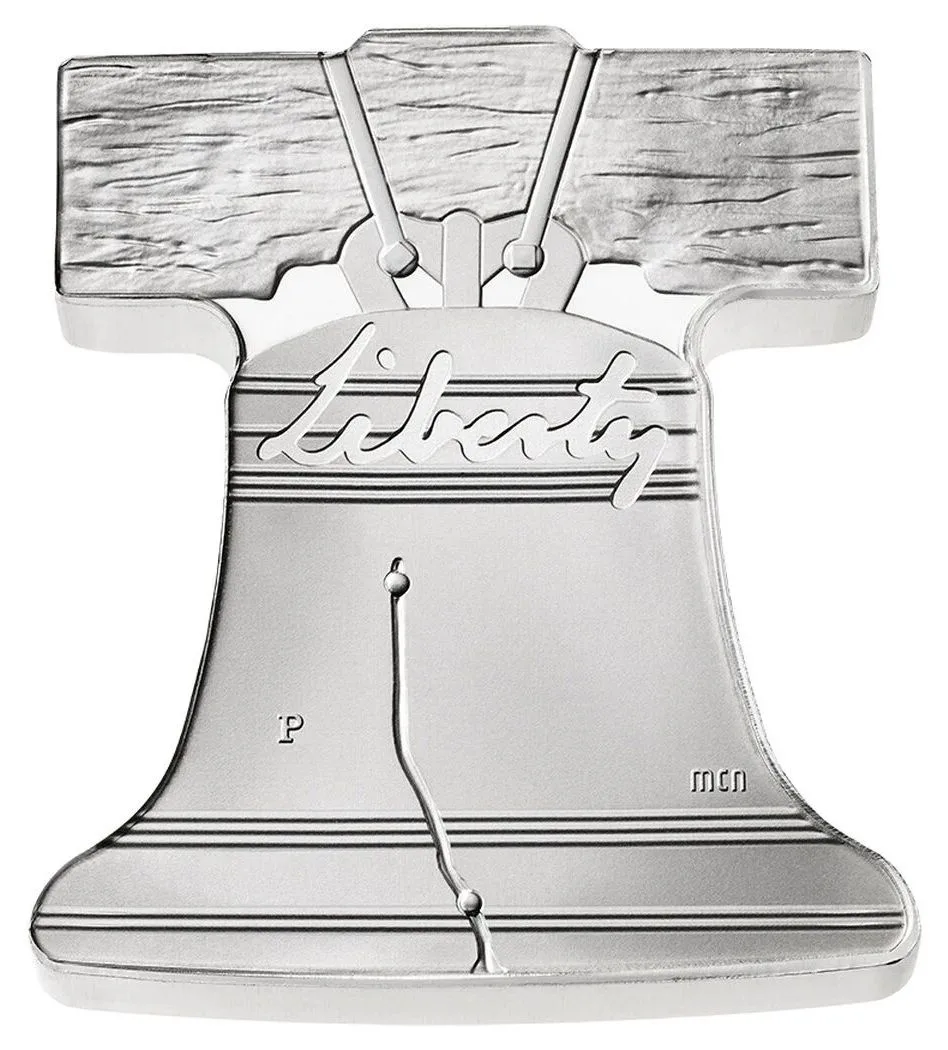
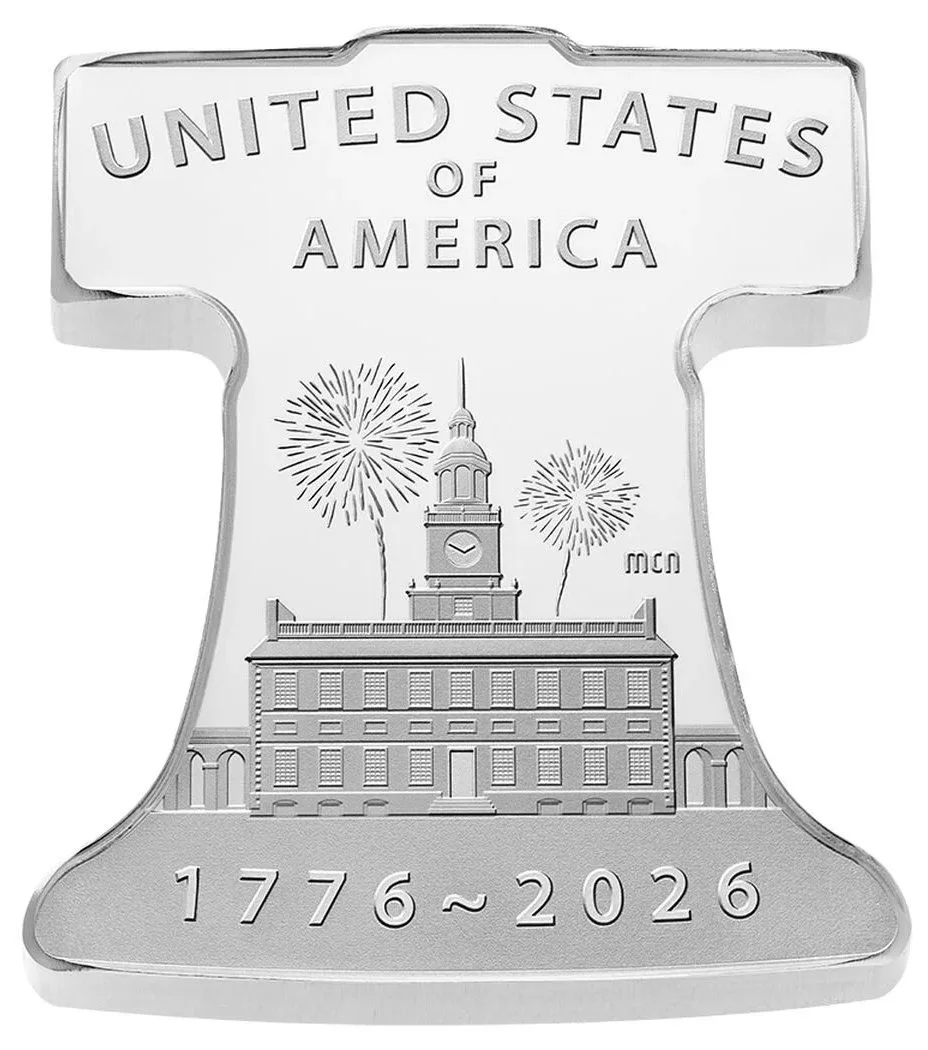
The medal repeats the composition of the series' gold coins: on one side the bell, on the other Independence Hall under fireworks. But, being a medal, it bears no statement of worth or other particulars proper to money, and that is its special feature: the image is freed from a monetary function and exists as a pure symbol. The design of both sides was created by Matthew Charles Newell; the piece was struck by hand in the Mint's research laboratory in Philadelphia.
The fireworks over Independence Hall recall that Americans celebrate the day of the proclamation of independence not only with speeches but also with lights. The custom arose as early as 1777, on the first anniversary, and has continued ever since. For a jubilee medal this matters: it is tied not only to history but also to the festival in which that history is remembered.
The double date 1776 ~ 2026 on the piece underlines its jubilee nature. The programme's designs were shown on 11 December 2025 at the National Constitution Center in Philadelphia, only a few blocks from the bell itself. The silver medal thus becomes a miniature copy of a famous image.
For a collector the silver medal is the most accessible way to own the image of the Freedom Ringing series. It lets one appreciate the designer's intention in full without needing a costly precious material. The outline of the bell, the crack and the fireworks remain the same, and the impression they make does not depend on what the object is made of.
Obverse
The Liberty Bell with its crack takes nearly the whole field; the word LIBERTY runs along the shoulder. The mint mark P and the author's initials mcn stand here. The outline of the bell gives the medal its non-round shape. The design is by Matthew Charles Newell. It repeats the image of the series' gold coins.
Reverse
Independence Hall against fireworks; UNITED STATES OF AMERICA, the initials mcn and the double date 1776 ~ 2026 are visible. Being a medal, this side lacks the statement of worth and the inscriptions about composition that stand on the gold coins of the series, so the composition looks freer and cleaner.