
Albatros D.II (10 Pesos)
PDFGeneral information
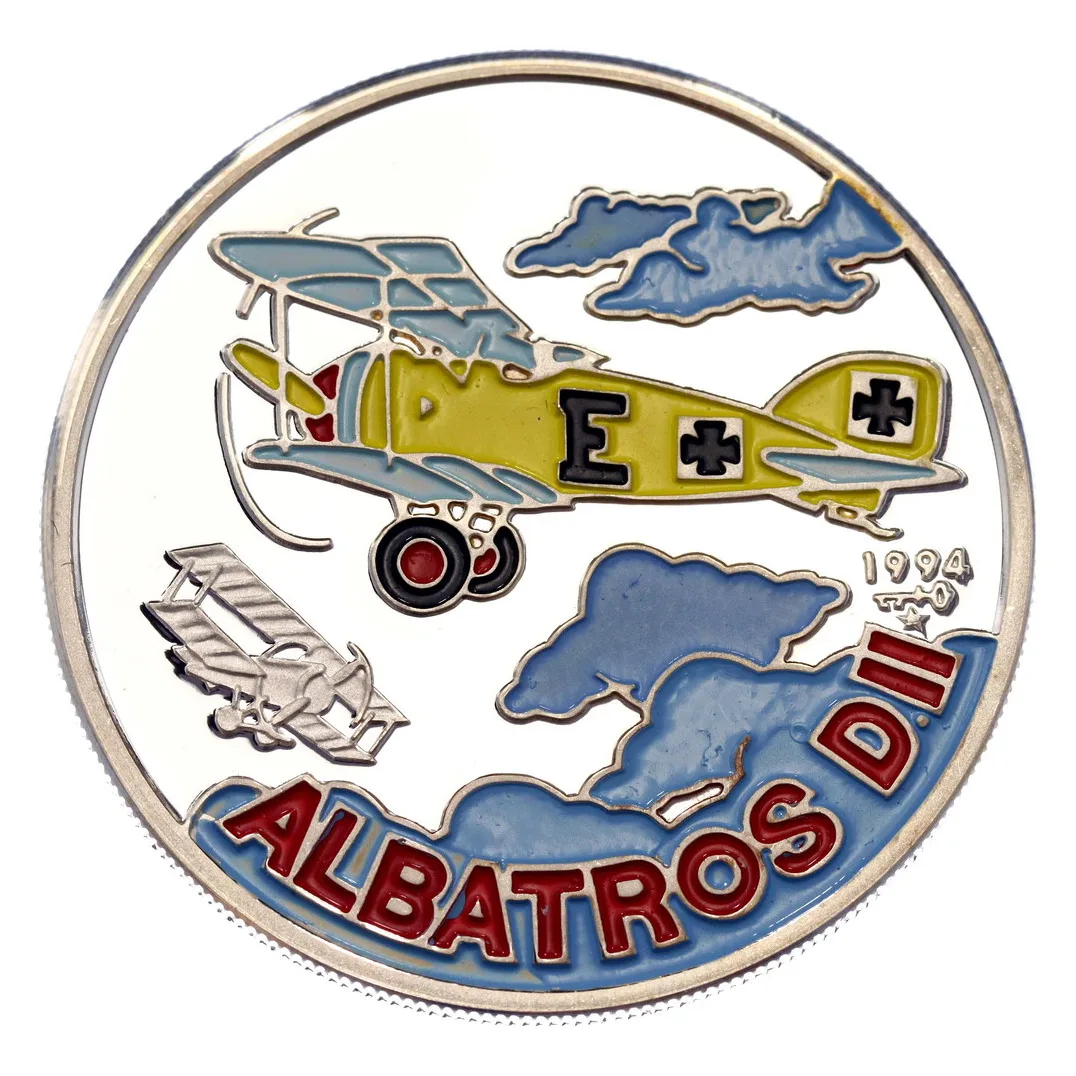

Description
In the autumn of 1916 the sky over the Western Front changed: German aviation received a fighter that for several months returned to it mastery of the air. It was the Albatros D.II — a single-seat biplane created at the Albatros-Flugzeugwerke factory in Johannisthal near Berlin by the designer Robert Thelen. It developed the successful D.I model and corrected its main fault: because of the high-set upper wing the pilot saw poorly forward and upward. On the D.II the upper wing was lowered closer to the fuselage and moved forward to open the view.
The aircraft was distinguished also by a streamlined wooden fuselage of semi-monocoque construction: it was stiffer and stronger than the usual framed bodies covered in fabric, and looked remarkably smooth for its time. In front stood an in-line liquid-cooled engine, and above it two synchronised machine guns firing through the propeller disc. For pilots of the time such a combination of speed, firepower and reliability was rare.
The Albatros D.II came to the front in September 1916 and at once became the basis of the first “elite” hunting squadrons — Jagdstaffel. The famous Jasta 2, commanded by Oswald Boelcke, one of the founders of air-combat tactics, flew it. It was in a D.II that the future “Red Baron”, Manfred von Richthofen, scored his first victory, and this gives the aircraft a special significance in history: it turned out to be the machine with which the career of the most famous pilot of the era began. Allied pilots had a hard time in those months: the new German fighters outclassed many of their machines.
The coin with this aircraft belongs to the series “Famous Aircraft”, issued in 1994–1995 by the Cuban mint for collectors. The six coins of the series show three subjects: two German First World War fighters and an Italian flying boat. In this trio the Albatros D.II is the earliest in time and the most “workmanlike” in character: not a star but a reliable machine on which men fought and learned to fight.
Obverse
The artistic side shows a biplane in flight. The aircraft is executed in relief and painted by hand in yellow-green tones with black national markings; around it, on painted parts of the field, clouds and water are indicated. At lower left is a small graphic drawing of the same biplane, at right the year 1994 and the mint mark, and along the lower arc runs the name ALBATROS D.II. The silhouette with the forward-shifted upper wing and smooth body is read unmistakably.
Reverse
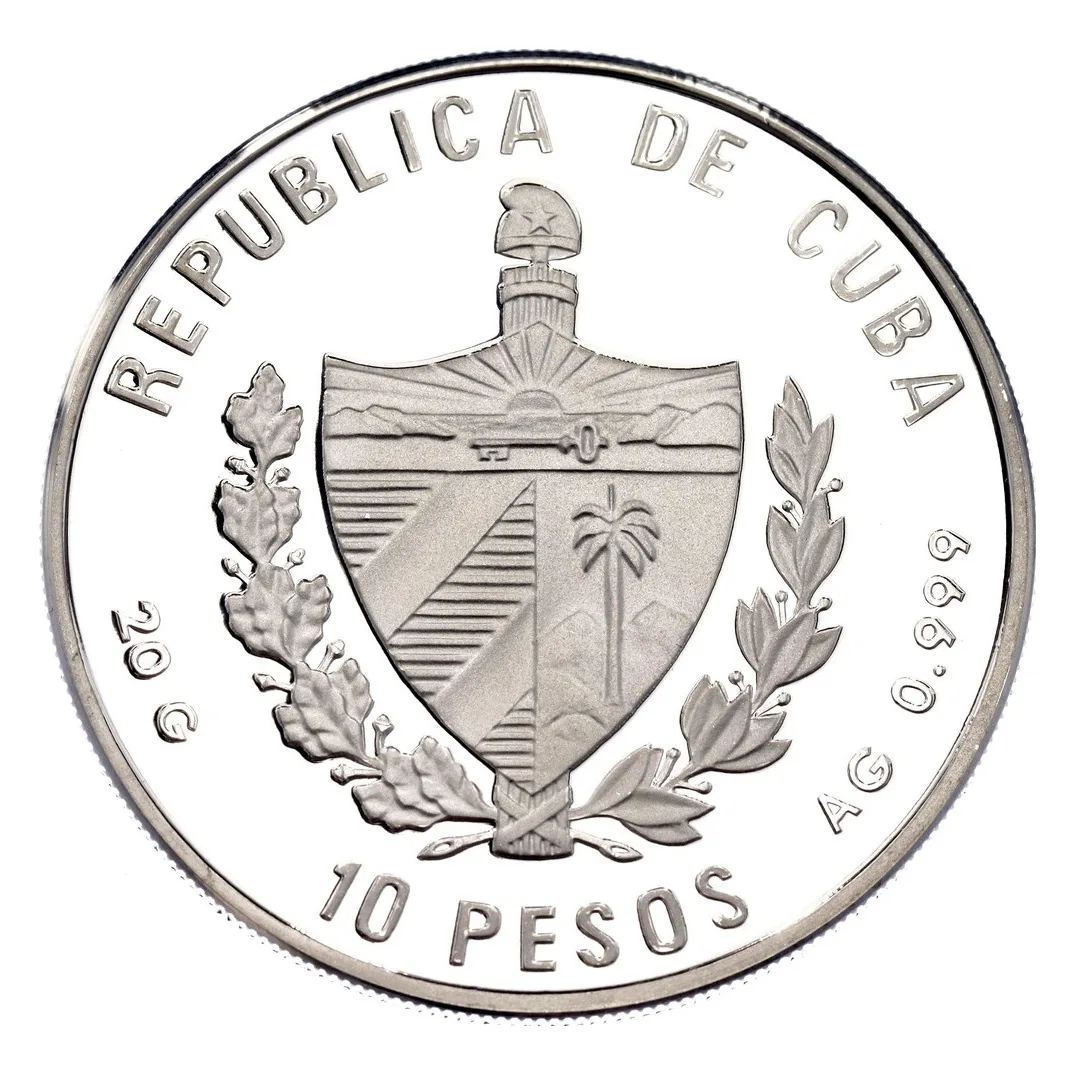
The reverse is the official side common to all coins of the “Famous Aircraft” series: the national arms of the Republic of Cuba in a drawing that goes back to Charles Edward Barber’s work. A shield with a landscape, a key, a royal palm and a rising sun is surrounded by oak and laurel branches and topped with a fasces bearing a Phrygian cap and a star. The inscription REPUBLICA DE CUBA runs along the upper arc, and below the arms the coin’s denomination is marked. The strict heraldry balances the bright painted scene on the other side.