
Chalicotherium (200 Pesos)
PDFGeneral information

Description
The coin is dedicated to Chalicotherium, one of the most unusual mammals ever to live on Earth. It is an extinct odd-toed ungulate related to horses, rhinoceroses and tapirs but quite unlike them in appearance. Its remains are found in Europe, Asia and Africa, and the group's time span covers the period from the Oligocene to the Pliocene, roughly 28 to 3 million years ago. The genus name is formed from Greek words for pebble and beast and marks the shape of the molar teeth.
The chief riddle of Chalicotherium is its forelimbs. They are noticeably longer than the hind legs, and instead of the hooves usual for odd-toed ungulates they carried large curved claws. Because of this combination the first researchers did not at once understand how the animal was built: the claws were assigned to other creatures, and only later did it become clear that they belonged to the same animal as the horse-like teeth. In appearance Chalicotherium recalled a cross between a horse and a gorilla: a horse-like head and general body proportions were combined with disproportionately long forelegs and a powerful shoulder girdle.
What the claws were for scientists worked out from the pattern of wear and the structure of the skeleton. The animal used them to pull down high branches, drawing foliage to its mouth, and ate trees instead of grass. According to one reconstruction, it walked on the knuckles of its forefeet, resting on the claws so as not to wear them down. In this way Chalicotherium took a special ecological niche that today is occupied, perhaps, only by sloths and great apes.
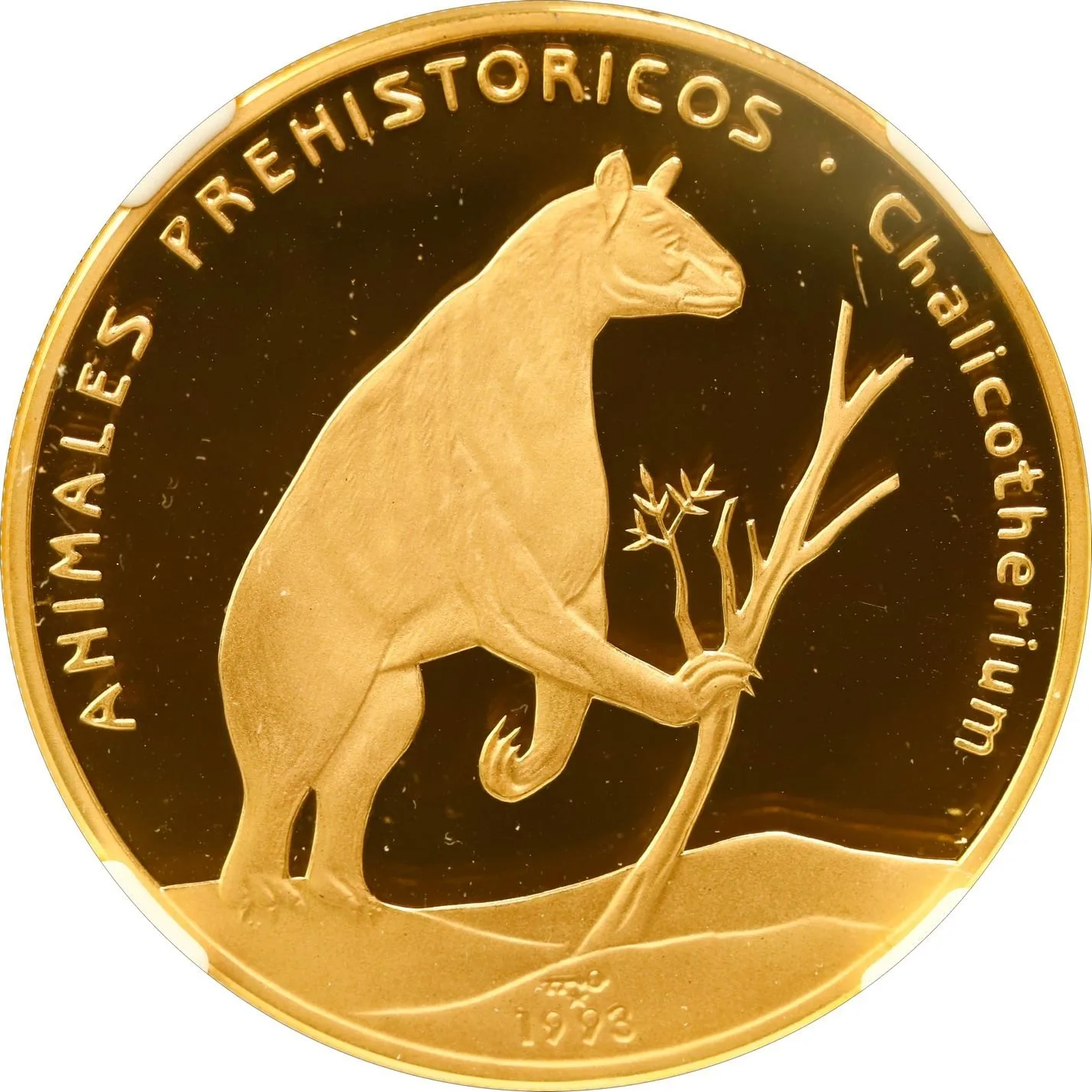
This is the image reproduced on the coin: Chalicotherium stands by a tree, forelimbs stretched out and resting on the trunk, the long neck bent toward the branches. The drawing conveys exactly the characteristic posture in which the animal found its food, and thanks to it even an uninitiated viewer understands that he sees an animal unlike familiar ones.
The presence of Chalicotherium among Cuban coins is a reminder that extinction touched not only dinosaurs. The theme of ancient life is widened here beyond the Jurassic and Cretaceous worlds: beside the lizards stands a mammal that outlived the dinosaurs by tens of millions of years.
The pose of Chalicotherium on the coin is almost comic and yet touching: the animal stretches like a person reaching an apple on a high branch. This humanlike trait has made Chalicotherium a favourite of palaeo-artists, and in popular science books its image seldom goes unnoticed.
Obverse
On the artistic side Chalicotherium is shown by a tree: forelimbs stretched out and resting on the trunk, the long neck bent toward the branches. The name of the programme runs in an arc above the drawing, with the animal's name, year and mint mark beside it. The composition is rendered in relief only, without colour. The drawing is by Alberto González Pereztol and the engraving by Belisario Álvarez Collado. The modelling of the figure conveys the long neck, the stooped back and the recognisable claws.
Reverse
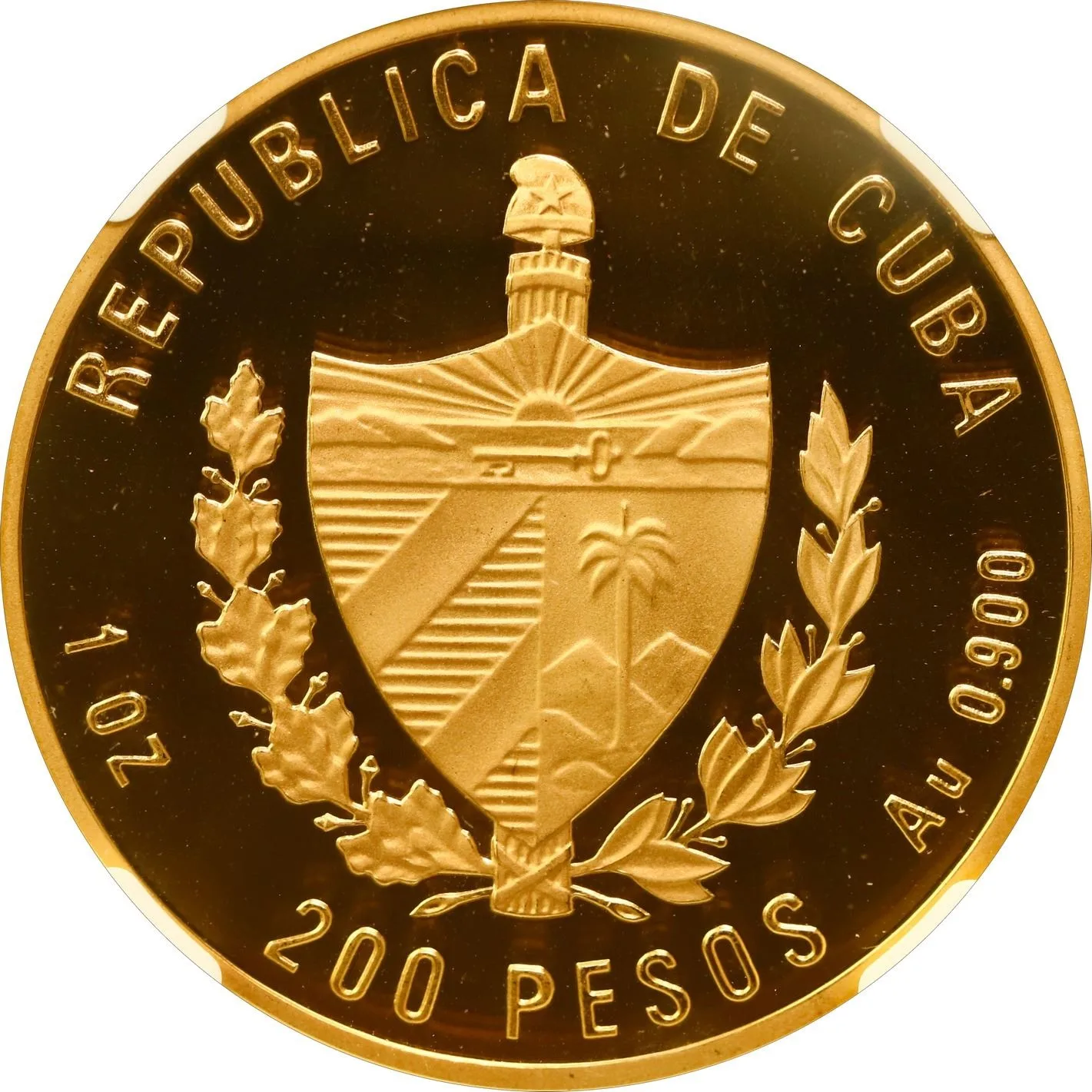
The official side carries the national coat of arms of the Republic of Cuba: a shield with a royal palm, a Phrygian cap, fasces and a rising sun. The design of the arms goes back to the American engraver Charles Edward Barber, whose project underlay Cuban state symbolism on coins.