
Cuban Crocodile (5 Pesos)
PDFGeneral information
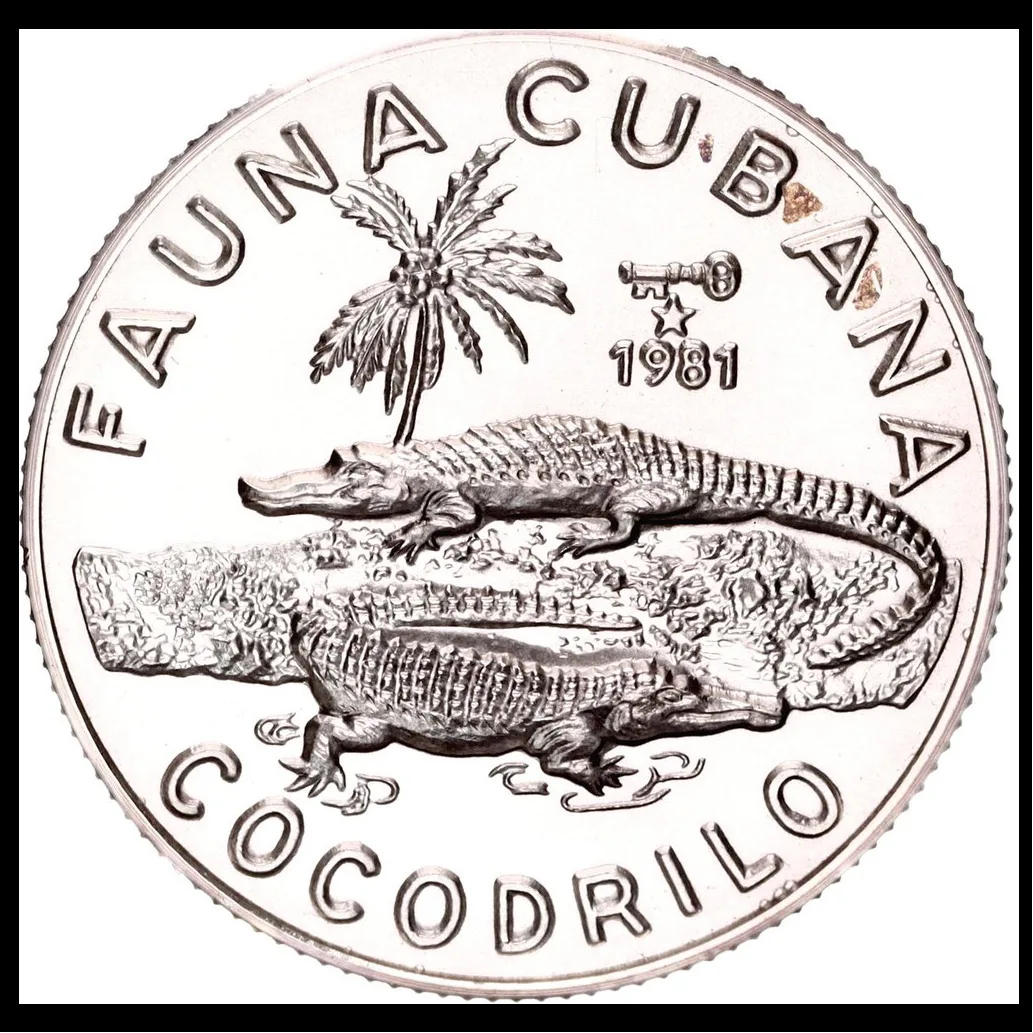
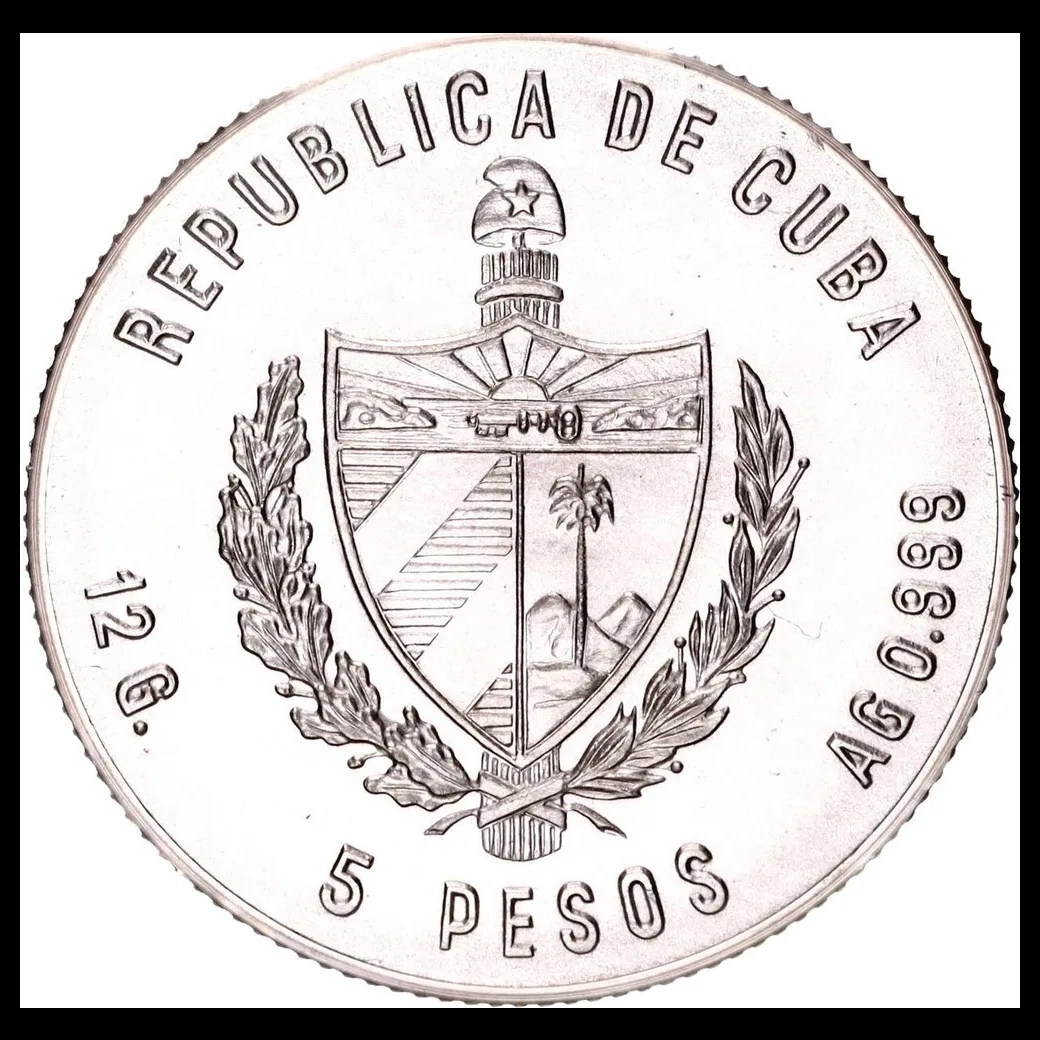
Пруф
Исполнение Proof («пруф»). Это та же монета, что и основная карточка, но отчеканена на полированных заготовках двумя ударами: поле получило зеркальную поверхность, рельеф — матовую и контрастную. Тираж — 1000 экземпляров, каталожный номер Аледона AAEE 052; обычное исполнение BU — 5000 экземпляров (AAEE 055). Характеристики обоих исполнений одинаковы: серебро 999 пробы, масса 12 г, диаметр 30 мм, рубчатый гурт; монетный двор Empresa Cubana de Acuñaciones (Гавана, Куба). Официальная сторона — герб Кубы с легендой REPUBICA DE CUBA, художественная сторона — кубинский крокодил с названием программы и годом. По каталогу Аледона 1999 года пруфовая монета стоила $39, обычная — $24.

Description
The Cuban crocodile (Crocodylus rhombifer) is one of the rarest reptiles in the world. It lives only in Cuba, mainly in the vast Zapata swamp in the south of the island, and is noticeably smaller than the American crocodile, though it still reaches several metres in length. It is easy to recognise by its bright, almost yellow-and-black colouring with a pattern of spots and by its long powerful legs. The crocodile can not only swim but also run on land, and when hunting it sometimes leaps out of the water to seize prey.
The species is on the verge of extinction. The reasons are hunting, loss of swamp lands and interbreeding with the American crocodile, because of which pure individuals have become rare. Today Cuban crocodiles are bred in nurseries, where they are raised and released into the wild; the best-known such centre is near Zapata. This work gives hope that the species will survive, but it remains one of the most vulnerable.
In 1981, when the Havana mint issued for collectors the series “Fauna Cubana I”, the crocodile appeared in it beside two hummingbirds. The contrast between the tiny birds and the heavy reptile is eloquent in itself: so the series shows the extreme points of Cuban fauna, from the smallest creatures to a large predator. The coins were not meant for payments and became part of a collecting programme.
On the coin the animal is depicted in its natural setting: reed thickets, water and the reptile itself with its elongated snout. The relief conveys the texture of the scales and the bony ridges on the back, so the crocodile looks weighty and ancient — and indeed reptiles of this group have existed on Earth for tens of millions of years. For a naturalist and a collector it is a chance to look closely at a rare animal that few ever meet alive.
Crocodiles arouse in people mixed feelings — fear and respect — and such images are not often met on coins. The Cuban mint chose this subject not for effect but to show an animal for whose preservation the country answers to the whole world: there is no second place on Earth where this species lives. So the coin can serve as a small reminder of how fragile rare nature is.
Obverse
The artistic side shows the Cuban crocodile in its habitat. The reptile is rendered in detailed relief: an elongated snout, scaly skin, bony scutes on the back, massive legs and tail. Around it are water and shoreline vegetation. The inscriptions are FAUNA CUBANA, COCODRILO and the year 1981; the mint mark is beside them. The composition looks restrained, but the animal occupies almost the whole field and makes a strong impression. The animal’s gaze is directed forward, which lends the scene tension.
Reverse
The official side is the same on every coin of the series: the national arms of the Republic of Cuba in Charles Edward Barber’s drawing. The shield is divided into three fields, a Phrygian cap with a star stands above it, with laurel and oak branches on the sides; the inscription REPUBLICA DE CUBA runs along the arc and the coin’s denomination is marked below. The strict heraldry is set against the lively, almost naturalistic image of the animal or bird on the other side and reminds us that this is a state issue.