
Cuban Railway (5 pesos, silver)
PDFGeneral information
Пруф
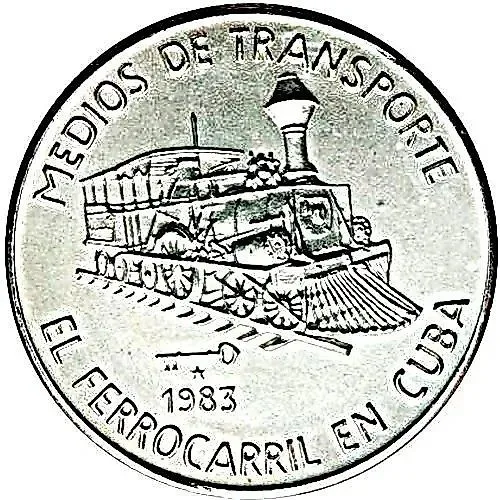
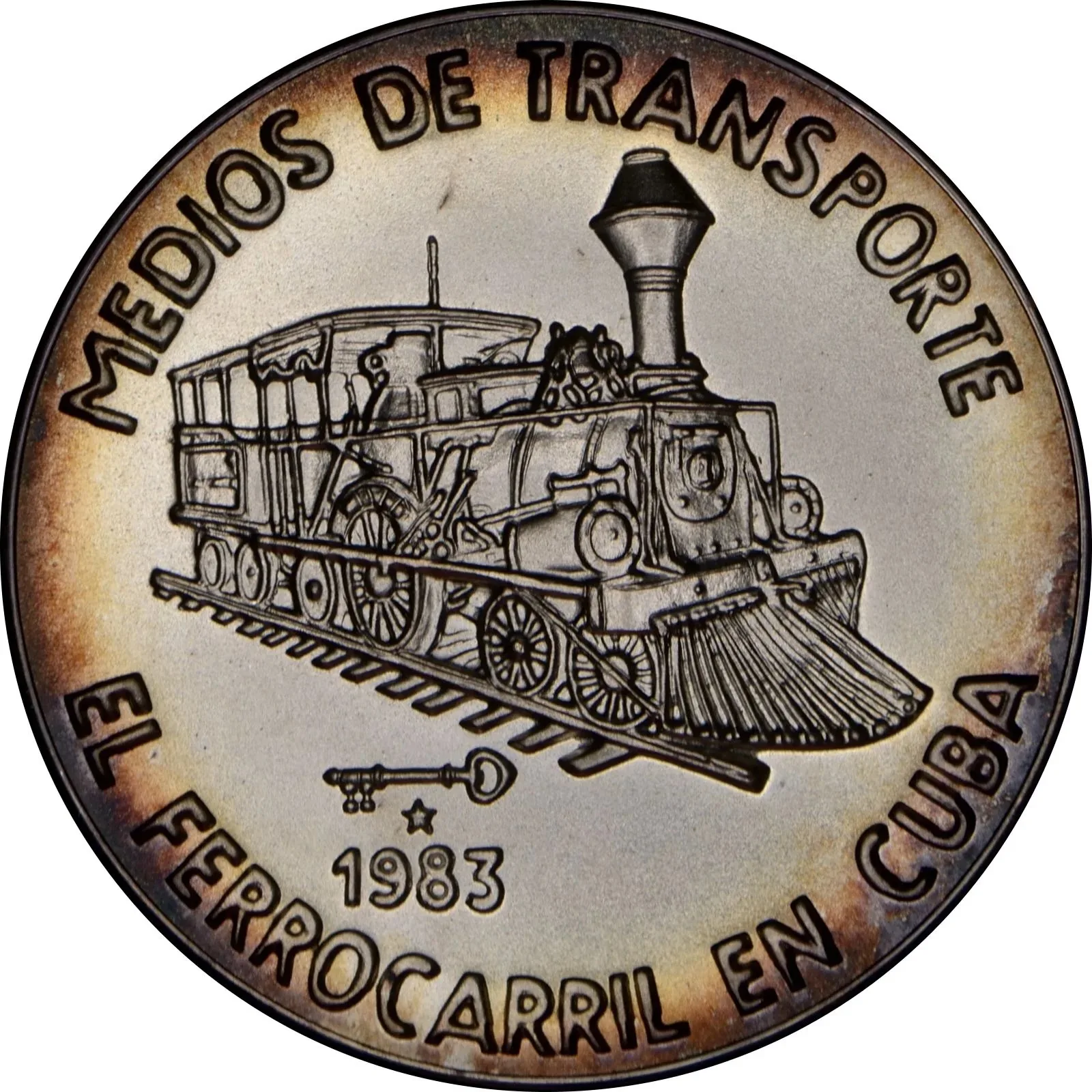
Пруф-разновидность серебряного 5 песо 1983 года с паровозом — то же изображение, что и у базовой карточки серии «Средства транспорта» (сюжет EL FERROCARRIL EN CUBA), но в качестве чеканки PROOF. Металл, масса и диаметр совпадают с обычным выпуском: серебро 999 пробы, 12 граммов, 30 миллиметров, кант рубчатый. Отличие — в финише и тираже: у пруфа зеркально гладкое поле и матовый, словно припудренный рельеф, тогда как базовый BU-выпуск имеет ровный блеск по всей поверхности. Тираж пруфа — 2000 экземпляров против 5000 у BU, в каталоге Хосе Марии Аледона разновидность значится под номером AAEE125.
Пруф ценят за контраст: рисунок на зеркальном поле читается особенно объёмно, а малый тираж делает монету желанной для собирателей. Обе версии чеканились одним и тем же штемпелем и различаются только технологией и объёмом выпуска, поэтому пруф не считается отдельным сюжетом, а оформляется как разновидность «Пруф» к базовой карточке. Монета остаётся законным платёжным средством Кубы (демонетизирована).

Description
The subject of the silver coin is a steam locomotive, which in the first half of the 19th century made Cuba one of the first countries in the world with its own railway. The island, which depended on sugar cane plantations for its livelihood, needed a quick way to transport the crop to the sea, and rails became that way. The first steam train on the Havana-Bejucal line passed on November 19, 1837; Compared to the metropolis, Cuba had no equal: in Spain the first line opened only in 1848.
The length of the first Cuban line was about 27.5 kilometers, and by 1839 it had reached Guines, the center of the sugar region. According to Cuban historiographical tradition, the island became the third country in the world with a railway, behind only Great Britain and the United States, and the first in the Spanish-speaking world. The island's economy was based on cane, and cane needed to be delivered quickly and cheaply to ports; It was the need for the export of sugar, molasses and rum that determined the routes of the first lines and further construction.
The first generation of steam locomotives were machines with a tall chimney, a cylindrical boiler, a small cabin and a coal tender; on the Cuban lines they ran among cane fields and along the coast, and the stations gradually turned into centers of urban life. Railroads were one of the phenomena that made Cuba part of world trade: behind the rails were telegraphs, warehouses, port piers and new cities.
For Cuban numismatics, a steam locomotive is a natural subject: it combines the history of the island, the work of several generations and the spirit of the industrial era. The silver coin captures this image in precious metal, emphasizing that the railroad was not just transportation for Cuba, but a stage of development: from a plantation colony with horse-drawn transport to a modern state.
Trains carrying cane to sugar factories became part of the island's landscape: fields, stations, water pumps and trolleys formed a kind of “railway country” within the country. Often the lines were laid by plantation owners and companies that connected their lands with the nearest port, and it was from such scattered branches that a dense network gradually formed, making Cuba one of the most “rail” countries in Latin America.
Obverse
Shown here is a first-generation locomotive with a tall chimney and a typical 19th-century silhouette: cylindrical boiler, chimney, driver's cabin, tender and open platform. The locomotive stands on a rail bed, which immediately sets the theme of movement and technology. Along the top edge is MEDIOS DE TRANSPORTE - “Means of Transport”, along the bottom - EL FERROCARRIL EN CUBA, and in the field under the car is the year 1983. Next to the year is a mint mark - a key with a star (llave y estrella). The composition is associated with the artist Alberto Gonzalez Perestol.
Reverse
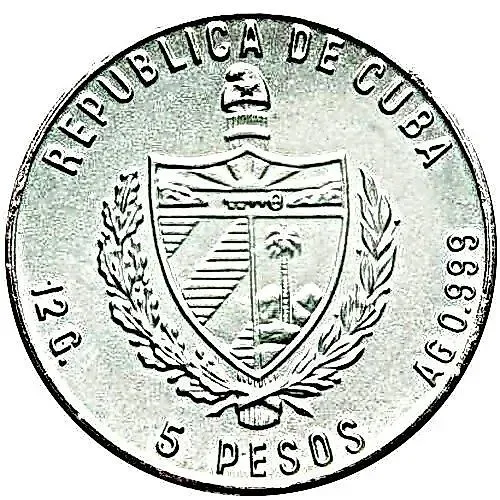
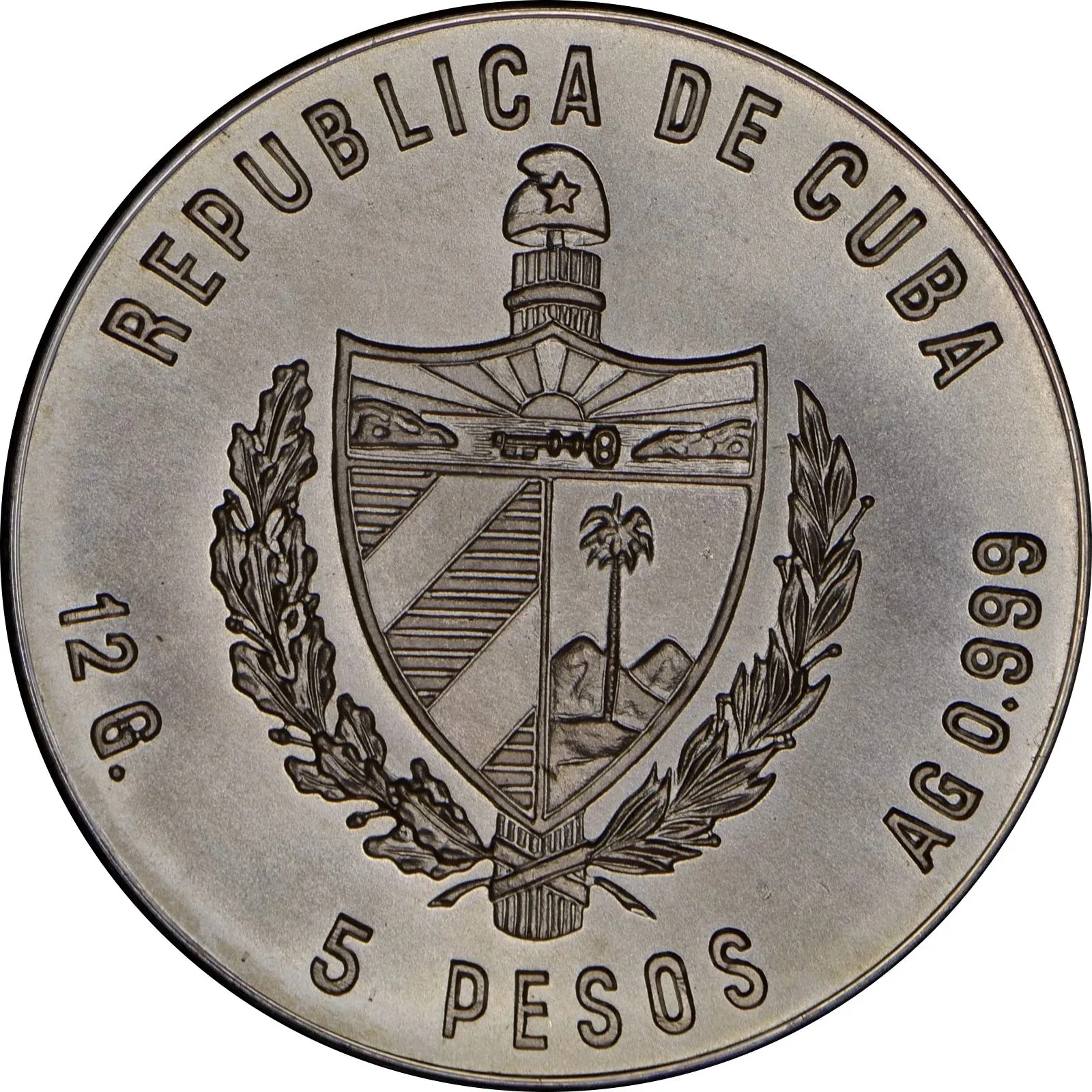
The reverse bears the state coat of arms of Cuba: a shield with a landscape of the island - a rising sun, a palm tree, hills and a key, a symbol of Cuba's position as the “key to the New World” - above the shield there is a Phrygian cap on a staff with a star, on the sides there are oak and laurel branches. REPUBLICA DE CUBA - “Republic of Cuba” is engraved at the top, 5 PESOS at the bottom, and the technical inscriptions of the issue are placed at the edge. The design draws on the Cuban coinage tradition established in 1915–16 by US Mint engraver Charles Edward Barber.