
Cuban Solenodon (1 Peso)
PDFGeneral information
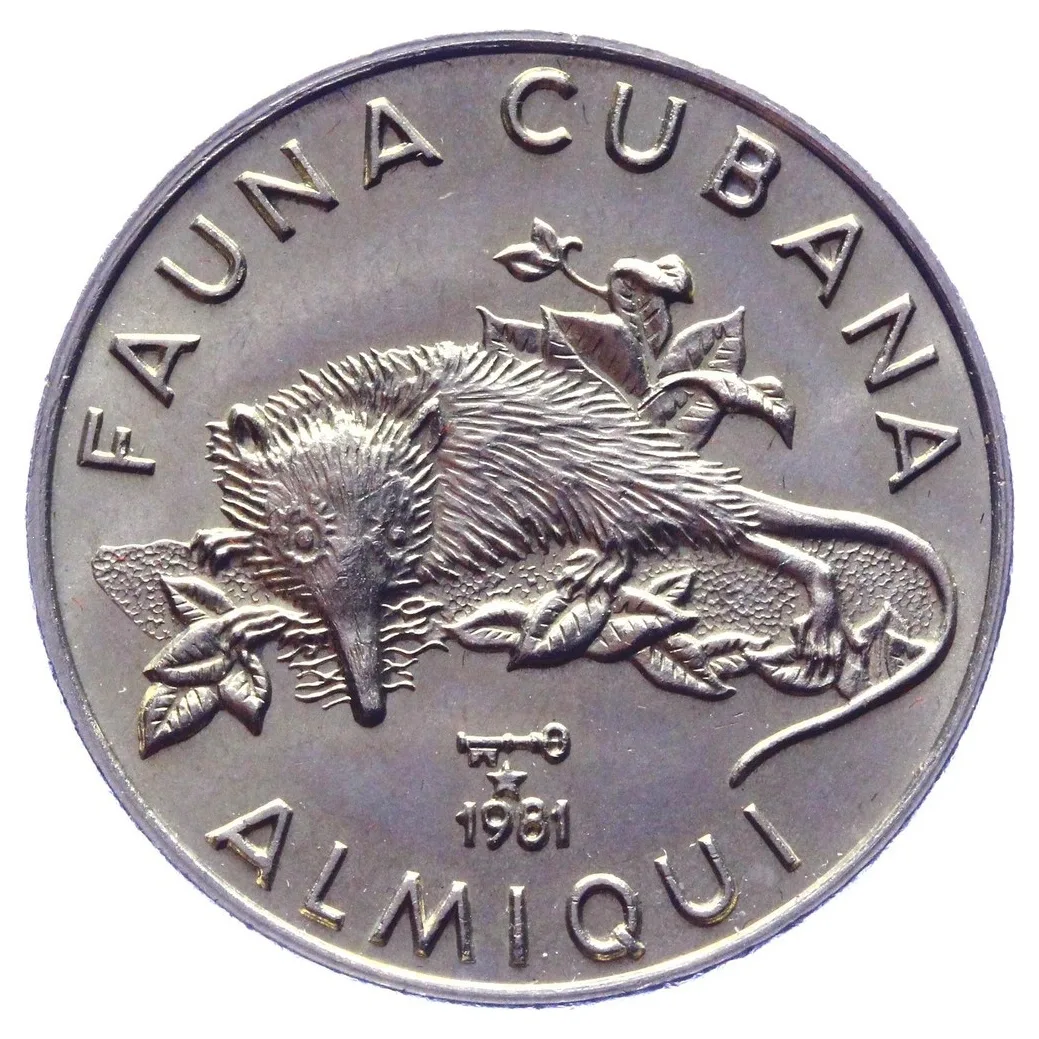

Description
The word “solenodon” is not very well known outside zoology, but once one learns what hides behind it, the creature becomes memorable. The Cuban solenodon (Solenodon cubanus) is a nocturnal predator from a long-isolated branch of mammals, and together with its Hispaniolan cousin it remains one of two species of its genus. It digs well, runs fast on short legs and can find prey in complete darkness by feeling the ground with its mobile nose. Black fur, a scaly tail and small eyes — an appearance more archaic than striking.
The animal’s special place in science is defined by venom. Its saliva contains toxic proteins that are delivered into prey through a groove in the lower incisors — a device more typical of snakes than of mammals. It is not needed for hunting insects and worms, but helps with larger prey, such as lizards. It is one of the rare cases of venomous mammals, and so the solenodon is called a “walking fossil”: features of its structure have changed little over tens of millions of years.
The species’ range is the mountain forests of Cuba, mainly in the east of the island. Numbers are low and continue to fall because of deforestation, hunting by dogs and cats brought by people, and mongooses, which have become the main threat to local fauna. For a time it was believed that the Cuban solenodon had vanished entirely, but then it was found again; protection of the species continues to this day.
The coin, struck in 1981, belongs to the series “Fauna Cubana II”, issued by the Havana mint for collectors. Animals that are rarely put on coins are gathered together here: a relic mammal, a national bird and an armoured fish. For a numismatist such a choice is interesting: it shows the programme not as a collection of banal symbols but as a selection of truly unusual heroes of Cuban nature.
It is interesting too how scientists came to understand that this is a special group. For zoologists the solenodon was long a puzzle: by appearance it could be taken for a huge shrew, but in the structure of its skull and teeth it stands apart. Today it is placed in a family of its own that has only two living species — the Cuban and the Hispaniolan — while others are known only from remains. The coin seems to remind us that the nature of the Caribbean has such rare pages too.
Obverse
The obverse is the artistic side. The Cuban solenodon is depicted among branches and leaves: an elongated mobile nose, a stocky body, strong forelegs with claws and a thin tail. The relief conveys the fur in fine strokes, and soft shading sets off the animal’s head. The inscriptions FAUNA CUBANA, the animal’s name and the year 1981 are struck, with the mint mark beside them. Light glides over the animal’s back, emphasising the dense fur.
Reverse
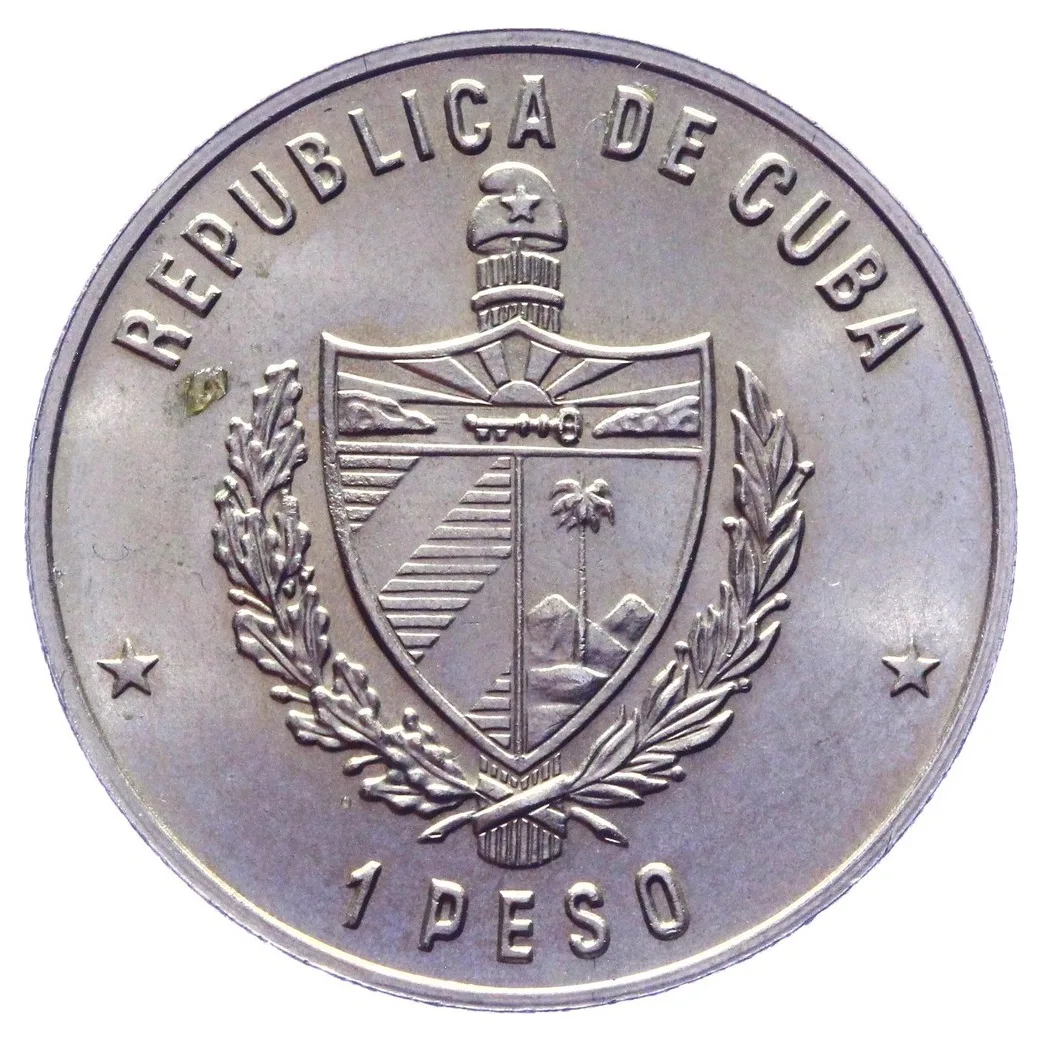
The official side is the same on every coin of the series: the national arms of the Republic of Cuba in Charles Edward Barber’s drawing. The shield is divided into three fields, a Phrygian cap with a star stands above it, with laurel and oak branches on the sides; the inscription REPUBLICA DE CUBA runs along the arc and the coin’s denomination is marked below. The strict heraldry is set against the lively, almost naturalistic image of the animal or bird on the other side and reminds us that this is a state issue. It is common to all coins of the second series.