
Cuban Trogon (1 Peso)
PDFGeneral information
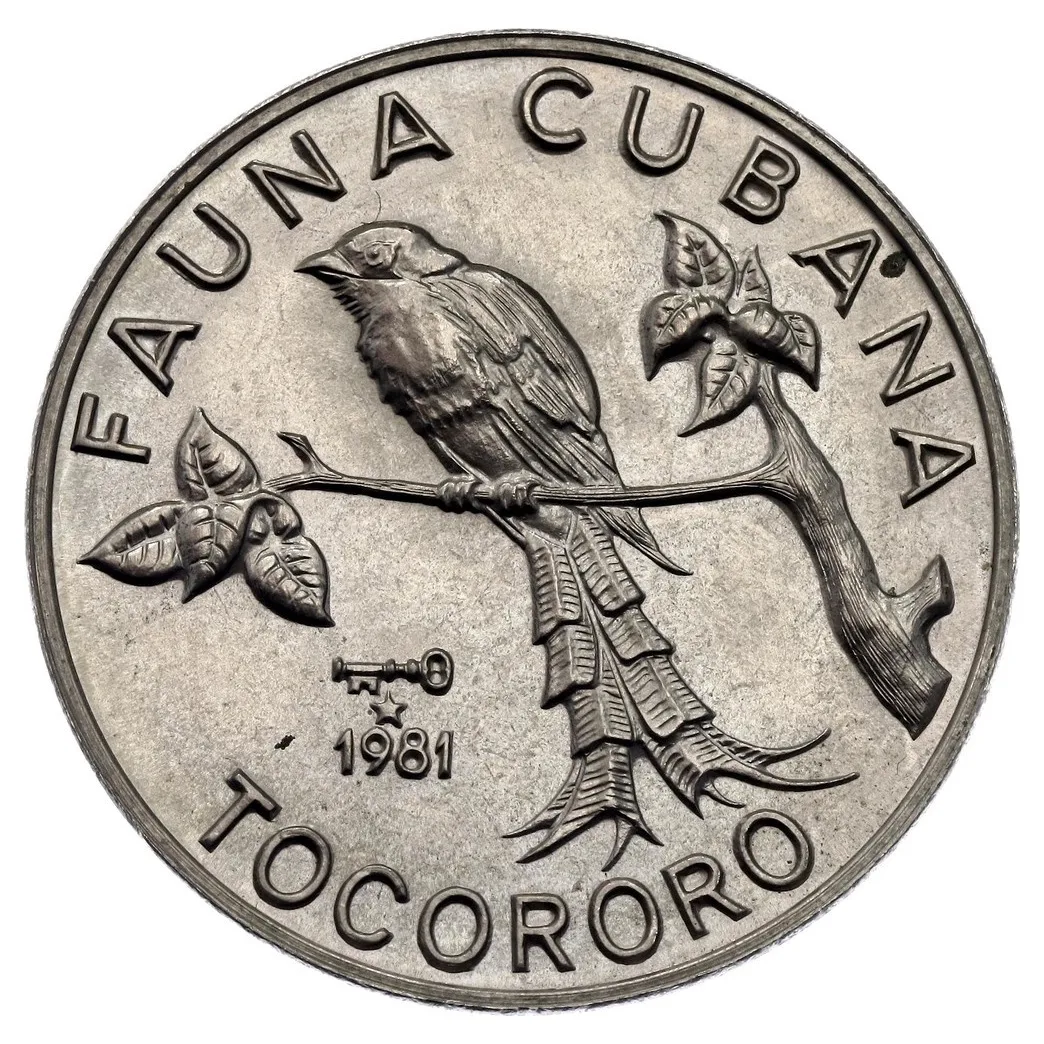
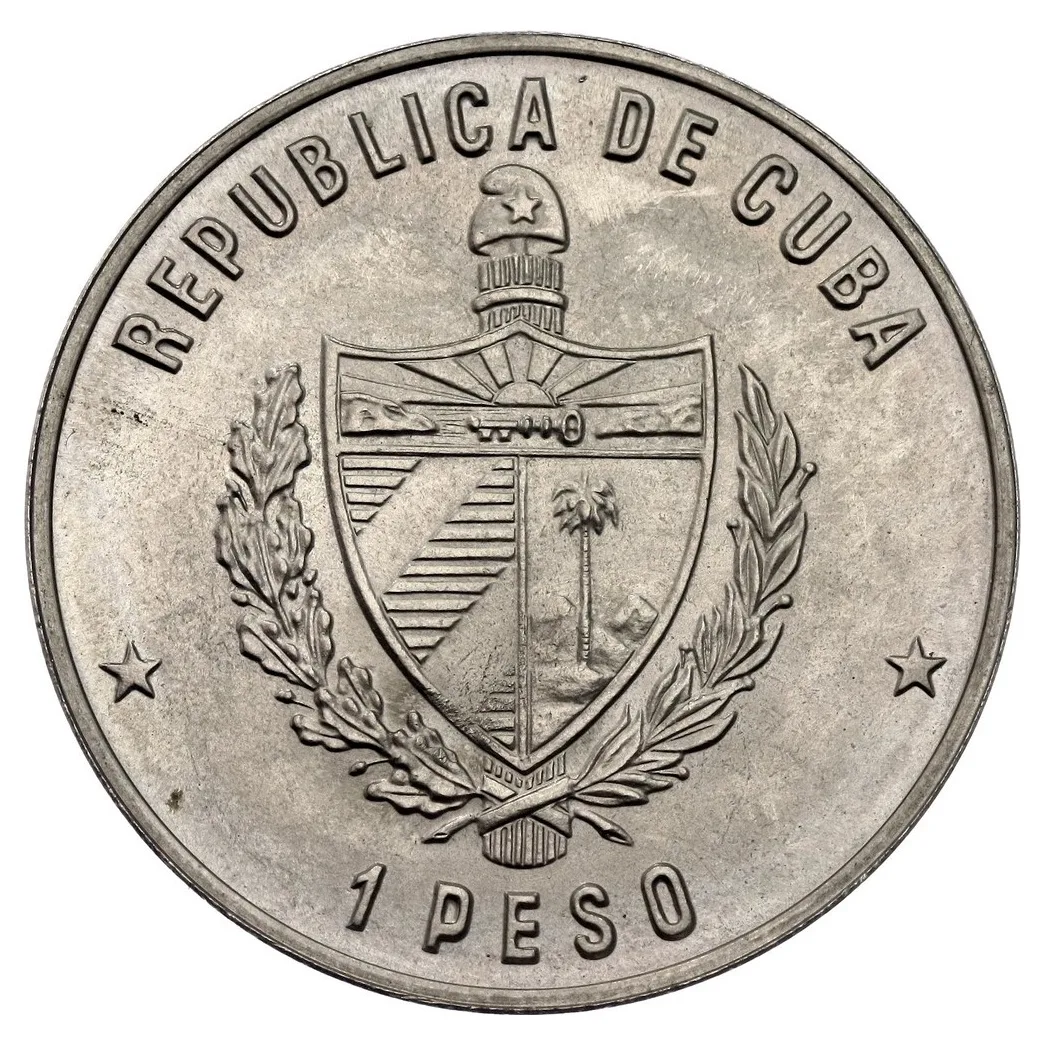

Description
The flag of Cuba has three colours — red, blue and white — and in the nature of the island there is a bird that seems composed of them. It is the tocororo (Priotelus temnurus), the Cuban trogon: blue back, white breast, red belly. No wonder that the bird is regarded as national and its image became part of state symbolism: Cubans see in it living confirmation that the flag’s colours were taken from nature itself. Popular etymology reinforces this: by legend the tocororo does not live in captivity and dies when deprived of freedom, so it is regarded as a symbol of independence.
Leaving the legend aside, the bird has many genuine merits. Its tail is long; it sits motionless high on a branch and catches insects and small lizards, darting from its place in short dashes. It likes hollow trees where it raises its young; it often takes over abandoned woodpecker nests. Its voice is a soft “toco-toco”, from which the name came.
The tocororo lives in many forests of Cuba, from plains to mountains, but being secretive it is rarely seen by casual observers. It is an endemic of the island, that is, it lives nowhere else. So the image of the bird became for Cubans a sort of calling card of native nature, and the choice of the subject for a coin seems the most natural.
In 1981 the Havana mint issued for collectors the second series “Fauna Cubana”, and the tocororo appeared among its heroes with the solenodon and the gar. For a collector the coin is interesting for its neatness: the bird is shown without excessive detail but with right proportions and an expressive perch, and the relief lets one examine each feather.
The combination of blue, white and red in the bird’s plumage seems almost symbolic, and Cuban poets have more than once used this image. In songs and poems the tocororo appears as a sign of homeland, loyalty and will, and on a collectible coin this meaning is kept without extra words. A numismatist holding the coin sees not just a bird but one of the most recognisable images of Cuban culture, and that is the main value of the subject.
Obverse
The obverse is the artistic side. The Cuban trogon tocororo perches on a branch: the body is upright, the head slightly turned, the tail hangs down. The wings and breast are worked in fine relief, and leaves around create a light background. The inscriptions FAUNA CUBANA, the bird’s name and the year 1981 are struck, with the mint mark beside them. The free field around the bird is left clean, which helps one concentrate on its silhouette.
Reverse
The official side is the same on every coin of the series: the national arms of the Republic of Cuba in Charles Edward Barber’s drawing. The shield is divided into three fields, a Phrygian cap with a star stands above it, with laurel and oak branches on the sides; the inscription REPUBLICA DE CUBA runs along the arc and the coin’s denomination is marked below. The strict heraldry is set against the lively, almost naturalistic image of the animal or bird on the other side and reminds us that this is a state issue. This reverse unites all the coins of the programme.