
Cuban Trogon (5 Pesos)
PDFGeneral information
Пруф
Исполнение Proof («пруф»). Это та же монета, что и основная карточка, но отчеканена на полированных заготовках двумя ударами: поле получило зеркальную поверхность, рельеф — матовую и контрастную. Тираж — 1000 экземпляров, каталожный номер Аледона AAEE 061; обычное исполнение BU — 5000 экземпляров (AAEE 064). Характеристики обоих исполнений одинаковы: серебро 999 пробы, масса 12 г, диаметр 30 мм, рубчатый гурт; монетный двор Empresa Cubana de Acuñaciones (Гавана, Куба). Официальная сторона — герб Кубы с легендой REPUBICA DE CUBA, художественная сторона — кубинский трогон с названием программы и годом. По каталогу Аледона 1999 года пруфовая монета стоила $38, обычная — $26.

Description
The tocororo, the Cuban trogon (Priotelus temnurus), is the national bird of Cuba, and it earned this title not only by beauty. The bird’s plumage almost literally repeats the colours of the Cuban flag: head and back blue, breast white, belly red. Such a coincidence looks as if nature itself had produced a state symbol, and Cubans noticed this long ago. The bird is the size of a pigeon but slimmer, with a long tail that gives it a distinctive silhouette.
The name tocororo is onomatopoeic: it conveys the bird’s soft calls, something like “to-co-ro-ro”. It lives in the forests of the island, from lowland to mountain, and usually sits on a branch motionless, often upright, with the tail hanging down; because of this habit it is not always easy to spot among foliage. It eats insects, fruit and small lizards, catching prey in short darts. It nests in tree holes, often in old woodpecker nests, and the young are fed by both parents.
The tocororo is endemic to Cuba and the only trogon on the island; the whole trogon family are tropical forest birds, more often found in the Americas and Africa. For Cubans the bird is a point of pride, and its image can be seen on stamps, badges and in songs. It is no accident that it entered the 1981 series “Fauna Cubana II”, issued by the Havana mint for collectors: without it a programme about Cuban nature would look incomplete.
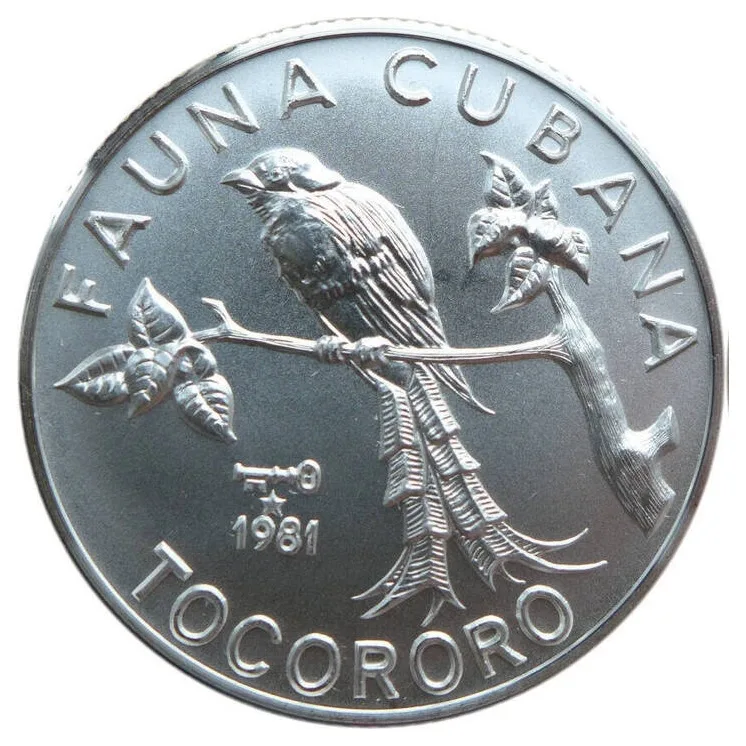
On the coin the bird is shown perched on a branch, with its long tail hanging down. The relief conveys the small feathers on the breast and wings, the even line of the back and a characteristic silhouette that a collector will recognise from afar. For a series in which a relic mammal and an armoured fish are neighbours, the tocororo is the most “dressed up” hero, for whom the coin is worth examining especially closely.
For scientists the tocororo is interesting as a member of the trogon family — birds adapted to life among branches: they have short legs poorly suited to walking but long tails and a broad bill. For Cubans it is a bird known even to city children. On the coin both views come together: it has both scientific accuracy and national pride, and the overall image turned out laconic and memorable.
Obverse
The artistic side shows the Cuban trogon on a branch among leaves. The bird sits upright, the tail hangs down and the head is slightly turned. The relief conveys the small feathers on the breast, the line of the wing and the long tail feathers. Leaves around create the background. The inscriptions are FAUNA CUBANA, the bird’s name and the year 1981; the mint mark stands beside them. Restrained strokes underline the elegance of the silhouette. A slight turn of the head gives the bird liveliness.
Reverse
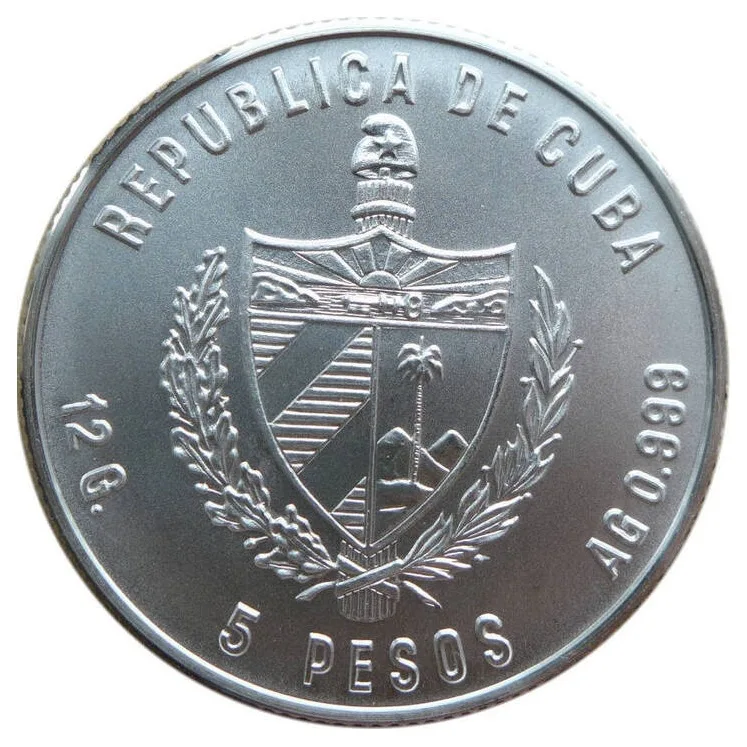
The official side is the same on every coin of the series: the national arms of the Republic of Cuba in Charles Edward Barber’s drawing. The shield is divided into three fields, a Phrygian cap with a star stands above it, with laurel and oak branches on the sides; the inscription REPUBLICA DE CUBA runs along the arc and the coin’s denomination is marked below. The strict heraldry is set against the lively, almost naturalistic image of the animal or bird on the other side and reminds us that this is a state issue.