
Cuban Volanta Coach (5 pesos, silver)
PDFGeneral information
Пруф
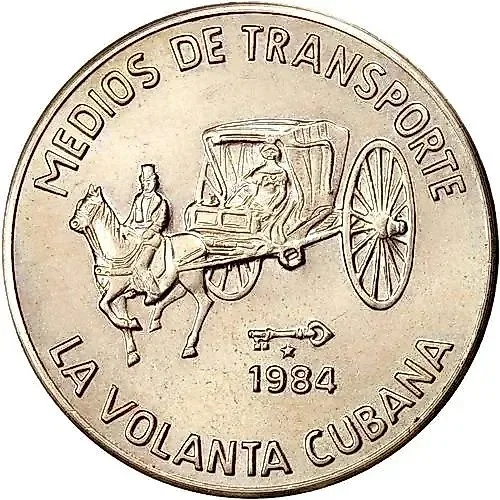
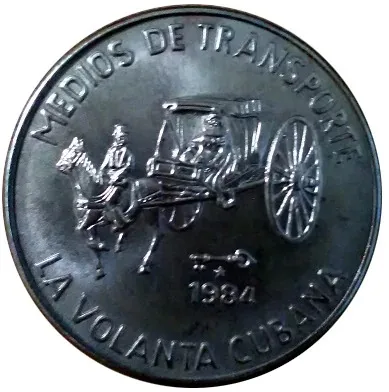
Пруф-разновидность серебряного 5 песо 1984 года с волянтой — то же изображение кубинского конного экипажа, что и у базовой карточки серии «Средства транспорта» (LA VOLANTA CUBANA), но в качестве чеканки PROOF. Металл, масса и диаметр совпадают с обычным выпуском: серебро 999 пробы, 12 граммов, 30 миллиметров, кант рубчатый. Отличие — в финише и тираже: у пруфа зеркально гладкое поле и матовый рельеф, а тираж снижен до 1000 экземпляров против 5000 у BU. В каталоге Хосе Марии Аледона разновидность значится под номером AAEE127.
Пруф с волянтой высоко ценят за то, что контраст зеркала и мата подчёркивает тонкие детали: спицы большого колеса, оглобли, навес экипажа. Как и у других пруфов серии, малый тираж делает монету отдельной коллекционной целью. Дизайн реверса выполнил художник Э. Сеперо (E. Cepero). Обе версии чеканились одним штемпелем, поэтому пруф оформлен разновидностью «Пруф» к базовой карточке; монета остаётся законным платёжным средством Кубы (демонетизирована).

Description
The silver coin is dedicated to the Cuban volanta, a light open carriage on high wheels that for three centuries was one of the most recognizable forms of urban transport on the island. According to Aledon's catalogue, this was a common method of transportation in Cuba, as in other countries of the Americas, for more than three hundred years. Volanta appeared in the colonial era and remained in Havana and other cities almost until the beginning of the 20th century.
It was used for walks and business meetings, and transported mail, luggage and passengers from the port to the station. The carriage was distinguished by a comfortable suspension, which softened shaking on uneven pavement stones, and high wheels, which made it possible to drive on muddy roads. A horse, a driver on the carriage, a convertible top - these are the details by which the volanta was recognized from afar.
The name of the crew, according to one version, is associated with the idea of flight: the carriage “flew” over the pavement. Whatever the origin of the word, volanta became part of Cuban songs, stories and urban legends, and miniature copies of it can still be found among the souvenirs of old Havana.
With the spread of the tram and the automobile, the volante disappeared from the city streets, but remained in memory as a symbol of a leisurely colonial life. The silver coin captures this image in precious metal: it recalls the time when the distance of travel was determined by horse and springs, and how far Cuban technology has come since then - from horse-drawn carriages to airships.
The image of the volanta was readily used by artists and photographers: the light carriage against the backdrop of colonial facades became one of the visual signs of old Havana. For the medalist, this is a convenient plot - dynamic, with a clear silhouette and recognizable details: wheels with spokes, the arc of the harness, the tilt of the horse's body - so the image on the coin is readable immediately, without explanation.
Silver gives the modest cart an almost ceremonial appearance: the convex lines of the wheels and harness glisten on the field, and the horse appears to be running. Among the subjects of the program, volanta is the only one where the “motor” is the living power of an animal, and this is its special charm: the image recalls the leisurely, almost chamber rhythm of the city, as it was before the era of motors.
Obverse
Here a volante is depicted in motion: a horse in harness, a driver on a harness, a light body on high spoked wheels. The composition is based on the contrast of the rapid diagonal of the carriage and the calm field of the coin. The inscriptions MEDIOS DE TRANSPORTE and LA VOLANTA CUBANA - “Cuban volanta” - go in a circle, under them is the year 1984. Sources attribute the engraving of this plot to the Cuban medalist E. Cepero.
Reverse
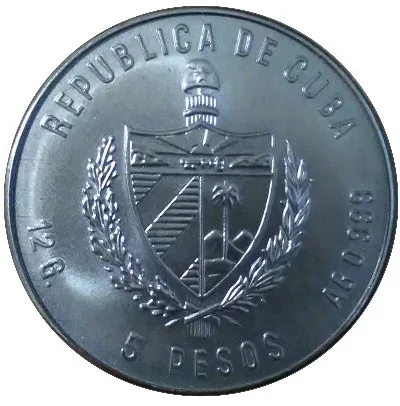
The official side is the same for all editions of the program: the coat of arms of the Republic of Cuba is a shield with a rising sun, a palm tree and a Cuban landscape, topped with a Phrygian cap with a star and framed by laurel branches. The design dates back to the work of American engraver Charles Edward Barber, adopted for Cuban coins in the early 20th century. Around the circle is the legend REPUBLICA DE CUBA, and below is the denomination of 5 PESOS. The strict, symmetrical design is contrasted with the free composition of the artistic side and serves as an invariable feature of the Cuban coin program.