
Merchant Navy of Cuba (1 peso)
PDFGeneral information

Description
Cuba is an island, and its entire history is somehow connected with the sea. During the colonial era, silver and goods of the Spanish crown passed through the Havana port, and later sugar and tobacco, which brought wealth to the island, were exported by sea. The merchant ship on the coin is an image of this eternal dependence on water: without the fleet there would be no exports, no supplies, no communication with the outside world.
In the 19th and 20th centuries, Cuba developed its own merchant fleet: steamships connected Havana with ports in the United States, Europe and Latin America, and coastal shipping served dozens of harbors along the entire coast. Maritime trade was not only an economy, but also a way of life: port areas, docks, customs and shipping companies largely determined the appearance of Cuban cities. Havana, Matanzas, Santiago de Cuba and Cienfuegos lived a port life, and for many Cubans the sea was both work and a way to the big world.
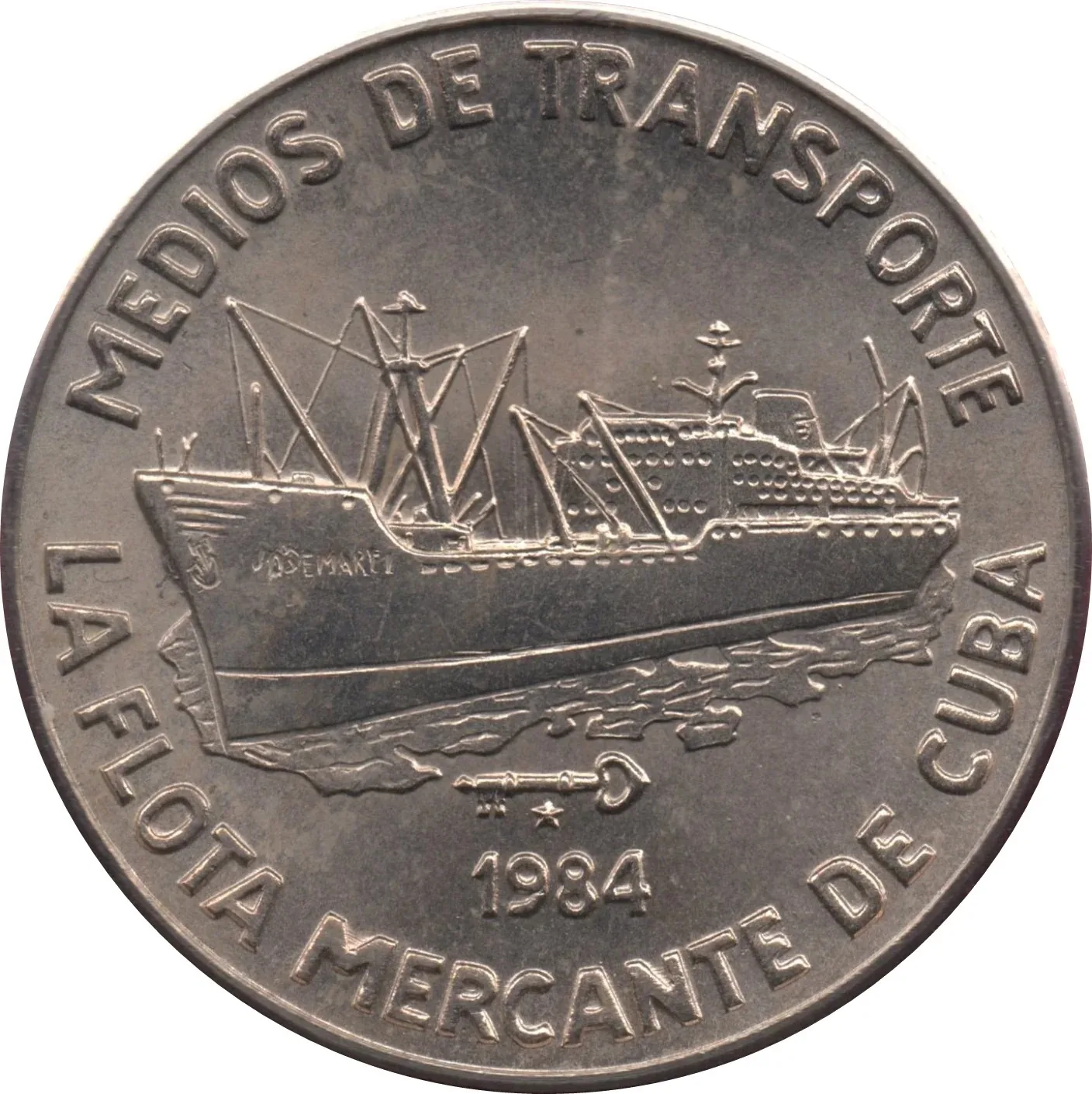
The 20th century constituted a special page in the island’s maritime history, when ships flying the Cuban flag sailed between the island, the United States and the ports of South America. The coin shows a classic-looking steamship: a high bow, a smoking chimney, waves running along the side. This is a typical ship of the era of steam, and it was these ships that determined the rhythm of Cuban foreign trade for several decades.
By depicting a merchant ship, the coin reminds us that the island has always lived by sea. In this sense, the sailing ship or steamship on the coin is as much a symbol of Cuban history as the palm tree or the sugar cane, and the theme of the merchant fleet itself fits naturally into the story of how communications developed on the island.
Ship themes are traditional for coins of island states: waves, sails and smoke on a coin speak of a connection with the sea as clearly as a coat of arms speaks of statehood. The Cuban merchant fleet experienced periods of prosperity and decline, but the image of the steamship remained in the national memory, and the ports of Havana and Santiago still retain traces of that era in the form of old piers, warehouses and port buildings.
For an island state whose life depended on shipping, the topic of transport was not an abstract one: every ton of sugar, every box of tobacco left the port. Therefore, the ship on the coin is read not as decoration, but as a sign of what the economy was based on.
Obverse
The artistic side depicts a merchant ship - a typical ship of the era of steam, sailing through the waves with a high bow and a smoking funnel. The legend MEDIOS DE TRANSPORTE names the program, the Spanish LA FLOTA MERCANTE DE CUBA - “Merchant Navy of Cuba” - defines the plot; The year 1984 is right there. The waves under the body are conveyed by rhythmic lines, and together with the smoke they create a feeling of movement and wind. Sources call the author of the engraving of this subject the Cuban medalist E. Cepero, who is characterized by a restrained linear drawing and attention to the silhouette of the vessel.
Reverse
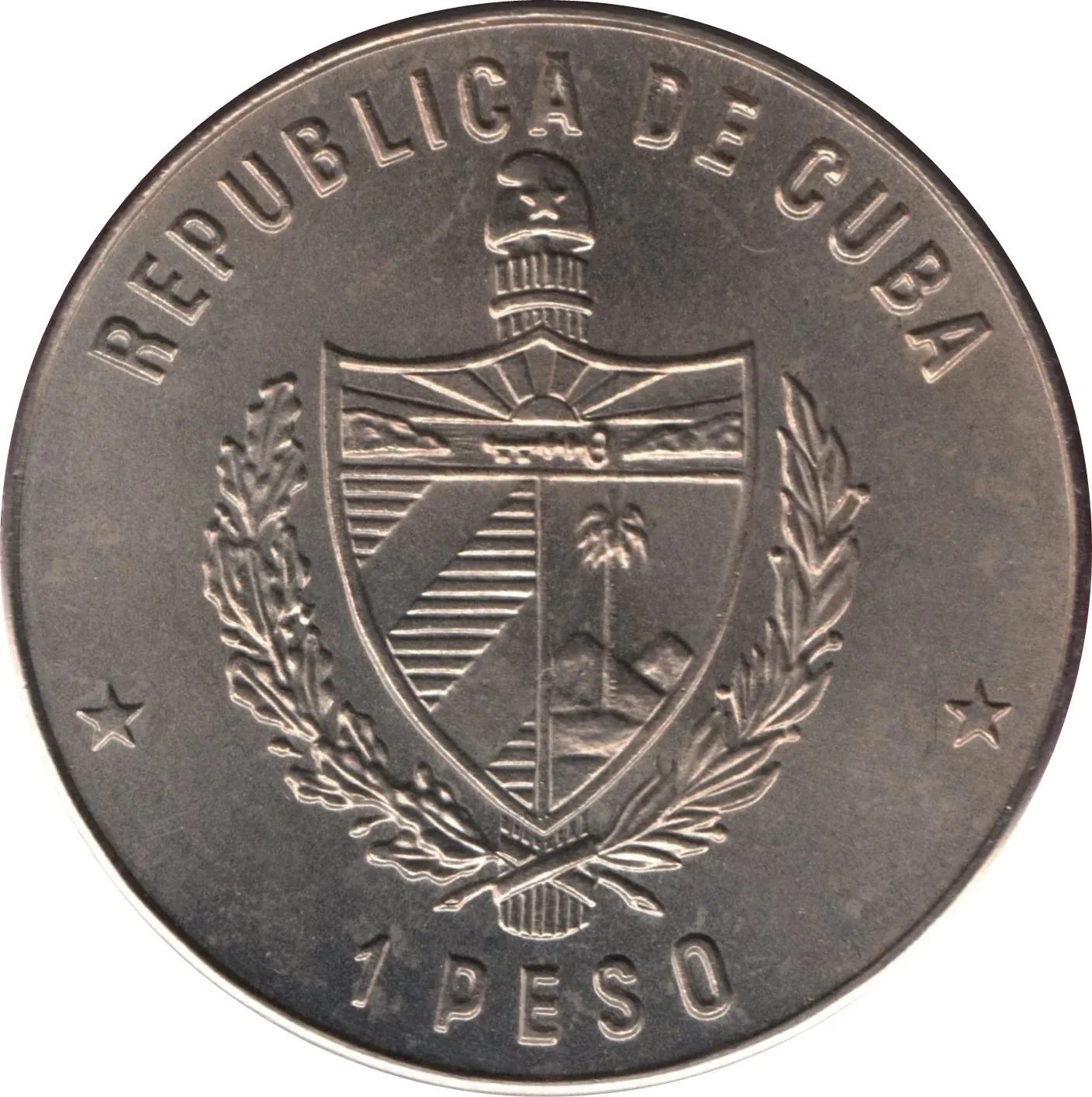
The official side is the same for all editions of the program: the coat of arms of the Republic of Cuba is a shield with a rising sun, a palm tree and a Cuban landscape, topped with a Phrygian cap with a star and framed by laurel branches. The design dates back to the work of American engraver Charles Edward Barber, adopted for Cuban coins in the early 20th century. Around the circle is the legend REPUBLICA DE CUBA, and below is the denomination of 1 PESO. The strict, symmetrical design is contrasted with the free composition of the artistic side and serves as an invariable feature of the Cuban coin program.