
Merchant Navy of Cuba (5 pesos, silver)
PDFGeneral information
Пруф
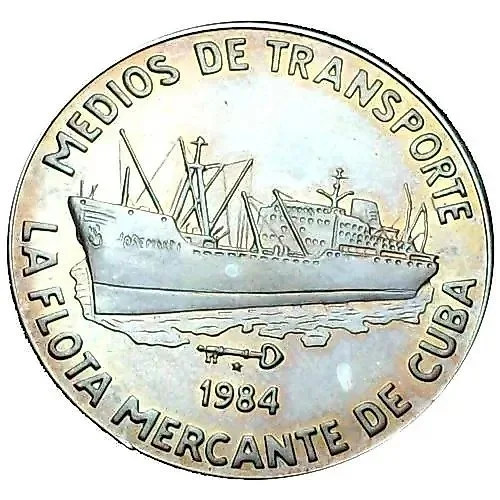
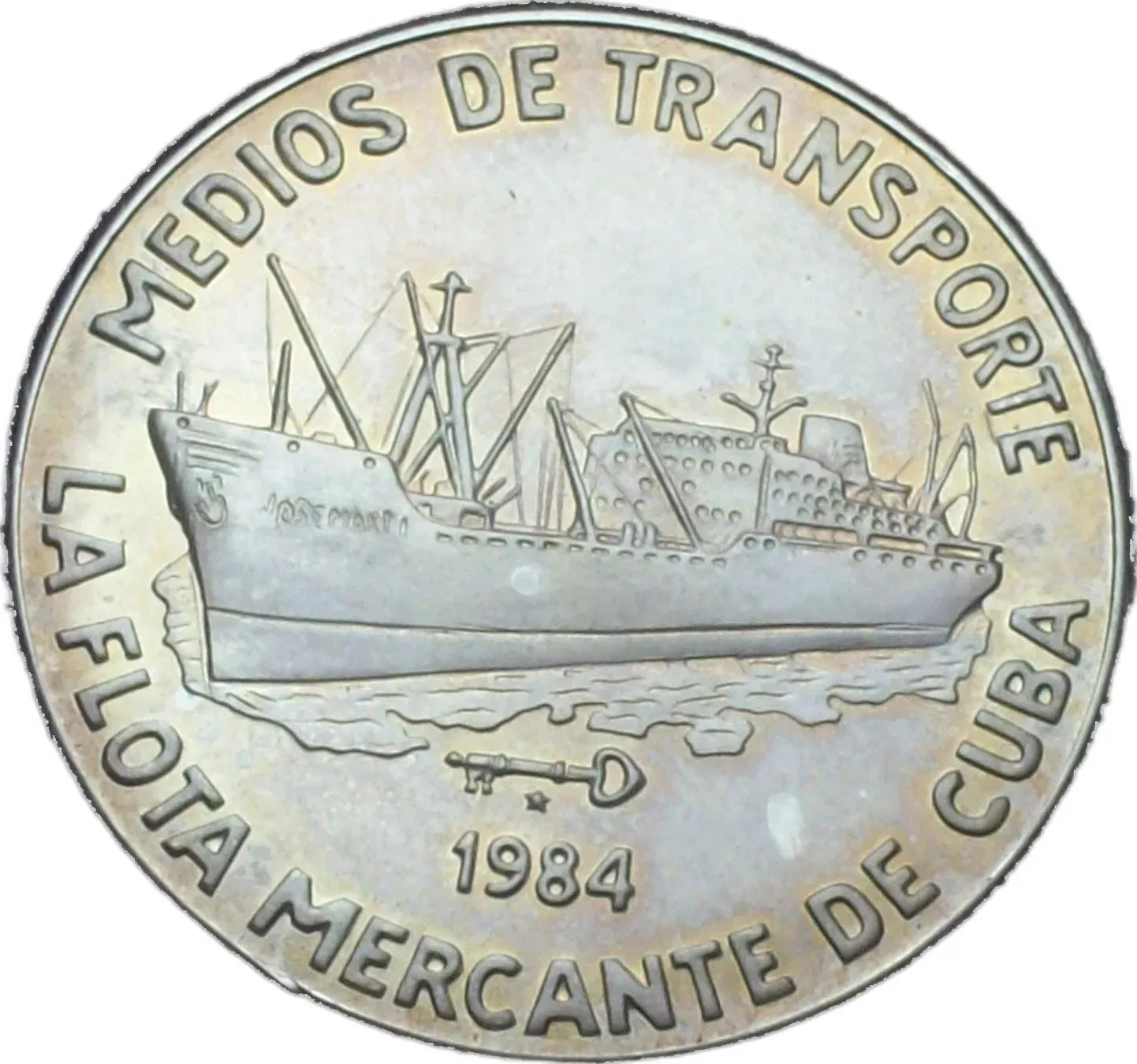
Пруф-разновидность серебряного 5 песо 1984 года с торговым кораблём повторяет сюжет базовой карточки серии «Средства транспорта» (LA FLOTA MERCANTE DE CUBA), но отчеканена в качестве PROOF. Характеристики те же, что у обычного выпуска: серебро 999 пробы, масса 12 граммов, диаметр 30 миллиметров, кант рубчатый. Различие — в финише и тираже: зеркальное поле и матовый рельеф пруфа выгодно оттеняют силуэт судна, а тираж уменьшен до 1000 экземпляров против 5000 у BU-версии. В каталоге Хосе Марии Аледона разновидность заведена под номером AAEE126.
Такой пруф — самостоятельная коллекционная позиция: он малотиражнее базовой монеты и ценится за глубину рельефа и «медальный» вид. Дизайн реверса принадлежит художнику Э. Сеперо (E. Cepero). Оба исполнения чеканились одним штемпелем и различаются лишь технологией и тиражом, поэтому пруф оформлен разновидностью «Пруф» к базовой карточке. Монета — законное платёжное средство Кубы, со временем демонетизированное.

Description
The silver coin is dedicated to the Cuban merchant fleet - those ships that connected the island with the rest of the world. For a state located in the middle of the Caribbean Sea, maritime transport has never been a minor topic: silver caravans and goods of the crown passed through the port of Havana back in the Spanish era, and later sugar and tobacco, which formed the basis of the economy, were transported by sea. There are no land routes beyond the island, and therefore each flight meant earnings, supplies, and communications.
In the 19th and 20th centuries, steamships operated on Cuban routes, connecting Havana with ports in the United States, Europe and Latin America, and small ships served cabotage between the island's harbors. The ports - Havana, Matanzas, Santiago de Cuba, Cienfuegos - were not just loading points, but independent worlds with docks, warehouses, customs and shipping offices. For many Cuban families, the sea simultaneously meant work and the opportunity to see the wider world.
The coin depicts an old-style steamship: a high bow, a smoking chimney and waves along the side, giving the silhouette a feeling of movement. This picture is a collective image of the era when the merchant fleet was the main channel of the island’s economy: sugar, tobacco and, next to them, imported goods that could not be dispensed with.
By including the merchant fleet in the circle of stories about transport, the Cuban Mint emphasized that the island's roads are not only rails and pavements, but also sea routes. The Silver Edition makes this scene a ceremonial one: a ship sailing on the waves remains a sign of Cuban history no less than a coat of arms or a palm tree.
Merchant shipping was closely linked to the fate of the sugar industry: each harvest season meant voyages, loading bags into holds and unloading at destination ports. Longshoremen, pilots, captains and shipowners formed a special environment, the folklore of which was reflected in Cuban music and literature. The silver coin emphasizes the seriousness of the theme: the ship here is not a decoration, but a symbol of the economy that fed the island.
The silver coins of the Cuban program were intended primarily for collectors abroad, and the maritime theme was for them a clear and recognizable image of the island: water, port and steamships are associated with Cuba no less than palm trees and tobacco.
Obverse
On the artistic side, there is a steamer sailing along the waves: a high stem, a chimney with smoke, rhythmic lines of water along the side. Around are the legends MEDIOS DE TRANSPORTE and LA FLOTA MERCANTE DE CUBA - “Merchant Navy of Cuba”, the year 1984 is placed next to it. The silver field emphasizes the chiaroscuro of the ship and makes the silhouette of the ship especially expressive; The author of the engraving of this plot is named by sources as medalist E. Cepero.
Reverse
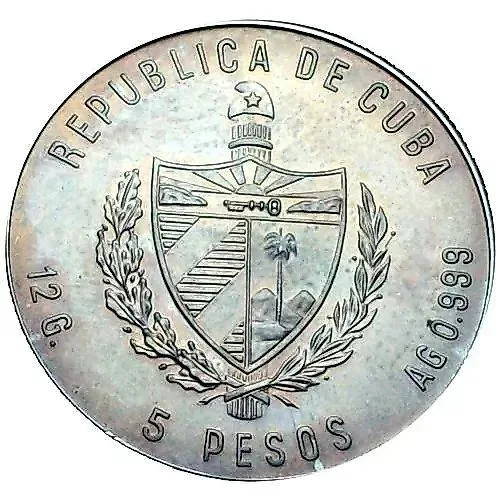
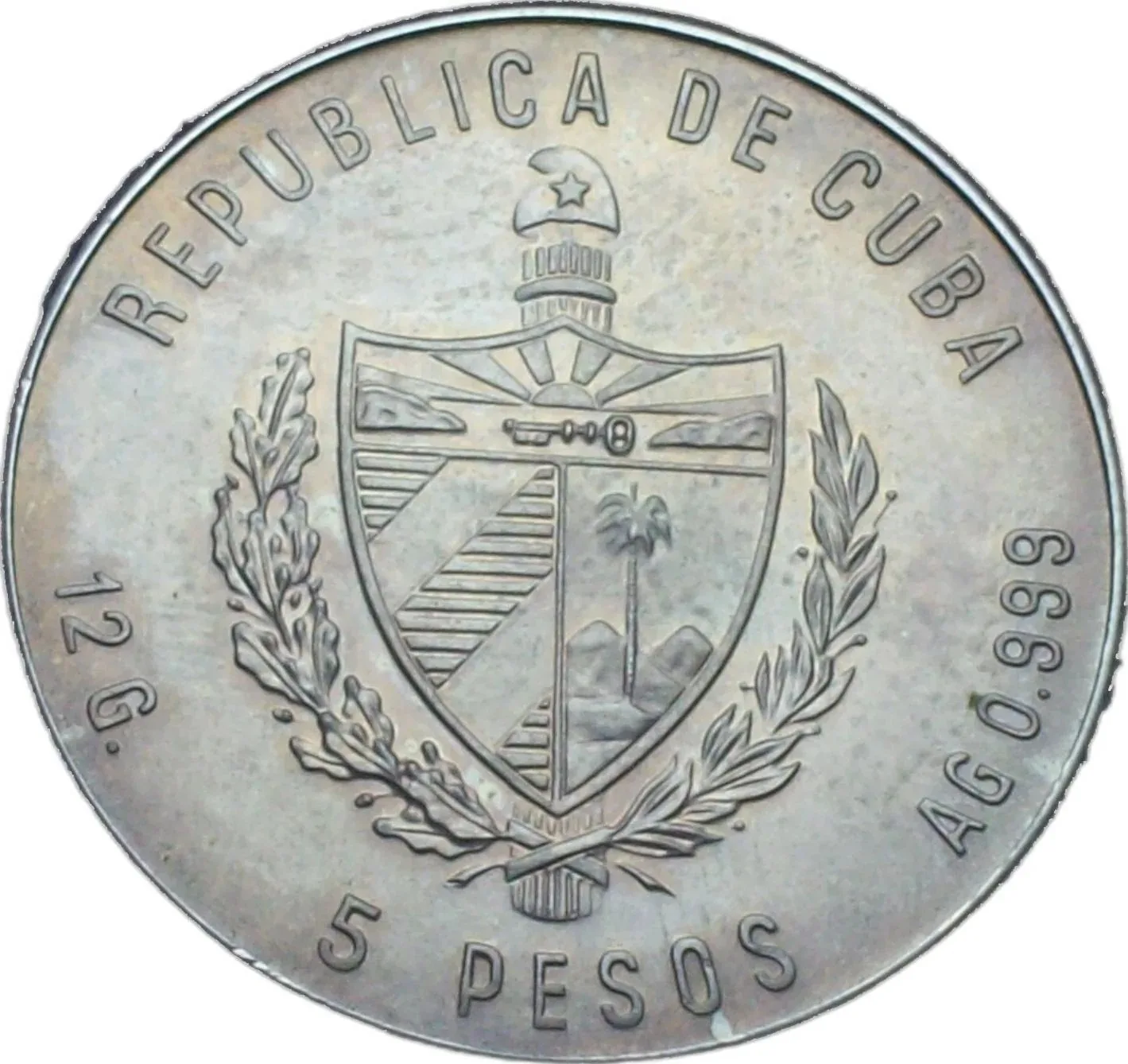
The reverse bears the state coat of arms of Cuba: a shield with a landscape of the island - a rising sun, a palm tree, hills and a key, a symbol of Cuba's position as the “key to the New World” - above the shield there is a Phrygian cap on a staff with a star, on the sides there are oak and laurel branches. REPUBLICA DE CUBA - “Republic of Cuba” is engraved at the top, 5 PESOS at the bottom, and the technical inscriptions of the issue are placed at the edge. The design draws on the Cuban coinage tradition established in 1915–16 by US Mint engraver Charles Edward Barber.