
Orange Blossom (1 Peso)
PDFGeneral information

Description
In spring, when the orange trees bloom in Cuba, the air in the villages fills with the sweet smell of azahar. White five-petalled flowers sit on the branches as thick as snow, while fruit of the previous harvest still hangs beside them — a picture hard to forget. The orange, which botanists call Citrus sinensis, was brought to the island by the Spaniards, and over the centuries it has become as much a part of Cuban life as sugar cane and tobacco. Its flower has long been sung: in many cultures it is a sign of purity, and the European tradition links it with weddings.
The flowers yield fragrant water and neroli oil, a precious base for perfumery. In cooking, flower water gives desserts a light bitter aroma. This wealth of tradition explains the choice of subject: the coin shows not just a plant but an image that speaks of scents, of celebration, of home. For a Cuban series that shows native nature, orange blossom is the homeliest of the three subjects.
The coin was struck in 1981 in Havana; it belongs to the “Flora Cubana” series of 1980–1981, made up of three plants: the butterfly flower, orange blossom and the orchid. The issue was intended for collectors, and the coins did not enter circulation. The drawings of the sides from which the dies were made were prepared in Spain, so the artists’ names are not given in the sources.
The subject was chosen not for exoticism but for familiarity: a flower you can smell in any Cuban garden. That is why the composition is simple and honest — one branch, a few leaves, a flower in close-up. For a collector it is a chance to hold a miniature in which the scent comes alive in the imagination.
For Cubans the orange is not an exotic but an everyday thing: juice, sweets, preserves, the smell of a festive table. The flower is the herald of this abundance, and its choice for a collectible coin shows that the artists sought images not in ceremonial symbols but in ordinary life. Such a coin sits well beside the other issues of the series: the mariposa gives it a national context, the orchid a tropical exoticism and orange blossom a homely tone. Together the three subjects create a portrait of nature that can be viewed like a postcard from a warm country.
Obverse
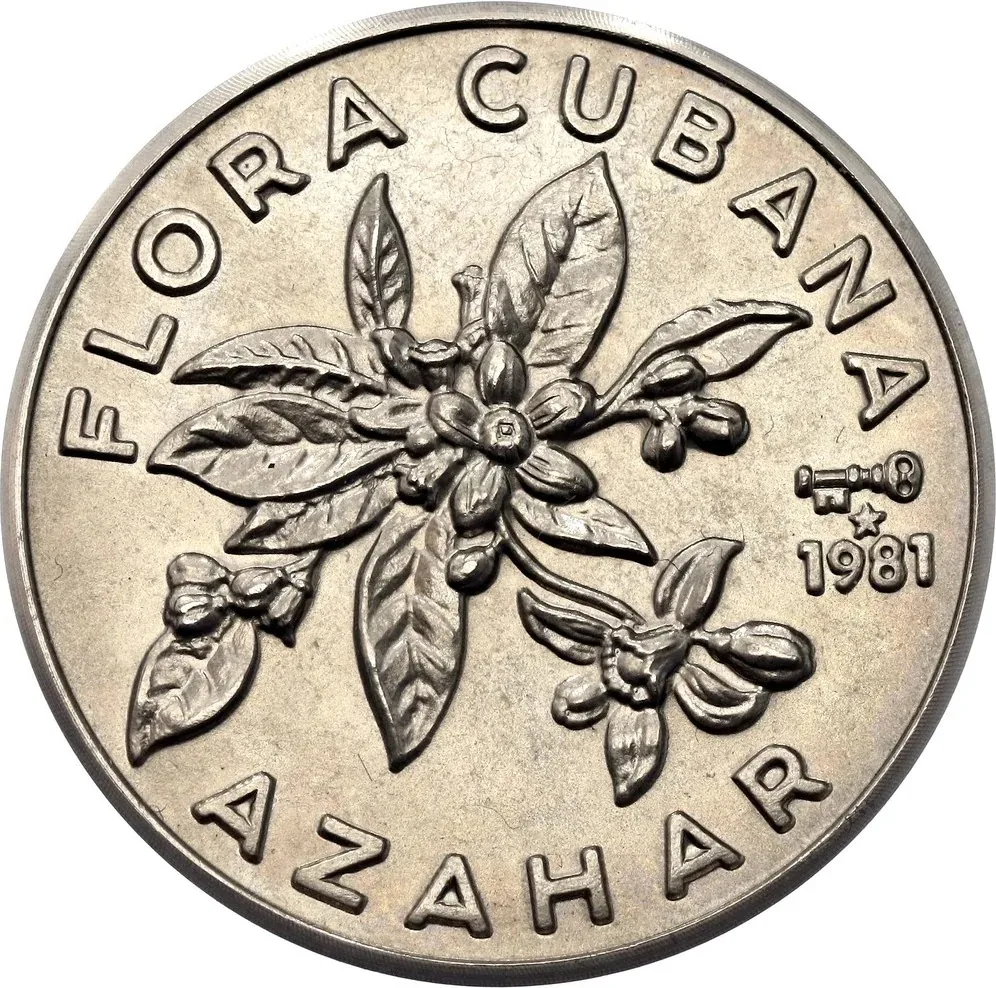
The obverse is the artistic side: an orange flower with petals, a branch and leaves. The relief is low but carefully worked: individual petals, veins on the leaves and the bend of the twig are visible. The inscriptions are FLORA CUBANA, AZAHAR and the year 1981, with the mint mark beside them. The restrained composition recalls a botanical illustration and does not distract from the main image. The flower is set in the centre of the field and the branch with leaves goes toward the edge, creating a light diagonal movement.
Reverse
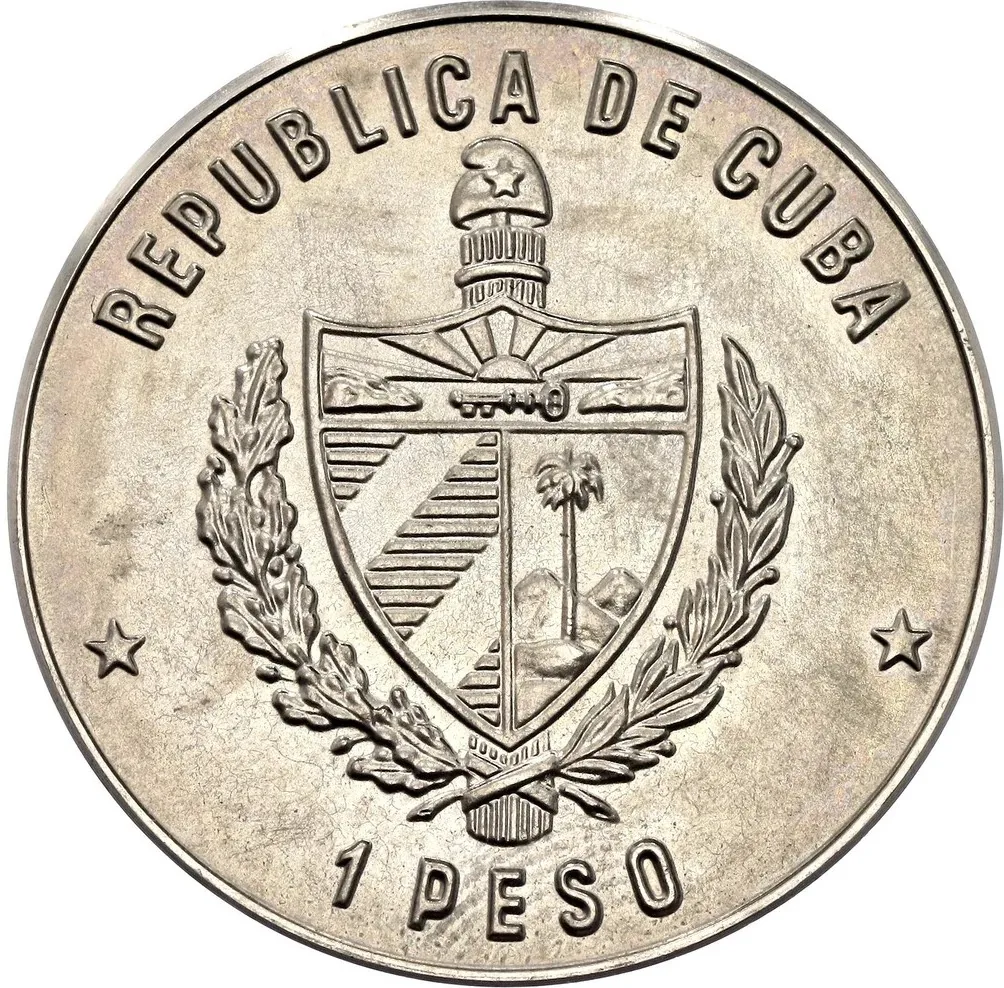
The reverse is the official side. The national arms of Cuba in Charles Edward Barber’s drawing: a shield with three fields, a Phrygian cap with a star above it, laurel and oak on the sides. The inscription REPUBLICA DE CUBA runs along the arc and the denomination is marked below. This arms design ties the series into one whole: it is identical on every coin of the programme, and only the flower on the other side changes.