
Orange Blossom (5 Pesos)
PDFGeneral information
Пруф
Исполнение Proof («пруф»). Это та же монета, что и основная карточка, но отчеканена на полированных заготовках двумя ударами: поле получило зеркальную поверхность, рельеф — матовую и контрастную. Тираж — 3000 экземпляров, каталожный номер Аледона AAEE 030; обычное исполнение BU — 10000 экземпляров (AAEE 033). Характеристики обоих исполнений одинаковы: серебро 999 пробы, масса 12 г, диаметр 30 мм, рубчатый гурт; монетный двор Empresa Cubana de Acuñaciones (Гавана, Куба). Официальная сторона — герб Кубы с легендой REPUBICA DE CUBA, художественная сторона — апельсиновый цвет с названием программы и годом. По каталогу Аледона 1999 года пруфовая монета стоила $38, обычная — $27.

Description
Many people recognise the scent of orange blossom — azahar, as it is called in Spanish — at once: sweet, slightly bitter, it is associated with summer and with celebration. In Cuba orange trees, brought from the Iberian Peninsula after the discovery of the island, have long become an ordinary part of the landscape: citrus groves grow near villages, and white azahar blossoms open in spring, when the branches still hold last year’s fruit. The tree that botanists call Citrus sinensis is green all year round, so a flowering branch looks like a promise of a new harvest.
Orange blossom has long gone beyond botany. It yields fragrant water and neroli oil, used in perfumery and cooking. In the European tradition white orange blossom is a symbol of innocence and purity, and bridal wreaths are woven of its flowers; the word “fleur d’oranger” is familiar to anyone who knows the language of weddings. In Spain and the countries it colonised, azahar was sung by poets, and in Cuba it became one of the plant images by which the island is recognised.
The coin is the second subject of the “Flora Cubana” series of 1980–1981, issued for collectors by the Havana mint. The series is devoted to three plants — the butterfly flower, orange blossom and the orchid — and shows Cuban nature as Cubans themselves love it: without spectacular landscapes, through several familiar flowers. The coin was not meant for circulation and was demonetised in the year of issue. The sketches of the artistic sides were made in Spain, and the names of the authors are not given in the sources.
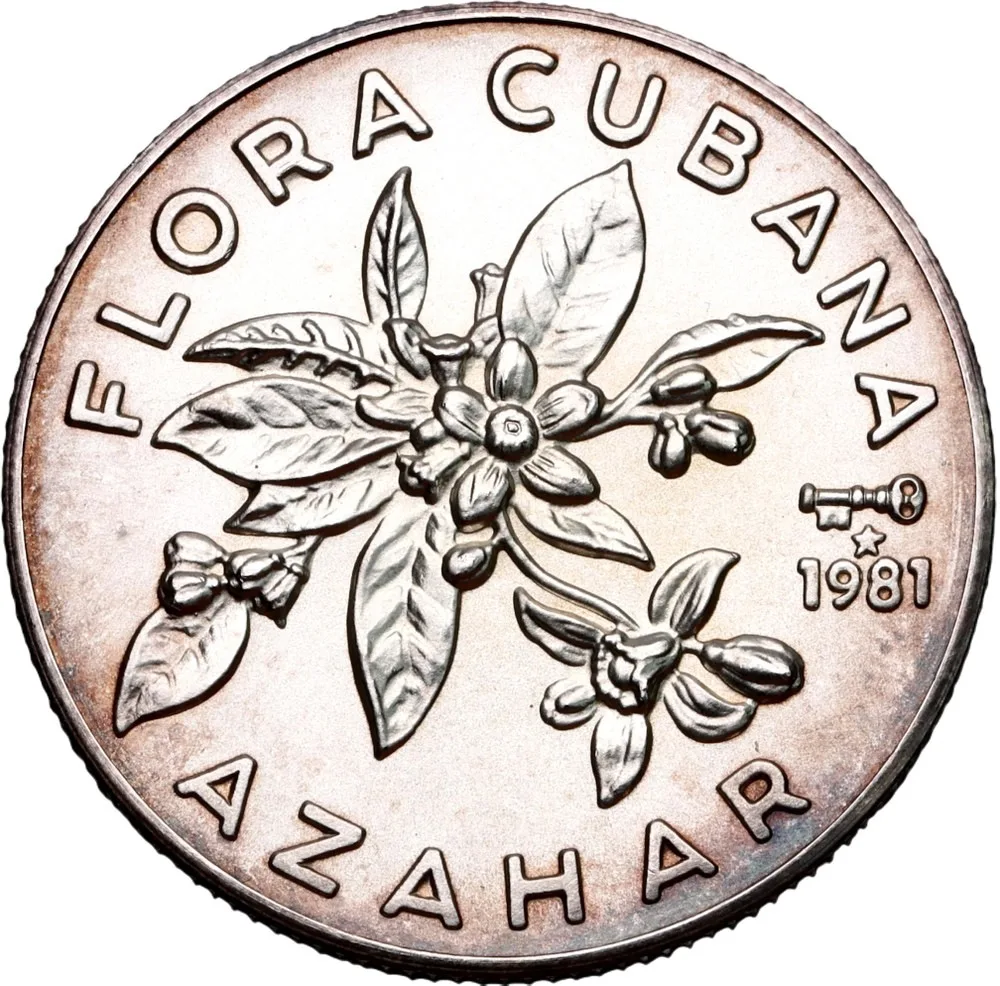
The drawing is simple: a flower and a branch with leaves, in the spirit of a herbarium. But on a small coin it looks rich — the petals are laid softly, the leaves are drawn along their veins, and one senses the habit of Spanish botanical engraving of showing a plant so that it can be recognised without reading the name.
Note that the word “azahar” came into Spanish from Arabic, and this recalls the long history of citrus: first they reached Europe from Asia, then crossed the ocean with Spanish seafarers and took root in the New World. A coin showing such a flower tells, almost involuntarily, how plants travelled together with people.
Obverse
The artistic side shows an orange flower with petals and leaves on a branch; the drawing resembles a neat herbarium engraving. The relief is soft, the petals lie in a fan, the leaves are drawn along their veins. The inscriptions name the programme — FLORA CUBANA, the plant — AZAHAR, and the year 1981, with the mint mark nearby. Nothing superfluous: the coin keeps attention on the flower itself. The petals are laid so that the flower resembles a small star.
Reverse
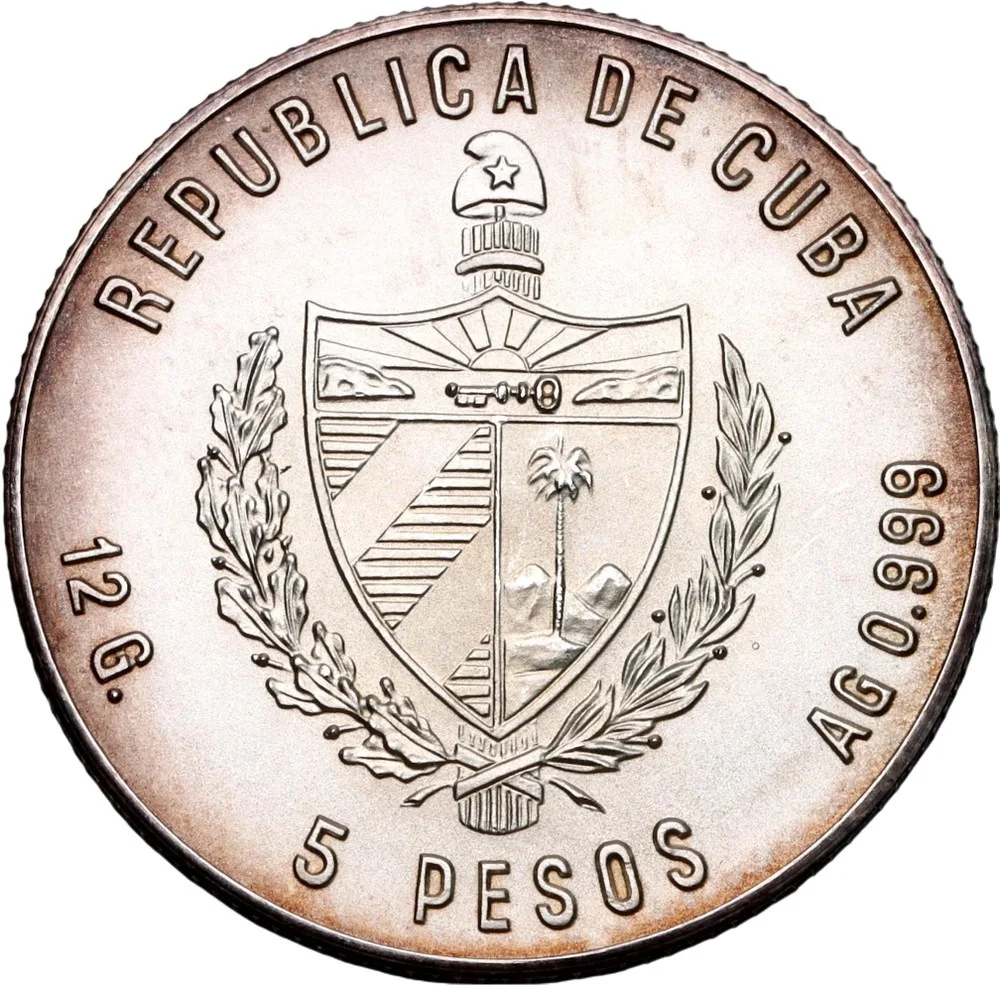
The official side is the same on every coin of the series: the national arms of the Republic of Cuba in a drawing that goes back to the American engraver Charles Edward Barber. The shield is divided into three fields, a Phrygian cap with a star stands above it, laurel and oak branches flank it; the inscription REPUBLICA DE CUBA runs along the arc, and the coin’s denomination is marked below. The strict heraldic reverse balances the soft, living floral composition of the artistic side and confirms that this is a state issue.