
Zeppelin (1 peso, copper)
PDFGeneral information

Description
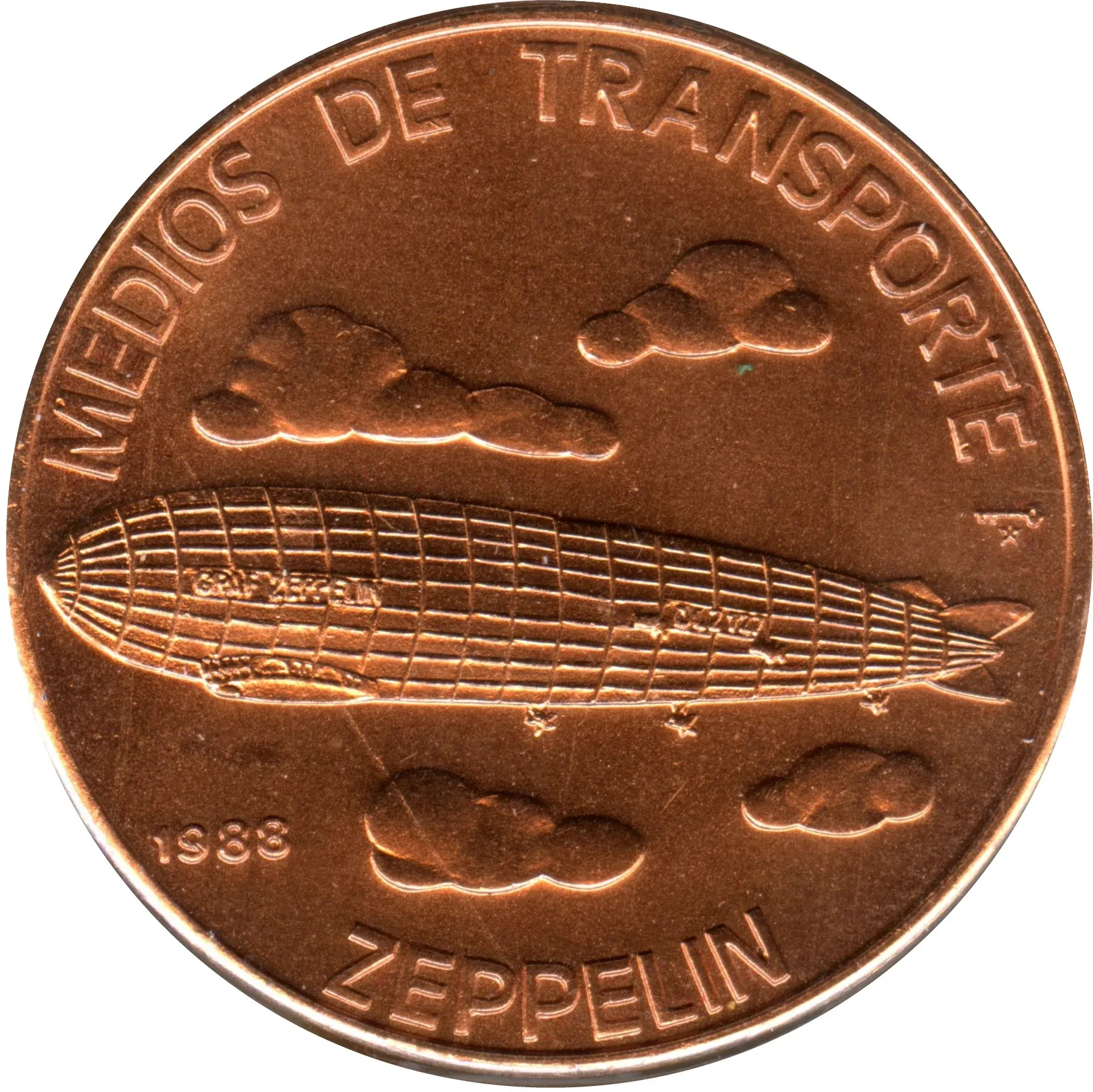
The airship depicted on this coin is the same subject as on a regular peso, but in a “heavy” copper design: the disk is enlarged and noticeably larger, and therefore the relief looks especially deep. The Cuban Mint often minted the same theme in different metals and formats - from light copper-nickel coins to large silver and copper impressions, and the large copper version with an airship became a representative issue, where the sheer volume of metal made the item “ceremonial”.
The image of the airship dates back to the beginning of the 20th century. Count Ferdinand von Zeppelin's first Zeppelin took flight in 1900, and the huge airships soon became a symbol of the new century: they crossed the Atlantic, carried mail and passengers, and circumnavigated the world. For people of the 1920s and 1930s, the airship meant the future: reliable, fast, comfortable - and extremely beautiful, because the silver cigar in the sky evoked almost awe in the audience.
The Hindenburg disaster on May 6, 1937 in Lakehurst, when a hydrogen-filled passenger airship burned down, turned out to be a turning point. Regular passenger flights ceased, and the page on which airships seemed like the transport of the future was closed. The copper coin captured the airship already at the end of this glory - as a memory of a technical dream that turned out to be brighter than durable.
It is interesting to compare the copper and copper-nickel versions of the same theme as two “editions” of the same theme: the light coin went into mass collection circulation, the large and heavy one into a narrow, ceremonial segment, where large format and expressive relief are valued. Cuba was not alone here: in the world numismatics of the 20th century, large copper and bronze prints often accompanied silver issues as display and presentation copies.
Copper is a material that conveys relief well, and in large format the details - tail, nacelle, frame lines - are worked out with great clarity. The golden hue of copper is associated with the rays of sunset on the shell of an airship, and this image gives the coin a special expressiveness. That is why the large copper version is perceived not as a “simplified” version, but as an independent artistic statement on the same topic.
Obverse
The artistic side follows the design of the airship: a cigar-shaped body with stabilizer fins and a gondola, shown in flight. On a large copper field, the relief is read especially deeply and contrastingly: the warm metal emphasizes the volume of the body and the play of light, and the silhouette looks almost sculptural. The legend MEDIOS DE TRANSPORTE names the program, the inscription ZEPPELIN is the plot, next to it is the year 1988. Sources call Alberto Gonzalez Perestol the author of the engraving of most of the plots of the program.
Reverse
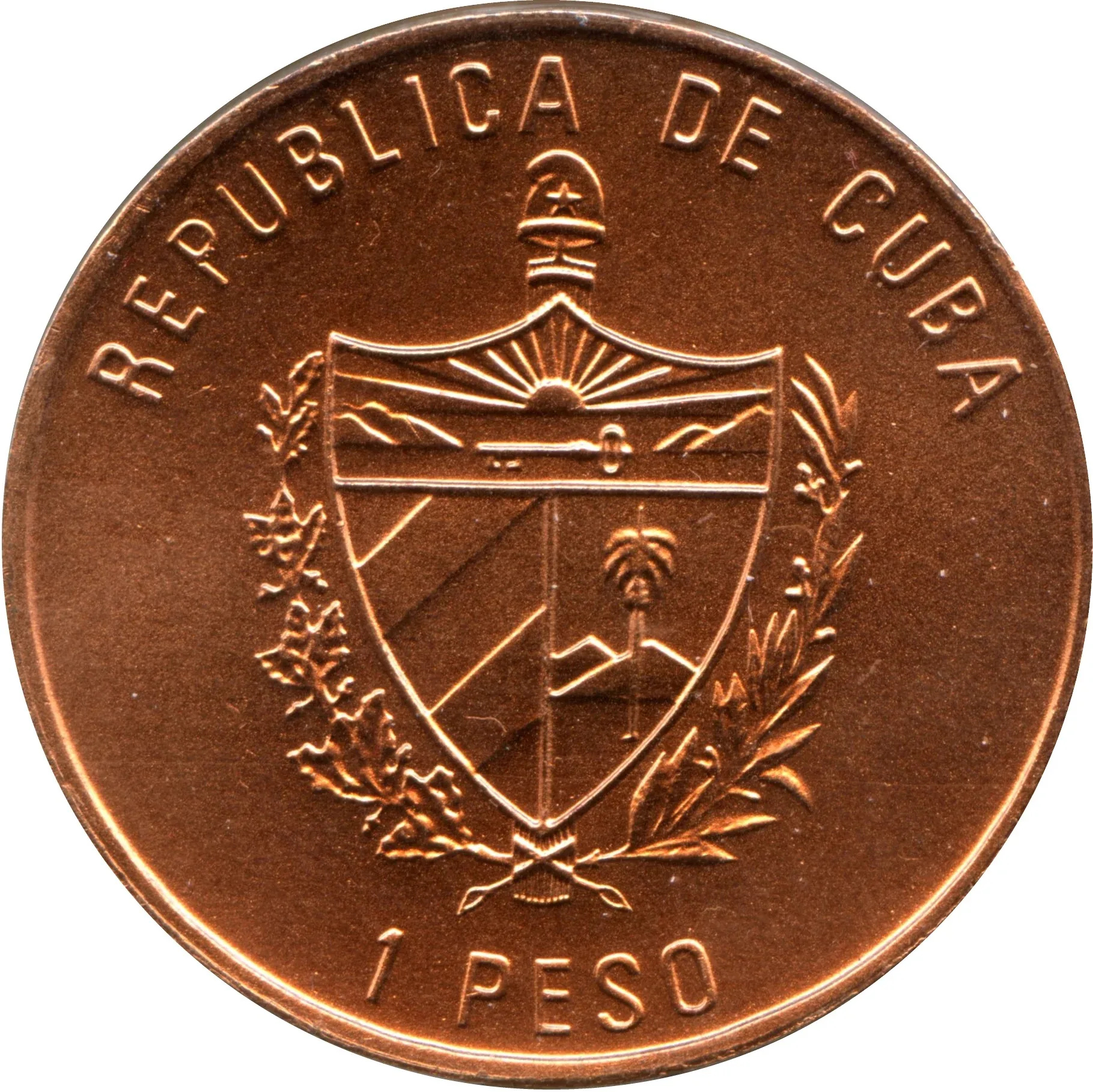
The reverse bears the state coat of arms of Cuba: a shield with a landscape of the island - a rising sun, a palm tree, hills and a key, a symbol of Cuba's position as the “key to the New World” - above the shield there is a Phrygian cap on a staff with a star, on the sides there are oak and laurel branches. REPUBLICA DE CUBA - “Republic of Cuba” is engraved at the top, 1 PESO at the bottom, and the technical inscriptions of the issue are placed at the edge. The design draws on the Cuban coinage tradition established in 1915–16 by US Mint engraver Charles Edward Barber.