
Thor and Jörmungandr
PDFGeneral information
Description
Among all the confrontations of Ragnarok the duel of Thor and Jormungandr is the oldest and best known. Its story begins long before the end of the world, at a time when the gods were still sure of themselves. Once Thor went to visit the giant Hymir and proposed to go fishing. For bait he tore off the head of the best ox and cast his line so deep that the Midgard Serpent himself was caught on the hook. Jormungandr bit, Thor hauled him to the side of the boat and swung his hammer, but the frightened Hymir cut the line and the serpent sank to the bottom. Thor hurled the hammer after him, yet the giant survived. The encounter ended in a draw, but both sides remembered that the enemy was near.
Jormungandr is a son of Loki and the giantess Angrboda, brother of Fenrir and Hel. Learning that the children would bring trouble to the gods, Odin cast the serpent into the ocean that surrounds Midgard. There he grew so large that he encircled the earth and took his own tail in his mouth. The Norse saw in him an image of the world ocean, the boundary of the known world. Thor is the defender of humankind, the god of thunder, whose hammer Mjolnir returns to his hand after every throw, while a belt of strength and iron gloves double his might. Every encounter of these two was for people a question of survival.
The finale of their enmity is described in the Voluspa and the Prose Edda. When Ragnarok begins, Jormungandr rises from the waves, flooding the land with water and breathing venom. Thor goes out against the serpent and kills him. But after taking nine steps he falls dead: the serpent's venom kills him. Victory and death merge into one moment, and it is precisely this note, the great price of victory, that makes the story so powerful.
For the Norse such an outcome had a deep meaning. The god who guarded people throughout all time pays with his own life for the last defence. He receives no reward, does not depart in a blaze of glory, but simply does his duty to the end. In this logic heroism is measured not by outcome but by readiness to walk towards the inevitable.
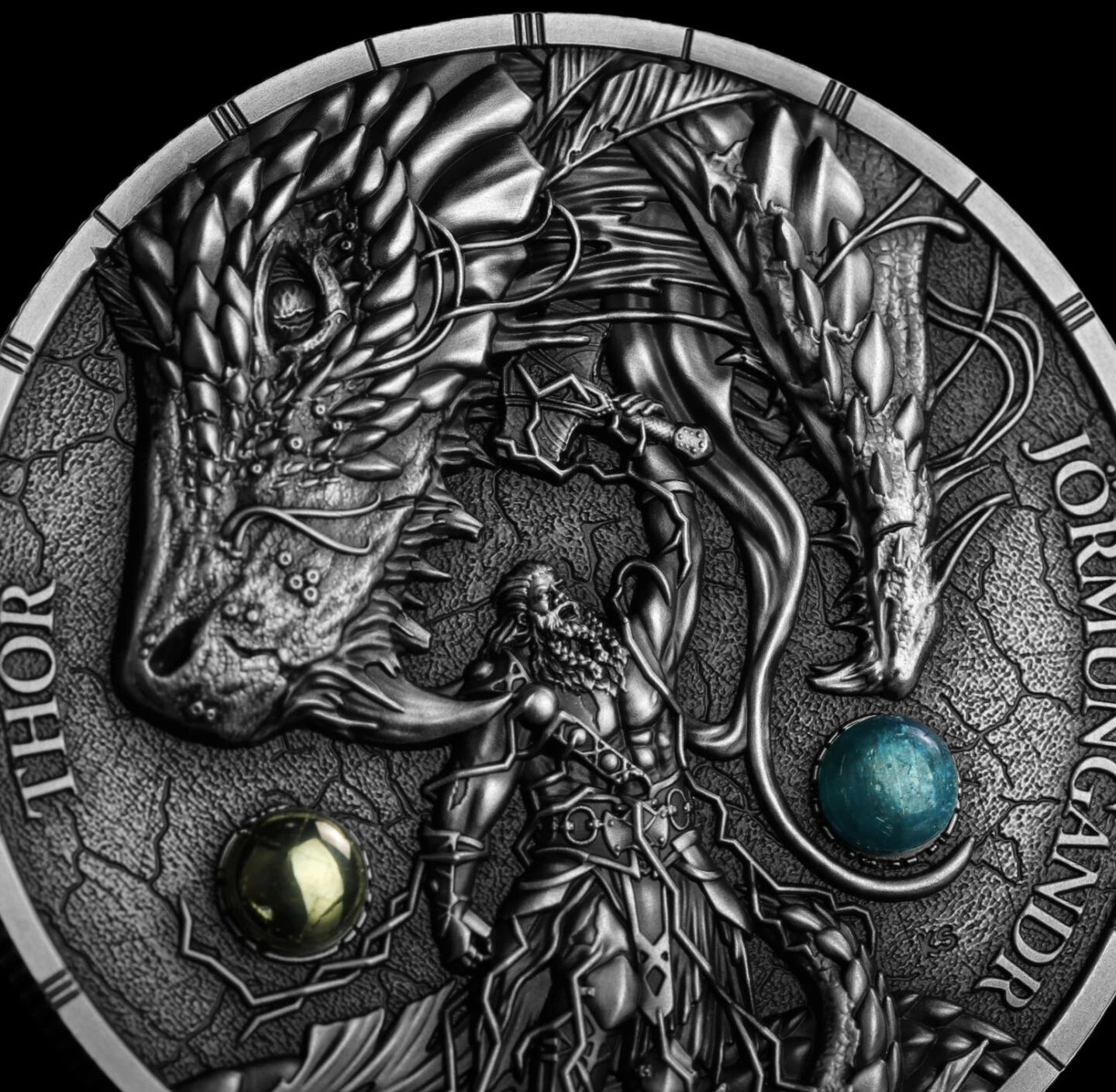
The duel was often depicted on rune stones and wood carvings: the figure of the god with a hammer and the serpent coiled in rings were recognisable everywhere from Iceland to England. On the Gosforth and Ardre stones Jormungandr reaches for Thor's boat, and the fishing scene with the ox head on the hook became one of the favourite subjects of early Scandinavian art. This issue continues the same tradition, but on silver: the end of the world is presented as a snapshot of the blow.
The fishing trip with Hymir is also known from the poem Hymiskvida, where Thor comes to the giant for a huge cauldron for the feast of the gods. The story of catching the serpent serves there as the central episode: Thor hooks Jormungandr, and this scene, judging by carved stones, was one of the Norse favourites. It shows the hero at the moment when his strength meets a strength equal to his own.
Obverse
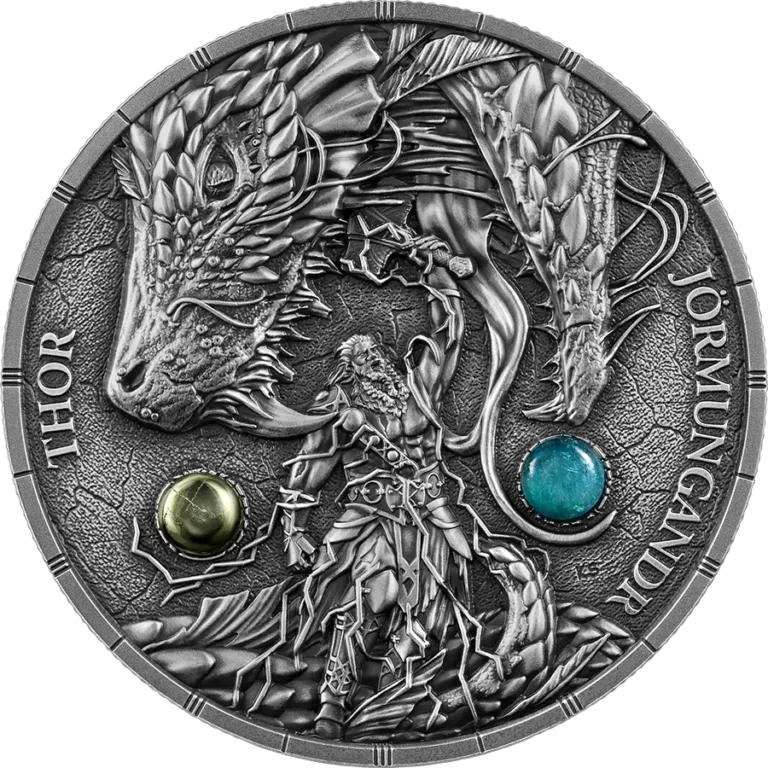
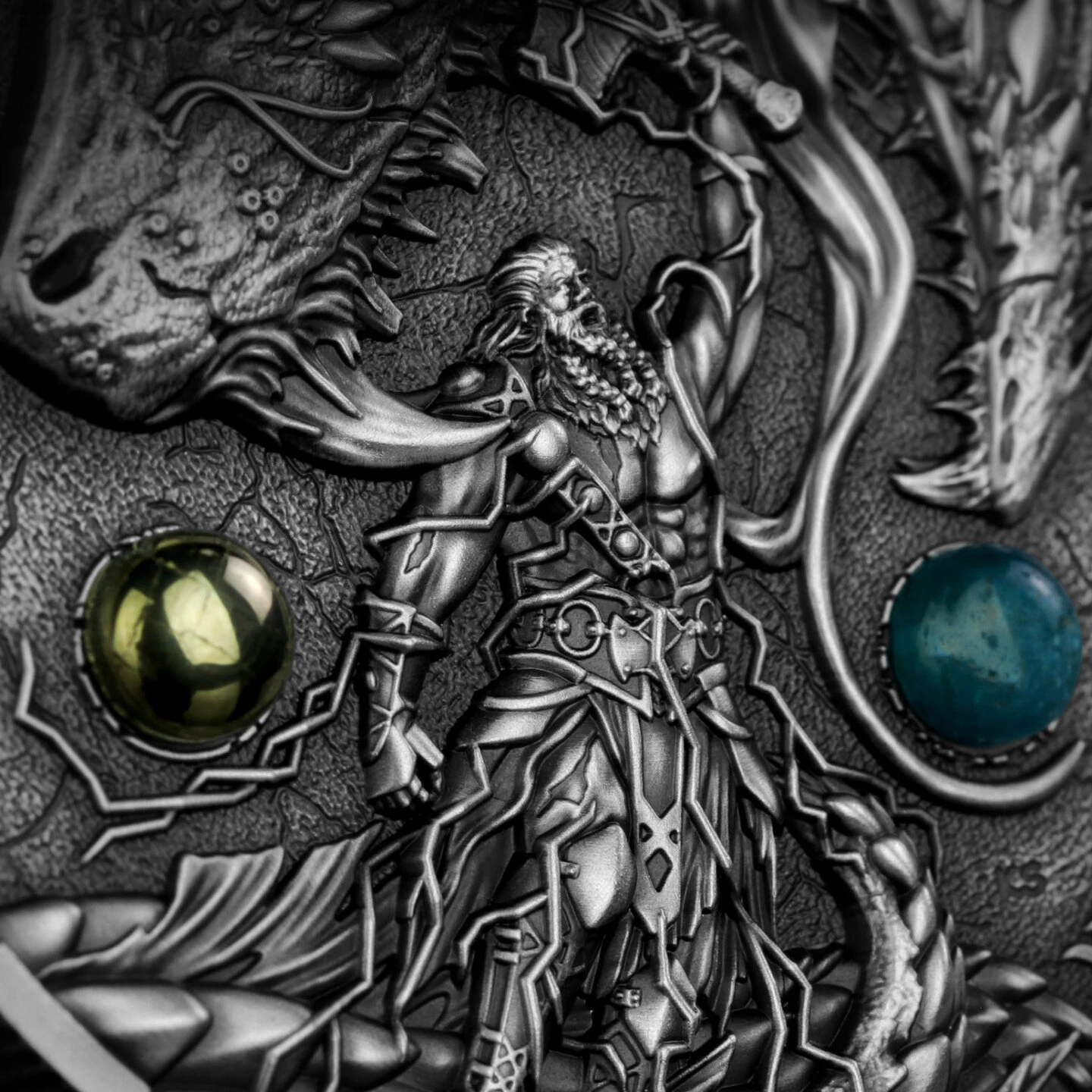
The obverse shows one of the most dramatic moments of Ragnarok: the battle of Thor and Jormungandr, the giant Midgard Serpent. The mighty god of thunder fights an opponent whose colossal body encircles the whole world. Thor delivers a mortal blow to the serpent with the hammer Mjolnir, but victory comes at a heavy price: in the last moments of his life the serpent poisons Thor with deadly venom. The dynamic composition is complemented by inserts of pyrite and apatite, and under ultraviolet light the image begins to glow brightly.
Reverse
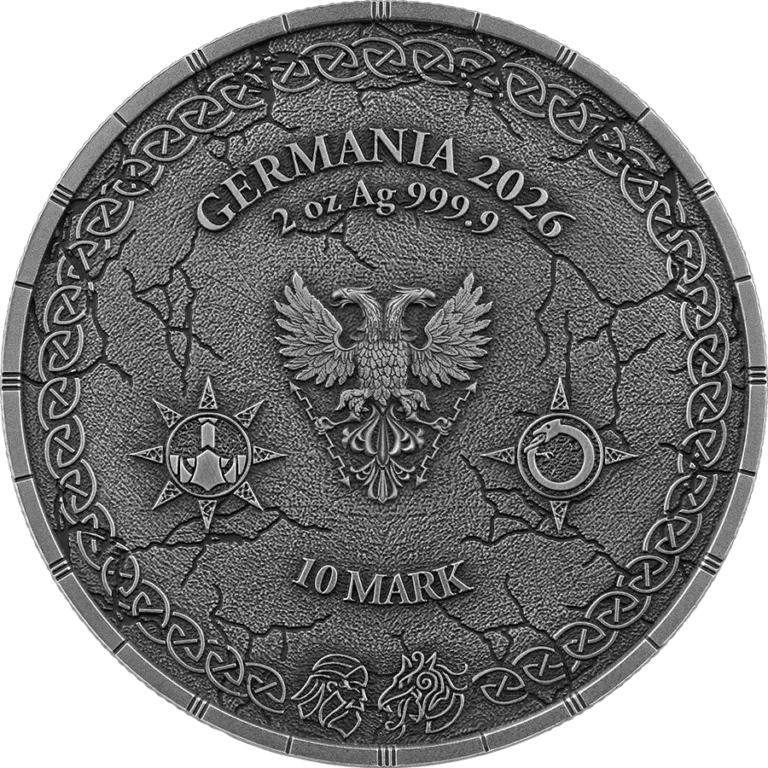
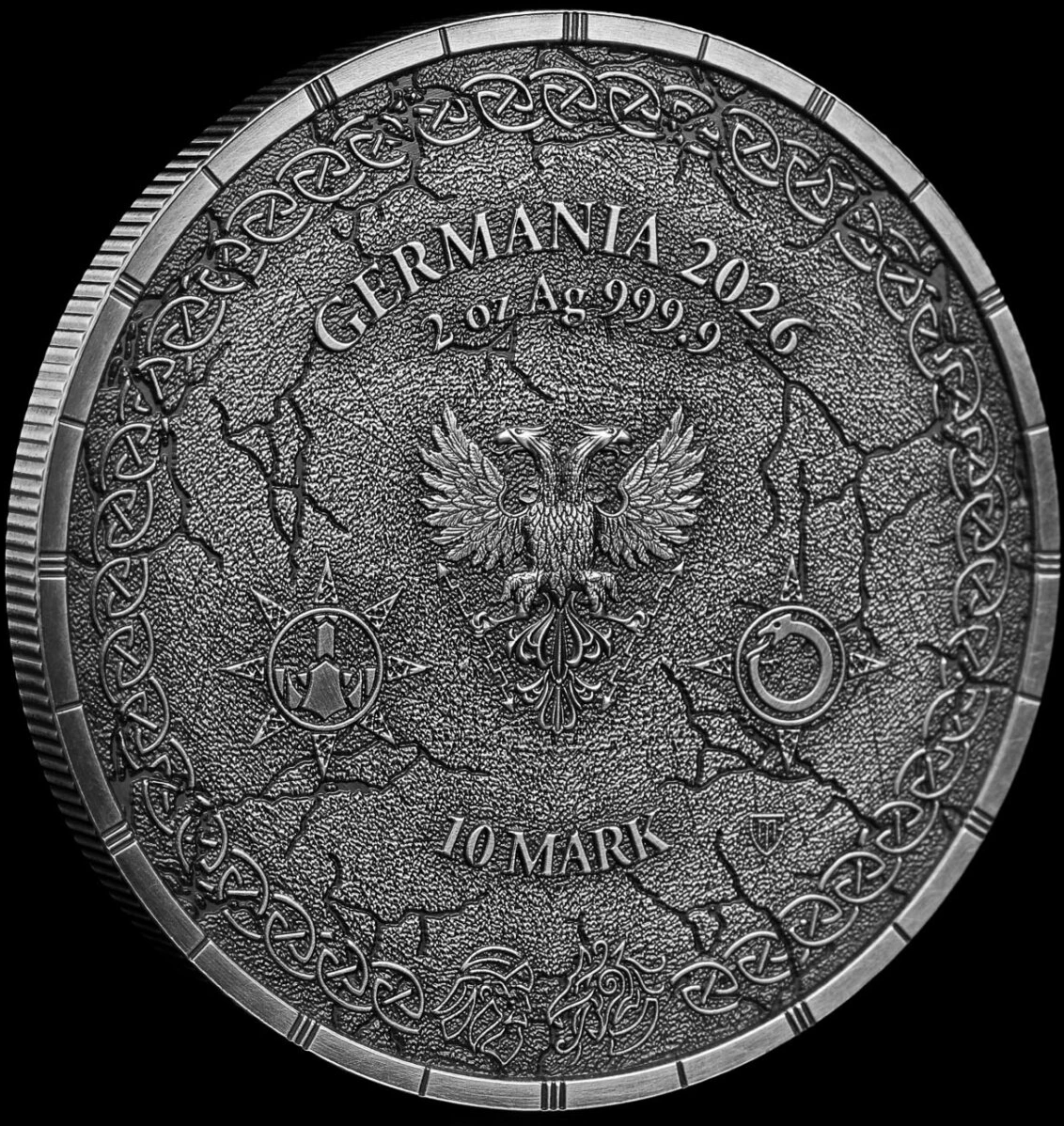
The reverse shows the symbols of Jormungandr and Mjolnir, the legendary hammer of Thor, as well as the double-headed eagle, the emblem of the Germania Mint. The design is by Kinga Sabatowicz.