
Thor and Jörmungandr (Geminus, 2 × 1 oz)
PDFGeneral information
Description
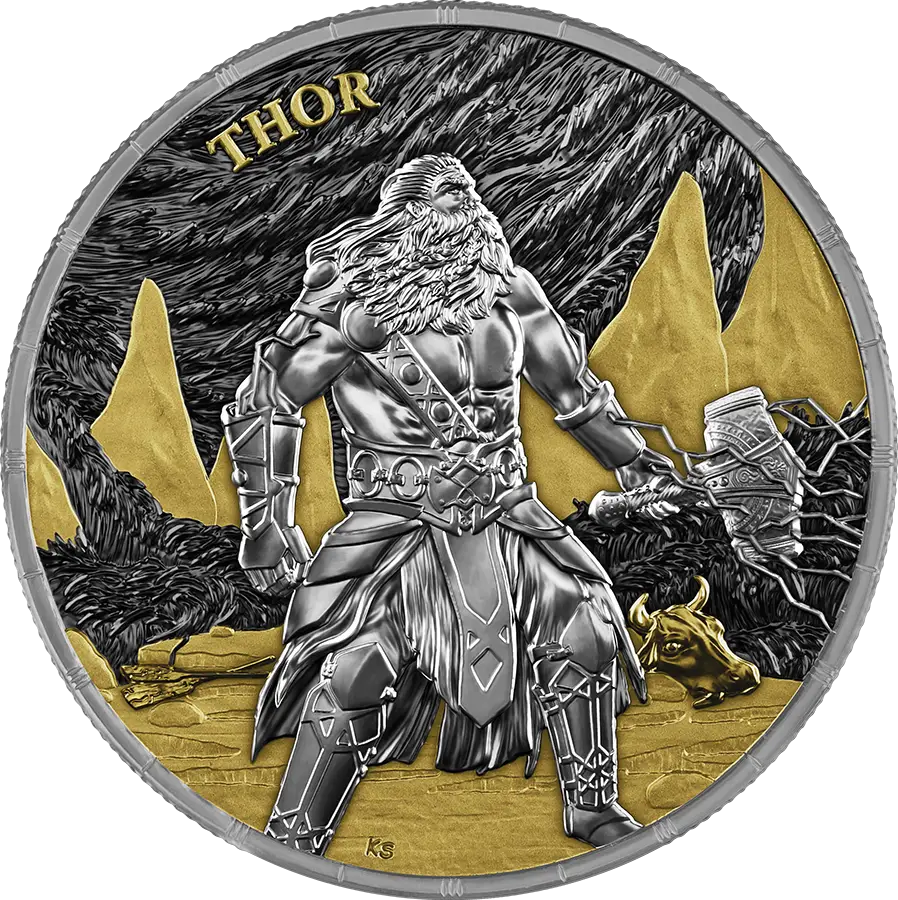
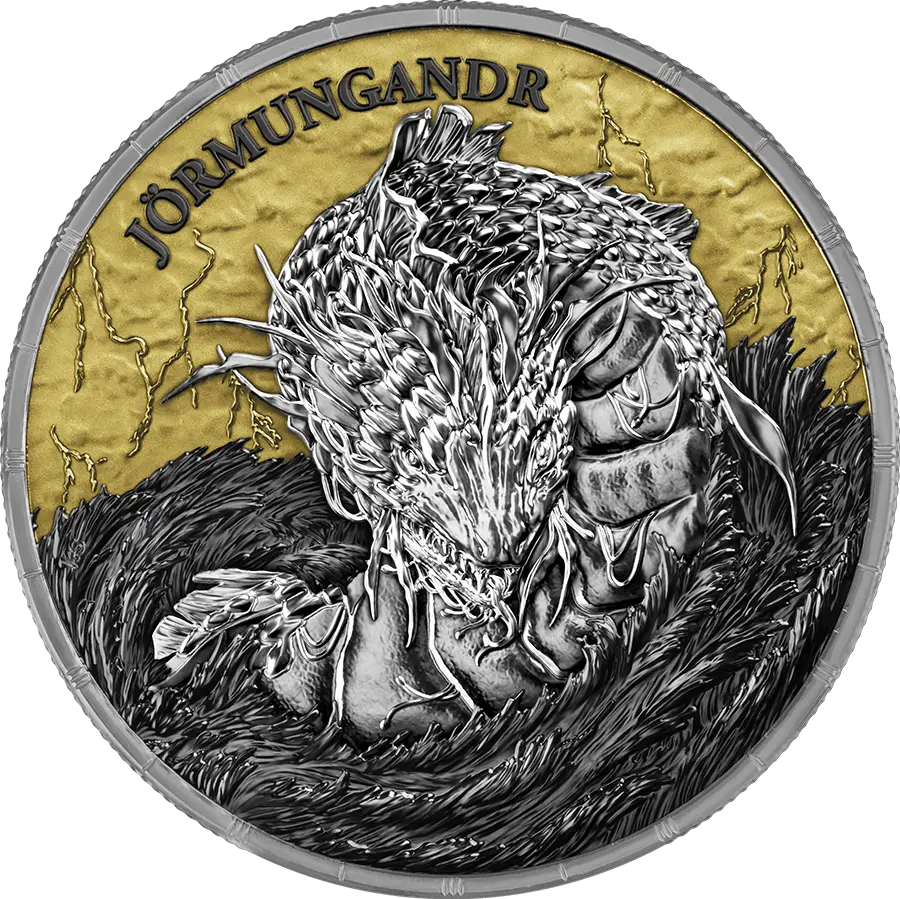
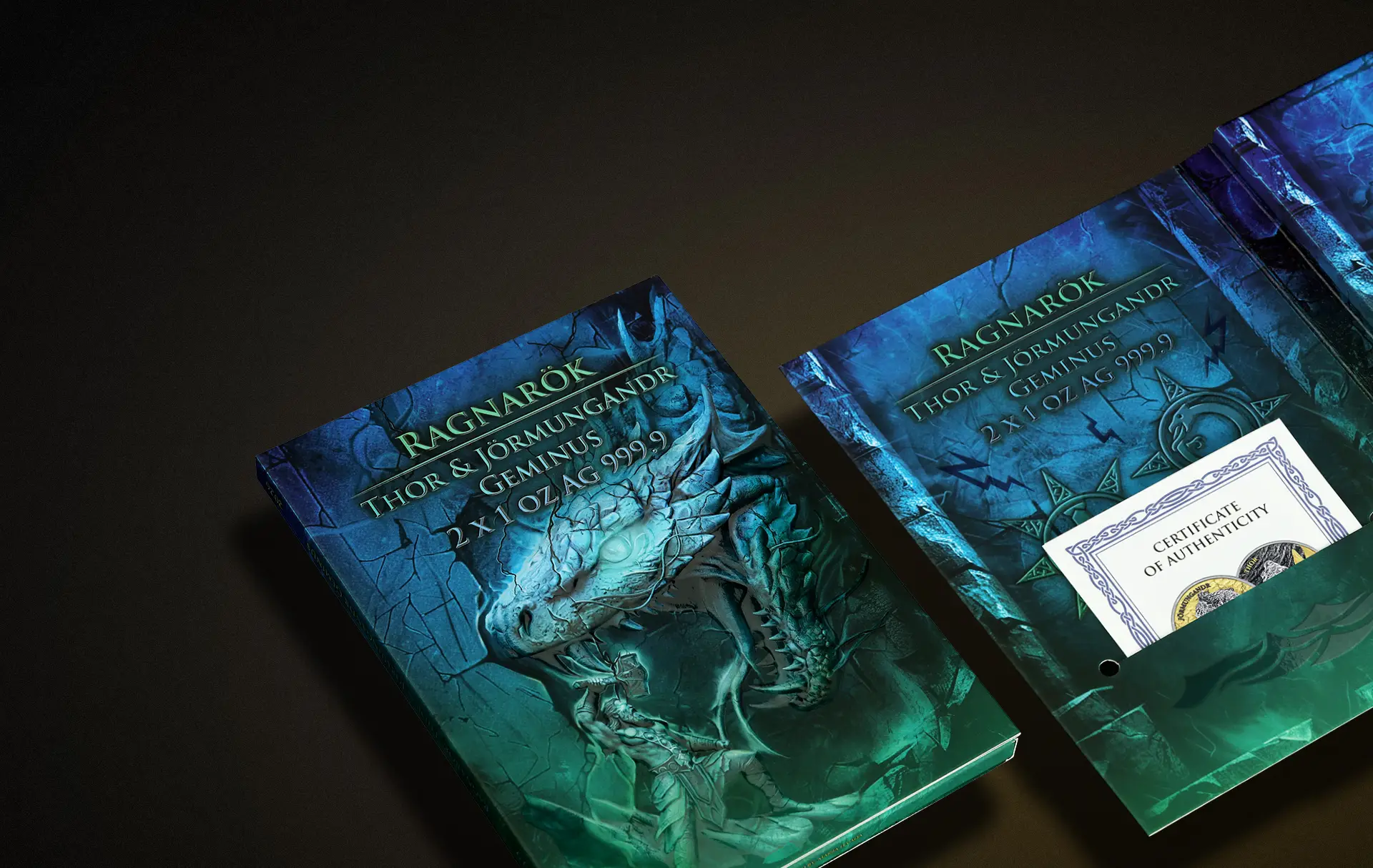
Two coins, two adversaries, and each is revealed by the presence of the other. Thor and Jörmungandr are so closely tied in Norse myth that it is hard to speak of one without the other. Thor, son of Odin and the giantess Jörð, is the god of thunder and storms, defender of Asgard and of Midgard, the world of humans. He rides across the sky in a chariot drawn by the goats Tanngrisnir and Tanngnjóstr, wears the belt of strength Megingjörð and iron gloves, and carries the hammer Mjölnir, a weapon that returns to its owner after every throw. Jörmungandr, also called the Midgard Serpent, is the middle of the three children of Loki and the giantess Angrboða, brother of the wolf Fenrir and of Hel, mistress of the realm of the dead. When Odin learned the prophecy about Loki’s offspring, he cast the serpent into the ocean surrounding Midgard, where it grew until it encircled the earth and closed its teeth on its own tail. Their first meeting resembles a prank. In the halls of Útgarða-Loki the giants challenged Thor to lift a grey cat from the floor. The god did not know that it was Jörmungandr in the shape of a beast, and he managed to raise only one paw; it later turned out how close he had come to shifting the borders of the world. The second meeting is a fishing trip. Thor rowed out to sea with the giant Hymir, baited the hook with an ox head and hauled the serpent to the surface. They stood face to face, the hammer already raised, but the terrified Hymir cut the line and Jörmungandr sank back into the deep. The scene was so beloved in Northern art that it can be recognised on rune stones in Sweden, Denmark and England. The third meeting is the last. When Ragnarök comes, the serpent will let go of its tail, the sea will flood the land, and it will crawl ashore spewing venom and poisoning air and water. On the plain of Vígríðr, Thor will go out to meet it. The thunderer will slay the monster, take nine steps and fall dead from the poison: victory and death come in a single moment, and nobody comes out ahead. This symmetry is the main reason the pair is issued as a Geminus, the “twins”. Each coin carries one hero, but the meaning arises when two rounds lie side by side: god and serpent, protector and threat, the beginning and the end of one circle. The Edda, however, does not end in darkness. After Surtr’s fire the earth rises from the sea anew, and Thor’s sons Móði and Magni find their father’s Mjölnir in the grass; the order of the world goes on. The 2026 issue is the third in the Ragnarök series, after the pairs Sköll and Hati (2024) and Loki and Heimdall (2025).
Obverse
The artistic sides of the two coins join into a single picture of confrontation. On the first is Thor (inscription THOR): a bearded warrior in armour with the hammer Mjolnir in his hand against a background of golden crags and a dark stormy sky. On the second is Jormungandr (inscription JÖRMUNGANDR): a scaly serpent with spikes and horns, coiled on a golden field split by cracks. The designs are by Kinga Sabatowicz.
Reverse
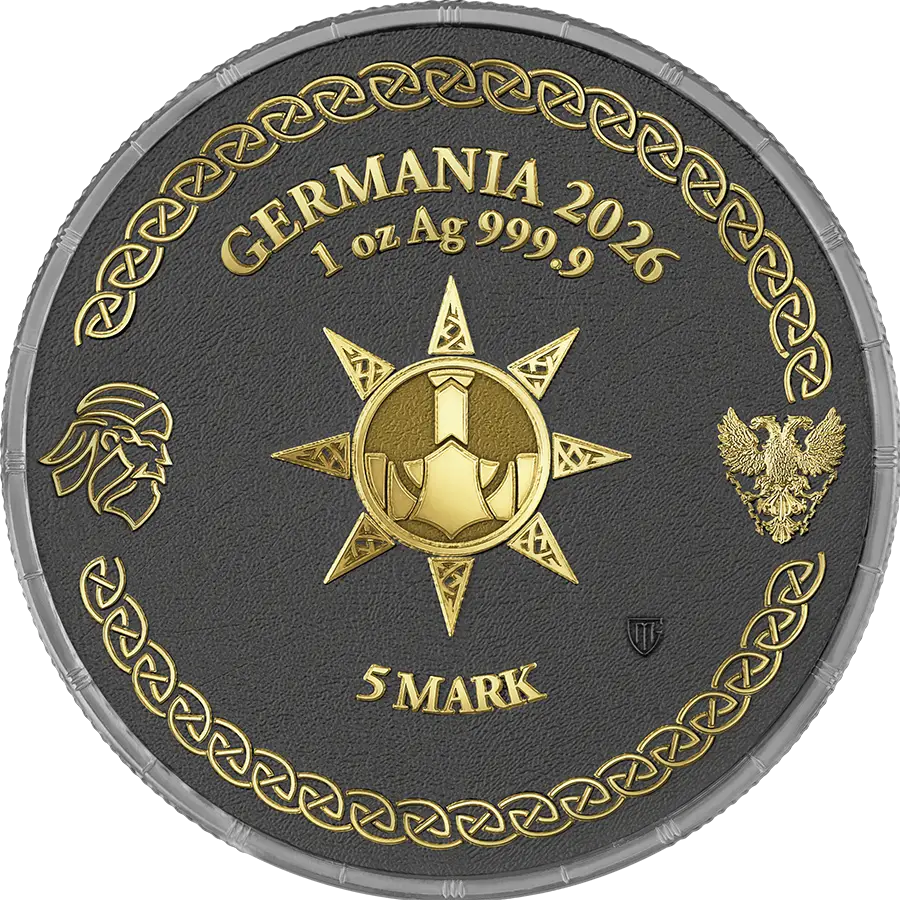
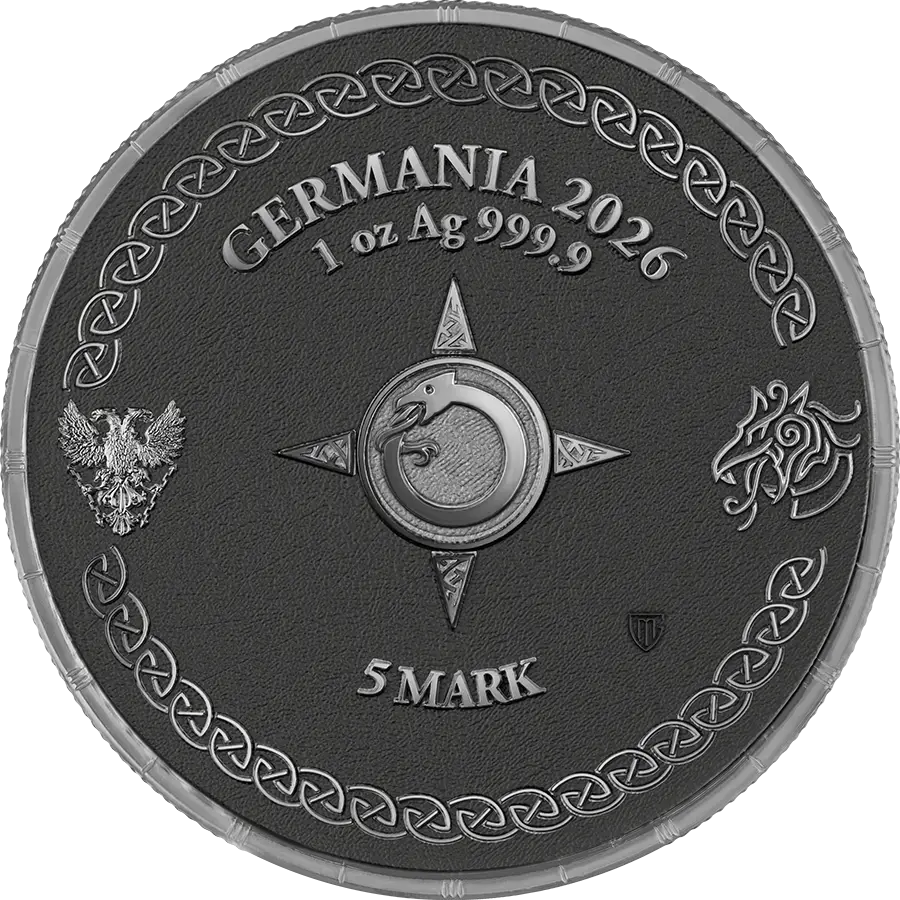
The official sides of both coins carry the year 2026 and a Celtic knotwork border. In the centre is a compass-star with the hero's emblem: a helmet on the Thor coin, a medallion with a serpent on the Jormungandr coin. The Thor side is kept in golden tones, the Jormungandr side in grey, so that even the reverses of the pair differ in colour.