
Apatosaurus (5 Pesos)
PDFGeneral information

Description
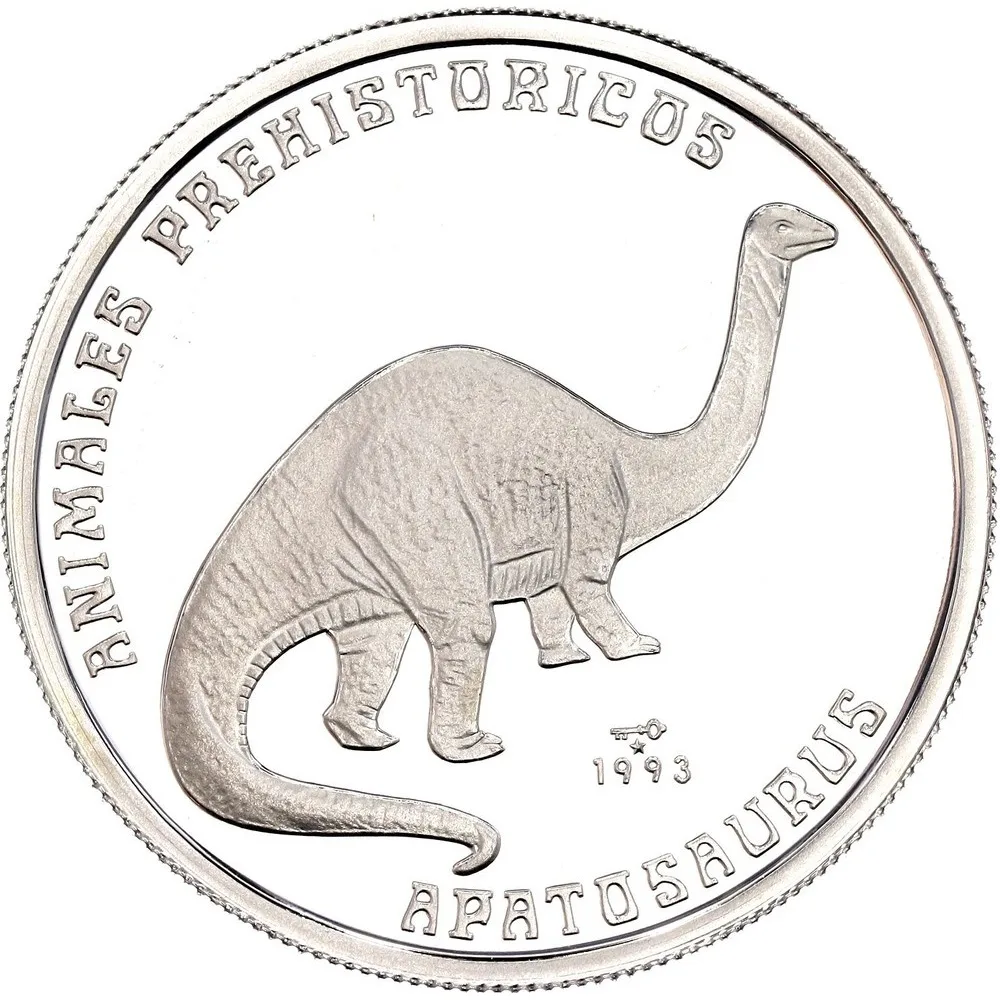
The coin shows Apatosaurus, which the wider public long knew by another name, Brontosaurus. It is one of the largest land animals in the history of the planet: a plant-eating Jurassic sauropod that lived in North America about 152–151 million years ago. Its silhouette, a long neck, a massive body on four pillar-like legs and a thin tail, became for many generations of schoolchildren the embodiment of the word dinosaur.
The name Apatosaurus means deceptive lizard, and it preserves the story of a mistake. Because of the incredibly long neck and tail the first palaeontologists took the tail for the neck and joined parts of the skeleton wrongly. The animal was described in 1877 by the American scientist Othniel Marsh, and two years later he named a different, more complete skeleton Brontosaurus, not yet knowing that it was almost the same lizard. This confusion gave the hero a double life: the scientific name remained Apatosaurus, while in books and museums it was known as Brontosaurus.
No less famous is the error about the head: museum skeletons long displayed a skull belonging to another sauropod, shorter and heavier than the real one. Only in the 1970s did scientists establish that Apatosaurus had a more elongated and lighter head. The story shows how slowly and with what difficulty science separates guess from fact, and that is why people love to tell it.
Apatosaurus lived on floodplains with horsetails, ferns and conifer forests. It held its head low, cropping vegetation at ground level, and spent its time in continuous feeding, since otherwise such a body could not survive. Trackways found by palaeontologists show that these giants moved in groups, and the young, apparently, kept in the middle under the protection of adults.
The Cuban coin of 1993 is dedicated to this hero and belongs to a collector programme about prehistoric animals. Dinosaurs in the early 1990s were a popular theme among both children and collectors, and Cuba used that popularity by issuing coins where science meets graphics.
The scale of Apatosaurus is conveyed best in a museum: the skeleton fills a whole hall, and a person beside it looks tiny. A coin, of course, cannot convey such size, but the relief and drawing recall it, and that is its chief merit.
For young collectors such a coin is a first step into the world of palaeontology, and for adults a reminder of how far science has travelled from the first guesses of the nineteenth century.
Obverse
The artistic side shows Apatosaurus walking to the right: the neck is stretched forward, the body rests on powerful pillar-like legs and the tail trails behind. The name of the programme runs in an arc above the drawing, with the animal's name, the year and the mint mark beside it. The drawing is rendered in relief only: the mirror background sets off the matt figure, which is especially important for such coins. The authors are Elena Delgado Álvarez and Ridoberto Peláez Alcázar.
Reverse
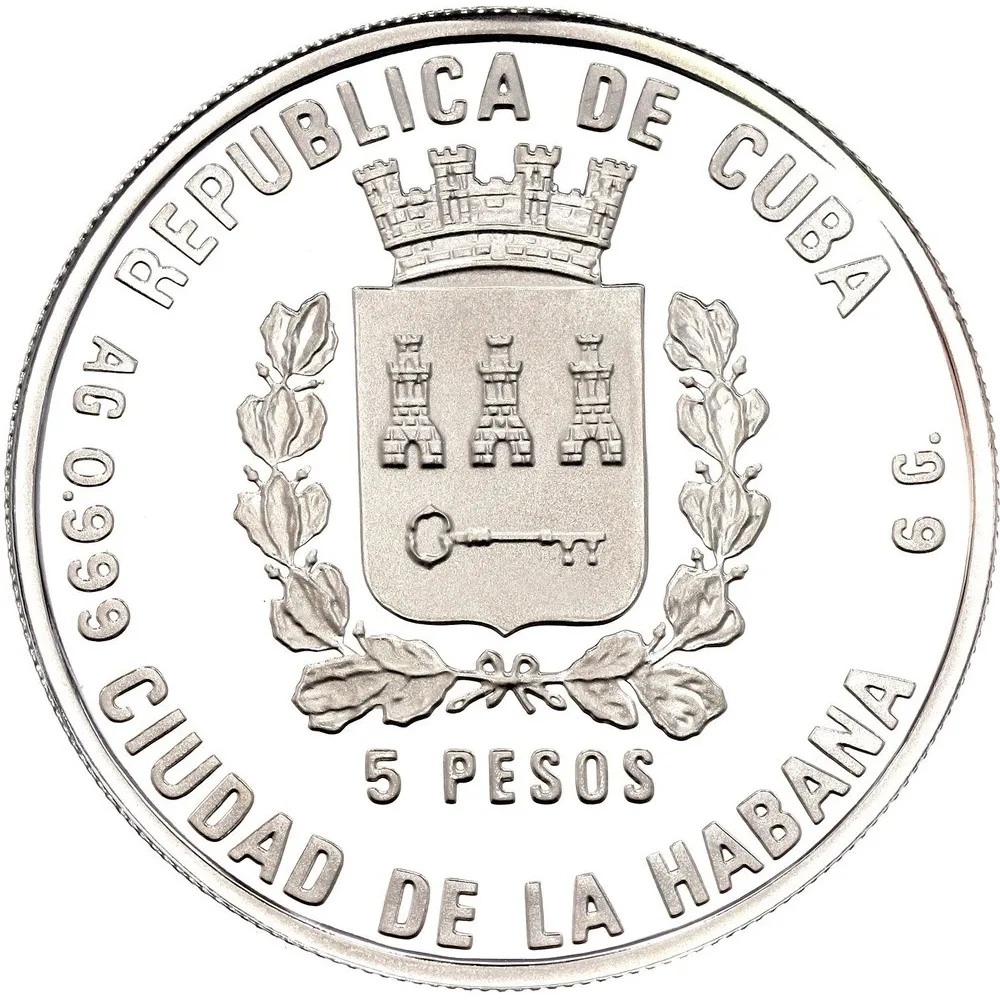
The official side shows the coat of arms of the city of Havana with inscriptions naming the state and the city. Such a choice is a peculiarity of the coin: on other issues of this programme the arms of the republic stand on the official side.