
Apatosaurus (5 Pesos, Piedfort)
PDFGeneral information

Description
This coin returns us to the image of Apatosaurus, a giant of the Jurassic plains whose name was once a source of scientific confusion. The animal lived in North America about 152–151 million years ago and belonged to the sauropods: plant-eating lizards with a long neck, a long tail and a body on four pillar-like legs. The name Apatosaurus means deceptive lizard; it was so called because the structure of its vertebrae and bones led the first researchers into error in their reconstruction.
In the nineteenth century the hunt for fossils turned into a contest. Two American scientists, Othniel Marsh and Edward Cope, financed expeditions, competed for every find and hurried to assign names. In this race in 1877 Apatosaurus was born, followed by Brontosaurus, described by Marsh in 1879. Decades passed before palaeontologists worked out that the forms were close; in the early twentieth century they were united, and the name Brontosaurus passed into textbooks, remaining a favourite with the public.
Curiously, in 2015 a group of researchers, after careful comparison of skeletons, concluded that Brontosaurus did deserve a genus of its own. This dispute shows how lively science is: even the best-known dinosaur is still a subject of discussion. Apatosaurus, for its part, keeps the status of a true classic: its bones are found in the Morrison Formation, the richest deposit of Jurassic fossils.
The image of Apatosaurus is usually linked with the unhurried life of a plant-eating giant: it moved in herds, fed on vegetation that it cropped from bushes and trees near the ground, and for defence relied on its size and probably on its powerful tail. Predators such as Allosaurus could attack the young or sick, but an adult Apatosaurus was too large and dangerous a target.
The Cuban coin of 1993 chose this image for good reason: it is known to everyone, it shows plainly what prehistoric life means, and it fits the relief graphics of collector issues.
The scale of this animal is best felt in a museum, where the skeleton fills a whole hall and a person at its foot seems tiny. A coin cannot convey this, but the relief silhouette recalls it, and that is its chief charm.
For those who collect on the theme of nature such an issue is valuable because it joins a scientific subject with neat graphics and does not distract from the main thing, the animal itself.
Obverse
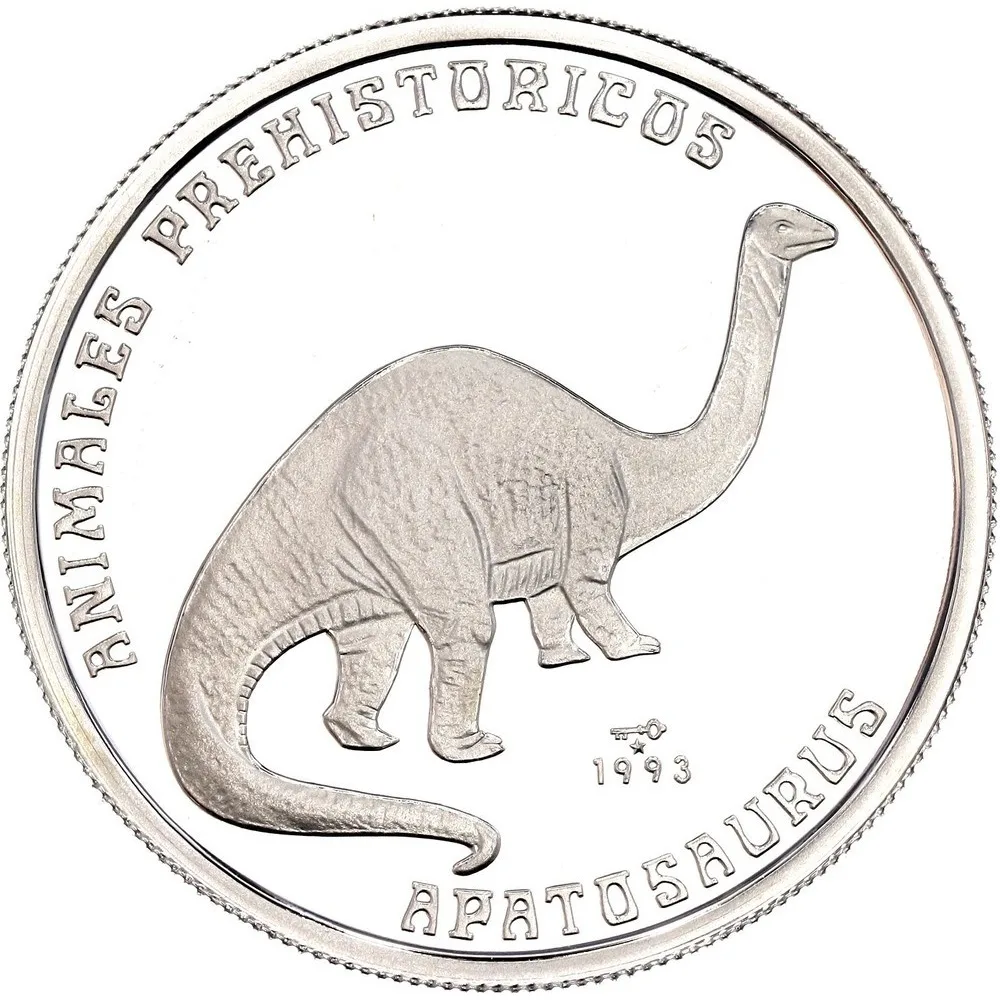
On the artistic side Apatosaurus is shown walking to the right: the long neck is stretched forward, the body rests on pillar-like legs and the tail trails behind. The name of the theme is placed in an arc above the drawing, with the animal's name, year and mint mark beside it. The composition is rendered in relief only, so the quality of the strike is of special importance. The drawing was made by Elena Delgado Álvarez and Ridoberto Peláez Alcázar.
Reverse
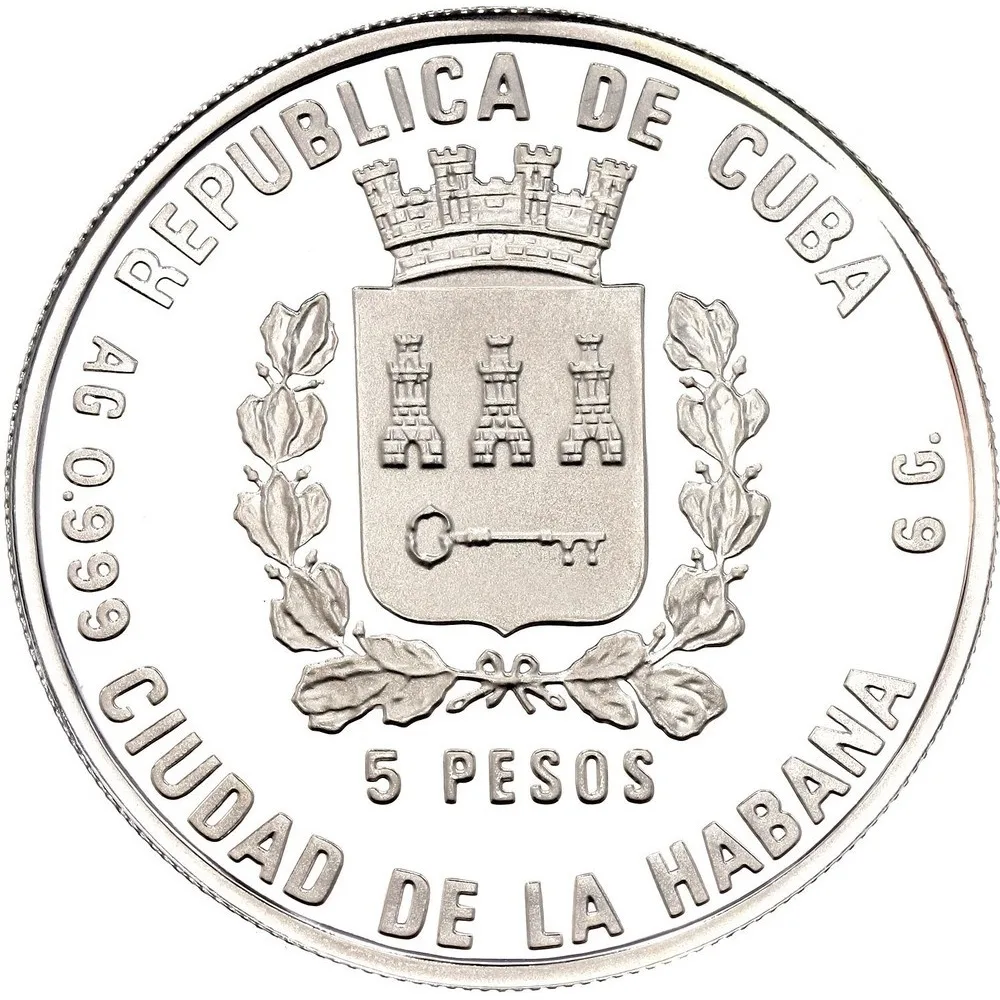
The official side contains the coat of arms of the city of Havana with inscriptions naming the state and the city; the coin was struck from the same dies as the ordinary variant with this animal.