
Brown Pelican (10 Pesos)
PDFGeneral information

Description
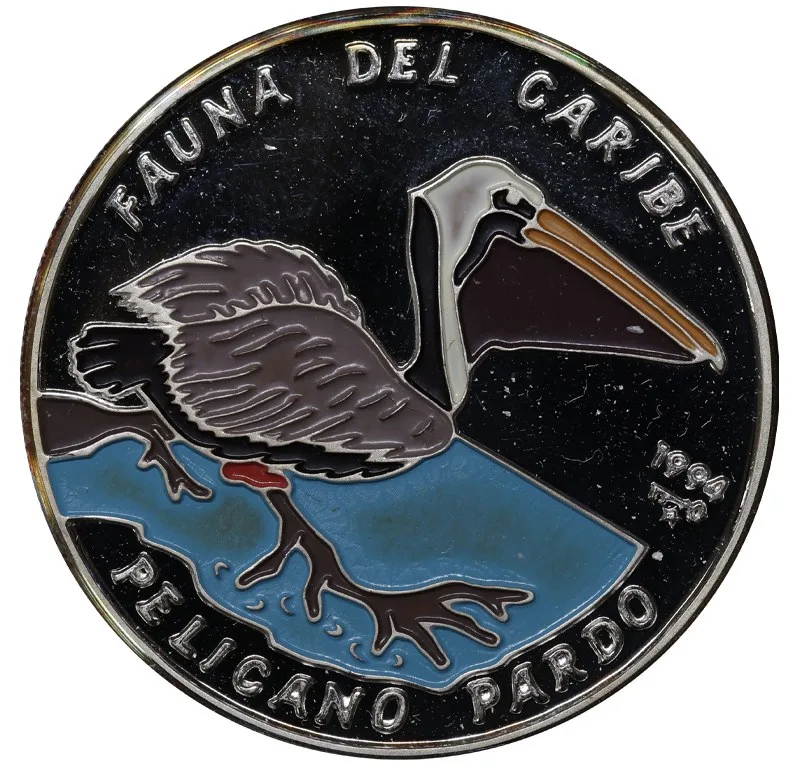
A pelican's dive is one of the most spectacular techniques of bird fishing, and on the Cuban coin of 1994 attention is concentrated precisely on the brown pelican Pelecanus occidentalis, whom Cubans call "pelícano pardo" or "alcatraz". The design was made by the engraver Rigoberto Peláez Alcázar; the inscriptions FAUNA DEL CARIBE and PELICANO PARDO run along the arc, with the year and the mint's mark at the right. The exact date of issue within 1994 is not documented, but it is known that the coin was meant for collectors from the start.
The brown pelican is the only pelican (together with the Peruvian) that feeds by diving into the water from a height: the usual height of a dive is three to ten metres, but attacks from up to twenty or thirty metres are known. Internal air sacs damp the impact with the water, and the throat pouch, the largest among birds, can hold up to three gallons of water with fish; then the bird tilts its head and drains the water, leaving the catch.
In the Caribbean the diet is based on small schooling fish: scaled sardines, anchovies and sardinellas. An adult's wingspan is about two metres and it lives up to forty years. The species is a symbol of Cuba's coasts, where it is called "alcatraz" and is regularly seen off the shore and by the cays.
Pelicans nest in colonies, often together with other seabirds, on mangrove islets where predators cannot reach the chicks. The chicks hatch naked and helpless, grow quickly under their parents' care and leave the nest after several weeks. The behaviour of pelicans follows seasons and currents: after storms the birds move to calmer places, and in years when fish are scarce colonies may reduce their broods.
The history of the species is a lesson in conservation: in the middle of the twentieth century brown pelicans were among the victims of pollution by organochlorine pesticides that made eggshells brittle. After such substances were banned and nesting sites protected, the species returned to places where it had almost been lost. On a collectible coin the Cuban pelican is not only a handsome bird but a reminder that nature can recover if it is helped.
The brown pelican has a characteristic bearing too: on land it looks awkward, but in the air it soars almost without wingbeats, gliding over the waves on currents of air rising from the water. This manner can be watched off Cuba's shores on almost any day, and it gives the picture a feeling of calm and strength at once. For a collector the graphic expressiveness of the subject matters too: the bird's silhouette is fitted into the circle so that the bill and wingspan echo its curve.
Obverse
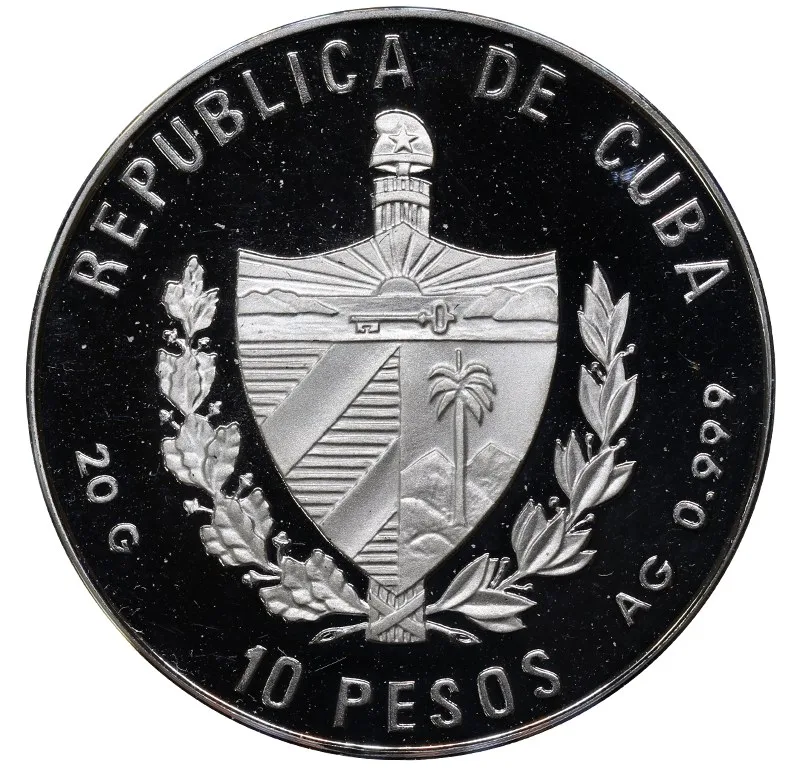
The official side carries the national arms of Cuba: a shield with the sun over the sea, a palm and mountains, a key and branches of laurel and oak. The arc above reads REPUBLICA DE CUBA, with 10 PESOS beneath. The pattern of the arms for Cuban coins was made by Charles Edward Barber, chief engraver of the US Mint.
Reverse
A brown pelican flying over the waves; FAUNA DEL CARIBE along the upper arc, PELICANO PARDO below, and the year 1994 and the mark of the mint, Empresa Cubana de Acuñaciones, at the right. The colouring is applied by hand: the brown plumage, pale head and yellow tinge on the neck differ slightly on each specimen, and the mirror ground emphasises the bird's relief.